In the world of precision manufacturing, one of the most common points of confusion is also one of the most fundamental: sheet metal thickness. If you tell a supplier you need “16 gauge steel,” the actual physical thickness changes depending on whether you are talking about carbon steel, stainless steel, or aluminum. At Moshijia Technology, we see these “gauge-to-metric” errors lead to costly structural failures and material waste every week. This guide is designed to demystify the sheet metal gauge chart, providing a definitive reference for engineers, procurement specialists, and DIYers to ensure every bend and weld starts with the right thickness.
1. Understanding Sheet Metal Gauge
Defining the Gauge Measurement System
The term gauge refers to a unit of measure for the thickness of sheet metal. Unlike inches or millimeters, where a higher number means more thickness, the gauge system works inversely. A higher gauge number indicates a thinner sheet of metal. This system originated from the wire drawing industry. To make thinner wire, workers had to pull the metal through more “draws” or dies. Therefore, a 20-gauge wire was drawn 20 times, making it much thinner than a 10-gauge wire.
Historical Context of Metal Gauges
The history of gauges is rooted in the industrial revolution. Before digital calipers, manufacturers needed a quick way to categorize materials. Different regions developed their own standards, leading to the Birmingham Gauge in the UK and the Manufacturer’s Standard in the US. Because these standards were based on weight per square foot rather than direct linear measurement, the numbers became fixed traditions in the industry that we still use today.
Common Materials in Sheet Metal
Not all metals play by the same rules. In our facility, we primarily work with three categories:
- Ferrous Metals: Carbon steel and galvanized steel.
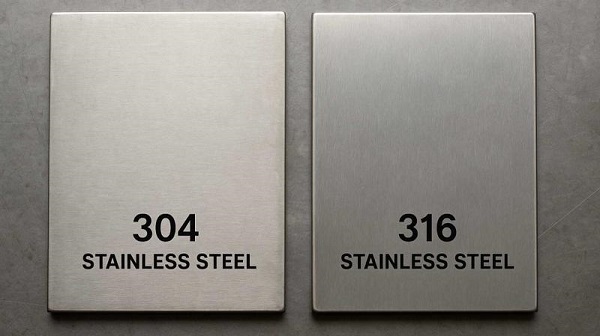
- Stainless Steel: Usually 304 or 316 grades.
- Non-Ferrous Metals: Aluminum, copper, and brass.It is critical to remember that 16 gauge aluminum is not the same thickness as 16 gauge steel. Always verify your material type before looking at the chart.
2. The Sheet Metal Gauge Chart
Definition and Purpose of Charts
A sheet metal gauge chart is a master reference tool. It translates an abstract gauge number into a measurable dimension in inches or millimeters. Its primary purpose is to eliminate guesswork during the design and procurement phases. Without this chart, a designer might specify a thickness that doesn’t exist in a supplier’s inventory, or worse, one that cannot support the intended mechanical load.
Structure of a Professional Chart
A standard, high-quality chart is organized by material type. Because steel is denser and weighed differently than aluminum, the columns are separated. A typical chart includes:
- Gauge Number: The industry-standard identifier.
- Decimal Inches: The primary measurement for US-based manufacturing.
- Metric Millimeters: The global standard for precision engineering.
- Tolerance Range: The allowable margin of error for that thickness.
Key International Gauge Standards
Different standards exist based on the specific material and geography:
- Manufacturer’s Standard: Used for standard carbon steel.
- U.S. Standard Gauge: Used for stainless steel and sometimes nickel.
- American Wire Gauge (AWG): Predominantly used for aluminum and copper.
- Birmingham Gauge (BG): Commonly found in older UK-based technical drawings.
3. How to Read a Gauge Chart
Significance of Gauge Numbers
The most important rule is the inverse relationship. If your project requires more strength and rigidity, you need a lower gauge number. For example, a heavy-duty 10-gauge truck chassis is much thicker than a 22-gauge computer case. In sheet metal fabrication, “thick” usually starts at 10 gauge and below, while “thin” or “shim” stock goes up to 30 gauge and beyond.
Thickness Conversion Reference Table
Below is a condensed version of the reference chart we use at Moshijia Technology for the most common industrial materials.
| Gauge | Steel (Inches) | Steel (mm) | Aluminum (Inches) | Aluminum (mm) | Stainless (Inches) |
| 10 | 0.1345 | 3.42 | 0.1019 | 2.59 | 0.1406 |
| 12 | 0.1046 | 2.66 | 0.0808 | 2.05 | 0.1094 |
| 14 | 0.0747 | 1.90 | 0.0641 | 1.63 | 0.0781 |
| 16 | 0.0598 | 1.52 | 0.0508 | 1.29 | 0.0625 |
| 18 | 0.0478 | 1.21 | 0.0403 | 1.02 | 0.0500 |
| 20 | 0.0359 | 0.91 | 0.0320 | 0.81 | 0.0375 |
| 22 | 0.0299 | 0.76 | 0.0253 | 0.64 | 0.0312 |
| 24 | 0.0239 | 0.61 | 0.0201 | 0.51 | 0.0250 |
Visual Identification in the Shop
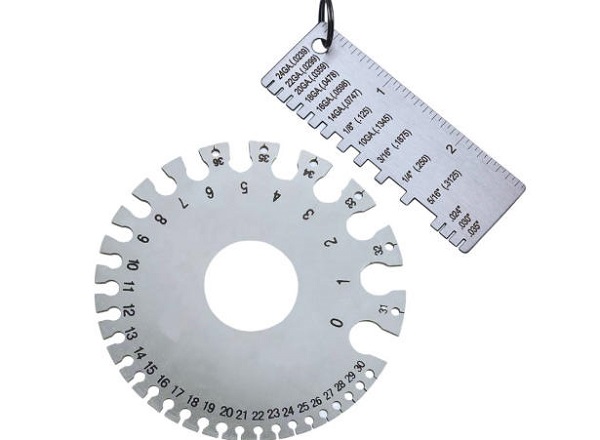
In a real-world shop environment, we use gauge wheels. This is a circular metal disk with notches. You slide the metal into the notch to find its gauge. Note: Never force the metal. It should slide in snugly. If it’s loose, try the next size up.
4. Applications of Gauge Charts
Key Industries Utilizing Sheet Metal
Sheet metal is the backbone of modern infrastructure. We serve several specific sectors:
- Construction: Uses 10-18 gauge for HVAC ducting and roofing.
- Automotive: Employs 18-22 gauge for body panels to balance weight and strength.
- Aerospace: Uses precise, thin-gauge aluminum for skin panels.
- Electronics: Requires 20-24 gauge for EMI/RFI shielding and enclosures.
Specific Applications by Thickness
Choosing the right gauge is about fitness for purpose.
- 7 to 10 Gauge: Heavy brackets, structural supports, and industrial flooring.
- 11 to 16 Gauge: Cabinetry, toolboxes, and appliance frames.
- 18 to 22 Gauge: Car doors, fenders, and light-duty shelving.
- 24+ Gauge: Decorative trim, gutters, and flashing.
Importance in the Design Process
At the design stage, the gauge chart dictates bend allowance and K-factor. If an engineer designs a part using “1/16th inch” but the shop buys 16-gauge steel (which is actually 0.0598″), the final dimensions will be off. This small 0.002″ difference compounds across multiple bends, leading to parts that won’t fit during assembly.
5. Factors Influencing Gauge Selection
Material Properties and Weight
Weight is a major cost driver. Steel is roughly three times heavier than aluminum. If you are designing a portable medical device, you might choose a thicker gauge of aluminum (e.g., 12 gauge) to maintain strength while keeping the weight lower than a thinner gauge of steel.
Environmental and Load Considerations
Where will the part live? If it’s an outdoor enclosure, you must account for corrosion. Stainless steel might allow you to use a thinner gauge because you don’t need a “corrosion allowance” like you would with carbon steel. For load-bearing parts, we use finite element analysis (FEA) to ensure the selected gauge won’t buckle under pressure.
Cost Implications and Availability
Standardization saves money. 16 and 18 gauge are “commodity” sizes. They are always in stock and cheaper per pound. If you specify an obscure 19-gauge sheet, you will face long lead times and custom surcharges. We always recommend sticking to even-numbered gauges for the best price-to-performance ratio.
6. Common Misconceptions
The “Higher is Thicker” Myth
The most frequent mistake for beginners is assuming a 24-gauge sheet is thicker than a 12-gauge sheet. Always remember the Wire Draw Rule: more draws equals thinner material.
Standard Cross-Material Confusion
You cannot use a steel chart for aluminum.
Real Case Study: A client once ordered “20 gauge” parts in both Stainless and Aluminum. The Stainless parts arrived at 0.037″, but the Aluminum parts were 0.032″. The aluminum parts were too flimsy for the brackets, requiring a full re-production run. Always specify the decimal thickness in your PO to avoid this.
Accuracy and Tolerance Issues
Gauges are not absolute. Every mill has a manufacturing tolerance (usually ±0.002″ to ±0.005″). If your design has zero clearance, a “thick” 16-gauge sheet might not fit into a slot designed for the “nominal” size. Always design with the maximum material condition in mind.
7. Best Practices for Professional Use
Tips for Project Selection
- Prototype with 18 gauge: It is easy to bend by hand but strong enough for testing.
- Welding Thin Metal: Avoid 22 gauge and thinner if you are a beginner welder; it burns through easily.
- Radius Matters: Thicker gauges require a larger internal bend radius to prevent cracking.
Consulting Charts During Design
Integrate your gauge chart directly into your CAD software. Most modern programs like SolidWorks or Fusion 360 have “Sheet Metal Tables” where you can input the exact decimal values from the chart. This ensures your flat patterns are calculated correctly from the start.
Maintaining Measurement Accuracy
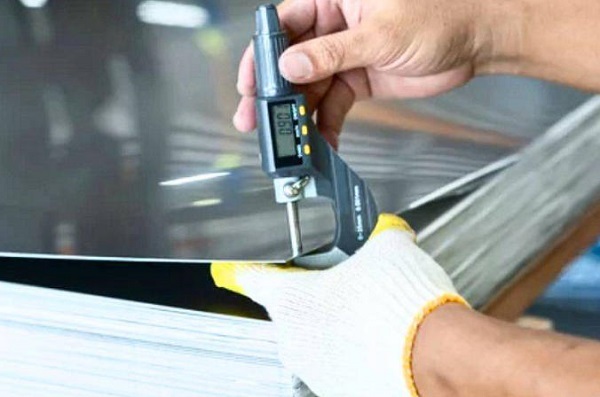
Always use a calibrated micrometer to verify the stock when it arrives from the vendor. Coatings like powder paint or galvanization add thickness. A 16-gauge sheet might measure like a 14-gauge sheet after it’s been heavily painted. Measure the bare metal whenever possible.
8. Conclusion
The sheet metal gauge chart is more than just a list of numbers; it is the language of the metal shop. Understanding the inverse relationship of gauge numbers, the variations between material types, and the importance of decimal accuracy is what separates a successful project from a pile of scrap metal. By using the tables provided and following the best practices of checking tolerances and material standards, you ensure your designs are both manufacturable and cost-effective.
FAQ: Common Sheet Metal Questions
How do I convert gauge to mm quickly?
While a chart is best, a rough rule for steel is that 16 gauge is approximately 1.5mm. As the gauge number goes up, the thickness goes down.
Is 16 gauge or 18 gauge stronger?
16 gauge is thicker (approx. 0.059″) compared to 18 gauge (approx. 0.047″), so 16 gauge is significantly stronger and more rigid.
Does gauge apply to plate metal?
Generally, no. Once metal exceeds 3/16″ (0.187″) in thickness, the industry stops using “gauge” and starts using fractional inches (e.g., 1/4″ plate, 1/2″ plate).
Why is galvanized steel thicker than standard steel for the same gauge?
The gauge usually refers to the base metal thickness. Galvanization adds a layer of zinc on both sides, which can increase the total measured thickness by 0.001″ to 0.003″.
Get projects quote with Moshijia Technology
Ready to start your next fabrication project? Whether you need precision CNC machining or custom sheet metal bending, our engineers are here to help. [Contact Moshijia Technology today for a professional DFM analysis and instant quote.]