Introduction
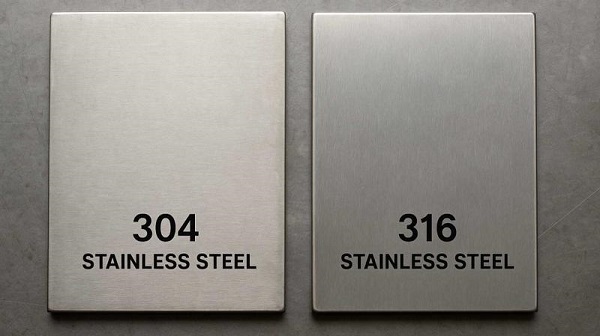
Stainless steel is a staple in both our daily lives and a wide range of industrial applications, and among its various types, 304 and 316 stainless steel are two of the most commonly used. From the cutlery in our kitchens to the construction of large – scale industrial equipment, their presence is everywhere. However, despite their similar appearances, 304 and 316 stainless steel have distinct differences in composition, performance, cost, and more. Understanding these differences is crucial for making informed decisions, whether you’re an engineer choosing materials for a project, a consumer buying stainless – steel products, or a manufacturer aiming to optimize production. we will delve deep into the disparities between 304 and 316 stainless steel to help you select the right material for your specific needs.
Composition Differences
304 Stainless Steel Composition
304 stainless steel, also known as 18/8 stainless steel, is a widely – used austenitic stainless steel. Its main alloying elements are chromium (Cr) and nickel (Ni). Typically, it contains 18 – 20% chromium and 8 – 10.5% nickel. Chromium is crucial as it forms a thin, protective oxide layer on the surface of the steel, known as a passive film. This film is highly resistant to oxidation and corrosion, preventing the underlying metal from reacting with the environment. Nickel, on the other hand, enhances the steel’s toughness, ductility, and its ability to maintain its structure at low temperatures. It also contributes to the steel’s corrosion – resistance, especially in certain chemical environments. Besides chromium and nickel, 304 stainless steel contains small amounts of other elements. For example, it has a carbon (C) content of ≤0.08%, which affects the steel’s hardness and strength. Manganese (Mn) is present at ≤2.00%, and it helps with the steel’s workability during manufacturing. Silicon (Si) is usually ≤1.00%, which can assist in the deoxidation process during steel – making. Phosphorus (P) and sulfur (S) are kept at low levels, with P ≤0.045% and S ≤0.030% respectively, as they can have negative impacts on the steel’s mechanical properties if their concentrations are too high.
316 Stainless Steel Composition
316 stainless steel is an upgraded version of 304 stainless steel. While it also contains chromium and nickel, its composition has some key differences. The chromium content in 316 stainless steel is 16 – 18%, slightly lower than that of 304. However, the nickel content is 10 – 14%, which is higher than 304. The most significant addition is 2 – 3% molybdenum (Mo). This is what sets 316 stainless steel apart from 304. Molybdenum greatly improves the steel’s resistance to corrosion, especially in the presence of chlorides. Chlorides are common in many industrial and marine environments, and they can cause pitting corrosion in stainless steels. The addition of molybdenum makes 316 stainless steel much more resistant to this type of attack. For instance, in a seawater environment with a high chloride concentration, 304 stainless steel may start to show signs of pitting corrosion over time, while 316 stainless steel can withstand this environment much better. The higher nickel content in 316 stainless steel also contributes to its enhanced corrosion – resistance and mechanical properties at high temperatures. Similar to 304, 316 stainless steel has a carbon content of ≤0.08% (even lower, ≤0.03% in the case of 316L stainless steel, a low – carbon variant), and controlled amounts of other elements like manganese, silicon, phosphorus, and sulfur to ensure good mechanical and processing properties.
Performance Contrasts
Corrosion Resistance
Corrosion resistance is a crucial factor when choosing between 304 and 316 stainless steel. In general environments, both 304 and 316 stainless steel have good corrosion – resistance due to the formation of a passive oxide film on their surfaces. However, 316 stainless steel has a significant advantage in environments containing chlorides.
In a study comparing the two materials in a marine environment (where the chloride content in seawater is high, around 19,000 ppm), 304 stainless steel showed signs of pitting corrosion after just 6 months of exposure. In contrast, 316 stainless steel remained in good condition even after 12 months. This is because the molybdenum in 316 stainless steel forms a more stable and protective passive film in the presence of chlorides.
In industrial settings, 304 stainless steel is suitable for general – purpose applications where the exposure to corrosive substances is minimal. For example, in a food – processing factory’s non – acidic food storage tanks, 304 stainless steel can withstand the normal humidity and mild cleaning agents used during operations. But if the factory starts to process foods with high salt or acidic content, or if the cleaning agents contain chloride – based substances, 316 stainless steel would be a better choice.
In chemical plants, where the environment can be highly corrosive, 316 stainless steel is often the material of choice for pipelines and equipment. For instance, in a plant that produces chemicals involving chloride – containing reactions, 304 stainless steel would corrode rapidly, while 316 stainless steel can maintain its integrity over a long period.
Mechanical Strength
At room temperature, 304 and 316 stainless steel have similar mechanical strength properties. The tensile strength of both steels is typically in the range of 515 – 725 MPa in the annealed condition. Their yield strength is around 205 – 275 MPa, and they both exhibit good ductility, with an elongation percentage of around 40 – 60%. This means that in applications where the temperature is around room – temperature, such as in the construction of household appliances or basic industrial machinery frames, either 304 or 316 stainless steel can be used based on other factors like cost and corrosion – resistance requirements.
However, when it comes to high – temperature applications, 316 stainless steel has an edge. The additional molybdenum and higher nickel content in 316 stainless steel enhance its resistance to creep and oxidation at elevated temperatures. In a power – generation plant, where components in the boiler may be exposed to temperatures up to 650°C, 316 stainless steel can maintain its mechanical properties better over time compared to 304 stainless steel. Over a long – term operation of 5 years in a high – temperature boiler environment, parts made of 304 stainless steel may experience a significant decrease in strength and show signs of oxidation – induced surface damage, while 316 stainless steel parts would remain in a more stable condition.
Temperature Resistance
The temperature resistance of 304 and 316 stainless steel also shows some differences. 304 stainless steel can generally be used in continuous service temperatures up to about 870°C, but it may start to lose its corrosion – resistance and mechanical properties at higher temperatures. In a heat – treatment furnace with a maximum operating temperature of 800°C, 304 stainless steel components can function well for a reasonable period. However, if the temperature in the furnace occasionally exceeds 870°C, the 304 stainless steel may oxidize rapidly, and its surface may form a thick layer of scale, which can affect the performance of the equipment.
316 stainless steel, on the other hand, can be used in continuous service at temperatures up to around 980°C. Its higher nickel and molybdenum content contribute to its better high – temperature stability. In a chemical processing reactor that operates at high temperatures and also comes into contact with corrosive chemicals, 316 stainless steel is often the preferred material. For example, in a reactor that processes certain polymers at a temperature of 900°C and is exposed to acidic by – products, 316 stainless steel can resist both the high – temperature degradation and the chemical corrosion, ensuring the long – term operation of the reactor.
Cost Variances
304 Stainless Steel Cost
304 stainless steel is generally more cost – effective. Its lower cost is mainly due to its relatively simple composition. Since it does not contain the expensive molybdenum element like 316 stainless steel, and the chromium and nickel content is also at a relatively standard level in the stainless – steel family.
In the market, the price of 304 stainless – steel products is usually more affordable for a wide range of applications. For example, in the construction of general – purpose household appliances, such as the outer shells of refrigerators and washing machines, using 304 stainless steel can keep the cost down while still meeting the requirements of normal use, including basic corrosion – resistance and mechanical strength. In large – scale industrial applications like the production of ventilation ducts in commercial buildings, the cost – effectiveness of 304 stainless steel makes it a popular choice. It can be mass – produced at a relatively low cost, and the overall cost of the project can be better controlled. In the food – processing industry, when making non – critical equipment such as storage bins for dry food ingredients, 304 stainless steel is a cost – efficient option as it can withstand the normal environment in the factory and is not overly expensive.
316 Stainless Steel Cost
316 stainless steel is more expensive than 304 stainless steel. The main reason is its composition. The addition of molybdenum, a relatively rare and costly element, significantly increases the raw – material cost. Molybdenum is not as abundant as some other elements in the earth’s crust, and the extraction and purification processes are complex, which drives up its price. The higher nickel content in 316 stainless steel also contributes to its higher cost, as nickel is also a major cost – determining factor in stainless – steel production.
In industries where 316 stainless steel is essential, such as the medical industry for manufacturing surgical instruments and the marine industry for shipbuilding components, the higher cost is often acceptable due to its superior performance. For example, a surgical scalpel made of 316 stainless steel can ensure high – quality performance in a sterile and body – fluid – contact environment, and the cost is secondary to the need for high – quality and reliable performance. In the construction of a large – scale cruise ship, components like seawater – intake pipes made of 316 stainless steel can endure the harsh marine environment over a long service life. Although the initial investment in using 316 stainless steel is high, the long – term cost in terms of maintenance and replacement is relatively low, which is an important consideration for industries that require high – performance materials.
Application Scenarios
304 Stainless Steel Applications
304 stainless steel, with its good balance of cost – effectiveness, corrosion – resistance, and mechanical properties, has a wide range of applications.
- Food Industry: In the food industry, 304 stainless steel is highly favored. It is used to make various food – processing equipment, such as food storage tanks, conveyor belts, and cooking utensils. For example, many commercial kitchens use 304 stainless – steel pots and pans because it is non – reactive with food, ensuring that no harmful substances are leached into the food during cooking. The smooth surface of 304 stainless steel also makes it easy to clean, which is crucial for maintaining food hygiene. It is also used in the construction of large – scale food – processing plants, like dairy factories, where milk storage tanks made of 304 stainless steel can withstand the acidic and alkaline substances present during the milk – processing process without corroding.
- Architectural and Decorative Purposes: In architecture, 304 stainless steel is used for both structural and decorative elements. In high – rise buildings, 304 stainless – steel rods and cables are used in curtain – wall systems. These components can support the glass panels while withstanding the forces exerted by wind and temperature changes. The corrosion – resistance of 304 stainless steel ensures that the curtain – wall system remains intact and aesthetically pleasing for a long time. In interior decoration, 304 stainless – steel decorative strips and handrails are popular choices. For example, in luxury hotels, the handrails of staircases made of 304 stainless steel not only provide safety but also add a touch of elegance. Its ability to be polished to a high – gloss finish makes it suitable for creating a modern and sleek look.
- General Industrial Applications: In general industrial settings, 304 stainless steel is used in the manufacturing of various machinery and equipment. It is used in the production of pumps and valves. These components need to have good mechanical strength to withstand the pressure of fluids and also need to be corrosion – resistant to prevent damage from the fluids they transport. In the automotive industry, some parts of the engine, such as exhaust manifolds, are made of 304 stainless steel. It can withstand the high – temperature exhaust gases and resist corrosion caused by the chemical components in the exhaust.
316 Stainless Steel Applications
316 stainless steel, with its superior corrosion – resistance and high – temperature performance, is mainly used in more demanding and specialized applications.
- Marine and Offshore Industries: The marine environment is extremely harsh, with high humidity, saltwater, and strong winds. 316 stainless steel is the material of choice for many marine applications. Shipbuilding, it is used to make hull components, seawater – intake pipes, and deck fittings. Seawater – intake pipes made of 316 stainless steel can resist the corrosion of seawater, which contains a high concentration of chlorides. In offshore oil and gas platforms, 316 stainless steel is used in the construction of structural components and pipelines. These platforms are exposed to the marine environment 24/7, and the use of 316 stainless steel ensures the long – term stability and safety of the platform. For example, the handrails and walkways on the platform made of 316 stainless steel can withstand the corrosive effects of salt – spray and the mechanical stress caused by workers’ activities.
- Medical Field: In the medical industry, 316 stainless steel is widely used due to its biocompatibility and high – level corrosion – resistance. It is used to manufacture surgical instruments, such as scalpels, forceps, and surgical screws. These instruments need to be extremely clean, non – corrosive, and biocompatible to avoid any negative effects on the patient’s body during surgery. 316 stainless steel meets these requirements. It is also used in the production of medical implants. Although titanium is more commonly used for long – term implants, 316 stainless steel is used for some temporary implants or implant components. For example, in some orthopedic surgeries, 316 stainless – steel plates and screws are used to fix broken bones during the healing process.
- High – End Industrial Applications: In high – end industrial applications, such as aerospace and chemical processing, 316 stainless steel plays a crucial role. In the aerospace industry, it is used in the construction of aircraft engine components that are exposed to high – temperature and corrosive environments. For example, some parts of the engine combustion chamber are made of 316 stainless steel because it can maintain its mechanical properties at high temperatures and resist the corrosion of the hot and corrosive gases generated during combustion. In the chemical processing industry, 316 stainless steel is used to make reactors, pipelines, and storage tanks for storing and transporting highly corrosive chemicals. For instance, in a plant that produces strong acids or chemicals containing chlorides, 316 stainless – steel equipment can ensure the safe and efficient operation of the production process.
How to Choose
Choosing between 304 and 316 stainless steel depends on several factors:
- Environment: If the application is in a general – purpose environment with low exposure to corrosive substances, 304 stainless steel is usually sufficient. For example, in a normal office building’s interior decoration, 304 stainless – steel handrails can meet the requirements of aesthetics and durability. However, if the environment contains chlorides, such as in marine or swimming – pool areas, or in chemical plants with chloride – containing processes, 316 stainless steel is a must – have to prevent corrosion.
- Budget: If cost is a major concern and the performance requirements are not overly demanding, 304 stainless steel offers a more cost – effective solution. It is suitable for large – scale projects where cost control is crucial, like the construction of low – cost housing developments where 304 stainless – steel fixtures can be used in bathrooms and kitchens. But if the project requires high – performance materials and the budget allows, 316 stainless steel can ensure long – term reliability and reduce maintenance costs in the long run, as seen in high – end luxury buildings or critical industrial facilities.
- Performance Requirements: For applications that require high – temperature resistance or better mechanical strength at elevated temperatures, 316 stainless steel is the better choice. In a high – temperature furnace in a metal – processing factory, 316 stainless – steel components can withstand the heat and maintain their integrity. If the application only involves normal – temperature operations and basic mechanical strength requirements, 304 stainless steel can fulfill these needs, such as in the production of simple household metal products.
Conclusion
In conclusion, 304 and 316 stainless steel, while both being popular and useful materials, have distinct differences in composition, performance, cost, and application scenarios. 304 stainless steel, with its 18 – 20% chromium and 8 – 10.5% nickel composition, offers good general – purpose corrosion – resistance, mechanical strength, and cost – effectiveness, making it suitable for a wide range of applications in normal environments. On the other hand, 316 stainless steel, with its addition of 2 – 3% molybdenum and higher nickel content, excels in highly corrosive environments, especially those with chlorides, and also shows better performance at high temperatures.
When choosing between the two, it’s essential to consider the specific requirements of your project. The environment, budget, and performance needs are all key factors. By understanding these differences and making a well – informed decision, you can ensure that the stainless – steel material you select not only meets your current needs but also provides long – term reliability and value for your investment. Whether it’s for a simple household item or a complex industrial project, the right choice of stainless steel can make a significant difference in the quality and durability of the final product.
FAQ
What is the main difference between 304 and 316 stainless steel?
The main differences lie in their composition, performance, cost, and application scenarios. 316 stainless steel contains 2 – 3% molybdenum which 304 doesn’t have, and 316 has a higher nickel content. This makes 316 more corrosion – resistant, especially in chloride – containing environments, and better at high – temperature performance. 316 is more expensive than 304 due to its composition. As for applications, 304 is suitable for general – purpose use, while 316 is used in more demanding, corrosive, or high – temperature environments.
Which is better for kitchen utensils, 304 or 316 stainless steel?
For most kitchen utensils, 304 stainless steel is a great choice. It is non – reactive with food, easy to clean, and has good corrosion – resistance for normal kitchen environments, such as dealing with water, mild detergents, and common food acids. It is also cost – effective. However, if you frequently use your kitchen utensils in a very harsh environment, like near a pool (with high chloride levels from pool chemicals) or in a coastal area with high salt – air exposure, or if you are using strong, unusual cleaning agents, 316 stainless steel might be more suitable due to its superior corrosion – resistance. But for regular home kitchens, 304 is sufficient.
Is 316 stainless steel more expensive than 304?
Yes, 316 stainless steel is more expensive. The main reasons are its composition. Molybdenum, a relatively rare and costly element, is added to 316 stainless steel, which significantly increases the raw – material cost. The extraction and purification processes of molybdenum are complex. Also, 316 has a higher nickel content, and nickel is a major cost – determining factor in stainless – steel production. All these factors contribute to its higher price compared to 304 stainless steel.
Get projects quote with Moshijia Technology
At Moshijia Technology, we understand the importance of precise material selection for your projects. Whether you’re considering 304 or 316 stainless steel, our team of experts is here to assist. If you’re in the planning stages of a project and need a detailed cost estimate, feel free to reach out to us. We offer comprehensive project quotes, taking into account material costs, processing fees, and any additional requirements. Contact us today, and let’s work together to find the most suitable stainless – steel solution for your project while keeping your budget in check.