Introduction
Picking the wrong lathe tooling can wreck a project in minutes. You end up with poor surface finish, bad tolerances, or tools that burn out before you finish the job. It happens even to experienced machinists when the workpiece material or operation changes. The truth is simple: the right tool does 80% of the work. The wrong one does none of it.
This guide walks you through every decision point. We cover tool types, tool materials, geometry, and holder selection — all tied to real project scenarios. Whether you run a shop or work in a home garage, you will walk away with a clear process to pick the right lathe tooling every time.
I. Understanding Lathe Tooling
What Is Lathe Tooling?
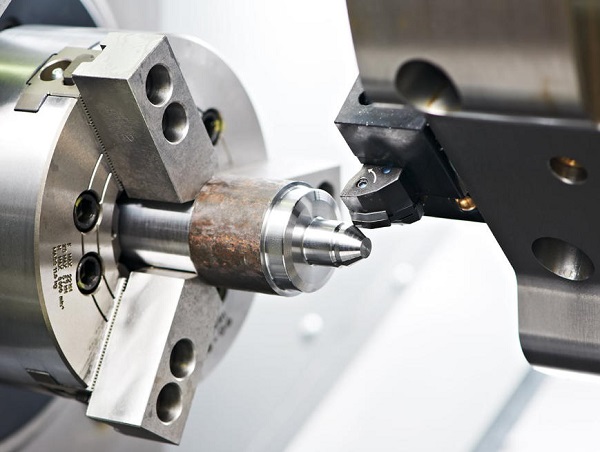
Lathe tooling refers to every cutting component on your lathe. This includes the insert or tip, the holder, the shank, and any accessories like coolant nozzles. It is not just the bit you see. The whole assembly matters.
Think of it this way: a great insert in a bad holder will still fail. A cheap insert in a precision holder can outperform expensive gear. The system matters more than any single part.
Main Types of Lathe Tools
| Category | Examples | Best For |
|---|---|---|
| Turning tools | CNMG, DNMG, TNMG inserts | External cylindrical cuts |
| Facing tools | Square-tip inserts, 45° lead angle | Flat surface cuts |
| Parting tools | Narrow grooving inserts | Cut-off operations |
| Threading tools | 60° or 55° threading inserts | Screw threads |
| Boring tools | Internal boring bars | Hole enlargement |
| Drilling tools | Center drills, twist drills | Hole starting and drilling |
Common Lathe Operations
Each operation demands a different tool setup:
- Rough turning — remove bulk material fast
- Finish turning — tight tolerances, smooth surface
- Facing — cut flat ends on the workpiece
- Grooving/parting — cut off or create channels
- Threading — cut internal or external threads
- Boring — enlarge or finish internal diameters
Your lathe tooling choice starts with knowing which operation you are running.
II. Assessing Your Project Requirements
Identify the Workpiece Material
This is the single biggest factor in tool selection. The material determines cut speed, feed rate, and insert grade.
| Material | Hardness (HRC) | Recommended Insert Grade | Typical Cut Speed (SFM) |
|---|---|---|---|
| Mild steel (1018, 1045) | 15–25 | P20–P30 (carbide) | 300–500 |
| Stainless steel (304, 316) | 15–30 | M20–M40 (carbide) | 150–300 |
| Cast iron (gray) | 15–30 | K01–K10 (carbide) | 300–600 |
| Aluminum (6061, 7075) | 15–40 | K10–K20 (carbide) | 800–2000 |
| Titanium (Ti-6Al-4V) | 30–40 | P10–P20 (coated carbide) | 80–150 |
| Brass / Bronze | 50–100 (HB) | K10–K20 uncoated | 400–800 |
Key takeaway: Harder materials need tougher insert grades and lower speeds. Softer materials allow higher speeds but demand sharp geometry to avoid built-up edge.
Determine Design Complexity
A simple shaft takes one tool. A complex part with grooves, threads, and tapers needs four or five. Count your features:
- 1–2 features → one or two tools
- 3–5 features → three to four tools
- 6+ features → consider a multi-tool turret or CNC live tooling
More complex parts also mean tighter tolerances. That pushes you toward finish-grade inserts with precise geometry.
Define Finish and Tolerance Needs
| Requirement | Typical Ra (µin) | Tool Recommendation |
|---|---|---|
| Rough cut | 125–250 | Wiper-geometry carbide, P-grade |
| Semi-finish | 32–63 | Standard carbide, M-grade |
| Fine finish | 8–16 | Cermet or ceramic, fine edge prep |
| Mirror finish | <8 | Polycrystalline diamond (PCD) |
If your tolerance is ±0.001″ or tighter, you need a rigid tool holder and a sharp, consistent insert. Cheap holders introduce deflection. That kills your tolerance.
III. Types of Lathe Tools by Material
High-Speed Steel (HSS) Tools
HSS is the oldest cutting material still in use. It is tough, cheap, and easy to resharpen.
When to use HSS:
- Low-volume production
- Interrupted cuts (like keyways)
- Home shop or DIY projects
- Materials that are hard to machine (stainless, titanium) at low speeds
| Pros | Cons |
|---|---|
| Very tough, resists chipping | Low hot hardness (~1100°F) |
| Cheap and easy to regrind | Max speed: ~100 SFM in steel |
| Good for interrupted cuts | Wears fast in abrasive materials |
Real-world tip: I once ran 316 stainless on a small CNC lathe. Carbide inserts lasted 15 parts. HSS lasted 40 parts because the interrupted cut kept chipping the carbide edge. The HSS tool flexed instead of breaking.
Carbide-Tipped Tools
Carbide is the workhorse of modern machining. Tungsten carbide with cobalt binder gives you high hot hardness (~1600°F) and wear resistance.
This is what 90% of professional shops use.
| Grade | Best For |
|---|---|
| P (blue) | Steel, long chip materials |
| M (yellow) | Stainless steel, medium chip |
| K (red) | Cast iron, short chip, abrasive |
| S (orange) | Heat-resistant alloys, superalloys |
| N (green) | Aluminum, non-ferrous |
| H (brown) | Hardened steel (50+ HRC) |
Coated vs. uncoated:
| Coating | Thickness | Benefit | Best For |
|---|---|---|---|
| TiN (titanium nitride) | 2–4 µm | General wear resistance | Steel, cast iron |
| TiAlN (titanium aluminum nitride) | 3–5 µm | High-temp resistance | Hard steel, titanium |
| AlTiN (aluminum titanium nitride) | 4–6 µm | Best heat barrier | Titanium, Inconel |
| CVD diamond | 5–15 µm | Ultra-hard, low friction | Aluminum, composites |
Ceramic and Cermet Tools
Ceramic inserts (alumina-based) handle speeds up to 3000 SFM. They are brittle but last 10× longer than carbide in finish cuts on cast iron and hardened steel.
Cermet (ceramic-metal composite) sits between carbide and ceramic. It gives you ceramic-level finish with carbide-level toughness.
| Material | Max SFM | Finish (Ra) | Tool Life vs. Carbide |
|---|---|---|---|
| Ceramic (Al₂O₃) | 2000–3000 | 8–32 µin | 5–10× |
| Cermet (TiCN-based) | 1000–1500 | 8–16 µin | 3–5× |
| Carbide (coated) | 500–1000 | 16–63 µin | Baseline |
Use ceramic when: You run high-volume cast iron or hardened steel (45+ HRC) and need mirror-like finish. Do not use ceramic for interrupted cuts — it will shatter.
Specialty Tools
| Tool Type | Use Case | Key Spec |
|---|---|---|
| Parting tool | Cut-off, grooves | Blade width: 1.5–4mm |
| Threading tool | External/internal threads | 60° (metric) or 55° (pipe) |
| Boring bar | Internal diameter work | Min bore: 3× tool diameter |
| Knurling tool | Textured grip patterns | Pitch: 64–128 TPI |
| Form tool | Radii, contours | Must match profile exactly |
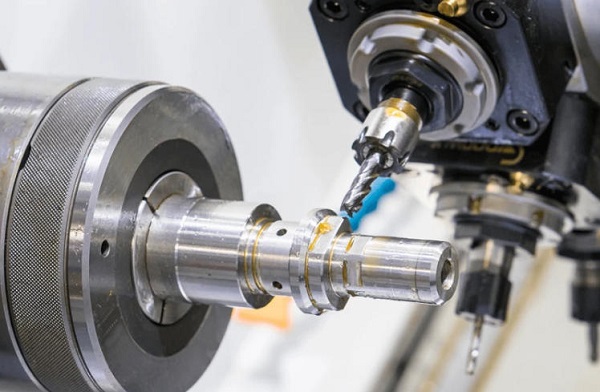
IV. Tool Geometry and Design
Why Geometry Matters
Tool geometry controls how the chip flows, how much heat is generated, and how much force the tool takes. Get it wrong and you get chatter, poor finish, or premature failure.
Three angles dominate every insert:
| Angle | What It Does | Typical Range |
|---|---|---|
| Rake angle | Controls chip flow direction | -5° to +25° |
| Clearance angle | Prevents rubbing on workpiece | 5° to 15° |
| Nose radius | Affects finish and strength | 0.4mm to 1.6mm |
Key Geometric Features Explained
Rake angle:
- Positive rake (+10° to +20°) → sharp cut, low force, good for aluminum and soft steel
- Negative rake (-5° to 0°) → strong edge, good for hard steel and interrupted cuts
Clearance angle:
- Too little → rubbing, heat buildup, poor finish
- Too much → weak edge, chipping
Nose radius:
- Small (0.4–0.8mm) → sharp, good for finishing, light cuts
- Large (1.2–1.6mm) → strong, good for roughing, heavy cuts
Selecting Geometry for Your Application
| Operation | Rake | Clearance | Nose Radius |
|---|---|---|---|
| Rough turning steel | 0° to +5° | 7° | 1.2mm |
| Finish turning steel | +10° to +15° | 10° | 0.8mm |
| Aluminum finishing | +15° to +25° | 12° | 0.4mm |
| Stainless steel | -5° to 0° | 8° | 0.8mm |
| Cast iron | 0° to +5° | 7° | 1.2mm |
V. Tool Holder Selection
Why Holders Are as Important as Inserts
A 200carbideinsertina15 holder will perform worse than a 20insertina150 holder. The holder controls rigidity, runout, and chip evacuation.
| Holder Type | Rigidity | Best For | Max RPM |
|---|---|---|---|
| Square tool post | Low | Light cuts, DIY | 2,000 |
| Quick-change (Capto) | Medium | General turning | 8,000 |
| Hydraulic (Hardinge) | High | Production, finish | 10,000 |
| Indexable turret | Very high | CNC, high-volume | 12,000+ |
Matching Holder to Operation
| Operation | Recommended Holder | Reason |
|---|---|---|
| Rough turning | 40×40mm square, C-clamp | Cheap, rigid enough |
| Finish turning | Capto C5 or C6 | Low runout (<0.003mm) |
| Parting | Narrow groove holder (MGEHR) | Blade stability |
| Threading | Right-hand threading holder | Chip clearance |
| Boring | Boring bar with anti-vibe | Depth control |
Pro tip: Always check runout with a dial indicator before production. Even 0.01mm of runout can double your tool wear on finish passes.
VI. Making the Final Decision — A Step-by-Step Process
Follow this flow every time you start a new project:
| Step | Question | Action |
|---|---|---|
| 1 | What material am I cutting? | Pick insert grade (P, M, K, etc.) |
| 2 | What operation? (rough/finish/thread) | Pick insert geometry and nose radius |
| 3 | What tolerance and finish? | Pick insert grade (coated vs. ceramic) |
| 4 | What holder do I have? | Match shank size and clamp type |
| 5 | What speed and feed? | Use manufacturer’s recommendations |
| 6 | Test on scrap | Run 1–2 parts, measure, adjust |
Quick Decision Table
| If You Are Cutting… | Use This Insert | Use This Holder | Speed Range |
|---|---|---|---|
| Mild steel, rough | CNMG 120408, P-grade | 25×25mm square | 300–500 SFM |
| Mild steel, finish | DNMG 150608, M-grade TiN | Capto C5 | 400–600 SFM |
| Stainless, finish | CNMG 120408, M-grade TiAlN | Capto C6 | 150–250 SFM |
| Cast iron, rough | CNMG 120412, K-grade | 25×25mm square | 400–700 SFM |
| Aluminum, finish | DNMG 150604, K-grade polished | Capto C5 | 1000–2000 SFM |
| Titanium, finish | CNMG 120408, P-grade AlTiN | Capto C6 | 80–150 SFM |
VII. Common Mistakes to Avoid
| Mistake | Why It Hurts | Fix |
|---|---|---|
| Using one tool for everything | Compromises on every operation | Use dedicated tools per operation |
| Ignoring chip control | Chips wrap around tool, cause damage | Use chip breaker geometry |
| Running too fast | Heat builds up, edge cracks | Follow SFM recommendations |
| Skipping coolant on steel | Built-up edge, poor finish | Use flood coolant or MQL |
| Buying cheapest inserts | High cost per part in the long run | Calculate cost per part, not per insert |
| Wrong clamping force | Vibration or deformed holder | Follow torque specs (usually 25–40 Nm) |
VIII. Maintenance and Care of Lathe Tools
Why Maintenance Extends Tool Life
A well-maintained insert can last 3–5× longer than a neglected one. It is not about spending more time. It is about spending 2 minutes per shift.
| Task | Frequency | How |
|---|---|---|
| Wipe inserts clean | Every tool change | Use lint-free cloth, no solvent on coated inserts |
| Check for chipping | Every part | Visual + feel with finger (carefully) |
| Measure wear | Every 50 parts | Flank wear >0.3mm = replace |
| Clean holder taper | Weekly | Air blast + light oil |
| Check runout | Monthly | Dial indicator on spindle |
Signs It Is Time to Replace
- Flank wear exceeds 0.3mm (0.012″)
- Edge chipping visible under 10× magnification
- Surface finish degrades despite same parameters
- Cutting forces increase (listen for chatter)
- Burrs appear on workpiece edges
Rule of thumb: If you are regrinding HSS more than 3 times, switch to a new insert. The geometry is gone.
IX. Conclusion
Choosing the right lathe tooling is not guesswork. It is a decision tree based on three inputs: material, operation, and finish requirement. Get those three right, and the tool choice becomes obvious.
Start with the insert grade. Match it to your material. Then pick the geometry for your operation. Finally, choose a holder that gives you the rigidity you need. Test on scrap. Measure. Adjust.
The shops that win are not the ones with the most expensive tools. They are the ones that match the right tool to the right job — every time.
FAQ
What is the best lathe tooling for beginners?
Start with CNMG 432 or DNMG 1506 carbide inserts in P-grade (for steel) or K-grade (for cast iron). Pair them with a 25×25mm square tool post. Keep it simple.
Can I use the same tool for roughing and finishing?
Technically yes, but you will sacrifice either tool life or finish quality. Best practice: use one tool for roughing, swap to a wiper or fine-geometry insert for finishing.
How often should I replace carbide inserts?
It depends on material and volume. For mild steel, expect 15–30 minutes of cut time per edge. For stainless, 5–15 minutes. For titanium, 3–8 minutes. Always replace when flank wear hits 0.3mm.
Is ceramic tooling worth the cost?
Yes — if you run high-volume cast iron or hardened steel. Ceramic inserts cost 3–5× more than carbide but last 5–10× longer. The cost per part drops significantly.
What insert geometry is best for aluminum?
Use a high positive rake angle (+15° to +25°), polished edge, and K-grade carbide or CVD diamond coating. This prevents built-up edge and gives you a mirror finish.
How do I reduce tool chatter on my lathe?
Check three things: holder rigidity, insert nose radius (go larger), and depth of cut (go smaller). Also make sure your workpiece is firmly chucked.
Get Projects Quote with Moshijia Technology
Need custom lathe tooling matched to your specific project? Moshijia Technology provides precision tooling solutions for shops of all sizes. Tell us your material, operation, and tolerance — we will send you a quote within 24 hours.