Manufacturers working with CNC aluminum sheet often hit roadblocks: choosing the wrong aluminum grade (like using 7075-T6 for a low-stress part, driving up costs), struggling with aluminum sheet machining tolerances that miss assembly requirements, or ending up with rough edges after CNC cutting aluminum sheet—forcing rework and delays. These issues stem from a lack of clarity on material properties, tooling setup, and design best practices. This guide breaks down everything you need to master CNC aluminum sheet manufacturing.
1. CNC Aluminum Sheet Machining: Methods, Tolerances, and Efficiency
The right machining method directly impacts precision, speed, and cost. CNC routing aluminum sheet, CNC cutting aluminum sheet, and CNC milling aluminum sheet are the most common processes, each suited to different part requirements.
| Machining Method | Key Use Case | Typical Tolerance Range | Best for Thin vs. Thick Sheets |
| CNC routing aluminum sheet | Intricate cuts (e.g., holes, slots) | ±0.02mm – ±0.05mm | Thin sheets (0.5mm – 6mm) |
| CNC cutting aluminum sheet | Straight/complex shapes (no depth) | ±0.01mm – ±0.03mm | Thin to medium (0.3mm – 10mm) |
| CNC milling aluminum sheet | 3D features (e.g., pockets, bosses) | ±0.005mm – ±0.02mm | Medium to thick (5mm – 50mm) |
High-speed machining of aluminum sheet (using spindle speeds 8,000–20,000 RPM) boosts efficiency by 30–50% compared to standard speeds, but requires rigid machines to avoid vibration. For tight specs, prioritize processes that meet your aluminum sheet machining tolerances—e.g., use CNC milling for parts needing ±0.01mm precision.
2. Aluminum Grades for CNC: Choosing the Right Alloy for Your Project
Selecting the correct aluminum grade is critical for performance and cost. 6061-T6 aluminum sheet CNC, 5052-H32 aluminum sheet machining, and 7075-T6 aluminum CNC properties are the most widely used options, each with unique strengths.
| Aluminum Grade | Key Properties | Machinability | Typical Applications | Cost Level |
| 6061-T6 | High strength, good corrosion resistance | Excellent | Electronic enclosures aluminum sheet, brackets | Medium |
| 5052-H32 | Flexible, high ductility | Very Good | Architectural panels, thin sheet parts | Low-Medium |
| 7075-T6 | Ultra-high strength (stronger than steel) | Good | CNC aluminum sheet aerospace panels, drones | High |
The best aluminum alloy for CNC depends on your needs: 5052-H32 for formable, low-cost parts; 6061-T6 for balanced strength and machinability; 7075-T6 for high-stress applications. Always consider aluminum temper selection for machining—tempered grades (e.g., T6) are stronger but may require slower feed rates than annealed (O) grades.
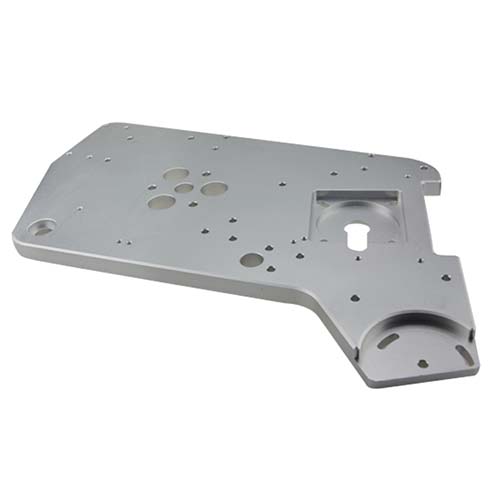
3. CNC Tooling & Parameters: Avoiding Common Mistakes
Poor tooling choices lead to broken cutters, rough finishes, and wasted material. Carbide end mills for aluminum are a must (they resist heat better than HSS), while optimizing RPM and feed rate prevents tool wear.
Key Tooling Tips:
- Carbide end mills for aluminum: Use 2-flute cutters for deep cuts (better chip evacuation) or single-flute for faster speeds—single-flute vs 2-flute aluminum cutter choice depends on depth: single-flute for shallow cuts (<3mm), 2-flute for deeper (>3mm).
- RPM & feed rate aluminum sheet: Use this general guide (adjust for sheet thickness):
| Aluminum Grade | Spindle RPM | Feed Rate (mm/min) |
| 5052-H32 | 12,000–18,000 | 500–1,200 |
| 6061-T6 | 10,000–16,000 | 400–1,000 |
| 7075-T6 | 8,000–14,000 | 300–800 |
- Coolant for CNC aluminum: Use water-soluble coolant (10–15% concentration) to reduce heat and extend tool life—dry machining works for thin sheets but risks overheating.
- Chip load calculator aluminum: Online tools (e.g., Haas Chip Load Calculator) help fine-tune parameters—aim for 0.05–0.15mm per tooth for aluminum.
4. Surface Finish & Post-Processing: Achieving Quality and Durability
A smooth surface finish enhances both aesthetics and performance. Post-processing for CNC aluminum sheet ranges from simple deburring to advanced anodizing.
| Post-Processing Step | Result | Application Use Case |
| Deburring CNC aluminum parts | Remove sharp edges, burrs | All parts (prevents injury, improves fit) |
| Achieving mirror finish on aluminum sheet | Polished, reflective surface | Consumer electronics, decorative panels |
| Anodizing after CNC machining | Corrosion-resistant, colored coating | Outdoor parts (e.g., architectural panels) |
| Brushed finish aluminum sheet | Textured, matte surface | Automotive trim, electronic enclosures |
| Passivation of machined aluminum | Enhances corrosion resistance (no color) | Aerospace parts, medical devices |
Anodizing after machining adds a 5–20μm thick layer, increasing durability by 40%—ideal for CNC aluminum sheet drones or outdoor architectural panels.
5. Design & CAD/CAM Tips: Avoiding Machining Errors
Poor design leads to costly mistakes (e.g., thin walls that break during machining). Follow these CNC aluminum sheet design rules:
- Corner radius rules for aluminum sheet: Use a minimum radius of 0.5mm for sheets <3mm thick (prevents cracking); increase to 1mm for thicker sheets.
- Minimum wall thickness aluminum CNC: Avoid walls thinner than 0.8mm for sheets <5mm thick—they bend or break during machining. For thicker sheets, 1.5mm is safe.
- Tab and slot aluminum sheet design: Use tabs (1–2mm thick) to hold parts in place during machining; slots should be at least 1.2x the sheet thickness (prevents tool binding).
- CAM toolpaths for thin aluminum: Use climb milling (tool rotates with the feed direction) to reduce vibration; avoid aggressive plunge cuts.
- Nesting parts on aluminum sheet: Arrange parts close together (1–2mm spacing) to reduce material waste—nesting software can save 15–25% on sheet costs.
6. Applications & Industries: Where CNC Aluminum Sheet Shines
CNC aluminum sheet is versatile, used across industries for its strength-to-weight ratio and machinability.
| Industry | Key Applications | Aluminum Grade of Choice | Critical Requirements |
| Aerospace | CNC aluminum sheet aerospace panels | 7075-T6 | High strength, tight tolerances (±0.005mm) |
| Automotive | Automotive aluminum bracket machining | 6061-T6 | Lightweight, corrosion resistance |
| Electronics | Electronic enclosures aluminum sheet | 5052-H32 / 6061-T6 | Good finish, EMI shielding |
| Architecture | Architectural facade aluminum panels | 5052-H32 | Weather resistance, aesthetic finish |
| Robotics/Drones | CNC aluminum sheet drones (frames) | 6061-T6 | Strength, low weight |
Moshijia Technology’s Perspective
At Moshijia Technology, we optimize CNC aluminum sheet manufacturing for precision and efficiency. We recommend 6061-T6 for most electronic enclosures (balanced cost/strength) and use 5-axis machines for CNC milling aluminum sheet (tolerances down to ±0.005mm). Our team also provides custom toolpath settings—e.g., high-speed machining for 5052-H32 sheets—to cut lead times by 20%. For post-processing, we integrate anodizing to deliver durable, ready-to-use parts, solving your end-to-end manufacturing pain points.
FAQ
- Which is better for thin aluminum sheets: CNC routing or CNC cutting?
CNC cutting aluminum sheet is better for simple, precise shapes (no depth), while CNC routing aluminum sheet works for intricate features (holes, slots) in thin sheets (0.5mm–6mm).
- Do I need coolant for CNC aluminum sheet machining?
Yes—coolant for CNC aluminum (water-soluble, 10–15% concentration) reduces heat, extends tool life by 50%, and improves surface finish. Dry machining is only safe for very thin sheets (<1mm) and slow speeds.
- What’s the minimum wall thickness for CNC aluminum sheet?
For sheets <5mm thick, avoid walls thinner than 0.8mm (they break easily). For thicker sheets (5mm+), the minimum safe wall thickness is 1.5mm. Always check your aluminum sheet machining tolerances when designing thin features.