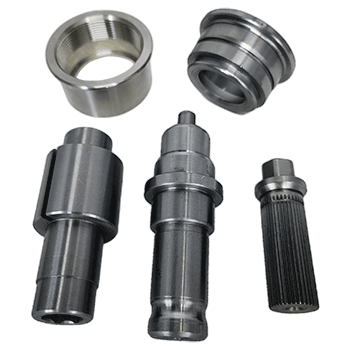
In the fast – paced world of modern manufacturing, precision and efficiency are the cornerstones of success. Among the plethora of advanced manufacturing techniques, Computer Numerical Control (CNC) turning has emerged as a game – changing process. But what exactly is CNC turning, and how has it transformed the manufacturing landscape? This article will take an in – depth look at CNC turning, exploring its working principles, the machines involved, its advantages, applications across different industries, and the challenges it faces.
Understanding the Basics of CNC Turning
At its core, CNC turning is a subtractive manufacturing process. It involves the use of a lathe, where the workpiece is securely held and rotated at high speeds. A non – rotary cutting tool is then brought into contact with the rotating workpiece. As the workpiece spins, the cutting tool moves along one or more axes, removing material layer by layer to shape the workpiece into the desired form. The entire process is controlled by a computer program, which ensures high levels of accuracy and repeatability.
The Components of a CNC Turning Machine
- Spindle: The spindle is a crucial component of the CNC turning machine. It holds the workpiece and rotates it at a controlled speed. The speed of the spindle can vary widely, depending on the material being machined and the specific requirements of the job. For example, when machining soft materials like aluminum, the spindle may rotate at a higher speed, while for harder materials such as stainless steel, a lower spindle speed may be more appropriate.
- Tool Post: The tool post is where the cutting tool is mounted. It can hold multiple cutting tools, allowing for different machining operations to be performed without the need for frequent tool changes. The tool post can move along the X, Z, and in some advanced machines, the Y axis, enabling precise control over the cutting tool’s position relative to the workpiece.
- Chuck: The chuck is used to secure the workpiece onto the spindle. There are different types of chucks, such as three – jaw chucks, which are self – centering and ideal for round workpieces, and four – jaw chucks, which offer more flexibility for irregularly shaped workpieces. The chuck must hold the workpiece firmly to prevent any movement during the machining process, as even the slightest movement can result in inaccurate cuts.
- Tailstock: The tailstock provides additional support for long or slender workpieces. It can be adjusted along the length of the machine to accommodate workpieces of different sizes. The tailstock often has a center that can be used to support the end of the workpiece, reducing the risk of deflection during machining.
How CNC Turning Works
- Design Phase: The process begins with the creation of a 3D model of the part to be manufactured using Computer – Aided Design (CAD) software. The CAD model details the part’s dimensions, shape, and any intricate features. This digital representation serves as the blueprint for the entire manufacturing process.
- CAM Programming: Once the CAD model is complete, it is imported into Computer – Aided Manufacturing (CAM) software. The CAM software generates a toolpath, which is a set of instructions that tells the CNC turning machine how to move the cutting tool to remove material from the workpiece to achieve the desired shape. The toolpath takes into account factors such as the type of cutting tool, the material being machined, and the desired surface finish.
- Machine Setup: After the toolpath is generated, the CNC turning machine needs to be set up. This involves installing the appropriate cutting tool in the tool post, securing the workpiece in the chuck, and adjusting the tailstock if necessary. The operator also enters the necessary parameters into the machine’s controller, such as the spindle speed, feed rate (the speed at which the cutting tool moves along the workpiece), and depth of cut.
- Machining Process: Once the machine is set up, the machining process can commence. The CNC turning machine reads the program and moves the cutting tool along the toolpath, removing material from the rotating workpiece. The operator monitors the process to ensure that everything is running smoothly and that the part is being produced to the required specifications.
- Quality Control: After the machining process is finished, the part undergoes quality control checks. This may involve measuring the dimensions of the part using precision measuring instruments to ensure they match the specifications in the CAD model. The surface finish of the part is also inspected to ensure it meets the desired quality standards.
The Advantages of CNC Turning
- High Precision and Accuracy
CNC turning is renowned for its ability to achieve extremely high levels of precision and accuracy. The computer – controlled movement of the cutting tool ensures that each cut is made to within tight tolerances, often in the range of ±0.001 inches or even less. This level of precision is crucial in industries such as aerospace, medical, and electronics. For example, in the aerospace industry, components like turbine shafts and engine bushings require precise machining to ensure optimal performance and safety. A slight deviation in the dimensions of these components could lead to catastrophic failures.
- Increased Efficiency and Productivity
Compared to traditional manual turning, CNC turning offers significant efficiency and productivity gains. The automated nature of the process allows for continuous machining without the need for frequent operator intervention. CNC turning machines can operate at high speeds, reducing the time required to complete a job. Additionally, the ability to perform multiple machining operations in a single setup, such as turning, facing, threading, and grooving, further increases productivity. In a production environment, a CNC turning machine can produce hundreds or even thousands of identical parts in a relatively short period.
- Complex Geometries and Intricate Designs
Despite being primarily associated with cylindrical parts, CNC turning can create complex geometries and intricate designs. With the use of multi – axis machines and advanced programming techniques, it is possible to produce parts with undercuts, tapers, and complex contours. For example, in the medical industry, custom – made orthopedic implants often require intricate shapes to fit the patient’s anatomy precisely. CNC turning can achieve these complex designs with ease, ensuring a better fit and improved patient outcomes.
- Consistent Quality and Repeatability
CNC turning ensures consistent quality and repeatability in part production. Since the machining process is controlled by a computer program, each part produced will have the same dimensions and characteristics as long as the program remains unchanged. This is particularly important in industries where large quantities of identical parts are required, such as the automotive industry. Automotive manufacturers rely on CNC turning to produce engine components, transmission parts, and axles with consistent quality and precision.
- Flexibility and Customization
CNC turning offers a high degree of flexibility and customization. With the ability to quickly change the computer program, manufacturers can easily switch between producing different parts or making modifications to existing designs. This makes it possible to produce small batches of customized parts as well as large production runs. For instance, a company that specializes in producing custom – made jewelry can use CNC turning to create unique designs with high precision and detail.
Applications of CNC Turning in Different Industries
- Aerospace Industry
The aerospace industry is one of the largest users of CNC turning technology. The complex geometries, tight tolerances, and high – quality requirements of aerospace components make CNC turning an ideal manufacturing method. CNC turning is used to produce a wide range of aerospace parts, including turbine shafts, engine casings, and landing gear components. Turbine shafts, for example, are made from high – strength alloys and require precise machining to ensure efficient engine performance. CNC turning machines can accurately shape these shafts, taking into account factors such as aerodynamics and heat resistance.
- Medical Industry
In the medical industry, CNC turning plays a crucial role in the production of various medical devices and components. The need for precision and biocompatibility in medical products makes CNC turning an essential technology. CNC turning is used to produce surgical instruments, orthopedic implants, dental prosthetics, and medical device housings. Orthopedic implants, such as hip and knee replacements, need to be precisely machined to fit the patient’s anatomy and provide long – term functionality. CNC turning allows for the production of implants with complex shapes and smooth surfaces, ensuring a better fit and reduced risk of complications.
- Automotive Industry
The automotive industry benefits greatly from CNC turning in the production of engine components, transmission parts, and other critical automotive parts. CNC turning enables the production of parts with high precision and tight tolerances, which is essential for the performance and reliability of vehicles. Engine blocks, cylinder heads, and crankshafts are some of the automotive components commonly produced using CNC turning. Engine blocks, for example, need to be machined with precise bore diameters and surface finishes to ensure proper engine operation and reduce friction. CNC turning machines can achieve the required precision, resulting in more efficient and reliable engines.
- Electronics Industry
In the electronics industry, CNC turning is used to produce components such as connectors, enclosures, and heat sinks. The need for precision and miniaturization in electronics products makes CNC turning a valuable manufacturing method. CNC turning machines can accurately machine small and intricate parts from materials such as aluminum and copper, which are commonly used in electronics applications. Heat sinks, for example, are designed to dissipate heat from electronic components, and their effectiveness depends on their precise shape and surface area. CNC turning allows for the production of heat sinks with complex fin designs and precise dimensions, ensuring efficient heat transfer.
- Consumer Goods Industry
The consumer goods industry also makes use of CNC turning in the production of a wide range of products. From the handles of high – end kitchen knives to the components of luxury watches, CNC turning can create parts with high precision and aesthetic appeal. In the production of watches, for example, CNC turning is used to machine the gears, shafts, and cases with extreme precision, ensuring the accurate movement of the watch and its durability.
Challenges and Considerations in CNC Turning
- Initial Investment and Cost
One of the main challenges associated with CNC turning is the high initial investment required. CNC turning machines, especially those with advanced features and multi – axis capabilities, can be expensive to purchase. Additionally, the cost of software, training, and maintenance also adds to the overall investment. However, the long – term benefits of increased productivity, precision, and quality often outweigh the initial cost. Manufacturers need to carefully consider their production requirements and budget before investing in a CNC turning machine.
- Programming and Operator Skill
CNC turning requires skilled operators who are proficient in programming the machine. The programming language, such as G – code, can be complex and requires a significant amount of training to master. In addition to programming, operators also need to have a good understanding of machining principles, such as tool selection, cutting parameters, and workpiece setup. Lack of proper training and experience can lead to errors in programming and machining, resulting in poor – quality parts or even damage to the machine. Therefore, manufacturers need to invest in training programs for their operators to ensure optimal performance of the CNC turning machine.
- Tool Wear and Maintenance
The cutting tools used in CNC turning are subject to wear and tear during the machining process. Tool wear can affect the quality of the machined parts and increase the risk of tool breakage. Regular monitoring of tool wear and timely replacement of worn – out tools are essential to maintain the accuracy and efficiency of the machining process. Additionally, the CNC turning machine itself requires regular maintenance, including lubrication, calibration, and inspection of components, to ensure its proper functioning. Neglecting tool wear and machine maintenance can lead to increased downtime and higher production costs.
- Material Compatibility
Not all materials are equally suitable for CNC turning. Some materials, such as hardened steels and certain composites, can be difficult to machine and may require specialized cutting tools and techniques. Additionally, the choice of material can also affect the machining parameters, such as feed rate, spindle speed, and depth of cut. Manufacturers need to carefully consider the material properties and machining requirements when selecting a material for CNC turning. In some cases, it may be necessary to conduct trial runs or consult with experts to determine the best machining approach for a particular material.
The Future of CNC Turning
As technology continues to advance, CNC turning is expected to become even more sophisticated and efficient. Some of the trends that are likely to shape the future of CNC turning include:
- Increased Automation
The integration of artificial intelligence (AI) and machine learning (ML) technologies into CNC turning machines is expected to lead to increased automation. AI – powered systems can analyze machining data in real – time, adjust cutting parameters, and predict tool wear, resulting in improved efficiency and reduced downtime. Additionally, the use of robotic systems for workpiece handling and tool changing will further enhance the automation of the CNC turning process.
- Advanced Materials and Machining Techniques
The development of new materials, such as advanced composites and high – strength alloys, will require the development of new machining techniques. CNC turning machines will need to be equipped with more powerful spindles, specialized cutting tools, and advanced cooling systems to machine these materials effectively. Research into new machining techniques, such as cryogenic machining and ultrasonic – assisted machining, is also likely to lead to improvements in the machining of difficult – to – cut materials.
- Enhanced Connectivity and Data Management
CNC turning machines will become more connected, allowing for seamless integration into smart factories. The ability to collect and analyze machining data in real – time will enable manufacturers to optimize production processes, improve quality control, and make data – driven decisions. Cloud – based manufacturing platforms will also allow for remote monitoring and control of CNC turning machines, increasing flexibility and efficiency.
- Miniaturization and Precision
As the demand for smaller and more precise components continues to grow, CNC turning machines will need to be capable of achieving even higher levels of precision. Advances in machine design, such as improved motion control systems and high – resolution sensors, will enable the production of parts with micron – level tolerances. This will open up new opportunities for applications in fields such as microelectronics, medical devices, and aerospace.
In conclusion, CNC turning is a powerful and versatile manufacturing technology that has had a profound impact on various industries. Its ability to achieve high precision, efficiency, and flexibility makes it an essential tool for producing complex and high – quality parts. While there are challenges associated with CNC turning, such as high initial investment and the need for skilled operators, the benefits far outweigh the drawbacks. As technology continues to evolve, CNC turning is expected to play an even more significant role in the future of manufacturing, enabling the production of innovative products with unprecedented precision and efficiency.