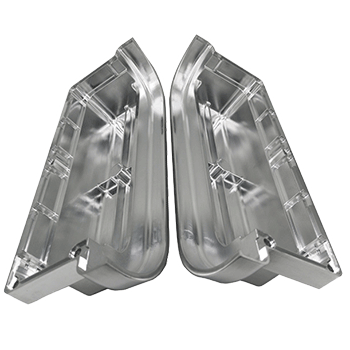
In the ever-evolving landscape of modern manufacturing, 5-axis machining has emerged as a game-changing technology, enabling the creation of complex and precise parts with unprecedented efficiency. But what exactly is 5-axis machining, and why is it becoming an increasingly essential tool in the manufacturing arsenal?
Understanding the Basics of 5-Axis Machining
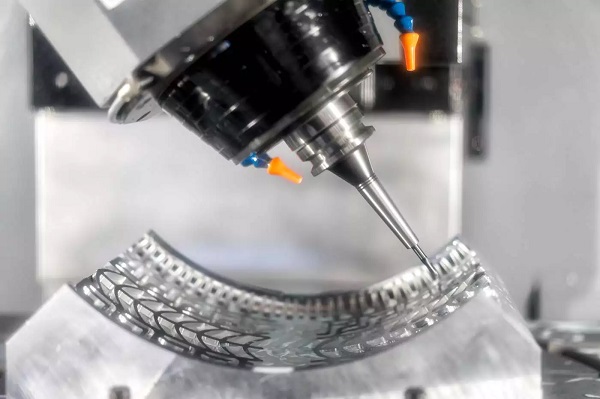
At its core, 5-axis machining refers to the ability of a CNC (Computer Numerical Control) machine to move a cutting tool or a part along five different axes simultaneously. In a standard 3-axis machining setup, the machine can move the tool or part along the X, Y, and Z axes, which correspond to the length, width, and height directions, respectively. However, in 5-axis machining, two additional rotary axes are added, typically designated as A and B. The A axis rotates around the X axis, while the B axis rotates around the Y axis. In some cases, a C axis, which rotates around the Z axis, may also be used.
This additional freedom of movement allows the cutting tool to approach the part from nearly any angle, opening up a world of possibilities for creating intricate and complex geometries. With 5-axis machining, manufacturers can produce parts with undercuts, angled surfaces, and complex curves that would be extremely difficult or impossible to achieve with traditional 3-axis machining.
The Advantages of 5-Axis Machining
- Enhanced Precision and Accuracy
One of the primary advantages of 5-axis machining is its ability to achieve unparalleled precision and accuracy. By allowing the cutting tool to maintain a constant angle relative to the part surface, 5-axis machining minimizes the risk of errors caused by tool deflection and vibration. This results in parts with tighter tolerances and smoother surface finishes, making it ideal for applications where precision is critical, such as aerospace, medical, and automotive manufacturing.
- Increased Efficiency and Productivity
5-axis machining also offers significant efficiency and productivity gains compared to traditional machining methods. With the ability to machine multiple surfaces in a single setup, 5-axis machining reduces the need for time-consuming and error-prone manual repositioning of the part. This not only saves time but also reduces the risk of damage to the part during handling. Additionally, 5-axis machining allows for the use of shorter, more rigid cutting tools, which can operate at higher speeds and feed rates, further increasing productivity.
- Greater Design Flexibility
The added degrees of freedom provided by 5-axis machining give designers the freedom to create more complex and innovative part designs. With 5-axis machining, it is possible to produce parts with intricate geometries, such as turbine blades, impellers, and molds, that would be difficult or impossible to manufacture using traditional machining methods. This opens up new possibilities for product design and development, allowing manufacturers to create products that are more efficient, lightweight, and aesthetically pleasing.
- Reduced Tool Wear and Costs
By allowing the cutting tool to maintain a more favorable angle of attack, 5-axis machining reduces the amount of wear and tear on the tool. This not only extends the life of the tool but also reduces the need for frequent tool changes, resulting in lower tooling costs. Additionally, 5-axis machining allows for the use of more efficient cutting strategies, such as trochoidal milling, which can further reduce tool wear and improve machining performance.
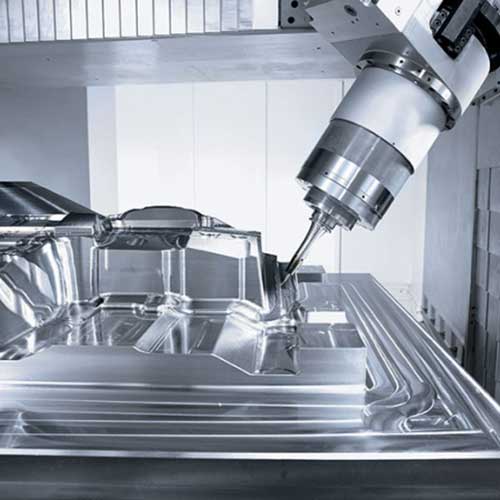
Applications of 5-Axis Machining
- Aerospace Industry
The aerospace industry is one of the largest users of 5-axis machining technology. The complex geometries and tight tolerances required for aerospace components, such as turbine blades, engine casings, and wing spars, make 5-axis machining an ideal choice for their production. 5-axis machining allows aerospace manufacturers to produce parts with greater precision and efficiency, resulting in improved performance and reliability of aircraft engines and structures.
- Medical Industry
In the medical industry, 5-axis machining is used to produce a wide range of components, including orthopedic implants, dental prosthetics, and surgical instruments. The high precision and accuracy of 5-axis machining are essential for ensuring the proper fit and function of these components, which can have a direct impact on patient health and well-being. Additionally, 5-axis machining allows for the production of complex geometries that can improve the performance and effectiveness of medical devices.
- Automotive Industry
The automotive industry also benefits from the use of 5-axis machining technology. 5-axis machining is used to produce a variety of automotive components, such as engine blocks, cylinder heads, and transmission parts. The ability to machine complex geometries and achieve tight tolerances with 5-axis machining allows automotive manufacturers to produce parts that are more efficient, lightweight, and durable. This can lead to improved fuel economy, reduced emissions, and enhanced performance of vehicles.
- Mold and Die Making
Mold and die making is another area where 5-axis machining is widely used. The complex shapes and high surface finish requirements of molds and dies make 5-axis machining an ideal choice for their production. 5-axis machining allows mold and die makers to produce molds and dies with greater precision and efficiency, resulting in higher quality products and shorter lead times. Additionally, 5-axis machining allows for the production of complex geometries that can improve the performance and functionality of molds and dies.
Challenges and Considerations in 5-Axis Machining
While 5-axis machining offers numerous advantages, it also presents some challenges and considerations that manufacturers need to be aware of. One of the main challenges of 5-axis machining is the complexity of programming and setup. The additional axes and the ability to move the tool or part in multiple directions simultaneously require more sophisticated programming and setup procedures compared to traditional 3-axis machining. This can require additional training and expertise for machinists and programmers, as well as the use of specialized software and tools.
Another challenge of 5-axis machining is the potential for collisions between the cutting tool, the part, and the machine components. The increased freedom of movement of the cutting tool in 5-axis machining increases the risk of collisions, which can damage the tool, the part, or the machine. To mitigate this risk, manufacturers need to use advanced collision detection and avoidance systems, as well as careful programming and setup procedures.
Finally, 5-axis machining can be more expensive than traditional machining methods due to the higher cost of the machine, the specialized software and tools required, and the additional training and expertise needed for programming and setup. However, the increased efficiency, precision, and productivity offered by 5-axis machining can often offset these higher costs, making it a cost-effective solution for many manufacturing applications.
Conclusion
In conclusion, 5-axis machining is a revolutionary technology that is transforming the manufacturing industry. With its ability to achieve unparalleled precision, efficiency, and design flexibility, 5-axis machining is enabling manufacturers to produce complex and innovative parts that were previously impossible or difficult to manufacture. While 5-axis machining presents some challenges and considerations, the benefits it offers make it an increasingly essential tool in the manufacturing arsenal. As technology continues to advance, it is likely that 5-axis machining will become even more prevalent and play an even greater role in the future of manufacturing. get a quote for your new projects now.