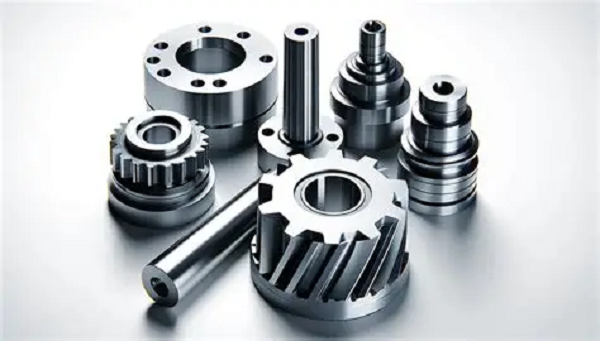
Need CNC machining parts that meet tight tolerances and complex specifications? We cover the process, materials, machine types, precision capabilities, and how to select the right manufacturing partner.
Introduction
You have a design. It exists in your CAD software. Now you need to turn that digital model into physical parts that fit together perfectly, perform reliably, and arrive on time.
That is where CNC machining parts come in.
CNC machining is the most versatile manufacturing process on the planet. It takes solid blocks of material and removes everything that does not look like your part. The result is precision components ready for assembly.
But here is the challenge—understanding how CNC works helps you design better parts and choose better suppliers. What materials work best? What shapes are possible? How tight can tolerances go? This guide answers those questions.
We cover the technology, the machines, the materials, and exactly how to get the parts you need.
What Are CNC Machining Parts?
Let us start with a clear definition. CNC machining parts are components manufactured using computer-controlled machine tools. The process removes material from solid stock to create precise shapes that match engineering drawings.
CNC stands for Computer Numerical Control. A computer reads G-code instructions and moves the machine axes accordingly. The operator loads material, starts the program, and the machine does the rest.
These parts share several characteristics:
- They are subtractive: Material is removed, not formed or added
- They are precise: Tolerances down to microns are achievable
- They are repeatable: The thousandth part matches the first
- They are versatile: Almost any solid material can be machined
Think of everything mechanical around you. The hinges on your laptop. The gears in your car transmission. The fittings in your plumbing. All are CNC machining parts made to exact specifications.
A simple part might be a shoulder bolt with a specific thread pitch. A complex one could be a five-axis machined titanium housing with internal passages and compound mounting angles.
How Does CNC Technology Work?
Understanding the process helps you make better decisions about your parts.
The Basic Principle
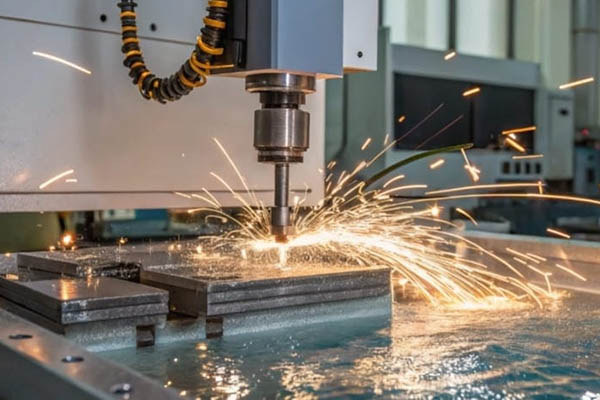
CNC machining uses rotating cutting tools or stationary tools with rotating workpieces to remove material. The machine follows a programmed path, moving through three, four, or five axes simultaneously.
Think of it like a robotic sculptor. The computer knows exactly where the material should remain and where it should be removed. It moves the tool through the material, shearing off tiny chips until only the part remains.
The CNC Workflow
Step 1: Design
You create a 3D model in CAD software. Every feature, every dimension, every tolerance gets defined. The better your model, the better your parts.
Step 2: CAM Programming
CAM software takes your model and generates toolpaths. The programmer selects tools, sets speeds and feeds, and defines cutting strategies. Simulation shows the tool moving through virtual material, catching collisions before they happen.
Step 3: Setup
The machinist mounts raw material in the machine. They indicate it true—making sure it sits square and centered. They load tools into the magazine. They set work offsets so the machine knows where the part starts.
Step 4: Machining
The cycle starts. The machine follows the program. Tools change automatically. Coolant floods the cut zone. Chips fly. Modern machines run unattended, with operators monitoring from screens.
Step 5: Inspection
Parts come off the machine and go to inspection. Calipers check basic dimensions. CMMs measure complex features. Surface testers verify finish. First article inspection documents that the process produces good parts.
Step 6: Secondary Operations
Some parts need more than machining. Deburring removes sharp edges. Tumbling smooths surfaces. Heat treating changes material properties. Surface finishing adds protection or appearance.
Step 7: Shipping
Finished parts get packaged with documentation—certificates of conformance, material test reports, inspection data. Then they ship to you.
The Technology Behind It
Modern CNC machines feature:
- High-speed spindles: 10,000 to 40,000 RPM for fast material removal
- Automatic tool changers: Switch tools in seconds, run unattended
- Probing systems: Measure parts in-process, adjust for tool wear
- Coolant systems: Flood, mist, or through-spindle cooling
- Chip management: Conveyors remove chips automatically
A job shop invested in new CNC machines with probing capability. Their scrap rate dropped from 5% to under 1%. The machines measured critical features during the cycle and adjusted offsets automatically. No more bad batches.
What Materials Can Be Machined?
Almost any solid material can be CNC machined. Here are the most common options.
Metals
| Material | Properties | Typical Applications |
|---|---|---|
| Aluminum 6061 | Light, machinable, corrosion resistant | Brackets, housings, prototypes |
| Aluminum 7075 | High strength, aerospace grade | Structural parts, gears |
| Steel 1018 | Low cost, weldable | Machine parts, fixtures |
| Steel 4140 | High strength, heat treatable | Shafts, gears, heavy-duty parts |
| Stainless 304 | Corrosion resistant, food grade | Medical, food processing, marine |
| Stainless 17-4 | High strength, heat treatable | Aerospace, medical instruments |
| Titanium Grade 5 | High strength-to-weight, biocompatible | Implants, aerospace, racing |
| Brass C360 | Excellent machinability, conductive | Fittings, valves, electrical |
| Copper | High conductivity | Electrical components, heat sinks |
Plastics
| Material | Properties | Typical Applications |
|---|---|---|
| Delrin (POM) | Low friction, stable | Gears, bushings, precision parts |
| Nylon | Tough, wear resistant | Wear pads, rollers |
| PTFE (Teflon) | Low friction, chemical resistant | Seals, bearings, insulators |
| PEEK | High temp, strong, biocompatible | Medical, aerospace, semiconductor |
| Acrylic | Clear, optical | Displays, light guides |
| Polycarbonate | Impact resistant | Housings, safety shields |
Material Selection Factors
Choose material based on:
- Mechanical requirements: Strength, stiffness, fatigue life
- Environmental factors: Temperature, corrosion, UV exposure
- Regulatory needs: FDA, NSF, biocompatibility
- Machinability: Some materials cut faster than others
- Cost: Raw material and machining time
A medical device company needed parts for a surgical tool. Handles needed sterilization resistance. Stainless steel 17-4 was the answer. It withstands autoclave cycles and maintains strength. Machining time was longer than aluminum, but the part lasted years instead of months.
Which Machines Produce These Parts?
Different machines create different types of CNC machining parts.
CNC Mills
Milling machines use rotating cutting tools to remove material. The workpiece stays fixed while the tool moves—or the table moves while the tool spins.
3-axis mills are the workhorses. They move in X, Y, and Z. Perfect for most parts with features on one face.
4-axis mills add rotation around one axis. This allows machining cylindrical features or indexing to different sides without re-clamping.
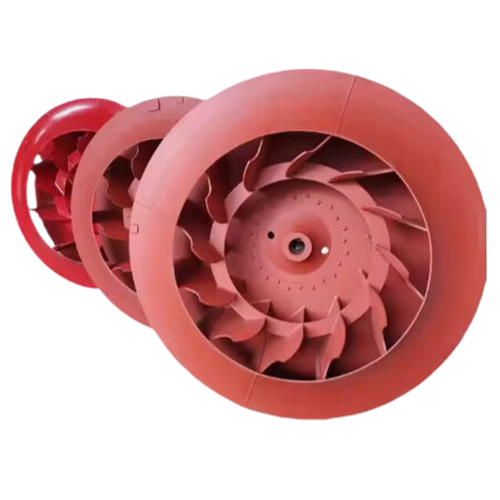
5-axis mills add two rotary axes. They machine complex shapes in one setup. Impellers, turbine blades, and medical implants need 5-axis capability.
CNC Lathes
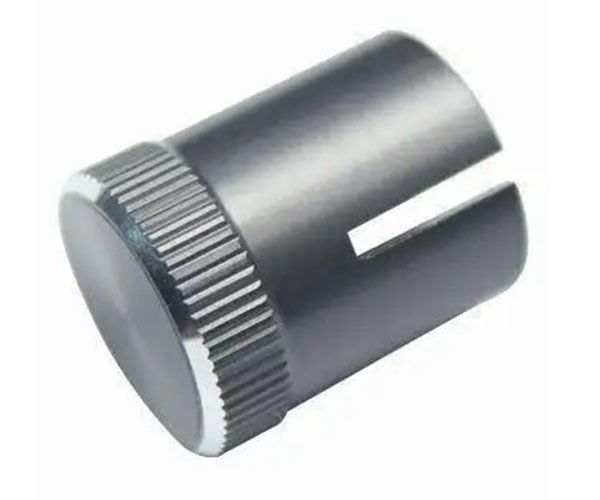
Lathes spin the workpiece while a stationary cutting tool removes material. They create cylindrical parts.
2-axis lathes turn diameters and face ends. Live tooling lathes add milling capability—they drill cross holes and cut flats while the part rotates.
Swiss-type lathes are specialized for small, complex parts. They support the material near the cut, allowing very precise work on long, thin components.
CNC Routers
Routers are like mills but built for large sheets. They cut wood, plastics, and aluminum sheet stock. Common in sign making, cabinetry, and prototyping.
CNC EDMs
Electrical Discharge Machines use sparks to erode material. They cut hardened steel and exotic alloys. Wire EDM uses a thin wire to cut through parts. Sinker EDM uses shaped electrodes to create cavities.
CNC Grinders
Grinding machines achieve the finest finishes and tightest tolerances. They use abrasive wheels to remove tiny amounts of material. Bearing surfaces and hydraulic spools often require grinding.
Machine Type Comparison
| Machine Type | Best For | Tolerance | Surface Finish |
|---|---|---|---|
| 3-Axis Mill | General machining | ±0.001″ | 32-64 Ra |
| 5-Axis Mill | Complex 3D shapes | ±0.0005″ | 16-32 Ra |
| CNC Lathe | Round parts | ±0.0005″ | 16-32 Ra |
| Swiss Lathe | Small, complex parts | ±0.0002″ | 16-32 Ra |
| Wire EDM | Hard materials, thin walls | ±0.0002″ | 8-16 Ra |
| Grinder | Ultra-precision | ±0.0001″ | 2-8 Ra |
What Shapes and Features Are Possible?
CNC machining parts can include almost any feature you can design.
Common Features
- Holes: Drilled, reamed, tapped, or bored
- Pockets: Square, round, or complex shapes
- Slots: Through or blind, straight or curved
- Threads: Internal or external, standard or custom
- Bosses: Raised pads for mounting
- Ribs: Structural reinforcement
- Chamfers: Angled edges for assembly
- Fillets: Rounded internal corners
- Undercuts: Features behind overhangs (requires special tools or 5-axis)
Complex Geometries
With multi-axis machines, you can create:
- Sculpted surfaces: Organic shapes, ergonomic contours
- Twisted features: Helical gears, spiral grooves
- Compound angles: Holes at any orientation
- Thin walls: Down to 0.020″ in metals, 0.030″ in plastics
- Internal passages: Coolant channels, wire paths
Design Limitations
Some features are difficult or impossible:
- Square internal corners: Milling cutters are round, so internal corners have radii equal to the tool radius
- Very deep narrow slots: Long tools deflect, causing taper
- Extremely thin walls: Vibration during cutting affects accuracy
- Re-entrant features: Features that are wider at the bottom than the top may need 5-axis or EDM
Feature Examples Table
| Feature | Typical Size Range | Considerations |
|---|---|---|
| Drilled holes | 0.005″ to 2.000″ | Depth-to-diameter ratio affects accuracy |
| Tapped threads | #0 to 2″ | Material affects thread quality |
| Pockets | Any | Corner radii must match tool size |
| Slots | Any | Width limited by tool availability |
| Walls | 0.020″ minimum | Thinner walls risk vibration |
How Precise Can CNC Parts Be?
Precision varies by feature type, material, and machine.
Standard Tolerances
Most shops hold ±0.005 inches (0.13 mm) routinely. This covers hole locations, pocket depths, and external dimensions.
Precision Tolerances
With good equipment and careful setup, ±0.001 inches (0.025 mm) is achievable. Bearing fits, mating surfaces, and critical alignments need this level.
High-Precision Tolerances
Some shops achieve ±0.0002 inches (0.005 mm) on critical features. Requires temperature control, specialized tooling, and meticulous process control.
Geometric Tolerances
Beyond size, parts must meet geometric requirements:
- Flatness: How flat a surface must be
- Parallelism: How parallel two surfaces must be
- Concentricity: How centered one diameter is to another
- Perpendicularity: How square a feature must be
Surface Finish
Surface finish affects both function and appearance:
- As-machined: 32-64 Ra, tool marks visible
- Fine machining: 16-32 Ra, smooth appearance
- Grinding: 8-16 Ra, reflective surface
- Polishing: 2-8 Ra, mirror finish
Tolerance Capability by Process
| Process | Typical Tolerance | Precision Tolerance |
|---|---|---|
| Milling | ±0.002″ | ±0.0005″ |
| Turning | ±0.001″ | ±0.0002″ |
| Grinding | ±0.0002″ | ±0.00005″ |
| EDM | ±0.0002″ | ±0.0001″ |
What Industries Use Them Most?
CNC machining parts appear everywhere in modern industry.
Aerospace
Aircraft use thousands of machined parts. Structural brackets, engine components, landing gear parts, hydraulic manifolds. Materials range from aluminum to titanium to Inconel. Tolerances are tight. Traceability is mandatory.
Medical
Surgical instruments, implants, and device housings come from CNC machines. Biocompatible materials like titanium and PEEK are common. Surface finish matters for infection control. Traceability tracks each part to its raw material lot.
Automotive
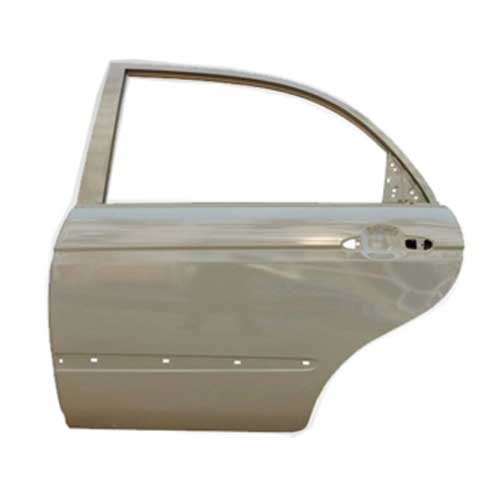
From prototype parts to production volumes, automotive relies on machined components. Engine blocks, transmission housings, cylinder heads—all machined after casting. Racing teams machine custom parts for every race.
Defense
Military hardware must perform in extreme conditions. Night vision housings, weapon components, communication devices—all rely on precision machining. ITAR compliance is often required.
Electronics
Consumer electronics demand precision at scale. Smartphone cases, laptop hinges, connector housings—all machined or mold machined. Heat sinks for high-power electronics are often CNC machined from aluminum or copper.
Industrial Equipment
Pumps, valves, compressors, and gearboxes contain dozens of machined components. These parts must withstand continuous operation, often in harsh environments.
Energy
Oil and gas equipment faces high pressure and corrosion. Valve bodies, drill components, and pump parts come from CNC machines. Wind turbine components require large-scale machining.
Industry Applications Table
| Industry | Typical Components | Key Requirements |
|---|---|---|
| Aerospace | Brackets, fittings, housings | Light weight, traceability |
| Medical | Implants, instruments, cases | Biocompatibility, finish |
| Automotive | Engine parts, transmission | Strength, volume |
| Defense | Weapon parts, housings | ITAR, durability |
| Electronics | Heat sinks, connectors | Conductivity, precision |
| Industrial | Valves, pumps, gears | Reliability, wear resistance |
How to Choose the Right Manufacturer?
Selecting the right partner for CNC machining parts determines success or failure.
Technical Capability Assessment
Does the supplier have the right equipment?
- Machine types: Mills, lathes, grinders, EDM
- Axis count: 3-axis, 4-axis, 5-axis capability
- Size capacity: Maximum part dimensions
- Material range: What they regularly machine
Ask for examples of similar parts they have produced.
Quality Systems
Look for certifications that matter for your industry:
- ISO 9001: Basic quality management
- AS9100: Aerospace requirements
- ISO 13485: Medical devices
- ITAR registration: Defense work
Beyond certificates, ask about inspection equipment and processes. CMM capability, in-process gauging, and documentation practices matter.
Communication and Responsiveness
How quickly do they respond to quotes? Do they ask clarifying questions about your prints? Do they offer design feedback?
A supplier who engages early will solve problems before they become expensive.
Sample Evaluation
Always order samples before production. Inspect them thoroughly. Check dimensions, surface finish, and appearance. Verify they assemble correctly.
On-Time Delivery History
Ask about delivery performance. Look for 95% or better on-time rates. Delayed parts shut down your production line.
Financial Stability
A supplier who goes out of business mid-project leaves you stranded. Check how long they have been in business. Look for signs of investment in new equipment.
Red Flags
- Unwilling to share inspection reports
- No documented procedures
- Pressure for large upfront payments
- Unclear about material sourcing
- Poor communication during quoting
Supplier Evaluation Checklist
| Factor | What to Check |
|---|---|
| Equipment | Machine types, sizes, capabilities |
| Quality | Certifications, inspection equipment |
| Experience | Similar parts made, industries served |
| Communication | Response time, questions asked |
| Samples | Fit, finish, dimensional accuracy |
| Delivery | On-time history, lead times |
| Financial | Years in business, stability signs |
Conclusion
CNC machining parts are the foundation of modern manufacturing. From aerospace to medical to automotive, these precision components enable products to perform reliably in demanding environments.
Understanding how they are made helps you specify better. Knowing material options lets you choose wisely. Recognizing tolerance capabilities prevents over-specifying and overspending.
Different machines serve different purposes. 3-axis mills handle general work. 5-axis mills tackle complex shapes. Lathes create cylindrical parts. Grinders achieve the finest finishes.
Selecting the right supplier is critical. Technical capability, quality systems, communication, and delivery performance all matter. A good supplier becomes an extension of your engineering team.
Whether you need simple shafts or complex five-axis housings, the principles remain the same. Design thoughtfully. Specify clearly. Choose partners wisely.
Frequently Asked Questions
What are CNC machining parts?
They are components manufactured using computer-controlled machine tools. Material is removed from solid stock to create precise shapes that meet engineering specifications.
What materials can be used for CNC machining?
Almost any solid engineering material—aluminum, steel, stainless steel, titanium, brass, copper, and engineering plastics like Delrin, nylon, and PEEK.
How tight tolerances can CNC machined parts hold?
Standard tolerances of ±0.005 inches (0.13 mm) are routine. Precision work achieves ±0.001 inches (0.025 mm) . High-precision applications require ±0.0002 inches (0.005 mm) with specialized processes.
What is the difference between 3-axis and 5-axis machining?
3-axis moves in X, Y, and Z, with the tool always pointing straight down. 5-axis adds two rotary axes, allowing the tool to tilt and reach complex features in fewer setups.
How much do CNC machined parts cost?
Cost depends on material, complexity, quantity, and tolerance requirements. Simple aluminum parts can cost under $50 each in quantity. Complex five-axis titanium parts can run thousands. Getting a quote requires a CAD file.
What file formats do machine shops need?
Most shops accept STEP files for geometry and PDF drawings for specifications. STEP files transfer solid models cleanly between different CAD systems.
How long does CNC machining take?
Lead times vary by complexity and quantity. Simple parts may ship in days. Complex components with engineering and programming may take weeks. Rush service is often available.
Get projects quote with Moshijia Technology.
Ready to produce your next precision components? At Moshijia Technology, we specialize in manufacturing high-quality CNC machining parts for prototypes and production volumes.
Our facility runs 3-axis, 4-axis, and 5-axis CNC centers around the clock. We work with all engineering materials—aluminum, steel, stainless, titanium, brass, and plastics. We hold tolerances down to ±0.002 inches on critical features.
We offer complete surface treatment capabilities—anodizing, passivation, heat treating, and plating. We inspect every critical feature and deliver documentation with every shipment.
Upload your CAD file today. Get a quote within 24 hours. Let’s build something precise together.