In today’s manufacturing landscape, many businesses face frustrating challenges: complex part designs that traditional 3-axis machines can’t handle, repeated setups that waste time and reduce accuracy, and long lead times that delay product launches. Whether you’re in aerospace, automotive, or medical device manufacturing, these pain points can hurt your cost efficiency and competitiveness. This is where 5 Axis CNC Machining Services come in—offering a solution to these common struggles by combining advanced technology with flexible processing. Let’s dive into the details of how 5-axis CNC machining works, its key benefits, industry applications, and more.
1. Understanding the Technology: 5 Axis CNC Machining Principle and Advantages
1.1 How Does 5-Axis CNC Machining Work?
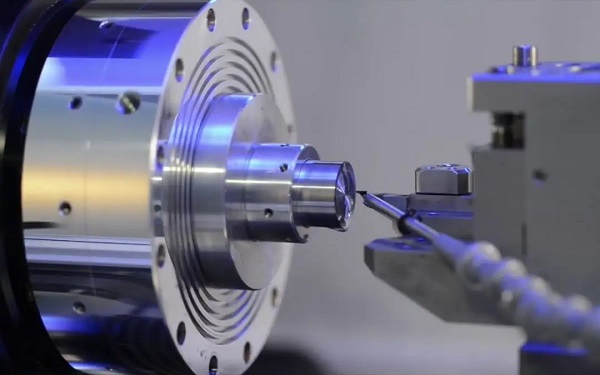
At the core of 5 Axis CNC Machining Services is the 5-axis CNC machining principle, which enables the cutting tool to move simultaneously along five different axes. Unlike 3-axis machines (which only move along X, Y, and Z linear axes), 5-axis systems add two rotational axes (usually A and C, or B and C). This simultaneous movement of axes is what sets it apart—allowing the tool to approach the workpiece from almost any angle.
To simplify, think of it this way: a 3-axis machine is like a robot that can only move up/down, left/right, and forward/backward. A 5-axis machine, however, can also tilt and rotate the workpiece or tool, making it easier to reach hard-to-access areas. This multi-axis machining fundamentals ensure that even the most intricate geometries are processed in one go, without repositioning the part.
1.2 Key Advantages of 5-Axis CNC Machining
The advantages of 5-axis CNC machining directly address the pain points of traditional machining. Below is a comparison of 5-axis vs. 3-axis machining to highlight its benefits:
| Advantage Category | 5-Axis CNC Machining | 3-Axis CNC Machining | Impact on Your Business |
| Fewer setups | 1-2 setups for complex parts | 5+ setups for the same part | Saves 50-70% of setup time; reduces human error |
| Higher accuracy | Tolerances as tight as ±0.001 mm | Tolerances typically ±0.005 mm or higher | Reduces scrap rates (from 8% to 2% on average) |
| Complex geometry | Handles undercuts, curved surfaces, and 3D shapes | Struggles with non-linear designs | Enables production of high-value, intricate parts |
| Cost efficiency | Lower labor and material waste | Higher labor costs (more setups) and scrap | Cuts overall production costs by 20-30% |
| Rapid lead times | 30-50% faster turnaround for complex orders | Longer lead times due to multiple setups | Helps meet tight project deadlines |
By reducing setups, 5-axis CNC machining minimizes the risk of errors caused by repositioning the workpiece. This not only improves accuracy but also lowers material waste—critical for expensive materials like titanium or nickel alloys.
2. Industry Applications of 5 Axis CNC Machining Services
2.1 Aerospace Industry Application
The aerospace industry demands parts that are lightweight, strong, and precise—requirements that 5-axis CNC machining excels at. Key applications include:
- Machining titanium alloy components (e.g., engine brackets, landing gear parts) that resist high temperatures and corrosion.
- Producing aluminum alloy aircraft frames and wing components, which need complex geometries to reduce weight.
- Processing nickel alloy turbine blades, where tight tolerances (±0.002 mm) are essential for performance.
Aerospace manufacturers rely on 5-axis CNC machining services because it can handle these hard-to-machine materials while maintaining the strict quality standards required by regulatory bodies like the FAA.
2.2 Automotive and EV Industry Application
In the automotive and electric vehicle (EV) sector, 5-axis CNC machining is transforming production by enabling faster, more precise manufacturing of critical parts:
- Engine components (e.g., cylinder heads, crankshafts) that require intricate oil passages and tight fits.
- Transmission parts for both traditional and EVs, where smooth operation depends on high dimensional accuracy.
- EV battery housings and motor components, which need complex shapes to fit into compact vehicle designs.
For example, a leading EV manufacturer reduced its motor part lead time by 40% by switching to 5-axis CNC machining—allowing it to scale production faster and meet growing consumer demand.
2.3 Medical Industry Application
The medical industry requires parts that are biocompatible, sterile, and precise—all areas where 5-axis CNC machining delivers:
- Medical device machining (e.g., orthopedic implants like hip stems or knee replacements) made from biocompatible materials like titanium or stainless steel.
- Surgical instrument machining (e.g., laparoscopic tools) with small, complex features that enable minimally invasive procedures.
- Processing biocompatible materials (e.g., PEEK plastic) for dental implants, where accuracy ensures a perfect fit for patients.
Medical manufacturers choose 5-axis CNC machining services because it can produce parts with the ultra-tight tolerances (as low as ±0.0005 mm) needed for patient safety and device performance.
3. Materials and Surface Finish Options for 5 Axis CNC Machining
3.1 Machinable Materials
5-axis CNC machining can process a wide range of materials, making it versatile for different industries. Below is a list of common materials and their typical uses:
| Material Type | Examples | Industry Applications | Key Benefits |
| Aluminum alloys | 6061, 7075 | Aerospace frames, automotive parts, consumer goods | Lightweight, high strength-to-weight ratio |
| Titanium alloys | Ti-6Al-4V | Aerospace engine parts, medical implants | Corrosion-resistant, biocompatible |
| Stainless steels | 304, 316 | Medical instruments, food processing equipment | Rust-resistant, easy to sterilize |
| Tool steels | H13, S7 | Mold and die making, industrial tools | High hardness, wear-resistant |
| Engineering plastics | PEEK, Delrin | Medical devices, automotive interiors | Lightweight, chemical-resistant |
3.2 Surface Finish Options
After machining, surface treatment is critical to enhance part performance, appearance, and durability. Common surface finish options for 5-axis CNC parts include:
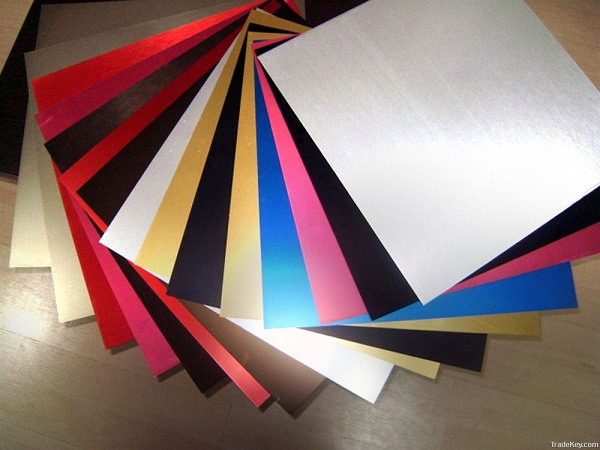
- Anodizing: Creates a protective oxide layer on aluminum parts; available in clear, black, or colored finishes. Ideal for aerospace and consumer goods.
- Hard anodizing: A thicker version of anodizing (25-100 μm) that provides extra wear resistance. Used for automotive and industrial parts.
- Passivation: Removes free iron from stainless steel surfaces to prevent rust. Essential for medical and food-grade parts.
- Bead blasting: Uses small glass or metal beads to create a matte, uniform surface. Popular for automotive and aerospace components.
- Powder coating: Applies a dry powder (usually polyester) that cures to a hard finish. Used for automotive frames and outdoor parts.
- Black oxide: Converts steel surfaces to a black, corrosion-resistant layer. Ideal for tools and mechanical parts.
- Painting: Applies liquid paint for aesthetic or protective purposes. Common in consumer goods and automotive interiors.
4. Project Flow: From Planning to Delivery
4.1 Initial Project Planning
A successful 5-axis CNC machining project starts with thorough planning. Key steps include:
- Design review: Engineers check the part design for manufacturability—identifying potential issues like tight tolerances or hard-to-reach areas.
- DFM (Design for Manufacturing) analysis: Optimizing the design to reduce costs and improve efficiency. For example, simplifying a feature to avoid unnecessary machining steps.
- Fixture strategy planning: Designing custom fixtures to hold the workpiece securely during machining. Good fixtures reduce vibration and improve accuracy.
By investing time in planning, manufacturers can avoid costly reworks and ensure the project stays on schedule.
4.2 Production and Quality Control
During production, strict quality control is essential to meet specifications. Here’s what the process entails:
- Production and machining process: The 5-axis machine follows a pre-programmed path, with operators monitoring progress to ensure smooth operation.
- Quality control and inspection: Parts are inspected at multiple stages using tools like coordinate measuring machines (CMMs) and optical scanners.
- Process capability index (CpK): A statistical measure that checks if the machining process can consistently meet tolerance requirements. A CpK value of 1.33 or higher is considered acceptable for most industries.
- Dimensional accuracy control: Ensuring all part dimensions match the design—critical for parts that need to fit with other components.
- Surface finish inspection: Using profilometers to measure surface roughness (e.g., Ra values) and ensure they meet the required standards.
For example, in aerospace manufacturing, every part undergoes 100% inspection to ensure compliance with FAA regulations.
4.3 Project Delivery and after sales
The final stage of the project focuses on delivering the parts on time and ensuring customer satisfaction:
- Project delivery: Coordinating with logistics partners to ship parts via air, sea, or ground—depending on the customer’s timeline and location.
- Shipment arrangement: Including protective packaging to prevent damage during transit, and providing tracking information so customers can monitor their order.
- Post-project review and feedback: Gathering input from the customer to identify areas for improvement in future projects.
- Client communication during delivery: Keeping the customer updated on any delays or issues, and addressing questions promptly.
Good communication during delivery helps build trust and ensures a positive customer experience.
Moshijia Technology’s Perspective
At Moshijia Technology, we believe 5 Axis CNC Machining Services are a game-changer for modern manufacturing. Our team combines deep engineering expertise with state-of-the-art 5-axis machines to solve our clients’ toughest challenges—from complex aerospace parts to precision medical devices. We prioritize DFM analysis and strict quality control to deliver parts that meet even the tightest tolerances, while keeping costs competitive. For businesses looking to boost efficiency and innovation, 5-axis CNC machining isn’t just a service—it’s an investment in long-term success.
FAQ
- What is the difference between simultaneous 5-axis and indexed 5-axis machining?
Simultaneous 5-axis machining moves all five axes at the same time, ideal for complex 3D shapes. Indexed 5-axis (also called “3+2” machining) locks the rotational axes in place during cutting, better for simpler parts that need multiple angles.
- How long does a typical 5-axis CNC machining project take?
Lead times vary by part complexity and quantity. For small-batch, complex parts, it can take 1-2 weeks; for large-volume orders, 3-4 weeks. DFM analysis can help reduce lead times by optimizing the design.
- Is 5-axis CNC machining more expensive than 3-axis machining?
While initial setup costs for 5-axis are higher, it often lowers total costs for complex parts. Fewer setups reduce labor and scrap, and faster lead times mean you can bring products to market sooner—offsetting the initial investment.