Manufacturers working with stainless steel often hit roadblocks: the material’s high toughness causes poor chip evacuation, inconsistent surface finishes ruin part quality, and selecting the wrong tools leads to frequent wear—all of which delay production and raise costs. Whether you’re making medical devices or automotive parts, these issues can derail projects and hurt profitability. Stainless steel CNC turning solves these pain points by combining precise programming, specialized tools, and optimized processes. Let’s explore how this technology works, the best materials to use, and how it serves key industries.
1. Basic Principles & Processes of Stainless Steel CNC Turning
1.1 Key Steps in the Stainless Steel CNC Turning Process Flow
The stainless steel CNC turning process flow follows a structured sequence to ensure accuracy and efficiency. Below are the core CNC turning operation steps for stainless steel:
- Design & Programming: Create a 3D model of the part, then write G-code programming for stainless steel turning to define tool movements. This step includes tool path optimization in stainless steel CNC turning to minimize tool wear and reduce cycle time.
- Material Setup: Secure the stainless steel workpiece in the CNC lathe chuck, ensuring it’s aligned to avoid vibration.
- Tool Selection & Installation: Mount the right cutting tools (e.g., carbide inserts) and set spindle speed control for stainless steel turning (typically 500–2,000 RPM, depending on the material grade).
- Coolant Application: Choose a suitable coolant selection for stainless steel CNC turning (water-soluble or oil-based) to reduce heat and improve chip flow.
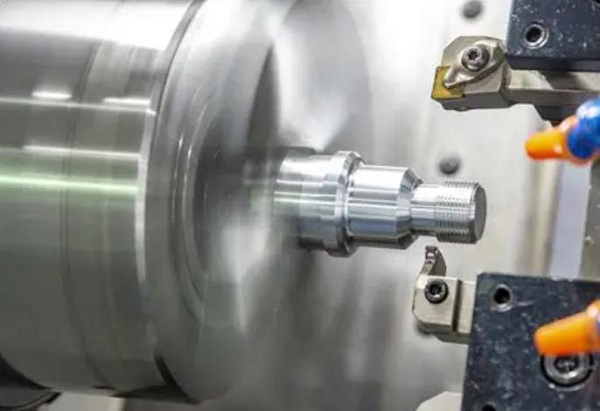
- Machining: The lathe rotates the workpiece while the cutting tool removes material. Adjust feed rate adjustment in stainless steel CNC machining (0.1–0.3 mm/rev) to balance speed and surface quality.
- Chip Evacuation: Use built-in systems to clear chips—critical for chip evacuation in stainless steel turning, as clogged chips cause scratches and tool damage.
- Inspection: Check dimensions and surface finish to meet specifications.
1.2 Optimizing Spindle Speed and Feed Rate
Proper speed and feed settings prevent tool failure and ensure consistent results. Below is a reference table for common stainless steel grades:
| Stainless Steel Grade | Recommended Spindle Speed (RPM) | Optimal Feed Rate (mm/rev) | Key Consideration |
| 304 | 800–1,500 | 0.15–0.25 | Balances speed and chip control |
| 316L | 700–1,300 | 0.12–0.20 | Lower speed due to higher toughness |
| 410 | 1,000–1,800 | 0.18–0.30 | Higher speed possible (ferritic grade) |
| Duplex (2205) | 600–1,200 | 0.10–0.18 | Slow speed to avoid overheating |
2. Stainless Steel Materials for CNC Turning Applications
Not all stainless steels perform the same in CNC turning. Choosing the right grade depends on your industry’s needs, such as corrosion resistance or strength.
2.1 Common Grades and Their Properties
| Grade | Type | Key Properties | Typical Applications |
| 304 stainless steel | Austenitic | Excellent corrosion resistance, good formability | Food processing equipment, kitchenware |
| 316L stainless steel | Austenitic | Higher corrosion resistance (vs. 304), weldable | Medical devices, marine components |
| 410 stainless steel | Ferritic | Magnetic, moderate corrosion resistance, high strength | Automotive fasteners, industrial shafts |
| Duplex stainless steel | Duplex (austenitic-ferritic) | High strength, superior corrosion resistance | Oil and gas valves, chemical tanks |
| Precipitation-hardening stainless steel | Martensitic | Ultra-high strength, heat-treatable | Aerospace components, high-pressure fittings |
2.2 Industry-Specific Requirements
- Food-grade stainless steel CNC turning standards: Grades like 304 and 316L meet FDA standards, as they are non-toxic and easy to clean.
- Corrosion-resistant stainless steel for turning: 316L and duplex grades are ideal for marine or chemical industries, where exposure to saltwater or chemicals is common.
- High-strength stainless steel turning requirements: Precipitation-hardening grades (e.g., 17-4 PH) need slower speeds and heat treatment post-machining to achieve full strength.
3. Tools & Cutting Inserts for Stainless Steel CNC Turning
3.1 Types of Cutting Tools and Inserts
The right tools are essential for machining stainless steel’s tough, gummy texture. Common options include:
- Carbide inserts for stainless steel turning: The most widely used—choose grades with cobalt (e.g., WC-Co) for wear resistance. Coated inserts (e.g., TiAlN, TiCN) reduce friction and extend tool life.
- CBN tools for stainless steel CNC machining: Cubic Boron Nitride tools handle high temperatures, making them ideal for hard stainless steels (e.g., precipitation-hardening grades).
- Coated cutting tools for stainless steel turning: TiAlN-coated tools resist heat, while TiCN-coated tools offer better wear resistance for dry machining.
- Indexable inserts for stainless steel CNC operations: Reusable inserts that can be rotated when worn—cost-effective for high-volume production.
3.2 Tool Holder Selection and Wear Monitoring
- Tool holder selection for stainless steel CNC turning: Use rigid holders (e.g., hydraulic or collet chucks) to minimize vibration, which causes chatter and poor surface finish.
- Tool wear monitoring in stainless steel turning: Signs of wear include:
- Increased cutting force (detected via machine sensors)
- Poor surface finish (scratches or roughness)
- Chip discoloration (indicates overheating)
Replace tools at 70–80% wear to avoid part defects.
4. Precision & Quality Control in Stainless Steel CNC Turning
4.1 Key Quality Metrics and Standards
Precision is non-negotiable, especially for critical parts like medical implants. Below are key metrics to monitor:
- Dimensional accuracy in stainless steel CNC turning: Aim for tolerances of ±0.005–0.01 mm for high-precision parts.
- Surface finish (Ra value) for stainless steel turning parts: Typical Ra values range from 0.8–3.2 μm. Medical parts may require Ra ≤ 0.4 μm for biocompatibility.
- Tolerance control in stainless steel CNC machining: Use CNC lathes with closed-loop feedback systems to maintain consistency.
- ISO standards for stainless steel turned parts: ISO 841 covers general tolerances, while ISO 1302 defines surface finish symbols.
4.2 Inspection Methods
| Inspection Method | Purpose | Equipment Used |
| Roundness Measurement | Check if the part is perfectly circular | Roundness tester |
| Concentricity Control | Ensure alignment of multiple features (e.g., holes, shafts) | Coordinate Measuring Machine (CMM) |
| Surface Roughness Test | Measure Ra value | Profilometer |
| Visual Inspection | Detect burrs, scratches, or discoloration | Magnifying glass or microscope |
4.3 Defect Prevention
Common defects in stainless steel turning and how to avoid them:
- Burrs: Use sharp tools and adjust feed rate; add a deburring step post-machining.
- Chatter (vibration marks): Increase spindle speed, use rigid tool holders, or reduce cutting depth.
- Overheating: Apply sufficient coolant and lower cutting speed for tough grades (e.g., duplex).
5. Applications & Industries of Stainless Steel CNC Turned Parts
5.1 Key Industry Uses
Stainless steel CNC turned parts are ubiquitous across industries due to their durability and versatility:
- Medical device components (stainless steel CNC turned): 316L parts like surgical instrument shafts and implantable screws—require ultra-high precision and biocompatibility.
- Automotive stainless steel turned parts: 410 fasteners, 304 sensors, and exhaust system components—need corrosion resistance and strength.
- Aerospace stainless steel turning components: Duplex valves and precipitation-hardening fittings—must withstand high pressure and extreme temperatures.
- Food processing equipment stainless steel turned parts: 304 nozzles and conveyor rollers—meet FDA standards and are easy to sanitize.
- Marine industry stainless steel CNC turning components: 316L propeller shafts and hull fittings—resist saltwater corrosion.
6. Equipment & Machinery for Stainless Steel CNC Turning
6.1 Types of CNC Lathes
Choosing the right machine depends on part size and complexity:
- CNC lathes for stainless steel turning: Standard 2-axis lathes for simple parts (e.g., bolts, bushings).
- Multi-axis CNC machines for complex stainless steel parts: 4-axis or 5-axis lathes for parts with intricate features (e.g., medical implants with multiple holes).
- High-torque CNC spindles for stainless steel machining: Essential for tough grades (e.g., duplex)—deliver more power to cut through material without stalling.
- Automated CNC turning centers for stainless steel production: Equipped with bar feeders and robotic arms for 24/7 high-volume production (e.g., automotive fasteners).
- Heavy-duty CNC turning equipment for large stainless steel parts: For parts over 100 mm in diameter (e.g., marine shafts, industrial bearings).
6.2 Coolant System Importance
CNC turning machines with coolant systems for stainless steel are a must. Coolant:
- Reduces heat (prevents tool softening and part warping)
- Improves chip flow (avoids clogging)
- Enhances surface finish (reduces friction between tool and workpiece)
Moshijia Technology’s Perspective
At Moshijia Technology, we prioritize matching the right stainless steel grade, tools, and processes to each client’s needs. For example, we use TiAlN-coated carbide inserts for 316L medical parts to ensure biocompatibility and tight tolerances. Our automated CNC turning centers with high-torque spindles boost efficiency for automotive clients, while our strict quality control (CMM inspections, Ra testing) guarantees consistency. We believe stainless steel CNC turning is more than machining—it’s about solving industry-specific challenges with precision.
FAQ
- What is the main challenge of machining duplex stainless steel, and how to overcome it?
Duplex stainless steel’s high toughness causes overheating and tool wear. Overcome this by using slow spindle speeds (600–1,200 RPM), CBN tools, and ample coolant to manage heat.
- Can stainless steel CNC turned parts meet food-grade standards?
Yes. Grades like 304 and 316L are FDA-approved for food contact. Ensure the machining process uses food-safe coolants and includes thorough cleaning post-production.
- How does tool coating affect stainless steel CNC turning performance?
Coatings like TiAlN reduce friction and heat, extending tool life by 30–50% vs. uncoated tools. TiCN coatings are better for dry machining, while TiAlN works well with coolant for high-speed operations.