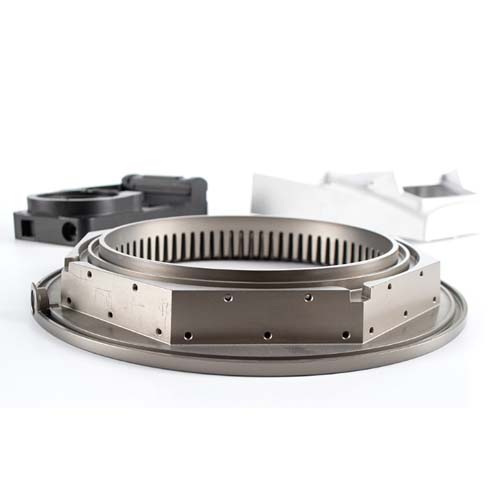
In modern manufacturing, businesses often hit roadblocks when striving for precision, efficiency, and flexibility. Maybe you’ve struggled to create complex geometries in metal parts that traditional machining can’t handle, leading to delayed product launches. Or perhaps you’ve wasted expensive materials due to imprecise cuts, eating into your profit margins. Even worse, you might be stuck with slow, labor-intensive processes that can’t keep up with the demand for miniaturized components in electronics or medical devices. These pain points don’t have to hold you back—laser CNC machining offers a solution, blending automation and precision to transform how parts are made. Let’s dive into its core principles, real-world uses, and what the future holds.
I. Introduction: The Game-Changer in Modern Manufacturing
Laser CNC machining isn’t just another tool—it’s a revolution in how we process materials. Imagine crafting aerospace turbine blades with sub-micron precision, or engraving tiny sensors for medical implants without damaging delicate substrates. That’s the power of combining laser technology with Computer Numerical Control (CNC) systems: automated, consistent, and capable of feats traditional machining can’t match.
At its core, laser CNC machining uses a focused laser beam, guided by a CNC controller, to cut, engrave, mark, or drill materials. This integration addresses three big industry demands:
- Miniaturization: Creating tiny, intricate parts for 5G devices or medical tools.
- Complexity: Shaping geometries that would break or deform with physical tools.
- Waste Reduction: Narrow laser cuts mean less material is lost, saving costs.
In short, this technology isn’t just improving manufacturing—it’s redefining what’s possible.
II. Core Principles of Laser CNC Machining: How It Works
To understand why laser CNC machining is so effective, let’s break down its key components and step-by-step process.
A. Fundamental Components of a Laser CNC System
Every laser CNC setup relies on four critical parts working in harmony:
| Component | Key Function | Example Features |
| Laser Source | Generates the focused beam | Types like fiber (1060-1080 nm wavelength), CO₂ (10.6 μm), or Nd:YAG (short pulses) |
| CNC Controller | Brain of the system | Programs paths via G-code, optimizes speed, and monitors processes in real time |
| Optics System | Delivers and focuses the laser | Mirrors to redirect the beam, lenses to narrow it, and nozzles for cutting |
| Worktable | Holds and positions materials | Automated movement (X/Y/Z axes), stability for precision, and clamps for secure holding |
B. Step-by-Step: How Laser CNC Machining Processes a Part
- CAD/CAM Design: First, a 3D digital model is created (using CAD software like SolidWorks). This model is then converted to G-code—the language CNC systems understand—via CAM software.
- Material Preparation: The substrate (metal, plastic, composite, etc.) is clamped to the worktable to prevent movement during processing.
- Parameter Setup: The operator adjusts laser settings: power (how strong the beam is), speed (how fast the beam moves), frequency (how often pulses fire), and focal length (how close the beam is to the material). These depend on the material—e.g., high power for steel, low power for glass.
- Automated Processing: The CNC controller guides the laser beam along the G-code path. The beam interacts with the material: it might ablate (vaporize) small bits for engraving, cut through for shaping, or mark the surface for identification.
- Post-Processing: The finished part is cleaned (to remove debris), inspected (for precision), and sometimes finished (e.g., polishing for medical parts).
C. Key Process Variations
Not all laser CNC work is the same—different tasks call for different approaches:
- Laser Cutting: Uses high-power beams to slice through materials (e.g., steel sheets for automotive parts).
- Laser Engraving: Removes thin layers of material to create 2D or 3D designs (e.g., logos on jewelry).
- Laser Marking: Alters the material’s surface (without removing it) for permanent labels (e.g., VIN numbers on cars).
- Laser Drilling: Creates tiny, precise holes (e.g., vias in PCBs for electronics).
III. Major Types of Laser CNC Machining Technologies
Not all lasers are created equal. The type you choose depends on the material and task. Here’s how the three most common options stack up:
| Technology | Technical Specs | Ideal Materials | Typical Applications |
| Fiber Laser CNC Machining | High power density, 1060-1080 nm wavelength, energy-efficient | Metals (steel, aluminum, copper), alloys, high-performance plastics | Precision metal cutting for automotive parts, medical device components (e.g., surgical needles) |
| CO₂ Laser CNC Machining | Longer 10.6 μm wavelength, works with non-metals | Wood, acrylic, paper, fabric, PVC | Custom signage, packaging prototypes, textile engraving (e.g., branded tote bags) |
| Nd:YAG Laser CNC Machining | Short pulse duration, high peak power | Thin metals, glass, ceramics, semiconductor wafers | Micro-drilling in PCBs, jewelry engraving, glass cutting for optics |
IV. Industrial Applications of Laser CNC Machining
Laser CNC machining isn’t limited to one sector—it’s transforming industries from aerospace to consumer goods. Let’s look at its real-world impact:
A. Aerospace and Defense
Aerospace demands parts that are lightweight, strong, and precise—and laser CNC machining delivers.
- Uses: Cutting turbine blades (from titanium), drilling tiny holes in fuel systems, and shaping aircraft frames.
- Benefits: Reduces part weight (improving fuel efficiency), meets strict safety standards, and avoids material deformation.
B. Medical Device Manufacturing
Medical parts need ultra-fine precision and biocompatibility—two strengths of laser CNC.
- Uses: Making micro-sensors for implants, engraving sterile marks on surgical tools, and cutting thin metal for needles.
- Advantages: No physical contact (so parts stay sterile), consistent results for mass production, and compatibility with biocompatible materials like titanium.
C. Electronics and Semiconductor Industry
As electronics get smaller (think 5G and IoT devices), laser CNC machining is essential for miniaturization.
- Uses: Cutting PCB traces (the tiny wires on circuit boards), drilling vias (holes to connect layers), and dicing semiconductor wafers into chips.
- Key Value: Enables smaller, faster devices and high-speed production (critical for meeting tech demand).
D. Automotive Industry
From traditional cars to EVs, laser CNC machining speeds up production and improves part quality.
- Uses: Cutting body panels, shaping EV battery components, and marking VIN numbers (resistant to wear and corrosion).
- Impact: Faster setup times, more accurate parts, and flexibility to adapt to EV design changes.
E. Consumer Goods and Customization
Consumers want personalized products—and laser CNC machining makes on-demand customization easy.
- Uses: Engraving phone cases, marking jewelry with initials, and prototyping plastic toys or kitchenware.
- Trend: Supports “mass customization”—making unique products at scale without extra cost.
V. Advantages of Laser CNC Machining: Why It’s Better Than Traditional Methods
What makes laser CNC machining stand out? Let’s break down its biggest benefits:
- Unmatched Precision: It achieves sub-micron accuracy (down to 0.001 mm)—far better than manual machining. This is crucial for parts like medical sensors or semiconductor chips.
- Speed and Efficiency: No need to switch physical tools (unlike milling or turning). Setup times are short, and repetitive tasks are automated, cutting production time by up to 50% for some parts.
- Material Versatility: It works with metals, plastics, glass, wood, and composites—all without reconfiguring the system. For example, a single fiber laser can cut steel and then engrave aluminum.
- Less Waste: Laser cuts have a narrow “kerf width” (the gap left by the cut)—often just 0.1 mm. This means less material is lost, saving money on expensive substrates like titanium.
- Non-Contact Processing: The laser never touches the material, so there’s no mechanical stress. This prevents deformation—critical for fragile materials like glass or thin metals.
Moshijia Technology’s Perspective
At Moshijia Technology, we’ve seen how laser CNC machining solves clients’ biggest pain points. Whether it’s fiber laser cutting for automotive parts or Nd:YAG micro-drilling for electronics, we tailor systems to meet industry needs. We prioritize integration with CAD/CAM tools for fast prototyping and strict quality checks to ensure precision. As demand for miniaturized, custom parts grows, we’re investing in next-gen lasers to keep clients ahead—because manufacturing success depends on tools that adapt and innovate.
FAQ
1. What materials can’t be processed with laser CNC machining?
Most materials work, but some are challenging: highly reflective metals (like gold or silver) may bounce the laser (though fiber lasers with high power can handle them), and materials that burn easily (like some foams) may require low-power, high-speed settings. We test materials first to find the right parameters.
2. How much does a laser CNC machining system cost?
Costs vary by type: Entry-level CO₂ systems for non-metals start at \(10,000-\)30,000, mid-range fiber lasers for metals cost \(50,000-\)150,000, and high-precision Nd:YAG systems for micro-processing can exceed $200,000. We help clients choose based on their needs to avoid overspending.
3. What maintenance is required for laser CNC machines?
Regular maintenance is minimal: Clean optics (lenses/mirrors) monthly to prevent beam distortion, check the laser source for wear (fiber lasers last 10,000+ hours), and lubricate the worktable axes quarterly. We offer maintenance plans to keep systems running smoothly.