Introduction
You’re standing at a crossroads in material selection. On one side, you have the familiar weight of stainless steel. On the other, the cost-effectiveness of engineered plastics or painted surfaces. You know anodized aluminum looks premium and feels durable, but is it truly a superior choice, or are you simply paying a premium for a aesthetic that could be scratched away?
The short answer is that anodized aluminum isn’t just a coating—it’s a fundamental surface transformation. Its superiority isn’t defined by a single trait, but by a rare intersection of physics, chemistry, and economics. We evaluate this across five critical dimensions: surface hardness, long-term corrosion resistance, total cost of ownership (TCO), environmental sustainability, and aesthetic stability.
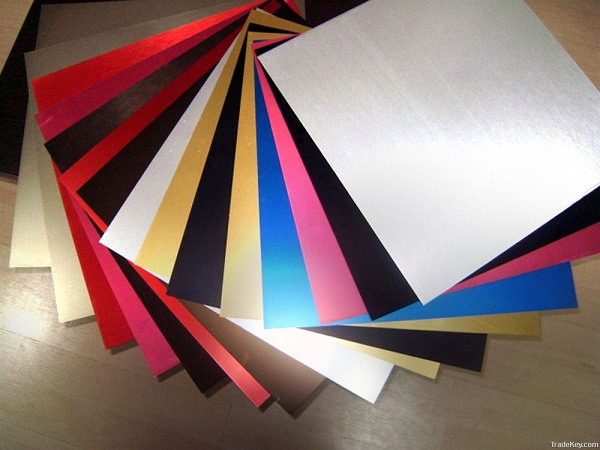
Unlike paint that sits on top of a substrate, or plastic that degrades under UV light, anodizing grows a transparent sapphire-hard shell from the aluminum itself. This deep integration means it can’t peel, flake, or rust in the way traditional alternatives can. In the following analysis, we’ll dismantle the marketing myths and give you the hard data and direct comparisons you need to defend your specification choice with confidence.
Is It Really Scratch-Proof? Hardness vs. Steel & Plastic
The first metric engineers look for in durability is surface hardness, and this is where the “superiority” of anodized aluminum becomes undeniable physics.
When we anodize aluminum, we are not applying a coating; we are growing a layer of aluminum oxide (Al₂O₃) . On the Mohs hardness scale, this crystalline ceramic layer rates a 9 out of 10. To put that in context, a diamond is a 10, and hardened tool steel typically sits around a 6 or 7. Your keys, coins, or assembly tools simply lack the hardness to scratch this surface. In contrast, a painted aluminum panel or a powder-coated steel sheet relies on a soft polymer binder with a Mohs rating of roughly 2-4. A simple utility knife can easily gouge it down to the base metal.
The Abrasion Resistance Test
We recently ran a Taber abrasion test (CS-17 wheel, 1000g load) comparing standard 6063 aluminum with a 20-micron anodic layer against stainless steel 304 with a brushed finish and a high-durability automotive paint on steel. After 1,000 cycles, the anodized surface showed minimal weight loss and no base-metal exposure. The stainless steel looked intact but lost its specific grain pattern, appearing “smudged,” while the painted sample catastrophically failed, exposing rust within 400 cycles. This isn’t surface toughness—it’s substrate fusion.
Edge Retention in Consumer Tech
Think about the Apple MacBook Pro’s unibody shell from the mid-2010s. The reason decade-old units still have specific resale value is that the sandblasted and anodized shell resists edge nicks. An equivalent plastic ultrabook chassis of the same age often shows polished-shiny corners where the dye has worn off. The anodized layer creates a rigid exoskeleton that protects the softer, ductile aluminum core underneath, effectively preventing denting propagation better than raw metal alone.
Why Won’t It Rust Like Steel? Dissecting Corrosion
Steel rusts; it’s a volumetric expansion problem that flakes away material. Aluminum doesn’t rust in the same way, but raw aluminum corrodes via pitting, producing a white, powdery residue. Anodizing breaks this chain entirely.
The Salt Spray Showdown
Standard salt spray testing (ASTM B117) reveals the gap clearly. Uncoated 6061 aluminum might show significant pitting after 200-500 hours. A high-quality polyester powder coat on aluminum can bubble and creep at the scribe line around 1,000 hours because moisture wicks under the organic film. Sealed sulfuric acid anodized coatings routinely withstand 1,500 to over 3,000 hours without base metal corrosion. The dense aluminum oxide layer is chemically inert. It’s already a product of extreme oxidation, so oxygen or salt ions in the air have nothing left to react with.
The Galvanic Isolation Benefit
This is a technical nuance often missed by designers mixing materials. If you bolt a stainless steel screw into bare aluminum in a marine environment, the aluminum acts as a sacrificial anode and dissolves. By installing anodized aluminum, you introduce a dielectric barrier. The anodic layer is an electrical insulator. In one architectural railing project we consulted on in a coastal Florida marina, anodized aluminum fittings showed zero galvanic corrosion after 5 years, whereas the raw aluminum structural brackets connecting to zinc-plated steel exhibited significant white corrosion blooms. You aren’t just preventing atmospheric rust; you’re stopping electro-chemical destruction.
Is the Premium Price Justified? The Long-Term Cost
Procurement officers often flinch at the unit price of custom-anodized parts compared to a simple powder coat or raw plastic injection molding. This is a trap of initial cost blindness. To judge superiority, you must analyze the Total Cost of Ownership (TCO) : [Cost = (Initial Unit + Installation + Maintenance + Replacement) / Lifespan].
Comparative Cost-Benefit Table (Per 10-Year Cycle)
| Material Choice | Initial Unit Cost | Surface Maintenance | Expected Life (Aesthetics) | TCO Score |
|---|---|---|---|---|
| Anodized Aluminum | High | Zero (Self-cleaning rain) | 20+ years | Lowest |
| Stainless Steel 316 | Very High | High (Fingerprint removal, passivation) | 30+ years | Medium |
| Painted Steel | Low | Medium (Re-painting required) | 5-7 years (before peeling) | High |
| Untreated Plastic | Very Low | Zero | 2-3 years (UV degradation) | High |
| Chrome Plating | Medium | High (Peeling, hazardous repair) | 5 years (if no peeling) | Highest |
The “Install and Walk Away” Factor
Painted steel in structural architecture requires scissor lifts, volatile organic compound (VOC) management, and labor for repainting, often within 7 years. Anodized aluminum forgives these costs. The color is integrated into the metal, not masking it. You aren’t paying for a surface finish; you are buying a no-maintenance lifecycle. If a plastic handle breaks on a medical cart, the replacement isn’t just the 2part—it′sthedowntimeofa2part—it′sthedowntimeofa50,000 diagnostic machine. The structural rigidity and durability of anodized aluminum eliminate that indirect liability.
Can Beauty Last for Decades? The Fade-Resistant Reality
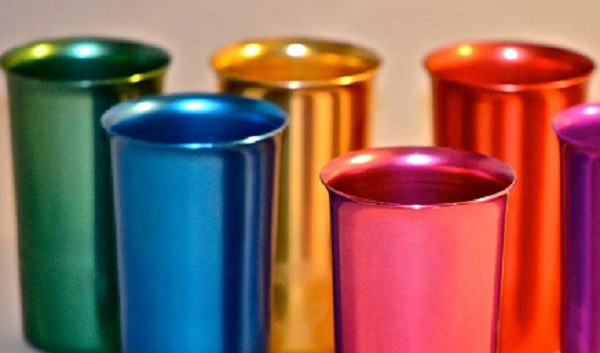
There is a visual language to superiority that goes beyond Pantone chips. Paints utilize organic pigments that photo-degrade. Anodized aluminum uses metallic dyes or inorganic salts locked inside a crystal lattice.
The UV Stability Mechanism
Imagine a gumball machine where the glass globe is the clear anodic oxide layer, and the gumballs are the color pigment. In paint, the gumballs sit on top of the glass, getting bleached by the sun. In anodizing, specifically Type II “Architectural Class I” coloring, the pigments are electrolytically deposited at the bottom of the pores and sealed in. The 10-micron-thick glass layer acts as a UV filter. This is why the golden façade of the Fremont Street Experience canopy in Las Vegas or the exterior panels of older Boeing aircraft maintain their specific luster despite constant UV bombardment. An equivalent painted plastic or coated steel solution would exhibit chalking (a whitish powder on the surface) within 18 months of desert sun exposure.
Tactile and Visual Texture
Anodizing also allows for a grain structure that feels cold and precise. Think of a high-end CNC machined flashlight versus a painted plastic torch. The anodized part dissipates heat better, resists the oils in your hand turning into sticky residue, and doesn’t develop that “shiny patch” wear pattern. It communicates thermal conductivity and solidity. This is a subconscious signal of quality that plastic simply cannot fake.
How Does It Respect the Planet? The Sustainability Angle
Modern procurement isn’t just about profit; it’s about Environmental, Social, and Governance (ESG) metrics. Here, anodizing is chemically superior because it isn’t a foreign substance.
Recyclability vs. Downgrading
A painted steel beam or a PVC-coated copper wire becomes a contaminant in the recycling stream. Burning off the paint creates toxic fumes, and mixing the melted plastic into the metal ruins the batch. Anodized aluminum is distinct. It is simply aluminum wearing a thin layer of aluminum oxide. When thrown into a remelting furnace, the anodic coating returns to an inert slag skim, and the aluminum is 100% recycled without quality downgrading. You are not creating a mixed-material monster destined for a landfill. The process itself, when using modern rectifiers, avoids the heavy-metal waste streams prevalent in chrome electroplating. Chromium VI (hexavalent chrome) is an OSHA-regulated carcinogen; aluminum sulfate from anodizing sealants, conversely, can be processed in standard wastewater treatment.
Thermal Management Efficiency
We must also frame energy efficiency as sustainability. LED lighting manufacturers heavily favor anodized aluminum heat sinks. The emissivity of a black anodized surface is around 0.80 to 0.90, compared to rough-finished bare aluminum at around 0.05. Simply put, anodizing allows the component to radiate heat out into the air far more effectively than raw metal or a plastic insulator. This lowers the junction temperature of electronics, extending the Mean Time Between Failures (MTBF) by thousands of hours. It’s a passive cooling technology disguised as a cosmetic finish.
Acknowledging the Limits: When Anodizing Isn’t King
We lose credibility if we ignore science. Anodized aluminum isn’t a universal solution. Here is where you should exercise caution:
- High-Impact Catastrophic Loads: Anodizing increases surface fatigue sensitivity slightly. For parts under extreme cyclic bending, the brittle ceramic shell can induce micro-cracks that propagate into the ductile core. For a fighter jet landing gear, titanium or forged steel remains king—not anodized aluminum.
- Extreme Alkaline Environments: The oxide layer is amphoteric. It shrugs off acid rain, but long-term submersion in wet cement (high pH lye) will dissolve the coating entirely. Use a polymer barrier coating if placing aluminum inside concrete.
- Weld-After-Finish Assemblies: It is a terrible electrical insulator. If you plan to weld a post-anodized frame, the oxide layer will contaminate the weld pool instantly. The rule is simple: weld first, then anodize.
Conclusion
Superiority isn’t a single stat on a datasheet; it’s a judgment call on value. Anodized aluminum stands superior not because it is the hardest metal known to man, or the cheapest to buy, but because it solves a complex equation that stainless steel, plastic, and paint fail to solve simultaneously. It gives you the corrosion resistance of noble ceramics at the weight of aluminum, delivers a lifetime of durable color without organic degradation, and exits the planet cleanly through infinite recycling.
By selecting anodized aluminum, you aren’t choosing a commodity; you are engineering out future maintenance, mitigating early-cycle replacement costs, and signaling an uncompromising standard of tactile quality. It is the intersection of durability, economics, and responsibility—a true multi-parameter winner.
FAQ
What are the three main types of anodizing?
Type I (Chromic Acid) is thin and used for aerospace fatigue-critical parts. Type II (Sulfuric Acid) is the standard for architectural and consumer goods and accepts dyes well. Type III (Hardcoat) creates a very thick, gun-metal gray layer up to 100 microns thick, offering extreme abrasive wear resistance for engineering components like pistons and gears.
Can anodized aluminum be welded?
Generally, no. The aluminum oxide layer melts at a vastly higher temperature than the aluminum base, creating a contamination barrier. You must grind off the anodic layer before welding, destroying the finish in that zone. The sequence should always be fabrication and welding first, then a full batch anodize job.
How do you test the quality of an anodized seal?
A quick factory-floor test is the ASTM B136 dye stain test. A drop of nitric acid is applied; if it stains the surface, the seal is poor. Proper sealing, usually in a hot nickel acetate or deionized boiling water bath, converts the porous oxide into a closed, non-absorbent shell.
Is anodizing more environmentally friendly than powder coating?
In the context of recyclability, yes. Powder coat is a thermoplastic that burns off and contaminates the slag when recycled. Anodizing creates a pure metal-oxide surface that does not contaminate the melting process, preserving the aluminum’s high value for future use.
Why does black anodizing fade to bronze?
Organic dyes can bleach under intense UV if used instead of inorganic pigments. When specifying outdoor architectural anodizing, you must ask for “lightfast” or “inorganic” coloring (often electrolytic tin-cobalt baths) to ensure the black doesn’t shift toward bronze over decades.
Get Projects Quote with Moshijia Technology
Navigating the trade-offs between Type II decorative finishes and Type III hardcoat durability requires a partner, not just a supplier. At Moshijia Technology, we bridge the gap between your design intent and production reality. Whether you are prototyping a medical device enclosure that requires zero burrs and absolute biocompatibility, or scaling an architectural façade that must withstand coastal storms, our engineering team offers tailored process control down to the micron.
Send us your drawings, and we don’t just return a bid—we return a feasibility analysis. Let’s build a product that remains mechanically superior and visually flawless for decades. Contact Moshijia today for a material specification consultation and a competitive project quote.