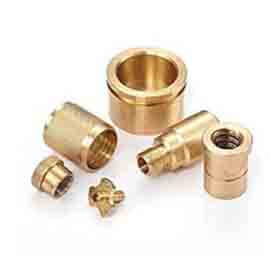
Introduction to Brass CNC Turning
At the heart of modern manufacturing is a process that delivers exceptional precision and efficiency: CNC turning. This method is a type of manufacturing where a cutting tool carefully removes material from a spinning workpiece to create a cylindrical part with detailed features. When this advanced process is used with brass, it creates high-quality brass CNC turning parts. The workpiece, a solid brass rod, spins at high speeds in a lathe while a stationary cutting tool shapes it according to a pre-programmed digital design. Brass is a particularly popular material for this technique because it is remarkably easy to machine, naturally resists corrosion, and is cost-effective overall. This combination makes brass an ideal choice for producing complex components at large scale, meeting tight tolerances with excellent surface finishes.
The Outstanding Advantages of Brass
Selecting the right material is a crucial decision in any engineering project. Brass, an alloy mainly made of copper and zinc, consistently stands out as a top choice for CNC turned components. Its unique combination of mechanical, thermal, and visual properties provides a versatile solution that balances performance with ease of manufacturing. Understanding these benefits is key to using this alloy to its full potential in precision applications.
Superior Machinability
In manufacturing, “machinability” refers to how easily a material can be cut, which directly affects production speed, tool life, and final surface finish. Brass is the industry standard for excellent machinability. Specifically, the alloy C360, often called Free-Cutting Brass, has a machinability rating of 100%. This serves as the standard that other metals are measured against. For comparison, 12L14 steel, another highly machinable material, is also rated around 100%, while 6061 aluminum, known for its good workability, scores slightly lower at approximately 90%. This superior rating means that brass can be machined at higher speeds and feeds, leading to shorter cycle times and reduced production costs. The low friction created during cutting also results in less tool wear and a smoother, cleaner surface finish straight off the machine, often reducing the need for additional polishing operations.
Excellent Corrosion Resistance
One of the most valued properties of brass is its natural ability to resist corrosion. The copper content in the alloy creates a protective layer when exposed to the atmosphere, which shields the underlying metal from further oxidation. This makes brass highly resistant to damage from water, salt solutions, organic compounds, and various atmospheric conditions. This property is mission-critical in applications where long-term reliability and exposure to moisture are concerns. Industries such as plumbing, marine hardware, and fluid control systems rely on brass for its ability to maintain structural integrity and prevent leaks over extended periods of service.
High Electrical and Thermal Conductivity
Brass inherits excellent conductive properties from its primary component, copper. While not as conductive as pure copper, it offers a superb balance of conductivity, strength, and machinability that pure copper lacks. Its high electrical conductivity makes it an ideal material for electrical connectors, terminals, sockets, and pins, ensuring reliable and efficient current flow. Similarly, its high thermal conductivity allows it to effectively transfer heat, a crucial function for components used in heat exchangers, electronic housings, and certain automotive parts. This ability to manage both electrical and thermal energy efficiently is a key advantage in a wide range of electromechanical designs.
Durability and Strength
Despite its outstanding machinability, brass is not a weak material. Various brass alloys offer a good range of tensile strength and hardness, making them suitable for many mechanical parts that require durability. For example, alloys like C464 Naval Brass are specifically formulated with an addition of tin to provide increased strength and corrosion resistance, making them robust enough for propeller shafts and other demanding marine applications. This combination of being easy to machine yet strong enough for structural use provides engineers with a versatile material that does not compromise on mechanical performance.
Aesthetic Appeal and Finishes
Beyond its functional properties, brass possesses a distinct visual quality. Its natural, warm, gold-like shine is highly sought after for decorative hardware, musical instruments, and high-end consumer products. This appearance can be further enhanced through a variety of finishing processes. A high polish can bring out a brilliant, mirror-like shine, while a brushed finish can provide a more subdued, satin texture. Furthermore, brass serves as an excellent base for plating with other metals like chrome, nickel, or silver, allowing for an even wider range of decorative and functional surface treatments.
Cost-Effectiveness
When evaluating material costs, it is essential to consider the total cost of production, not just the price of the raw material. While brass may have a higher per-kilogram cost than some steels or aluminum, this initial expense is often offset by significant savings during the manufacturing process. The high-speed machining capabilities of brass reduce cycle times, meaning more parts can be produced per hour. The low friction and wear on cutting tools mean that tools last longer and require less frequent replacement. This combination of faster production and lower tooling costs makes brass an exceptionally cost-effective choice for high-volume production of complex turned parts.
Comparing Common Brass Alloys
Not all brass is the same. Different compositions of copper, zinc, and other alloying elements yield different properties. Choosing the right alloy is critical for optimizing performance and manufacturability.
| Alloy (UNS) | Common Name | Key Characteristics | Best For… |
| C36000 | Free-Cutting Brass | The benchmark for machinability (100% rating); excellent for high-speed automated operations. | High-volume fittings, valves, fasteners, screw machine parts. |
| C26000 | Cartridge Brass | Good combination of strength and flexibility; excellent for cold working and forming. | Ammunition casings, decorative hardware, plumbing fixtures. |
| C46400 | Naval Brass | High strength, hardness, and excellent resistance to seawater and other corrosive environments. | Marine hardware, propeller shafts, valve stems, condenser plates. |
Where Precision Meets Application
The unique blend of properties found in brass makes it a go-to material across a surprisingly diverse range of industries. Its reliability and performance have been proven time and again in applications where precision is non-negotiable. The widespread use of brass CNC turning parts is a testament to the material’s versatility and effectiveness.
Electronics and Electrical Components
Due to its high electrical conductivity and excellent corrosion resistance, brass is a cornerstone of the electronics industry. It ensures stable, long-lasting electrical connections.
- *Connectors and pins*
- *Terminals and sockets*
- *Standoffs and spacers*
- *Switch components*
Plumbing and Fluid Systems
The superior corrosion resistance of brass makes it the default choice for components that manage water and other fluids. Its machinability allows for the creation of precise threads and sealing surfaces, ensuring leak-proof performance.
- *Valve bodies and stems*
- *Pipe fittings and couplings*
- *Spray nozzles*
- *Faucet components*
Automotive Industry
In the automotive sector, reliability is paramount. Brass parts are used where resistance to fuels, oils, and coolants, combined with good mechanical strength, is required.
- *Sensor housings*
- *Thermostat components*
- *Hose barbs and fittings*
- *Valve components for fuel and brake systems*
Musical Instruments
The acoustic properties of brass, along with its stunning appearance, make it essential for creating many wind instruments. The precision of CNC turning allows for the creation of complex geometries that define an instrument’s tone and playability.
- *Mouthpieces*
- *Valve casings and pistons*
- *Tuning slides*
- *Key components*
Consumer Goods and Hardware
For products that people interact with daily, durability and visual appeal are key. Brass provides a premium look and feel that lasts, making it ideal for high-end hardware and consumer electronics.
- *Custom fasteners and screws*
- *Decorative knobs and handles*
- *Lock components and cylinders*
- *Custom hardware for luxury goods*
Aerospace and Defense
In aerospace and defense, materials must meet strict specifications for reliability and performance. Specific brass alloys are chosen for their unique combination of properties, including non-sparking characteristics and resistance to harsh environments.
- *Specialized fittings and couplings*
- *Ammunition casings*
- *Instrument components*
- *Bushing and bearing applications*
The Custom CNC Turning Process
Transforming a raw bar of brass into a complex, finished component is a multi-stage process that blends digital design with mechanical precision. Understanding this workflow helps designers and engineers optimize their parts for manufacturability and ensures a smooth collaboration with their manufacturing partner.
Step 1: Design and CAD Modeling
Everything begins with a digital blueprint. The client provides a 3D CAD (Computer-Aided Design) model of the part, typically in a universal format like STEP, IGES, or a native format such as SLDPRT. This model contains all the geometric information of the final component. During this stage, it is crucial to apply Design for Manufacturability (DFM) principles. For brass turning, this includes considerations like maintaining reasonable wall thicknesses, designing threads to standard specifications, avoiding unnecessarily tight tolerances where they are not functional, and designing features that can be easily accessed by cutting tools. A well-designed part is easier, faster, and more economical to produce.
Step 2: CAM Programming
Next, the CAD model is imported into CAM (Computer-Aided Manufacturing) software. A skilled programmer uses the CAM software to translate the 3D model into a sequence of machine instructions, known as G-code. This involves defining the precise toolpaths the cutting tools will follow to shape the part. For brass, toolpaths are optimized to leverage its high machinability. This means programming aggressive but stable cutting strategies that maximize material removal rates while still achieving the specified surface finish and dimensional accuracy. The programmer selects the appropriate tools, sets cutting speeds and feed rates, and simulates the entire process digitally to identify and correct any potential collisions or errors before the machine is ever turned on.
Step 3: Machine Setup
With the G-code program ready, the CNC lathe is prepared for production. A solid bar of the specified brass alloy is loaded into the machine and securely clamped in a chuck or collet, which will rotate it at high speed. The machine operator then loads the selected cutting tools (e.g., turning tools, drills, groovers, threading tools) into the machine’s turret. A critical part of setup is “touching off” each tool, a process that precisely measures its position relative to the workpiece. This data, along with the workpiece’s position, is entered into the machine’s control, ensuring the G-code program executes with perfect accuracy. The program is verified, and the machine is ready to run.
Step 4: The Machining Operation
The cycle begins. The brass bar stock rotates at thousands of RPM while the CNC controller executes the G-code, moving the cutting tools along their programmed paths. A typical operation involves several steps:
- Facing: Cutting a clean, flat face on the end of the part.
- Roughing: Rapidly removing the bulk of the material to get close to the final shape.
- Finishing: A final, light pass with a sharp tool to achieve the exact dimensions and a smooth surface finish.
- Grooving/Threading: Creating grooves or cutting external/internal threads.
- Drilling/Boring: Creating and sizing internal holes.
- Cutoff: A final operation where a tool slices the finished part off the bar stock.
From our experience, managing the chips produced by brass is key. While Free-Cutting Brass produces small, manageable chips, other alloys can create long, stringy chips that can wrap around the part or tool. Proper coolant application—using a high-pressure flood to break chips and cool the cutting zone—is essential. The geometry of the cutting tool insert is also chosen specifically to act as a chip-breaker, ensuring a clean cutting area and preventing damage to the part’s surface. This attention to detail is what allows for a mirror-like finish directly from the machine.
Step 5: Secondary Operations
Often, a part is not complete after it comes off the lathe. Many components require secondary operations to add features that cannot be created in a turning-only process. This can include milling operations on a CNC mill or a multi-axis lathe to create flats, cross-holes, or complex contours. After all machining is complete, parts typically undergo deburring to remove any sharp edges or small burrs left by the cutting process. Finally, if required by the design, the parts move to finishing, which can include polishing, sandblasting, or plating to achieve the final desired visual and surface properties.
Ensuring Excellence in Quality Control
In the world of precision engineering, a part is only as good as its dimensional accuracy and material integrity. For custom brass CNC turning parts, where components often perform critical functions, a rigorous quality control process is not optional—it is the foundation of reliability. A premier manufacturing partner differentiates themselves through a comprehensive and transparent Quality Management System (QMS).
Pillars of a Robust QMS
A strong quality framework is often validated by internationally recognized standards. Certifications like ISO 9001 demonstrate that a manufacturer has established and maintains a systematic approach to quality, ensuring consistency, traceability, and a commitment to continuous improvement across all of their processes. This provides customers with the confidence that their parts will be produced to a consistently high standard every time.
Key Quality Control Checkpoints
A truly effective quality process involves multiple inspection stages, from raw material to final shipment. For a procurement manager or engineer evaluating suppliers, this checklist outlines the critical checkpoints to look for:
- Material Verification: The process must begin with absolute certainty about the raw material. Reputable suppliers use tools like X-ray fluorescence (XRF) analyzers to instantly verify the elemental composition of the incoming brass stock. This critical first step confirms that the correct alloy (e.g., C36000 vs. C46400) is being used, preventing costly material mix-ups that could lead to part failure in the field.
- First Article Inspection (FAI): Before launching full production, the very first part produced from a new setup is subjected to a meticulous inspection. A quality technician uses precision measurement tools to check every single dimension, feature, and tolerance called out on the engineering drawing. Production only proceeds once the FAI report confirms that the part is 100% compliant with the design.
- In-Process Inspection: Quality cannot be “inspected in” at the end; it must be monitored throughout the production run. Machine operators perform regular checks on parts as they come off the machine, using calibrated tools like digital calipers, micrometers, and go/no-go gauges. This allows for the immediate detection and correction of any process drift, such as that caused by tool wear, ensuring all parts in a batch remain within tolerance.
- Final Inspection: Before packaging and shipping, a final, comprehensive inspection is performed on a statistically significant sample of the batch (or 100% of parts for critical applications). This is often conducted by a dedicated QC department using advanced equipment. Coordinate Measuring Machines (CMMs) use a tactile probe to automatically measure complex 3D geometries with micron-level accuracy, while optical comparators can be used to check profiles and thread forms.
- Documentation and Traceability: The final deliverable should include more than just the parts. A complete documentation package, including material certificates and detailed inspection reports (such as the FAI and final inspection data), provides full traceability and a verifiable record that all specifications have been met.
Partnering with a Specialist
A commitment to this multi-stage quality protocol is what separates premier suppliers from the rest. For instance, at Moshijia Technology, our 15+ years of machining experience are built on a foundation of rigorous quality control, from material certification to final CMM inspection. We specialize in transforming complex designs into high-precision brass CNC turning parts that meet the tightest tolerances required by demanding industries. Our process ensures that every component we deliver is not only manufactured but also verified to perfection. Learn more about our advanced Precision CNC Turning Services.
Conclusion: Your Partner for Precision
Choosing the right material and manufacturing process is fundamental to the success of any engineering project. Brass, with its unparalleled machinability, excellent corrosion resistance, conductivity, and visual appeal, stands as a superior choice for custom CNC turned components. From intricate electronic connectors to robust plumbing fittings, its versatility is unmatched. However, a great material is only part of the equation. The true potential of brass is only unlocked when it is paired with a manufacturing partner who possesses deep expertise, a state-of-the-art process, and an unwavering commitment to quality. By understanding the complete journey from design to final inspection, you are now better equipped to make informed decisions and partner with a supplier who can turn your precise designs into reality.