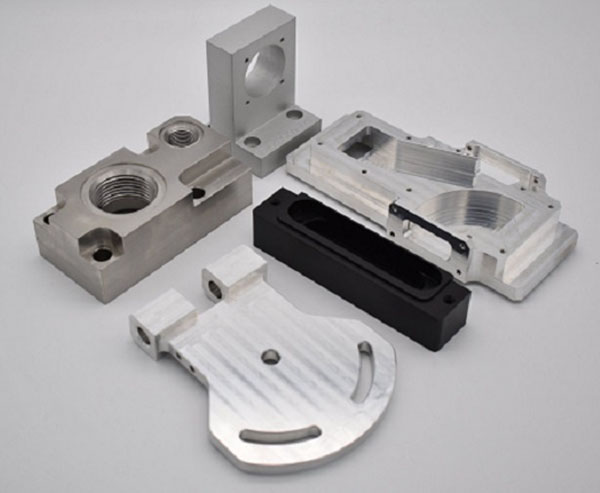
CNC machining of aluminum parts represents one of the most versatile and widely adopted manufacturing processes across industries ranging from aerospace to consumer electronics. By using computer-controlled equipment to precisely remove material from aluminum blocks, this technology enables the creation of components with exceptional dimensional accuracy, complex geometries, and reliable performance. The popularity of aluminum stems from its unique combination of lightweight properties, excellent strength-to-weight ratio, and natural corrosion resistance. For engineers, designers, and procurement specialists, understanding the full scope of aluminum CNC machining—from material selection and design optimization to finishing and cost factors—is essential for leveraging its full potential. This comprehensive guide will walk you through everything you need to know to successfully manufacture high-quality CNC machined aluminum components.
What is CNC Machining?
CNC (Computer Numerical Control) machining is a subtractive manufacturing process where pre-programmed computer software dictates the movement of factory tools and machinery. Unlike additive methods (like 3D printing) that build parts layer by layer, CNC machining starts with a solid block of material—in this case, aluminum—and uses precision cutting tools to remove material until the desired shape is achieved.
The process relies on digital instructions derived from a 3D CAD model, which are converted into a machine-readable G-code. This code controls various aspects of the machining operation, including the speed, position, coordination, and feed rate of the cutting tools. For aluminum parts, common CNC operations include milling, turning, drilling, and grinding, often performed on multi-axis machines (like 3-axis, 4-axis, or advanced 5-axis systems) that can create intricate features from multiple angles in a single setup.
The key advantage of CNC machining lies in its repeatability, precision, and automation. Once a program is verified, it can produce identical parts with tolerances as tight as ±0.001mm for highly demanding applications. This makes it ideal for everything from one-off prototypes to medium-volume production runs.
Why Choose Aluminium for CNC Parts?
Aluminum has become the go-to material for CNC machining for a compelling set of engineering and economic reasons. Its properties offer a balance that is difficult to match with other metals.
- Excellent Strength-to-Weight Ratio: Aluminum provides substantial strength while being about one-third the weight of steel. This is critical in industries like aerospace and automotive, where reducing mass directly improves fuel efficiency and performance.
- Superior Machinability: Aluminum is relatively soft and easy to cut, allowing for higher spindle speeds and feed rates. This results in faster production cycles, reduced tool wear, and lower power consumption compared to machining harder metals like stainless steel.
- Natural Corrosion Resistance: Aluminum naturally forms a thin, protective oxide layer when exposed to air. This layer provides inherent resistance to rust and environmental degradation, making it suitable for outdoor, marine, and chemical applications.
- High Thermal and Electrical Conductivity: These properties make aluminum an ideal choice for heat sinks, electronic housings, and electrical components.
- Cost-Effectiveness and Recyclability: Aluminum is generally more affordable than metals like titanium or specialty alloys. Furthermore, it is 100% recyclable without loss of its inherent qualities, supporting sustainable manufacturing practices.
What are the Common Aluminium Alloys Used?
Not all aluminum is the same. Its properties are significantly altered by alloying elements, creating different “series” suited for specific applications. Choosing the right alloy is a foundational step in the design process.
The following table summarizes the most common aluminum alloys used in CNC machining:
| Alloy Series & Common Grades | Primary Alloying Elements | Key Properties | Typical Applications |
|---|---|---|---|
| 6061 (6000 Series) | Magnesium & Silicon | Excellent all-rounder; good strength, machinability, weldability, and corrosion resistance. Most common and cost-effective. | Structural frames, brackets, automotive parts, consumer goods, prototypes. |
| 7075 (7000 Series) | Zinc | Very high strength-to-weight ratio; superior fatigue resistance. More difficult and expensive to machine than 6061. | Aerospace components (wing spars, fuselage fittings), high-performance automotive, military hardware. |
| 2024 (2000 Series) | Copper | High strength and good fatigue resistance. Poor corrosion resistance unless surface-treated. | Aircraft structures, truck wheels, hardware requiring high strength. |
| 5052 / 5083 (5000 Series) | Magnesium | Excellent corrosion resistance, especially in marine environments. Good weldability and formability. | Marine components, chemical tanks, pressure vessels, transportation equipment. |
| AL 6061-T6 vs. 7075-T651: For a practical comparison, consider a drone’s main arm. Using 6061-T6 offers great machinability and sufficient strength at a lower cost. However, for a competitive racing drone where every gram counts and stress is extreme, the 7075-T651 alloy would be chosen for its superior strength, even with its higher material cost and more demanding machining requirements. |
A Critical Note on Material Sourcing: Especially when sourcing from global suppliers, verifying the authenticity of the aluminum grade is crucial. Reputable manufacturers use tools like spectrometers to validate incoming material, ensuring you receive the mechanical properties you’ve designed for.
How Does the CNC Machining Process Work?
Transforming a digital design into a physical aluminum part follows a structured workflow:
- Design and CAD Modeling: The process begins with creating a detailed 3D model of the part using Computer-Aided Design (CAD) software. This model defines every dimension and feature.
- CAM Programming: The CAD file is imported into Computer-Aided Manufacturing (CAM) software. Here, a programmer defines the toolpaths, selecting the appropriate cutting tools, spindle speeds, feed rates, and depth of cuts for aluminum. This stage generates the G-code that will run the CNC machine.
- Machine Setup: The correct aluminum billet is secured in the machine (like a CNC mill or lathe). The necessary cutting tools are loaded into the tool magazine, and the machine is zeroed out to establish its starting reference point.
- Machining Operations: The machine executes the programmed sequence. For a complex enclosure, this might involve:
- Roughing: Using a larger tool to quickly remove the bulk of material.
- Finishing: Using smaller, finer tools to achieve the final dimensions and surface quality.
- Drilling and Tapping: Creating holes and threads with precision.
- 5-Axis Contouring: For complex curves or undercuts, a 5-axis machine can tilt the cutting tool or part to machine from optimal angles without multiple re-fixturing.
- Part Inspection and Finishing: Once machined, the part is carefully deburred (sharp edges removed) and inspected, often with Coordinate Measuring Machines (CMMs), to verify it meets all specified tolerances. It then moves to any required surface finishing processes.
What Surface Finishes are Available?
The “as-machined” surface of aluminum is functional but often receives a secondary finish to enhance its properties. The choice depends on aesthetic, functional, and protective needs.
- As-Machined: The most economical option, directly from the CNC machine with visible tool marks. Surface roughness typically ranges from Ra 0.2 to 3.2 µm.
- Bead Blasting: A stream of fine glass beads creates a uniform, matte or satin texture. It cleans the surface and improves paint adhesion.
- Anodizing (Type II & III): An electrochemical process that thickens the natural oxide layer. It dramatically increases corrosion and wear resistance, allows for color dyeing (clear, black, colors), and is an excellent electrical insulator. Hardcoat anodizing (Type III) offers even greater surface hardness.
- Powder Coating: A dry, electrostatic powder is applied and cured into a thick, durable polymer coating. It provides superior protection against chips, chemicals, and UV rays and is available in virtually any color and texture.
- Chemical Film (Alodine): A thin chromate conversion coating that protects against corrosion while maintaining electrical conductivity. It’s often used as a primer for paint or as a final finish for aerospace and electronic parts.
Case Study: A Wearable Tech Device Housing
For a smartwatch case, the functional requirements drive the finish choice. Bead blasting might be used first to create a consistent matte base. This would be followed by Type II anodizing to provide scratch resistance and allow for the introduction of a brand-specific color, like space gray or midnight blue. This combination delivers the durability and premium aesthetic consumers expect.
What Tolerances Can Be Achieved?
Tolerance refers to the permissible limit of variation in a physical dimension. Holding tight tolerances is a hallmark of precision CNC machining.
- Standard Tolerances: For many aluminum components, a standard machining tolerance of ±0.005 inches (±0.13 mm) is readily achievable and economically viable.
- Precision Tolerances: With advanced machines, proper tooling, and controlled environments, aluminum parts can hold tolerances as tight as ±0.001 inches (±0.025 mm) or even finer for critical features.
- Factors Influencing Tolerance:
- Part Geometry: Deep pockets or thin, tall walls are more prone to vibration or deflection.
- Machine Capability: The precision and rigidity of the CNC machine itself.
- Tooling and Tool Wear: Sharp, high-quality tools and monitoring for wear are essential.
- Thermal Effects: The heat generated during machining can cause aluminum to expand. Effective use of coolant is critical.
It is vital to balance necessity with cost. Specifying an unnecessarily tight tolerance (e.g., ±0.025mm across an entire large part) can exponentially increase machining time, require special inspection, and raise costs without adding functional value. Apply tight tolerances only to critical interfacing features.
How to Optimize Designs for Machining (DFM)
Design for Manufacturability (DFM) is the practice of designing parts to make them easier, faster, and less expensive to produce. Key principles for aluminum CNC machining include:
- Avoid Unnecessary Complexity: Simplify geometries. Combine multiple parts into a single machinable assembly where possible.
- Internal Corner Radii: Cutting tools are cylindrical, so they cannot create perfectly sharp internal corners. Design inside corners with a radius slightly larger than the intended tool radius.
- Wall Thickness: Maintain minimum wall thicknesses (typically >1mm for aluminum) to prevent distortion during machining or handling.
- Hole Depth and Size: Limit the depth of drilled holes to about 4x the tool diameter for straightness and chip clearance. Prefer standard drill sizes.
- Text and Lettering: For engraved text, use sans-serif fonts and ensure line width and depth are feasible (e.g., >0.3mm wide for metals).
What are the Cost Factors?
Understanding what drives the cost of CNC machined aluminum parts helps in making budget-conscious decisions. The primary factors are:
- Material Cost: The raw aluminum billet cost varies by alloy (e.g., 7075 is more expensive than 6061).
- Part Complexity: More complex parts require longer machining time, more tool changes, and potentially more expensive multi-axis machining.
- Tolerances and Surface Finish: Tighter tolerances and finer surface finishes (Ra values below 0.8 µm) increase machining and inspection time. Secondary finishes like anodizing add cost per part.
- Order Quantity: While unit cost decreases with higher volumes due to amortized setup costs, small-batch prototyping is inherently higher cost per part due to fixed setup overhead.
- Machine Time: This is often the largest cost component. It is calculated as the machine hourly rate multiplied by the cycle time needed to produce the part. Efficient CAM programming to minimize cycle time is crucial.
Cost-Saving Strategy Table:
| Cost Factor | Strategy to Reduce Cost |
|---|---|
| Material | Choose the most cost-effective alloy (e.g., 6061) that meets functional needs. |
| Design | Simplify geometry, increase allowable tolerances where possible, and avoid very deep pockets or tiny features. |
| Setup | Design parts to be machined in a single setup or use standard fixture sizes. |
| Batch Size | For production, group similar parts together in a single manufacturing order to optimize machine scheduling. |
How to Select a CNC Machining Supplier
Choosing the right partner is critical for project success. Look beyond just the quoted price and evaluate:
- Technical Capability and Equipment: Do they have the appropriate machines (e.g., 5-axis for complex parts) and in-house finishing capabilities you need? Modern machining centers are a good indicator.
- Quality Systems and Certifications: ISO 9001 certification is a baseline. Do they perform First Article Inspections (FAI) and provide material certificates? How do they verify material grade?.
- Design for Manufacturability (DFM) Feedback: A good supplier will proactively review your designs and suggest modifications to improve manufacturability and reduce cost.
- Communication and Transparency: They should be responsive, provide clear quotes, and offer regular updates. The ability to visit the facility (or take a virtual tour) is a plus.
- Experience and Specialization: Seek a supplier with proven experience in your industry, whether it’s aerospace, medical devices, or automotive.
Conclusion
CNC machining remains the gold standard for producing precise, high-performance aluminum parts. Success hinges on a holistic understanding that ties material science (selecting the right alloy), smart design (applying DFM principles), and informed procurement (choosing a capable supplier) together. From the versatile 6061 to the ultra-strong 7075, and from a simple as-machined finish to a protective hard anodize, the possibilities are extensive. By leveraging the insights in this guide—grounded in industry practices and technical data—you can confidently navigate the process to transform your innovative designs into reliable, high-quality aluminum components.
FAQ
What is the most cost-effective aluminum alloy for CNC machining?
6061 aluminum is generally the most cost-effective and widely used alloy for CNC machining. It offers an excellent balance of strength, machinability, weldability, and corrosion resistance for a vast range of general engineering applications.
Can aluminum CNC parts be made very strong?
Yes. While 7075 aluminum alloy is significantly stronger than 6061 and comparable to many steels, it comes with higher material cost and is more challenging to machine. It is the standard for high-stress applications in aerospace and defense.
What is the standard tolerance I should expect for aluminum parts?
A standard machining tolerance of ±0.005 inches (±0.13 mm) is commonly achievable and economical. Tighter tolerances down to ±0.001 inches (±0.025 mm) or better are possible for critical features but will increase cost and require explicit specification.
Why is anodizing so popular for aluminum parts?
Anodizing is popular because it enhances the natural oxide layer on aluminum, dramatically improving corrosion and abrasion resistance. It also allows for durable color dyeing and provides excellent electrical insulation, all while being an environmentally friendly process.
How does part complexity affect the machining cost?
Complexity directly increases machine programming time, machining cycle time, and often requires more expensive tools or multi-axis machines. Features like deep cavities, small internal corners, and undercuts add significant cost. Simplifying design geometry is the most effective way to control cost.
Get projects quote with Moshijia Technology.
Ready to bring your precision aluminum parts to life? Moshijia Technology specializes in high-quality CNC machining services, offering expert manufacturing from prototype to production. Our team provides comprehensive DFM feedback, utilizes advanced machinery, and ensures rigorous quality control to meet your exact specifications.
Submit your CAD files today for a detailed, competitive quotation and experience a seamless manufacturing partnership.