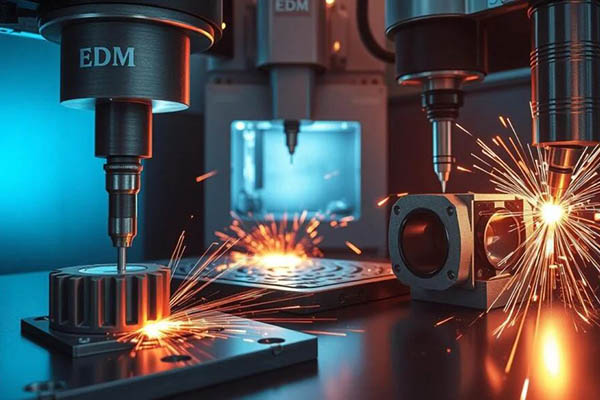
Learn what electric discharge machining (EDM) is and how it works. Discover EDM types, working principles, material suitability, and expert machining tips.
Traditional manufacturing relies on physical force. Sharp cutting tools shear away metal chips. This process creates high heat and friction. It causes mechanical stress on thin-walled workpieces. Cutting tools wear out fast when cutting hard metals like titanium or carbide. How can you machine complex shapes in hardened steel without tool contact? The answer is electric discharge machining (EDM).
EDM is a modern thermal erosion process. It uses electrical energy instead of mechanical force. At Moshijia Technology, we use EDM to produce precision aerospace parts and complex molds. This technical guide explains the science, mechanics, and industrial types of EDM. It will help you choose the best process for your next manufacturing project.
What is Electric Discharge Machining?
Electric discharge machining is a non-traditional manufacturing process. It erodes material from a conductive workpiece using electric sparks. There is no physical contact between the tool and the part. The process works on any material that conducts electricity, regardless of its hardness.
Engineers often call this process spark machining, spark eroding, or burning. A spark reaches temperatures from 8,000 to 12,000 degrees Celsius. This extreme heat melts and vaporizes microscopic amounts of metal. The liquid metal cools fast in a liquid medium. It forms tiny spheres that are flushed away. Because the tool never touches the part, there is zero cutting force. This makes EDM perfect for delicate components.
How EDM Works: Spark Erosion
The core mechanism of EDM relies on controlled electric sparks. These sparks occur in a microscopic gap between two electrodes. One electrode is the tool. The other electrode is the workpiece. Let us look at the four steps of the spark erosion cycle.
1. Creating the Electrical Field
Both electrodes sit in a bath of non-conductive dielectric fluid. The machine applies a high voltage to the tool and workpiece. This creates a strong electric field in the small gap between them. This gap is the spark gap, and it ranges from 0.005 to 0.05 mm.
2. Ionization and Spark Discharge
The electrical field grows stronger in the narrowest part of the gap. The insulation of the dielectric fluid breaks down. A conductive channel of plasma forms across the gap. Current flows through this channel, producing a hot electrical spark. This spark melts a tiny point on both the tool and the workpiece.
3. Bubble Expansion and Vaporization
The intense heat vaporizes the metal and some of the liquid. A vapor bubble forms around the plasma channel. The bubble expands rapidly. Pressure inside the bubble rises. The voltage supply is shut off. This causes the plasma channel to collapse instantly.
4. Molten Metal Flushing
The sudden drop in pressure causes the molten metal to boil violently. The liquid metal explodes into the surrounding fluid. The cold liquid cools the hot metal droplets instantly. The flowing dielectric fluid flushes these solid particles away. This leaves a tiny, microscopic crater on the surface of the workpiece. The machine repeats this spark cycle up to 250,000 times per second.
The Three Main Types of EDM
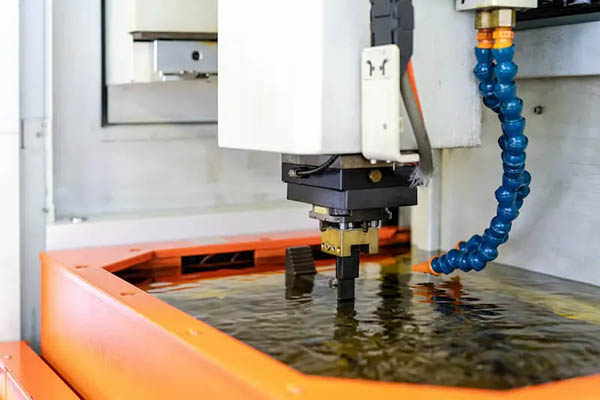
There are three main variations of electric discharge machining. Each type serves a unique industrial purpose. Choosing the right one depends on your geometry and tolerance needs.
3.1 Sinker EDM
Sinker EDM is also called ram EDM, volume EDM, or cavity-type EDM. It uses a custom-shaped electrode to “sink” a cavity into the workpiece. The electrode is usually made of graphite or copper. The machine lowers the electrode vertically into the workpiece while sparking. The cavity produced matches the inverse shape of the electrode.
Tool designers use sinker EDM to create blind cavities in injection molds. It can cut sharp internal corners that are impossible to mill. It is highly accurate and leaves an excellent surface finish.
3.2 Wire EDM
Wire EDM is also called wire erosion or traveling wire machining. It uses a thin, continuously moving single-strand wire as the electrode. The wire diameter ranges from 0.1 to 0.3 mm. It is typically made of brass or zinc-coated copper. The wire moves along a programmed 2D or 3D path, acting like a band saw.
The wire cuts entirely through the workpiece. It is ideal for thick plates, extrusion dies, and gears. Since the wire is fed from a spool, tool wear does not affect accuracy. Fresh wire is constantly used during the cut.
3.3 Hole Drilling EDM
Hole drilling EDM is also called fast hole drilling. It uses a hollow rotating tube electrode, usually made of brass or copper. The tube diameter ranges from 0.15 to 3.0 mm. High-pressure dielectric fluid is pumped directly through the center of the rotating tube.
This flushing clears chips quickly. It allows the machine to drill deep, precise holes at high speeds. It can drill holes at steep angles on curved surfaces. Turbine blade manufacturers use this to make cooling holes.
Engineer’s Insight: In wire EDM, maintaining wire tension is critical. If tension is too low, the wire will bow. This causes geometric errors in the middle of thick workpieces. We keep wire tension between 10 and 20 Newtons for optimal precision.
Four Critical Components of EDM
To achieve high accuracy, four key systems must work together. If one system fails, the process loses stability.
1. The Power Supply
The power supply converts main power into high-frequency pulsed DC voltage. It controls the pulse-on time, pulse-off time, and peak current. The pulse-on time is how long the spark lasts. Longer pulse-on times increase the material removal rate but make the surface rougher.
2. The Electrode Materials
The electrode must conduct electricity well and resist spark wear. For sinker EDM, graphite is popular because of its high melting point and easy machining. For high-precision parts, copper is preferred. In wire EDM, brass wire is the industry standard due to its excellent electrical conductivity and high tensile strength.
3. The Dielectric Fluid
The fluid serves three vital roles. First, it acts as an insulator until the voltage reaches a threshold. Second, it cools the spark zone to prevent overheating. Third, it flushes out metal particles. Sinker EDM uses hydrocarbon oil. Wire and hole drilling EDM use deionized water.
4. The Servo System
The servo system maintains a constant spark gap. The gap must stay at a precise distance. If the gap is too small, a short circuit occurs and damages the part. If the gap is too large, no spark will jump. The servo system adjusts the electrode position thousands of times per second.
EDM vs Traditional Machining
EDM fills the gap where traditional CNC milling and turning fail. Let us compare the benefits and limits of both methods.
| Factor | Electric Discharge Machining (EDM) | Traditional CNC Machining |
| Cutting Force | Zero mechanical force. No tool contact. | High physical force. Tool contacts workpiece. |
| Material Hardness | Machining limit is conductivity, not hardness. | Limited by tool hardness. Hard metals damage tools. |
| Geometry Capabilities | Sharp internal corners, deep slots, micro-holes. | Limited by round tool radiuses and tool reach. |
| Surface Finish | Satin texture. No tool marks or burrs. | Directional tool marks. Needs manual deburring. |
| Production Speed | Slow material removal rate. Good for detail. | Fast material removal rate. Great for bulk. |
Key Advantages of EDM
- Zero Cutting Force: Excellent for thin walls and fragile parts.
- No Hardness Limit: Easily cuts tungsten carbide, titanium, and hardened tool steels.
- Complex Cavities: Sinks intricate shapes with blind bottom details.
- No Burrs: Finished parts do not require secondary deburring.
Key Limitations of EDM
- Conductivity Required: Only works on materials that conduct electricity.
- Slow Speed: Material removal rate is much slower than high-speed milling.
- Heat Affected Zone: The thermal spark leaves a thin, brittle recast layer (white layer) on the surface.
- Electrode Wear: The tool electrode wears down slowly and must be replaced.
Typical Industrial Applications of EDM
High-precision sectors rely on EDM. It solves design challenges that normal cutting tools cannot.
1. Injection Mold Making
Mold makers use sinker EDM to create deep, sharp cavities in hardened tool steels. It is also used to cut ribs and slots. These shapes cannot be made with standard end mills because of tool length limits.
2. Aerospace Components
Aerospace engines use superalloys like Inconel. These alloys are tough and hard to cut. Wire EDM cuts complex disk shapes. Hole EDM drills thousands of angled cooling holes on turbine blades. These holes let blades survive extreme heat.
3. Medical Device Implants
Surgical tools and bone implants require biocompatible metals. Titanium and cobalt-chrome are common. Wire EDM slices these materials with high precision. It prevents thermal warping of fragile micro-implants.
Conductive Materials Suitable for EDM
EDM works on any conductive material. The hardness of the metal does not change the cutting speed. The table below lists common materials and their EDM traits.
| Material Category | Specific Alloys | EDM Machining Characteristics |
| Hardened Tool Steels | D2, H13, O1, S7 | Excellent results. Very stable spark. Little electrode wear. |
| Superalloys | Inconel 718, Hastelloy, Monel | Good alternative to milling. Low thermal stress on parts. |
| Refractory Metals | Tungsten Carbide, Titanium | Slower cutting speed. Requires high peak current. |
| Lightweight Alloys | Aluminum 6061, 7075 | Fast cutting speed. Clogs fluid easily. Needs high flushing. |
| Red Metals | Copper, Brass, Bronze | High electrical conductivity. Requires special power settings. |
Latest Technology Trends in EDM
The manufacturing industry is evolving rapidly. Modern EDM machines are becoming smarter, cleaner, and faster.
1. Real-time AI Gap Optimization
Modern generators use artificial intelligence (AI) to monitor the spark gap. They analyze voltage waves in real-time. If they detect carbon buildup or short circuits, they adjust the servo speed. This prevents damage and increases speed by up to 30%.
2. Hybrid Machining Systems
Machine builders are combining EDM with other technologies. For example, laser-assisted EDM uses lasers to heat the surface before spark erosion. This increases the material removal rate. Ultrasonic EDM vibrates the electrode to improve flushing in deep holes.
3. Green Dielectric Fluids
Traditional hydrocarbon oils release harmful fumes during sparking. New green biodegradable oils are based on synthetic esters. They reduce smoke emissions, last longer, and are safer for machine operators.
Frequently Asked Questions (FAQ)
- Does EDM create micro-cracks on the machined surface?Yes, EDM can create micro-cracks. The spark heat melts the metal. When the dielectric fluid cools it, the metal shrinks. This creates tensile stress and a thin “recast layer.” We use fine finishing spark cycles with low energy to reduce this layer.
- What is the maximum thickness wire EDM can cut?Wire EDM can cut very thick blocks. Standard machines cut metals up to 300 mm thick. Specialized machines can cut blocks up to 500 mm thick with high vertical accuracy.
- Can we use EDM to machine plastic or glass?No, standard plastics and glass are insulators. They do not conduct electricity. Therefore, the sparks cannot form. However, conductive ceramics and carbon fiber plastics can be machined using EDM.
- How accurate is electric discharge machining?EDM is highly precise. Wire EDM can achieve linear tolerances of $\pm$0.002 mm. Sinker EDM can achieve tolerances of $\pm$0.005 mm. This makes it ideal for mating mold inserts.
Get projects quote with Moshijia Technology
Do you need high-precision parts made of titanium, hardened steel, or complex geometries? Our expert engineers at Moshijia Technology specialize in wire EDM, sinker EDM, and fast hole drilling services. We ensure rapid turnarounds and strict ISO 9001:2015 quality assurance.