Discover how to evaluate custom manufacturing services, filter out trading companies, control QA, and optimize your total cost of ownership with this actionable procurement guide.
Finding the right manufacturing partner feels like navigating a minefield. Many procurement teams rely on basic price bidding. Yet, this traditional approach yields a success rate of less than 30%. You face massive price variances of up to 40%. You deal with unstable quality where defect rates hover around 15%. Late deliveries disrupt your entire supply chain.
As a product engineer at Moshijia Technology, I see these bottlenecks daily. This comprehensive blueprint delivers a systematic framework to vet suppliers, verify true factories, and de-risk your custom manufacturing projects from prototyping to mass production.
1. Define Your Specific Project Needs
Before contacting vendors, you must define your technical baseline. Vague specifications lead to misaligned quotes and engineering delays.
Document Precise Project Specifications
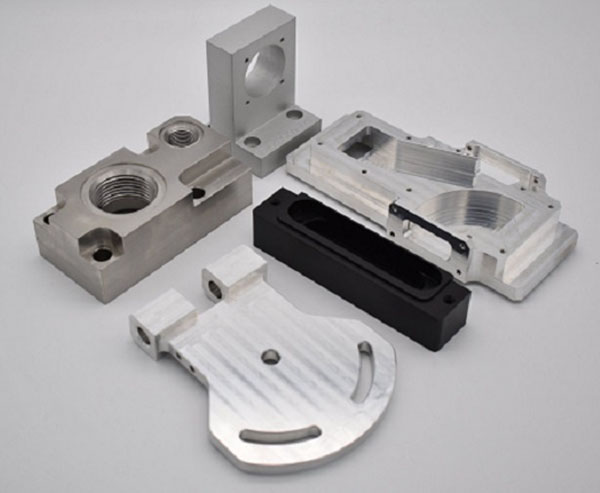
Every RFQ requires a complete engineering package. You need 3D CAD models in STEP or IGES format for CNC machining and sheet metal fabrication. Combine these with 2D technical drawings in PDF format. Your 2D drawings must explicitly state critical tolerances.
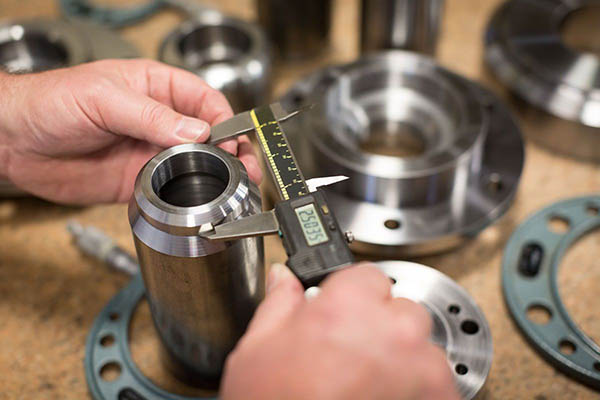
Standard ISO 2768-m (medium) suffices for general features. However, high-precision mating parts require geometric dimensioning and tolerancing (GD&T) down to $\pm0.01\text{ mm}$. For electronic assembly (PCBA), provide Gerber files, ODB++ data, and a detailed Bill of Materials (BOM) listing manufacturer part numbers.
Specify Materials and Surface Finishes
Do not just state “aluminum” or “steel.” Specify the exact grade like Aluminum 6061-T6 or Stainless Steel 316L. Material choice directly impacts machining speed and tool wear.
Clearly define your surface finish expectations. Use standard callouts such as Ra 1.6 $\mu\text{m}$ for as-machined parts, bead blasting (e.g., glass bead #120), or Type II/III anodizing. For PCBAs, choose the right surface finish like ENIG for fine-pitch components or HASL for cost-sensitive projects.
[Clear Specs] -> [Accurate RFQ] -> [No Engineering Delays]
Establish Production Volumes and Timelines
Your production volume dictates the ideal manufacturing process. Low-volume prototypes (1 to 50 parts) fit CNC machining or 3D printing. High-volume runs (over 5,000 parts) justify the upfront tooling costs of injection molding or progressive die stamping.
State your target delivery dates clearly. Break them down into first-article inspection (FAI) samples, pilot runs, and mass production phases.
2. Evaluate Core Supplier Capabilities
A supplier must possess both the technical capacity and the organizational maturity to handle your project.
Audit Production Machinery and Technology
Request a detailed facility equipment list. For complex gear machining, verify they own 5-axis CNC gear hobbing machines and CNC gear grinders. For multi-layered PCBAs, ensure their SMT lines feature automated optical inspection (AOI) and in-circuit testing (ICT) stations.
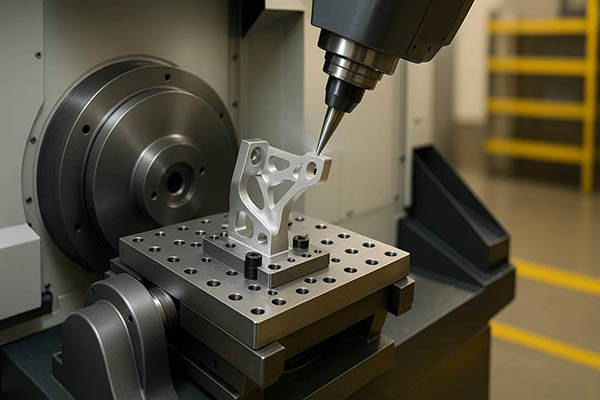
Look for high-end equipment brands like Mazak, Fanuc, or YCM. Advanced machinery ensures better repeatability and lower defect rates.
Verify Essential Industry Quality Certifications
Certifications prove a supplier adheres to standardized workflows. Do not accept scanned certificates without verifying them on registration databases.
| Industry Sector | Required Certification | Purpose / Focus Area |
| General Manufacturing | ISO 9001:2015 | Core Quality Management Systems |
| Medical Devices | ISO 13485 | Regulatory Compliance & Risk Management |
| Automotive Supply Chain | IATF 16949 | Defect Prevention & Waste Reduction |
| Aerospace & Defense | AS9100 | Stringent Quality & Traceability Standards |
| Electronics Assembly | IPC-A-610 Class 2/3 | Electronic Acceptance Standards |
Assess Relevant Niche Industry Experience
Ask for case studies within your specific industry. A shop excellent at heavy industrial welding might fail at micro-machining medical implants.
Request references from clients who have similar precision requirements. Inquire about their experience handling your specific raw materials, especially difficult alloys like Titanium Grade 5 or Inconel.
3. Spot Trading Companies Versus Factories
Many intermediaries masquerade as direct manufacturers. While trading companies offer broad product ranges, they add a 15% to 30% markup and blur your technical communications.
Deploy Effective Remote Factory Audits
Verify the supplier’s true identity without expensive travel. Request a live video walk-through via WeChat, Zoom, or Teams. Ask the engineer to show specific machines or walk over to the QA lab on short notice.
Check their business license. Look closely at the “Business Scope” (经营范围). A real factory states “Manufacturing” or “Processing” (制造/加工). A trading firm lists “Sales,” “Wholesale,” or “Import and Export” (销售/贸易).
Identify Red Flag Warnings Early
Watch out for communication patterns that indicate middleman behavior.
- Delayed technical answers: If simple engineering questions take 48 hours to resolve, the sales agent is likely copy-pasting questions to a third-party sub-contractor.
- Vague facility photos: Watch for stock images or cropped photos that hide the facility name or factory signs.
- Mismatched banking details: The company name on the quotation must match the beneficiary name on the bank account. A request to pay a Hong Kong offshore account with a different name signals a trading agent.
- Broad, unrelated catalogs: A single vendor claiming to manufacture heavy castings, high-speed PCBs, and silicone molds under one roof is almost certainly a trading company.
4. Implement Quality Control Systems
Do not rely on final inspections to catch errors. Quality must be baked into every step of the custom manufacturing workflow.
Secure Binding Golden Sample Agreements
Never authorize mass production without a signed Golden Sample. The supplier produces a pilot batch. You test these parts in your assembly.
Once approved, both parties sign two identical samples. One stays at the factory floor as a physical reference. The other remains at your QA lab.
Pro Tip: Write the approval date, part number, and engineer signatures directly on the sample using an indelible marker, then seal it with a clear epoxy coating.
Mandate Independent Third Party Inspections
Allocate 2% to 3% of your project budget for independent third-party inspections (such as SGS, TÜV, or Sofia Inspection). They audit the factory using the ANSI/ASQ Z1.4 standard.
[Raw Materials Incoming Quality Control (IQC)]
       │
       ▼
[In-Process Quality Control (IPQC)] ──► Check first article every shift
       │
       ▼
[Final Quality Control (FQC)] ───────► ANSI/ASQ Z1.4 Standard (AQL 1.0/2.5)
       │
       ▼
[Pre-Shipment Inspection (PSI)] ─────► Third-party verification before payout
Set your Acceptable Quality Limit (AQL) strictly. Use AQL 0 for critical defects, AQL 1.0 for major functional defects, and AQL 2.5 for minor cosmetic issues.
5. Master Cost and Delivery Negotiations
Low piece prices often hide high hidden costs. Focus on the total cost of ownership (TCO) to protect your margins.
Calculate Total Cost of Ownership
The unit price from the factory is just the starting point. You must calculate the landed cost to your warehouse.
$$\text{Total Landed Cost} = \text{Ex-Works Unit Price} + \text{Packaging} + \text{Inland Freight} + \text{Customs Duties} + \text{Sea/Air Freight} + \text{Insurance}$$
A domestic supplier charging $10 per part might be cheaper than an overseas supplier charging $6 per part once you factor in $3 per part for air freight and a 25% tariff.
Negotiate Minimum Order Quantities Safely
High MOQs tie up your working capital. Negotiate a tiered pricing structure.
Ask the vendor for a lower initial trial run (e.g., 20% of standard MOQ) to validate their production quality. Offer to pay a slight premium (10% to 15% higher piece price) for the first small batch. This protects your capital while minimizing financial risk if the quality falls short.
Structuring Secure International Payment Terms
Never pay 100% upfront to a new vendor. The industry standard for custom manufacturing is a 30% deposit / 70% balance structure.
Tie the final 70% balance payment explicitly to a successful pre-shipment inspection report. For large orders exceeding $50,000, use an Irrevocable Letter of Credit (L/C) at sight or an escrow service to ensure both parties meet their contractual obligations.
6. Optimize Communication and Long-Term Value
Technical capability means nothing if the supplier is impossible to reach during an engineering crisis.
Establish Communication Protocols and SLA
Test the vendor’s response time during the RFQ phase. A professional supplier should acknowledge your RFQ within 24 hours and deliver a structured quote within 3 to 5 business days.
Ensure you have a dedicated English-speaking project manager who understands technical drawings. Establish a service level agreement (SLA) requiring updates within 12 hours when production issues occur on the shop floor.
Leverage Geographical and Logistics Advantages
Evaluate the supplier’s proximity to major international shipping hubs, deep-water ports, and component ecosystems. For instance, an electronics manufacturer based in the Pearl River Delta can source specialized components within hours. This local ecosystem cuts weeks off your product development cycle compared to an isolated inland factory.
7. Supplier Selection Evaluation Matrix
Use this weighted decision matrix to score potential custom manufacturing vendors. Rate each vendor from 1 to 10 for each category.
| Evaluation Criteria | Weight | Supplier A Score | Supplier B Score |
| Technical Capability & Machinery | 25% | ||
| Verified Quality Systems (ISO/AQL) | 25% | ||
| Total Landed Cost (TCO) | 20% | ||
| Lead Time & Delivery Reliability | 15% | ||
| Communication & Engineering Support | 15% | ||
| Total Weighted Score | 100% |
Conclusion
Choosing the right custom manufacturing services requires moving past the lowest bid. By implementing a strict evaluation framework, you eliminate middlemen, enforce objective quality benchmarks, and secure your supply chain. Protect your projects by defining clear specifications and verifying factory capabilities upfront.
FAQ
How do I protect my Intellectual Property (IP) when outsourcing custom manufacturing?
Sign a binding Non-Disclosure, Non-Use, and Non-Circumvention (NNN) agreement before sharing any 3D CAD files or Gerber files. Ensure the NNN agreement is governed by the laws of the supplier’s host country, as standard Western NDAs are often unenforceable in foreign courts.
Why do custom manufacturing quotes vary by up to 40% for the exact same part?
Price variances stem from differences in factory overhead, machine sophistication, quality control steps, and material sourcing. Cheap quotes usually indicate that the vendor uses low-grade machinery, skips secondary stress-relieving processes, or lacks in-house QA testing equipment.
What is the standard lead time for low-volume CNC machined parts?
Standard lead times for 10 to 50 CNC machined parts typically range from 7 to 10 business days. This timeline includes material procurement, machine setup, programming, actual machining, and surface post-processing like anodizing or passivating.
Get Project Quotes with Moshijia Technology
Ready to streamline your custom manufacturing pipeline? Moshijia Technology delivers high-precision CNC machining, sheet metal fabrication, and advanced electronic assembly services under strict ISO quality standards. Upload your CAD models today for a rapid, DFM-optimized technical quote.