
Manufacturers across industries struggle with producing intricate components that traditional machining methods can’t handle efficiently. Tight deadlines, complex geometries, and strict precision requirements often create bottlenecks in production workflows. Whether you’re crafting aerospace components or medical devices, achieving consistent quality with complex shapes while keeping costs manageable can feel like an impossible balancing act. This guide explores how CNC 5 axis parts manufacturing solves these challenges, delivering unprecedented precision and efficiency for today’s most demanding manufacturing needs.
Understanding CNC 5-Axis Technology: Beyond Traditional Machining
CNC 5-axis technology represents the pinnacle of precision manufacturing, offering capabilities far beyond conventional 3-axis machines. While 3-axis systems move along the X, Y, and Z linear axes, 5-axis machines add two rotational axes (typically A and B or A and C), enabling the cutting tool to approach the workpiece from virtually any angle. This revolutionary design eliminates many limitations of traditional machining, opening new possibilities for complex part production.
Key Components of 5-Axis CNC Systems
Modern 5-axis manufacturing relies on several critical elements working in harmony:
- 5-axis CNC machines: Advanced equipment designed for simultaneous multi-axis movement.
- Multi-axis machining software: Specialized programs that calculate complex toolpaths across all axes.
- Simultaneous 5-axis movement: The ability to move all axes at once for continuous, smooth cutting.
- 5-axis software: CAM solutions that handle the complex calculations required for intricate part geometries.
- 5-axis lathes and routers: Specialized machines optimized for specific 5-axis applications.
Recent advancements in 5-axis technology have made these systems more accessible than ever, with modern machines offering improved accuracy (often within ±0.0001 inches) and faster processing speeds. According to industry research, companies adopting 5-axis technology report an average 40% increase in production capacity compared to traditional machining methods.
5-Axis Machining Processes: Techniques for Complex Part Production
The true power of 5-axis manufacturing lies in its versatile 5-axis machining processes, each tailored to specific part requirements and complexity levels. These processes enable manufacturers to produce parts that would be impractical or impossible with conventional methods.
Comparing 5-Axis Machining Strategies
| Process | Description | Best For | Key Advantage |
| 3+2 machining | Fixing the rotational axes at specific angles before cutting in 3 axes | Parts with multiple complex features on different faces | Simpler programming, lower cycle times for certain parts |
| Full 5-axis machining | Continuous movement of all axes simultaneously | Highly complex, organic shapes and contours | Single setup production of extremely complex geometries |
| Contour machining | Following the surface of the workpiece with continuous tool contact | Curved surfaces and organic shapes | Superior surface finish and dimensional accuracy |
| High-speed machining | Using increased spindle speeds with optimized feed rates | Precision components requiring fine detail | Reduced cycle times with improved surface quality |
Successful 5-axis machining depends on several critical factors, including toolpath generation (creating efficient cutting paths across all axes), fixture setup (designing workholding that accommodates multi-axis movement), and machine calibration (regular verification of axis alignment and accuracy). Proper implementation of these processes reduces setup times by up to 60% compared to multiple setups required with 3-axis machining.
5-Axis Parts and Components: Expanding Manufacturing Possibilities
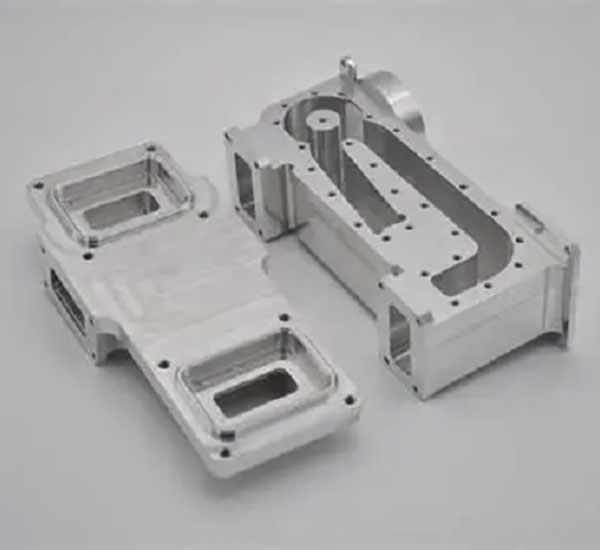
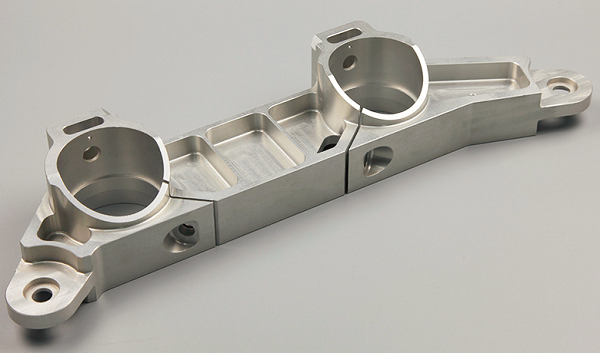
The capabilities of 5-axis technology have transformed what’s possible in part design and production. 5-axis parts and components now routinely feature complex geometries that were once considered unmanufacturable with traditional methods, enabling innovation across industries.
Common Types of 5-Axis Machined Parts
Manufacturers leverage 5-axis technology to produce a wide range of components:
- Complex geometries with curved surfaces and intricate details
- Precision components requiring tight tolerances across multiple features
- Aerospace parts like turbine blades and structural components
- Medical parts including surgical instruments and implant components
- Custom parts tailored to unique design specifications
- Molds and dies with complex cavities and contours
- Prototypes for rapid design validation
One of the most significant advantages of 5-axis machining is its ability to produce these complex parts in a single setup, eliminating the cumulative errors that occur when repositioning parts across multiple setups. This capability is particularly valuable for prototypes and low-volume production, where setup time often represents a significant portion of total manufacturing costs.
Applications of 5-Axis Machining: Industries Transformed by Precision
Virtually every manufacturing sector benefits from 5-axis technology, but certain industries have experienced particularly transformative results. The applications of 5-axis machining continue to expand as manufacturers discover new ways to leverage this technology’s capabilities.
Key Industries Embracing 5-Axis Manufacturing
- Aerospace industry: Producing lightweight, complex components with strict safety requirements, including turbine blades and structural elements.
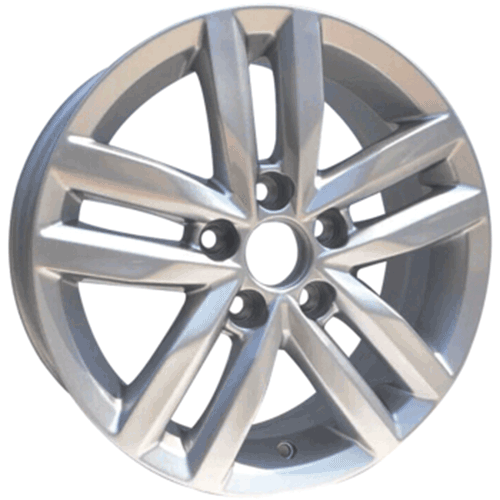
- Automotive industry: Creating high-performance parts with complex geometries, from engine components to custom racing parts.
- Medical industry: Manufacturing precision surgical instruments and implantable devices with intricate shapes and biocompatible materials.
- Mold and die making: Producing complex tooling with superior surface finishes for injection molding and casting processes.
- Defense industry: Crafting mission-critical components that must perform under extreme conditions.
- Energy sector: Machining complex parts for power generation equipment, including turbine components and precision valves.
In the aerospace sector alone, 5-axis machining has reduced production time for complex components by an average of 35%, while improving quality control metrics by nearly 50%. Medical device manufacturers report similar benefits, with 5-axis technology enabling more precise, patient-specific components that improve treatment outcomes.
Advantages and Benefits: Why 5-Axis Machining Delivers Superior Results
The transition to 5-axis manufacturing delivers numerous advantages and benefits that directly address the key pain points of modern manufacturing. From improved quality to significant cost savings, these benefits make 5-axis technology a sound investment for forward-thinking manufacturers.
Transformative Benefits of 5-Axis Technology
- Increased productivity: Reduced setup times and continuous cutting translate to more parts produced in less time.
- Improved precision: Single setup manufacturing eliminates errors from multiple part repositioning.
- Enhanced part quality: Consistent tool contact and optimal cutting angles result in superior surface finishes.
- Reduced setup time: Parts that once required multiple setups can now be completed in a single operation.
- Complex part production: Ability to manufacture geometries that would be impossible with other methods.
- Higher efficiency: Reduced waste and material usage through more precise cutting.
- Cost savings: Lower labor costs, reduced scrap rates, and faster time-to-market.
- Single setup machining: Minimizes handling and reduces the risk of damage to delicate components.
- Reduced tool wear: Optimal cutting angles distribute wear more evenly across tool surfaces.
Case studies show that manufacturers implementing 5-axis technology experience an average 30% reduction in labor costs and a 25% decrease in material waste. Perhaps most importantly, 5-axis machining reduces time-to-market for new products by streamlining the production process, giving companies a critical competitive advantage.
Moshijia Technology’s Perspective
At Moshijia Technology, we leverage advanced 5-axis machining to deliver precision components across industries. Our expertise in both 3+2 and full 5-axis processes ensures optimal results for any complexity level. With state-of-the-art equipment and experienced engineers, we transform complex designs into high-quality parts, reducing lead times while maintaining exceptional precision for all your critical manufacturing needs.
Frequently Asked Questions (FAQ)
- When should I choose 5-axis machining over 3-axis for my parts?
Choose 5-axis machining for parts with complex geometries, multiple features on different faces, or when you need superior surface finishes and tight tolerances across complex shapes. It’s particularly valuable when reducing setup time is critical.
- Does 5-axis machining cost more than traditional methods?
While initial programming and machine costs may be higher, 5-axis machining often reduces overall costs through faster production, fewer setups, less waste, and reduced labor. Complex parts typically see the most significant cost benefits.
- What materials work best with 5-axis machining?
5-axis technology handles virtually all machinable materials effectively, including metals (aluminum, stainless steel, titanium) and plastics. It’s particularly advantageous for difficult-to-machine materials where optimal cutting angles reduce tool wear.