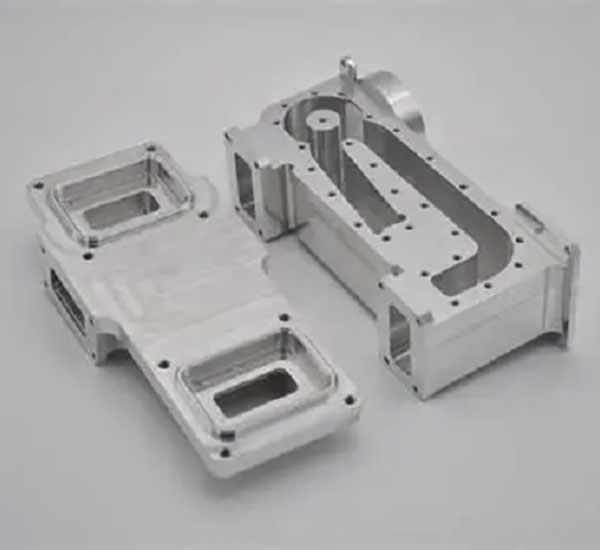
Aluminium is a cornerstone of modern manufacturing, and CNC milling aluminium parts unlocks its full potential. This guide cuts through the noise to give you a detailed, expert-backed look at how to successfully machine aluminium components. Whether you’re an engineer finalizing a design or a procurement specialist evaluating processes, you’ll learn about alloy selection, optimal machining strategies, tooling, and how to achieve the high-quality, precise parts your project demands.
What Is CNC Milling and Why It’s Ideal for Aluminium
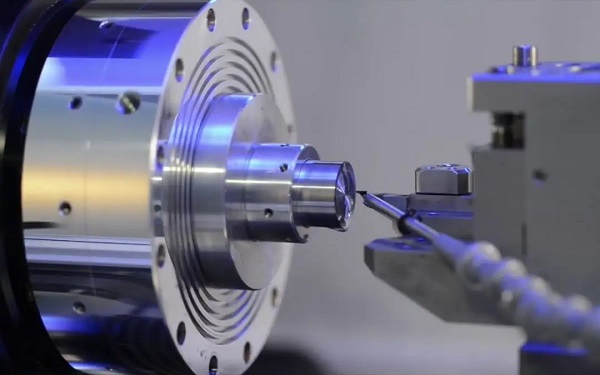
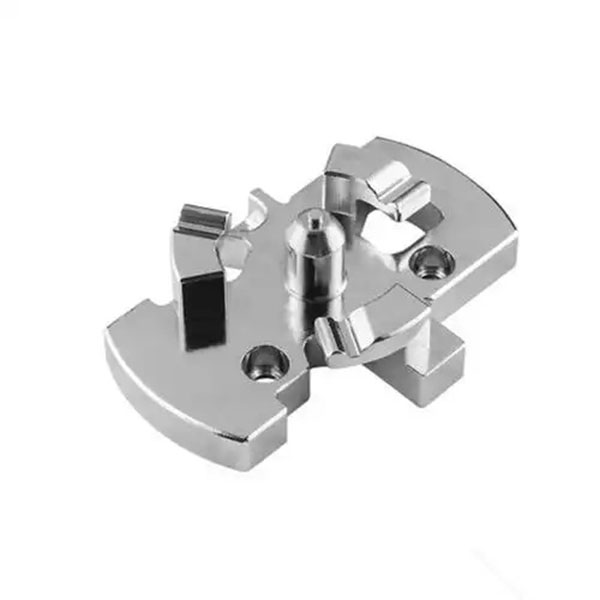
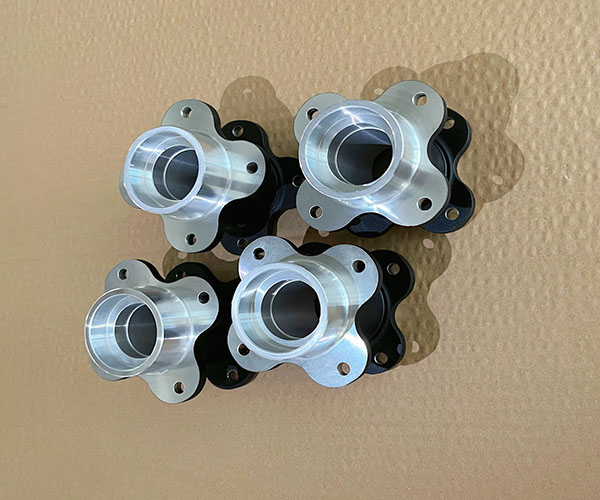
CNC milling is a subtractive manufacturing process where a computer-controlled machine uses rotating cutting tools to remove material from a solid block, shaping it into a finished part. For aluminium machining, this process shines. Aluminium’s inherent properties—like excellent machinability and a favorable strength-to-weight ratio—make it a perfect partner for CNC milling. The process delivers high precision and repeatability, allowing for the production of complex, lightweight components with tight tolerances that are essential in industries from aerospace to consumer electronics.
Why Choose Aluminium for Your Machined Parts?
Choosing the right material is critical. Aluminium consistently ranks as a top choice for machined components, and here’s why:
- Superior Machinability: Aluminium is generally soft and generates less cutting force than steels, allowing for faster machining speeds, reduced cycle times, and longer tool life. This translates directly to lower production costs.
- Exceptional Strength-to-Weight Ratio: Parts can be incredibly strong without the penalty of heavy weight. This is non-negotiable for applications in aerospace components and automotive parts where every gram counts.
- Good Corrosion Resistance: Many aluminium alloys naturally form a protective oxide layer, making them suitable for various environments. This can be enhanced further with finishes like anodizing.
- High Thermal and Electrical Conductivity: Ideal for parts that need to dissipate heat, such as heat sinks, or for certain electronic enclosures.
- Cost-Effectiveness and Recyclability: While raw material costs fluctuate, aluminium often provides a better balance of performance and cost than many alternatives. It is also 100% recyclable, supporting sustainable manufacturing goals.
What Are the Best Aluminium Alloys for CNC Milling?
Not all aluminium is created equal. The alloy and its temper define its machining behavior and final part performance. Here are the three most common workhorses:
| Alloy | Key Properties | Best For | Machinability Note |
|---|---|---|---|
| 6061-T6 | Excellent all-around strength, good corrosion resistance, high weldability. | Prototypes, automotive frames, bicycle components, consumer electronics housings. | Excellent. The go-to general-purpose alloy. Balances machinability and strength. |
| 7075-T6 | Very high strength, comparable to many steels. Excellent fatigue resistance. | Aerospace parts (fuselage frames, wing spars), high-stress automotive components. | Good. Harder than 6061, so requires slightly more conservative machining parameters. |
| 2024-T3 | High strength and superb fatigue crack resistance. | Aircraft structures, truck wheels, and other high-stress applications. | Fair. Can be gummier than 6061/7075, requiring sharp tools and good chip evacuation. |
From Experience: For a recent project involving a lightweight drone frame, we recommended 7075-T6 for the central arms requiring maximum stiffness and 6061-T6 for the less critical body panels. This material selection strategy optimized both performance and cost.
Essential Equipment and Tooling for Milling Aluminium
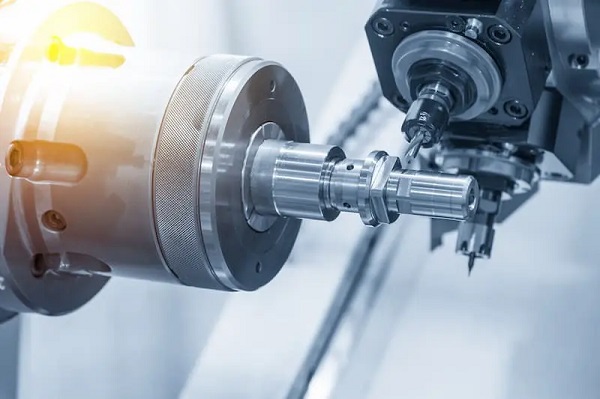
Successful CNC milling aluminium requires the right setup. While 3-axis mills handle most jobs, 4-axis and 5-axis CNC machines are invaluable for complex geometries, reducing setups and improving accuracy for parts like impellers or medical device housings.
The most critical choice is often the cutting tool. For aluminium:
- Material: Carbide end mills are standard. They maintain sharpness and resist the heat generated during high-speed machining far better than HSS tools.
- Geometry: Use tools with polished or sharp rake faces to prevent material adhesion.
- Flute Count: 2-flute or 3-flute end mills are ideal. They provide ample chip space (chip evacuation) to prevent re-cutting of chips, which is a primary cause of poor surface finish and tool breakage in aluminium.
- Coatings: An uncoated or ZrN (zirconium nitride) coated tool is often best, as some coatings can increase friction with aluminium.
Optimizing Speeds, Feeds, and Chip Control
This is where theory meets the shop floor. Getting these parameters right is the key to efficient, high-quality production.
- Speeds & Feeds: Aluminium allows for high cutting speeds (SFM). A good starting point for 6061 is:
- Speed (RPM): Use the formula:
RPM = (3.82 x SFM) / Tool Diameter. For a 1/2″ tool targeting 1000 SFM, that’s roughly 7640 RPM. - Feed Rate (IPM):
IPM = RPM x # of Flutes x Chip Load. For 7640 RPM, a 3-flute tool, and a 0.003″ chip load, the feed is about 69 IPM. - Always consult tool manufacturer recommendations and start conservatively.
- Speed (RPM): Use the formula:
- Chip Evacuation & Cooling: This cannot be overstated. Poor chip removal ruins finishes and tools.
- Use Compressed Air or Mist Coolant: Flood coolant is effective but can create a messy slurry. A high-pressure air blast or mist is often preferred to blow chips clear of the cut.
- Climb Milling: This technique produces thinner chips at the entrance and throws them behind the tool, aiding in evacuation and typically providing a better finish.
Achieving Precision: Tolerances, Finishes, and Avoiding Distortion
How to Achieve Tight Tolerances?
- Machine Calibration: Ensure your CNC machine is properly maintained and calibrated.
- Secure Workholding: Use a rigid vise, fixture, or vacuum plate to eliminate vibration and movement.
- Multi-Pass Strategy: For critical dimensions, use a roughing pass to remove bulk material, followed by a light finishing pass to achieve the final size and surface finish.
- Manage Heat: Use air or coolant to prevent thermal expansion of the part during machining.
Available Surface Finishes:
- As-Machined: A clean, milled finish suitable for many non-cosmetic parts.
- Bead Blasting: Creates a uniform, matte, non-directional texture.
- Anodizing (Type II & III): The most common finishing for aluminium. It creates a hard, corrosion-resistant oxide layer. Type II is for color and protection; Type III (hard coat) is for extreme wear resistance.
- Powder Coating: Provides a thick, durable, and colorful polymer coating.
Preventing Workpiece Deformation:
Thin-walled aluminium parts are prone to distortion from clamping force and residual stress. Mitigate this by:
- Using strategic clamping on thicker sections.
- Applying consistent, moderate clamping force.
- Stress-relieving the material blank before final machining.
- Sequencing operations to machine thin features last.
CNC Milling vs. Other Aluminium Fabrication Methods
| Method | Best For | Relative Cost | Speed | Complexity/Precision |
|---|---|---|---|---|
| CNC Milling | Complex 3D shapes, high-precision features, prototypes & production. | Medium-High | Medium-Fast | Very High |
| CNC Turning | Rotationally symmetric parts (round bars, discs). | Medium | Fast | High |
| Sheet Metal Fabrication | Enclosures, brackets, panels from thin sheets. | Low-Medium | Fast (after tooling) | Medium |
| Die Casting | Very high-volume production of complex shapes. | High initial tooling, low per-part. | Very Fast | Medium-High |
| 3D Printing | Extreme complexity, internal channels, low-volume prototypes. | High | Slow | Medium (surface finish) |
Bottom Line: CNC milling offers the best combination of precision, material strength (from solid billet), and flexibility for low-to-medium volume production of high-performance aluminium parts.
Key Applications of CNC Milled Aluminium Parts
The versatility of CNC milling aluminium parts makes them ubiquitous:
- Aerospace: Wing spars, engine mounts, UAV frames, and satellite components.
- Automotive: Engine blocks (prototypes), suspension components, custom intake manifolds, and lightweight chassis parts.
- Consumer Electronics: Laptop chassis, smartphone testing fixtures, heat sinks for processors, and camera body housings.
- Medical: Surgical instrument handles, imaging device components, and prosthetic limbs.
- Industrial: Robotic end-effectors, custom jigs and fixtures, and fluid system manifolds.
FAQ: CNC Milling Aluminium Parts
What is the best aluminium alloy for CNC machining beginners?
6061-T6 is highly recommended. It offers an excellent balance of machinability, strength, weldability, and cost, making it forgiving and predictable for most projects.
How thin can walls be when CNC milling aluminium?
With proper techniques, walls as thin as 0.5mm (0.020″) are possible. Success depends on alloy, tooling, machine rigidity, and expert programming to minimize cutting forces.
Why does my milled aluminium part have a rough or torn surface finish?
This is often caused by built-up edge (BUE)—aluminium welding to the tool. Solutions include increasing cutting speed, using sharper carbide end mills with proper geometry, ensuring effective chip evacuation, and applying air or mist coolant.
Is anodizing necessary for CNC milled aluminium parts?
Not always, but it is highly beneficial. Anodizing significantly improves surface hardness, enhances corrosion resistance, and allows for color dying for branding or part identification.
Can CNC milling achieve threads in aluminium?
Absolutely. Threads can be tapped (cut with a tap) or thread milled (cut with a rotating tool). Thread milling is often preferred for CNC as it creates stronger threads, uses one tool for multiple thread sizes, and is less prone to breaking in blind holes.
Get a Precise Quote for Your CNC Milled Aluminium Parts
Ready to turn your design into a high-precision reality? At Moshijia Technology, we specialize in CNC milling aluminium parts for prototypes and production runs. We combine expert material selection, advanced 5-axis CNC machines, and rigorous quality control to deliver components that meet your strictest tolerance and finish requirements.
Get projects quote with Moshijia Technology.
Submit your CAD files today for a fast, detailed, and competitive quote. Let’s build something exceptional.