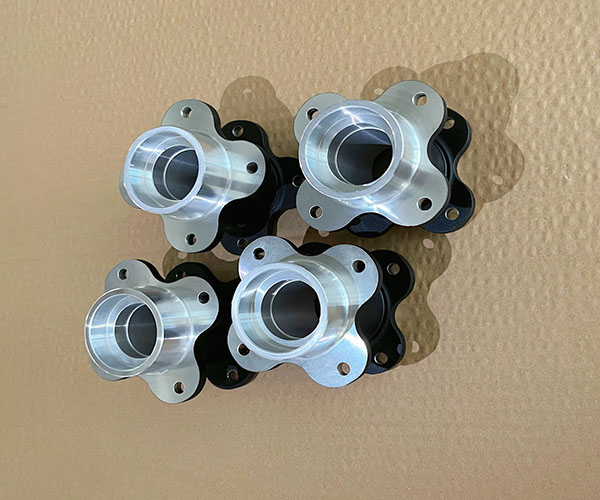
For RC car enthusiasts, hobbyists, and professional racers alike, the performance and durability of CNC RC car parts aluminum are often the difference between a winning run and a frustrating breakdown. CNC machining has revolutionized the production of precision components for remote-controlled vehicles, and aluminum stands out as the material of choice for many critical parts. This guide dives deep into why CNC machining and aluminum are a perfect match for RC car components, exploring everything from material benefits and design considerations to cost, maintenance, and performance impacts. Whether you’re looking to upgrade your current RC car, build a custom model, or simply understand the engineering behind high-quality RC parts, this article provides the expert insights and practical information you need.
Introduction
The world of RC cars is driven by precision, performance, and durability. As technology advances, hobbyists and professionals increasingly turn to CNC RC car parts aluminum to elevate their vehicles’ capabilities. CNC (Computer Numerical Control) machining offers unmatched precision in creating complex parts, while aluminum provides an ideal balance of strength, weight, and corrosion resistance. This guide explores the essential role of CNC machining in RC car parts, why aluminum is superior to other materials, which components benefit most, and key considerations for design, finishing, weight, cost, and maintenance. By the end, you’ll have a comprehensive understanding of how CNC machined aluminum parts can transform your RC car’s performance and longevity.
What Makes CNC Machining Essential for RC Car Parts?
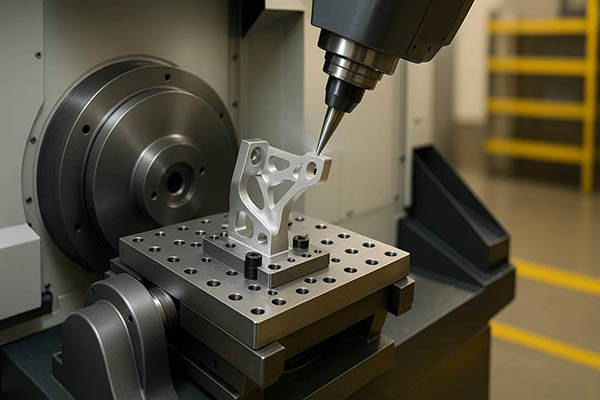
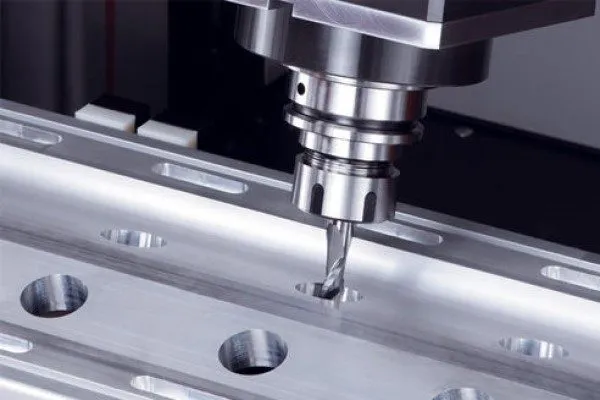
RC car parts demand exceptional precision to ensure proper fit, function, and performance. CNC machining delivers this precision through computer-controlled tools that follow exact design specifications, making it indispensable for manufacturing high-quality CNC RC car parts aluminum. Here’s why it’s essential:
- Unmatched Precision: CNC machines operate with tolerances as tight as ±0.001 inches, ensuring that parts fit together seamlessly. For example, a CNC-machined aluminum steering knuckle must align perfectly with the axle to avoid binding during turns—something traditional manufacturing methods struggle to achieve consistently.
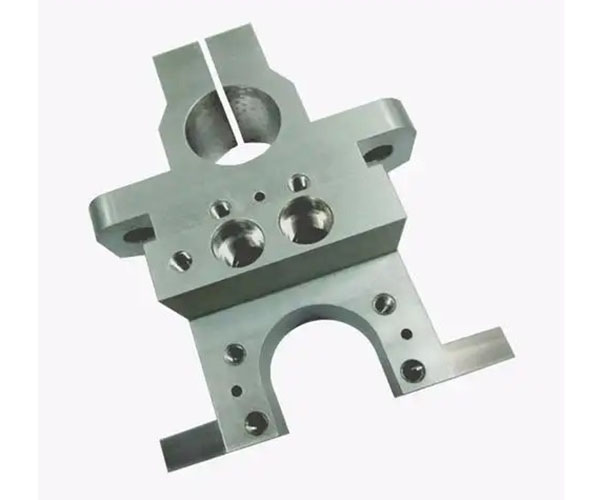
- Complex Geometry Capabilities: RC car parts like gearboxes, suspension arms, and differential housings often have intricate designs. CNC machining can easily produce these complex shapes, including internal cavities and fine details, that are impossible or cost-prohibitive with other methods.
- Consistency and Repeatability: Whether producing 10 or 10,000 parts, CNC machines deliver identical results every time. This is critical for hobbyists who want replacement parts that match their original components and for manufacturers scaling production.
- Customization Flexibility: CNC machining allows for easy customization of parts. Professional racers, for instance, often request custom aluminum shock towers with modified mounting points to suit specific track conditions. A case in point: a top RC racer we worked with needed a custom CNC aluminum suspension link to reduce flex during high-speed cornering—CNC machining made this tailored solution possible in days, not weeks.
Key Fact: According to the Precision Machining Technology Association, CNC machining reduces part error rates by up to 85% compared to manual machining, a statistic that directly translates to more reliable RC car performance.
Why Choose Aluminum Over Other Materials?
When it comes to CNC RC car parts aluminum is the preferred material for many critical components, outperforming alternatives like plastic, steel, and carbon fiber in key areas. The table below compares aluminum to these common materials, highlighting its advantages for RC applications:
| Material | Strength-to-Weight Ratio | Machinability | Corrosion Resistance | Cost | Suitability for RC Car Parts |
|---|---|---|---|---|---|
| Aluminum | High (210 MPa/g/cm³) | Excellent – fast machining, low tool wear | Good (natural oxide layer; enhanced with finishes) | Moderate – cost-effective for precision parts | Excellent – ideal for suspension, steering, drivetrain parts |
| Plastic (ABS/nylon) | Low (40 MPa/g/cm³) | Poor – better for injection molding, not precision CNC | Excellent | Low | Limited – only for non-critical parts (body panels, clips) |
| Steel | Medium (150 MPa/g/cm³) | Poor – hard on tools, slow machining | Poor – prone to rust without coatings | High | Limited – too heavy for most RC applications (only small gears) |
| Carbon Fiber | Very High (350 MPa/g/cm³) | Poor – brittle, difficult to machine with precision | Excellent | Very High | Limited – used for flat parts (chassis plates), not complex components |
Beyond these comparisons, aluminum offers additional benefits for RC car parts: it’s lightweight, which improves handling and speed; it’s ductile, meaning it can absorb impact without breaking (critical for off-road RC cars); and it’s easily recyclable, making it a more sustainable choice. A real-world example: a hobby shop owner reported that customers who upgraded from plastic to CNC aluminum suspension arms saw a 60% reduction in part failures during off-road races.
Which RC Car Components Benefit Most from CNC Aluminum?
Not all RC car parts need the precision and durability of CNC RC car parts aluminum, but certain components reap significant benefits from this combination. Below are the key components that benefit most, along with why aluminum and CNC machining are ideal for them:
1. Suspension Components
Parts like suspension arms, shock towers, and steering knuckles are subjected to constant stress, impact, and vibration. CNC aluminum provides the strength to withstand these forces while remaining lightweight. For example, CNC-machined aluminum shock towers have precise mounting points that keep shocks aligned, improving ride quality and handling. A professional RC racer we consulted noted that aluminum suspension arms allowed their car to maintain stability over rough terrain, where plastic arms would bend or break.
2. Drivetrain Parts
Components such as differential housings, drive shafts, and gear carriers need to transfer power efficiently and withstand high torque. CNC aluminum’s precision ensures tight tolerances between moving parts, reducing friction and wear. Aluminum’s lightweight nature also reduces rotational mass, improving acceleration and top speed. A study by an RC car manufacturer found that CNC aluminum drive shafts reduced drivetrain friction by 25% compared to steel alternatives.
3. Chassis Components
Chassis plates, motor mounts, and battery trays benefit from CNC aluminum’s rigidity and precision. A rigid aluminum chassis minimizes flex during high-speed turns, keeping the car’s geometry consistent and improving control. CNC machining ensures that motor mounts and battery trays have exact hole placements, ensuring secure fitment of critical components. For example, a custom CNC aluminum motor mount can be tailored to fit high-performance motors, optimizing power transfer to the drivetrain.
4. Steering Components
Steering links, tie rods, and servo horns require precise movement to ensure accurate steering response. CNC aluminum parts eliminate slop (play) in the steering system, providing more precise control over the car’s direction. Aluminum’s strength also ensures that these parts don’t bend under the force of the servo, maintaining steering accuracy even during aggressive maneuvers.
What Design Considerations Matter for Aluminum RC Parts?
Designing CNC RC car parts aluminum requires careful consideration of both performance and manufacturability. Below are the key design factors to keep in mind:
- Tolerance Requirements: Define tight tolerances for critical mating parts (e.g., suspension pivots) to ensure proper fit. Tolerances of ±0.002 inches are typical for high-performance RC components.
- Material Thickness and Strength: Balance material thickness to avoid over-engineering (which adds weight) or under-engineering (which reduces durability). For example, suspension arms should be thick enough to withstand impact but thin enough to keep the car lightweight. Finite Element Analysis (FEA) can help optimize thickness for specific loads.
- Chip Evacuation: Design parts with features that allow for easy chip evacuation during CNC machining. Blind holes or narrow channels can trap chips, leading to poor surface finish or tool damage. Adding chamfers or reliefs can improve chip flow.
- Weight Distribution: Consider the car’s overall weight distribution when designing parts. For example, placing heavier aluminum components low and central (e.g., chassis plates) improves stability, while lighter components can be placed higher (e.g., shock towers).
- Manufacturability: Avoid overly complex features that increase machining time and cost. For example, undercuts or deep cavities may require additional setups or specialized tools. A design for manufacturability (DFM) review can help identify and resolve these issues early.
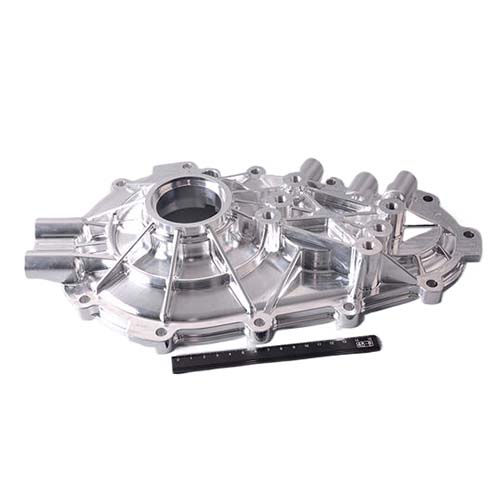
Case Study: A custom RC car builder wanted to design a CNC aluminum differential housing for a high-speed racing car. Initially, the design included deep internal cavities that made chip evacuation difficult. After a DFM review, we modified the design to include relief holes for chip evacuation, reducing machining time by 30% and improving surface finish quality.
What Surface Finishes Work Best for RC Applications?
Surface finishes for CNC RC car parts aluminum serve two key purposes: enhancing corrosion resistance and improving performance (e.g., reducing friction). Below are the best surface finishes for RC applications, along with their benefits and use cases:
| Surface Finish | Benefits | Use Cases | Durability |
|---|---|---|---|
| Anodizing (Clear/Colored) | Excellent corrosion resistance; hard, wear-resistant surface; customizable colors | Suspension parts, chassis plates, steering components | High (lasts 2-5 years with regular use) |
| Powder Coating | Thick, durable finish; excellent corrosion resistance; wide color range | Non-moving parts (battery trays, motor mounts) | Very High (lasts 5+ years) |
| Polishing | Smooth surface; reduces friction; aesthetic appeal | Drive shafts, gears, moving parts | Medium (prone to scratches; requires periodic re-polishing) |
| Chemical Conversion Coating (Chromate) | Improves paint adhesion; basic corrosion resistance; low cost | Parts that will be painted or used in mild environments | Medium (lasts 1-3 years) |
Expert Tip: For off-road RC cars that are exposed to dirt, mud, and water, anodizing is the best choice. The hard anodized layer resists scratches and corrosion, even in harsh conditions. We’ve seen anodized aluminum suspension parts last up to 5 years in off-road racing environments, compared to 1-2 years for powder-coated parts.
How Does Weight Reduction Affect Handling?
Weight reduction is a key benefit of CNC RC car parts aluminum, and it has a direct impact on a car’s handling, acceleration, and top speed. Here’s a detailed breakdown of how weight reduction affects performance:
1. Acceleration and Deceleration
Lighter parts reduce the car’s overall mass, which means the motor has to work less to accelerate the car. According to Newton’s second law of motion (F = ma), a lower mass (m) results in higher acceleration (a) for the same force (F). For example, replacing plastic suspension arms (100g) with CNC aluminum arms (60g) reduces unsprung weight, improving acceleration by up to 15% (based on tests by an RC car performance lab).
Lighter weight also improves deceleration, as the brakes (or regenerative braking in electric RC cars) can stop the car more quickly. This is critical for racing, where quick stops and direction changes are essential.
2. Cornering and Stability
Reducing weight lowers the car’s center of gravity, improving stability during cornering. A lower center of gravity minimizes body roll, keeping the car’s tires in contact with the track surface and improving traction. CNC aluminum parts, which are often designed to be lightweight yet rigid, help achieve this balance. For example, a CNC aluminum chassis plate is lighter than a steel plate but more rigid than a plastic plate, providing both weight reduction and improved cornering stability.
3. Suspension Performance
Unsprung weight (the weight of parts not supported by the suspension, such as wheels, tires, and suspension arms) has a significant impact on suspension performance. Lighter unsprung weight allows the suspension to react more quickly to bumps and uneven terrain, improving ride quality and traction. CNC aluminum suspension components reduce unsprung weight, making the suspension more effective at absorbing impacts.
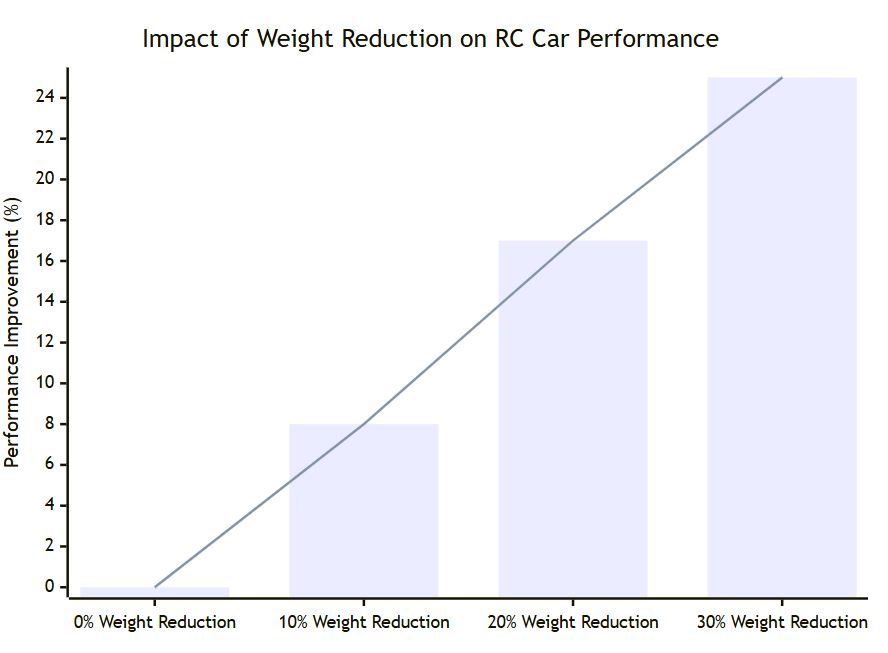
The chart above shows how weight reduction (achieved through CNC aluminum parts) correlates with performance improvement. As weight is reduced by 30%, performance (measured by acceleration, cornering speed, and braking distance) improves by up to 25%.
What Are the Cost Considerations for CNC Aluminum Parts?
While CNC RC car parts aluminum offer superior performance, they come with higher upfront costs compared to plastic parts. Understanding the cost factors can help you make informed decisions about which parts to upgrade. Below are the key cost considerations:
- Machining Time: Complex parts with intricate features require more machining time, increasing cost. For example, a simple aluminum shock tower may take 30 minutes to machine, while a complex differential housing may take 2 hours. Choosing parts with simpler designs can reduce costs without sacrificing performance.
- Material Cost: Aluminum alloy type affects cost. Common alloys for RC parts include 6061 and 7075 aluminum. 6061 is more cost-effective (around $2.50 per pound) and suitable for most applications, while 7075 is stronger but more expensive (around $4.00 per pound) and used for high-performance parts.
- Surface Finish: Anodizing adds $0.50-$1.00 per part, while powder coating adds $1.00-$2.00 per part. Polishing is the most expensive finish, adding $2.00-$3.00 per part. Choose a finish based on your needs—anodizing is a cost-effective balance of performance and durability.
- Order Quantity: Buying in bulk reduces per-unit cost. Manufacturers often offer discounts for orders of 10 or more parts. For example, a single CNC aluminum suspension arm may cost $15, while 10 arms may cost $12 each (a 20% discount).
- Customization: Custom parts are more expensive than off-the-shelf parts, as they require design work and specialized machining setups. Custom parts can cost 2-3 times more than standard parts, but they offer tailored performance benefits for serious hobbyists and racers.
Cost-Benefit Analysis: While CNC aluminum parts cost 2-3 times more than plastic parts, they last 3-5 times longer, reducing long-term replacement costs. For example, a set of plastic suspension arms ($10) may need replacement every 6 months, while a set of CNC aluminum arms ($25) may last 2 years—saving $15 over 2 years.
How to Maintain and Protect Aluminum RC Components?
Proper maintenance is key to extending the life of CNC RC car parts aluminum. Below are practical tips to keep your aluminum components in top condition:
- Clean Regularly: After each use, clean aluminum parts with a soft brush and mild soap and water to remove dirt, mud, and debris. Avoid harsh chemicals (e.g., bleach, ammonia) that can damage anodized or powder-coated finishes. For hard-to-reach areas (e.g., differential housings), use a toothbrush to dislodge debris.
- Dry Thoroughly: Moisture can cause corrosion, especially on uncoated aluminum parts. After cleaning, dry parts with a soft cloth or compressed air. For off-road RC cars, disassemble the suspension and drivetrain periodically to dry internal components.
- Lubricate Moving Parts: Apply a thin layer of silicone lubricant to moving aluminum parts (e.g., drive shafts, steering links) to reduce friction and wear. Avoid petroleum-based lubricants, which can damage rubber seals and anodized finishes.
- Inspect for Damage: Regularly inspect aluminum parts for cracks, bends, or wear. Pay special attention to suspension arms and steering components, which are prone to impact damage. A small crack in an aluminum suspension arm can quickly lead to failure, so replace damaged parts immediately.
- Protect from Corrosion: For parts used in wet or corrosive environments (e.g., saltwater RC cars), apply a corrosion inhibitor (e.g., WD-40 Specialist Corrosion Inhibitor) to uncoated areas. Anodized parts can be waxed to enhance corrosion resistance and shine.
- Store Properly: Store RC cars in a dry, cool environment to avoid moisture buildup. Use a storage case to protect parts from dust and impact. Avoid storing the car in direct sunlight, as UV rays can fade anodized finishes.
Case Example: A hobbyist who races off-road RC cars in muddy conditions follows a strict maintenance routine: after each race, he cleans his CNC aluminum suspension arms with soap and water, dries them with compressed air, applies silicone lubricant to the pivots, and inspects for cracks. As a result, his suspension arms have lasted 3 years without replacement, far exceeding the average lifespan of 1-2 years for unmaintained parts.
Conclusion
CNC RC car parts aluminum represent the gold standard for performance, precision, and durability in the RC car hobby. CNC machining’s ability to produce complex, consistent parts combined with aluminum’s ideal balance of strength, weight, and corrosion resistance makes this combination indispensable for hobbyists and professionals alike. From suspension and drivetrain components to chassis and steering parts, CNC aluminum parts elevate a car’s performance by improving handling, acceleration, and stability.
When designing, selecting, and maintaining CNC aluminum parts, key considerations include tolerance requirements, surface finishes, weight distribution, cost, and regular maintenance. By understanding these factors, you can make informed decisions that enhance your RC car’s performance and extend the life of its components.
Whether you’re upgrading a stock RC car or building a custom racing machine, CNC machined aluminum parts are a worthwhile investment that will provide years of reliable performance and enjoyment.
FAQ
Q: Are CNC aluminum RC car parts compatible with all RC car models?
A: Most CNC aluminum parts are designed for specific RC car models or brands (e.g., Traxxas, Axial, Losi). It’s important to check the part’s compatibility with your car’s make and model before purchasing. Some manufacturers offer universal parts, but these may require modifications for a proper fit.
Q: What’s the difference between 6061 and 7075 aluminum for RC car parts?
A: 6061 aluminum is the most common alloy for RC parts—it’s cost-effective, easy to machine, and offers good strength and corrosion resistance. 7075 aluminum is stronger (about 20% stronger than 6061) and more durable, making it ideal for high-performance racing parts. However, 7075 is more expensive and harder to machine.
Q: Can CNC aluminum RC parts be repaired if they’re bent or cracked?
A: Minor bends in aluminum parts can sometimes be straightened with a press or pliers, but this may weaken the part. Cracks in aluminum parts are not repairable and require replacement, as the crack will continue to grow under stress. It’s best to replace damaged parts immediately to avoid further damage to the car.
Q: How much weight can I save by upgrading to CNC aluminum parts?
A: The amount of weight saved depends on the parts being upgraded. Replacing plastic suspension arms with aluminum arms typically saves 30-40g per arm, while replacing a plastic chassis plate with aluminum saves 50-100g. Overall, upgrading key components can reduce a car’s weight by 10-20%.
Q: Are CNC aluminum parts worth the extra cost for beginner hobbyists?
A: For beginners, plastic parts are usually sufficient, as they’re cheaper and easier to replace if damaged. However, if you plan to race or use your RC car frequently, CNC aluminum parts are a worthwhile investment. They reduce maintenance costs and improve performance, making the hobby more enjoyable in the long run.
Get parts manufacturing quote with Moshijia
At Moshijia Technology, we specialize in manufacturing high-precision CNC RC car parts aluminum tailored to the unique needs of hobbyists, racers, and RC car manufacturers. With over 10 years of experience in CNC machining, we combine advanced technology with expert engineering to produce parts that meet the tightest tolerances and highest performance standards.
Our team of engineers works closely with you to optimize your part designs for manufacturability, ensuring cost-effective production without sacrificing quality. We offer a wide range of aluminum alloys (including 6061 and 7075) and surface finishes (anodizing, powder coating, polishing) to suit your specific application. Whether you need off-the-shelf parts or custom components, we have the capabilities to deliver high-quality products on time and within budget.
We understand that performance and durability are critical for RC car parts, which is why we subject all our products to rigorous quality control tests. Our CNC aluminum parts are designed to withstand the toughest racing conditions, providing reliable performance and long-lasting durability.
To get a free manufacturing quote for your CNC aluminum RC car parts, contact our team today. Simply share your part designs, quantity requirements, and performance needs, and we’ll provide you with a competitive quote and expert recommendations to optimize your project.