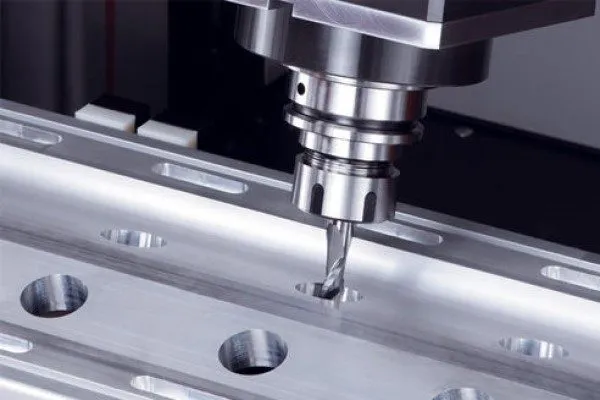
Need CNC aluminium machining that delivers clean cuts and tight tolerances? We cover alloy selection, speeds and feeds, surface finishes, and how to avoid common defects.
Introduction
You designed a part. It needs to be strong but light. It needs to conduct heat or resist corrosion. It needs to look good and fit perfectly the first time.
That is when you turn to aluminium. But here is the catch—not all aluminium machines the same way. Pick the wrong alloy, and you get gummy surfaces and torn threads. Run the wrong speeds, and your tools wear out in hours instead of weeks.
CNC aluminium machining is the most common precision manufacturing process in the world. From aerospace brackets to automotive prototypes, aluminium delivers performance that steel cannot match at half the weight.
This guide walks you through everything that matters. We cover which alloys work best, how milling differs from turning, what finishes you can choose, and exactly how to optimize your feeds and speeds. No fluff. Just practical knowledge you can use.
What Is CNC Aluminium Machining?
Let us start with the basics. CNC aluminium machining uses computer-controlled machine tools to remove material from aluminium stock. The result is a finished part that matches your 3D model within tight tolerances.
The process covers several operations:
- Milling for complex 3D shapes, pockets, and holes
- Turning for cylindrical features on a lathe
- Drilling and tapping for threaded holes
- Surface finishing to improve appearance or function
Aluminium machines differently than steel or plastic. It is softer, so you can cut faster. But it also has a lower melting point, so heat management matters. Chips can weld themselves to tools if you get things wrong.
Here is a real example: A racing team needed new intake manifold flanges. They tried 6061 aluminium with standard feeds and got built-up edge after three parts. They switched to polished tooling and increased coolant flow. Now they run hundreds of parts with the same end mill.
Why Choose Aluminium for CNC Projects?
Why do engineers spec aluminium over steel, plastic, or titanium? The answer comes down to five key advantages.
Weight Reduction
Aluminium weighs about one-third as much as steel. A bracket that weighs 3 pounds in steel becomes 1 pound in aluminium. For aerospace and automotive applications, that weight savings translates directly to fuel efficiency and performance.
Strength-to-Weight Ratio
Pure aluminium is soft. But alloys like 7075-T6 have tensile strength up to 83,000 psi—comparable to some steels. You get steel-like strength at a fraction of the weight.
Corrosion Resistance
Aluminium forms a natural oxide layer that protects against rust. Most alloys do not need paint or plating for indoor applications. For marine environments, alloys like 5052 and 5083 offer excellent saltwater resistance .
Thermal and Electrical Conductivity
Aluminium conducts heat better than steel. That is why LED heat sinks, engine components, and electronic enclosures use aluminium. It pulls heat away from sensitive components and dissipates it quickly.
Machinability
Compared to stainless steel or titanium, aluminium cuts fast. Spindle speeds of 10,000 to 20,000 RPM are common. You remove material quickly, which means lower part costs and faster turnaround.
Which Aluminium Alloys Machine Best?
Not all aluminium is created equal. Here is how the common grades stack up for CNC aluminium machining.
6061: The Workhorse
6061-T6 is the most common machining alloy. It offers good strength, excellent corrosion resistance, and great machinability. Surface finishes come out clean. Welding works well. Anodizing takes evenly.
Use 6061 for: general machine parts, structural components, automotive brackets, consumer products.
7075: Aerospace Grade
7075-T6 is stronger than many steels. Zinc is the main alloying element. It machines well but costs more than 6061. Weldability is poor, so design for machining only.
Use 7075 for: aerospace structural parts, high-performance racing components, gear parts, tooling fixtures.
2024: Aircraft Skin
2024-T3 offers high strength and good fatigue resistance. Copper is the main addition. It does not corrode as well as 6061, so protective coating is often needed.
Use 2024 for: aircraft structures, wing skins, military hardware, scientific instruments.
5052: The Former
5052-H32 is not heat-treatable. It forms easily without cracking. Strength is moderate, but corrosion resistance is excellent—especially in marine environments.
Use 5052 for: sheet metal enclosures, fuel tanks, marine parts, electronics chassis.
Comparison Table: Common Aluminium Alloys
| Alloy | Strength | Machinability | Corrosion Resistance | Cost | Best Application |
|---|---|---|---|---|---|
| 6061-T6 | Good | Excellent | Good | Low | General purpose |
| 7075-T6 | Very High | Good | Fair | High | Aerospace, high stress |
| 2024-T3 | High | Good | Poor | Medium | Aircraft structures |
| 5052-H32 | Medium | Good | Excellent | Low | Marine, formed parts |
| 6063-T5 | Medium | Good | Good | Low | Architectural extrusions |
A medical device company learned this the hard way. They prototyped a surgical handle in 6061. Works great. They switched to 7075 for production without changing feeds. Tools wore out fast. The solution? Slow down spindle speed by 20% and increase feed per tooth. Problem solved.
How Does CNC Milling Differ from Turning?
You need to know which process fits your part. Both remove material, but they work differently.
CNC Milling
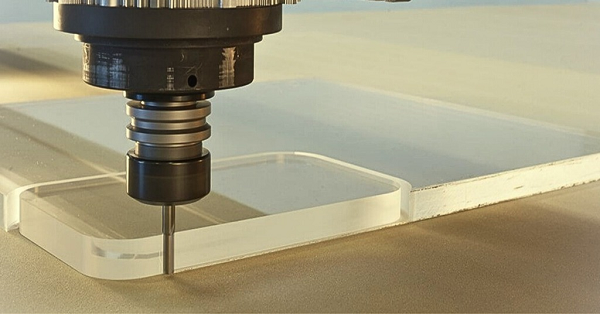
Milling uses rotating cutting tools to remove material from a stationary workpiece—or the workpiece moves while the tool spins. Modern 3-axis, 4-axis, and 5-axis milling centers can create complex geometries.
Milling produces:
- Pockets and cavities
- Complex 3D contours
- Flat surfaces
- Slots and keyways
- Holes and threaded features
A typical milling operation on a 6061 bracket might run at 12,000 RPM with a 3-flute end mill, taking 0.050″ radial cuts at 100 inches per minute.
CNC Turning
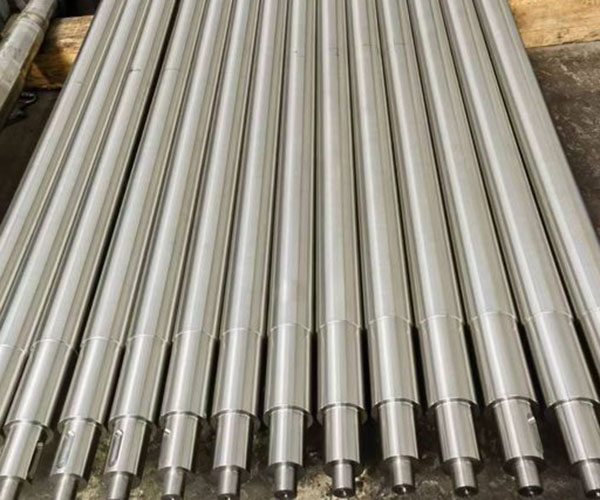
Turning spins the workpiece while a stationary cutting tool removes material. Lathes create cylindrical parts.
Turning produces:
- Round shafts
- Bushings and sleeves
- Threaded rods
- Pulleys and rollers
- Parts with grooves and tapers
Which One Do You Need?
Ask these questions:
- Is your part mostly round and symmetrical? → Turning
- Does it have complex features on multiple faces? → Milling
- Is it a mix of both? → Mill-turn or Swiss machining
Many precision machine shops now offer multi-tasking machines that do both. A part starts as bar stock, gets turned on the OD, then milled flat on the same machine without re-clamping.
What Surface Finishes Are Available?
Raw machined surfaces have tool marks. For many applications, that is fine. But sometimes you need something better.
As-Machined
Straight off the machine. You see circular tool marks. Roughness averages around 32 to 64 microinches Ra. Functional but not pretty.
Bead Blasting
Glass beads blasted at medium pressure create a uniform matte finish. It hides minor surface defects. Aerospace brackets and consumer electronics often use this look.
Anodizing
Anodizing grows a protective oxide layer on the surface. It adds hardness and corrosion resistance. You can dye it any color. Type II (decorative) is common for consumer goods. Type III (hard coat) adds wear resistance for functional parts.
A drone manufacturer learned to love hard coat anodize. Their 6061 camera mounts wore out where the gimbal pivots. Hard coat anodize to 0.002″ thickness solved the problem. No more fretting.
Powder Coating
Thicker than paint. Tough as nails. Great for outdoor equipment and industrial parts. Hides surface imperfections well.
Electropolishing
Removes a thin layer of material. Leaves a bright, smooth surface. Great for food contact and medical applications where you need easy cleaning.
| Finish | Appearance | Cost | Best For |
|---|---|---|---|
| As-machined | Tool marks visible | Lowest | Hidden or functional parts |
| Bead blast | Matte uniform | Low | Consumer goods, cosmetics |
| Anodize (clear) | Metallic, protected | Medium | Exterior parts, wear resistance |
| Anodize (color) | Colored, protected | Medium | Branded products |
| Powder coat | Smooth, opaque | Medium | Industrial, outdoor |
| Electropolish | Bright, smooth | High | Medical, food processing |
How to Optimize Machining Speeds and Feeds?
Getting speeds and feeds right separates good parts from scrap. Here is how to dial them in for CNC aluminium machining.
Start with Tooling
Use sharp tools with polished flutes. Aluminium sticks to dull tools. Uncoated carbide works well. DLC-coated (diamond-like carbon) tools reduce built-up edge even more.
Calculate Chip Load
Chip load is the thickness of material each flute removes. For aluminium, target 0.002″ to 0.005″ per tooth for roughing. Finishing passes use lighter loads.
Formula: Feed Rate = RPM × Number of Flutes × Chip Load
Example: 12,000 RPM × 3 flutes × 0.003″ chip load = 108 inches per minute feed rate
Set Spindle Speed
Aluminium loves speed. Run as fast as your machine allows. 10,000 to 20,000 RPM is typical. Higher speeds mean faster material removal and better surface finish.
Manage Heat
Aluminium conducts heat well, but it also softens when hot. Use flood coolant or through-spindle mist. Keep chips moving out of the cut zone.
Real-World Optimization
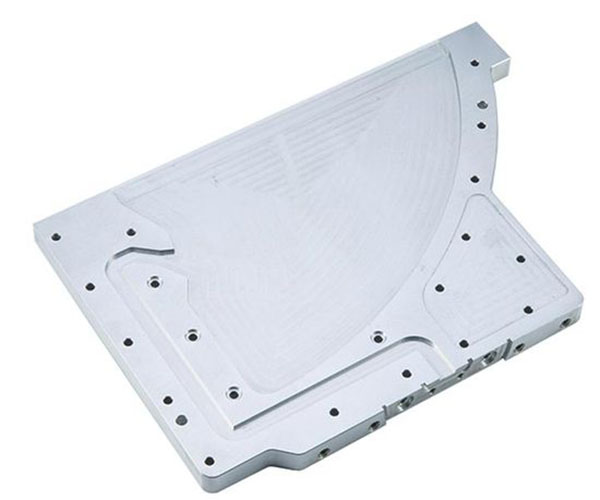
A job shop had trouble with 6061 vacuum manifold plates. Deep pockets caused tool deflection. They tried three approaches:
- Standard roughing: 0.200″ depth, chatter marks on walls
- Light passes: 0.050″ depth, cycle time doubled
- High-feed toolpath: 0.150″ depth with 5% stepover, 250 IPM feed rate
Option three cut cycle time by 40% and eliminated chatter. The secret was modern toolpaths that maintain constant tool engagement.
What Common Defects Should You Avoid?
Even experienced shops make mistakes. Here are the most common problems in CNC aluminium machining and how to prevent them.
Built-Up Edge
Aluminium sticks to the cutting edge. This ruins surface finish and eventually breaks tools.
Fix it: Increase surface speed. Use polished tools. Increase coolant flow. Try DLC-coated end mills.
Burrs
Ragged edges on part corners. They require secondary deburring operations that cost time.
Fix it: Reduce tool wear. Use sharp tools. Try climb milling. Design parts with chamfers on sharp edges.
Chatter
Vibration marks on machined surfaces. Ugly and often out of tolerance.
Fix it: Check workholding rigidity. Reduce stick-out length. Vary spindle speed slightly. Use variable-flute end mills.
Dimensional Drift
Parts start good but drift out of tolerance after a few cycles.
Fix it: Warm up the machine before production. Monitor tool wear. Use in-process probing to check critical features.
A real case: An automotive supplier made aluminium throttle bodies. After 50 parts, bores measured 0.001″ oversize. The cause? Thermal growth. The spindle warmed up over two hours and expanded. Solution: Run a warm-up cycle before production starts. Problem gone.
Surface Tearing
Rough, torn areas on walls or floors.
Fix it: Reduce radial engagement. Increase feed per tooth. Check for dull tools. Use high-efficiency milling toolpaths.
Conclusion
CNC aluminium machining delivers parts that are strong, light, and precise. The right alloy choice—whether 6061 for general use or 7075 for high stress—sets the foundation for success. Understanding the difference between milling and turning helps you design parts that machine efficiently.
Surface finishes transform functional parts into finished products. Anodizing adds color and protection. Bead blasting hides tool marks. Each option serves a purpose.
Optimizing speeds and feeds takes experimentation, but the payoff is faster cycles and longer tool life. Avoiding common defects like built-up edge and chatter saves scrap and rework.
Whether you need one prototype or ten thousand production parts, aluminium delivers. The material is forgiving. The processes are mature. The results speak for themselves.
Frequently Asked Questions
What is the best aluminium alloy for CNC machining?
6061-T6 is the most versatile and cost-effective choice for most applications. For higher strength requirements, 7075-T6 performs well but costs more and does not weld easily.
Can you CNC machine aluminium without coolant?
Yes, but it is not ideal. Without coolant, chips can weld to the cutter. Use compressed air to clear chips and consider mist lubrication for best results.
What surface finish can I expect from machined aluminium?
Standard machined finishes range from 32 to 64 microinches Ra. Bead blasting creates a uniform matte appearance. Anodizing adds color and protection while maintaining the underlying surface texture.
How tight tolerances can CNC aluminium machining hold?
Precision machine shops routinely hold ±0.005 mm (0.0002″) on critical features with the right equipment and process controls. Standard production tolerances are typically ±0.1 mm (0.004″).
Does aluminium corrode after machining?
Aluminium forms a natural protective oxide layer immediately after machining. For most indoor applications, no additional protection is needed. Outdoor or marine environments may require anodizing or painting.
How fast can you machine aluminium compared to steel?
Aluminium machines 3 to 5 times faster than mild steel. Spindle speeds of 10,000 to 20,000 RPM with high feed rates are common, while steel requires slower speeds to manage heat and tool wear.
Get projects quote with Moshijia Technology.
Ready to bring your aluminium parts to life? At Moshijia Technology, we specialize in CNC aluminium machining for prototypes and production runs. Our 3-axis, 4-axis, and 5-axis CNC centers handle complex geometries with ease.
We help you choose the right alloy—6061, 7075, or something specialized. We optimize feeds and speeds for your specific part geometry. We offer surface finishing in-house, from as-machined to anodized and bead blasted.
Upload your CAD file today. Get a quote within 24 hours. Let’s make your next project a success.