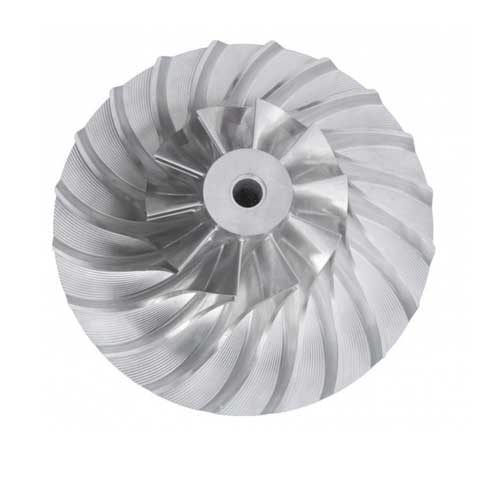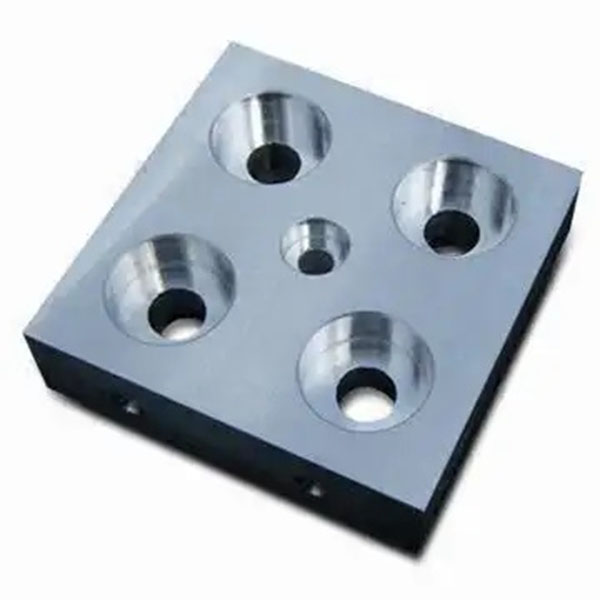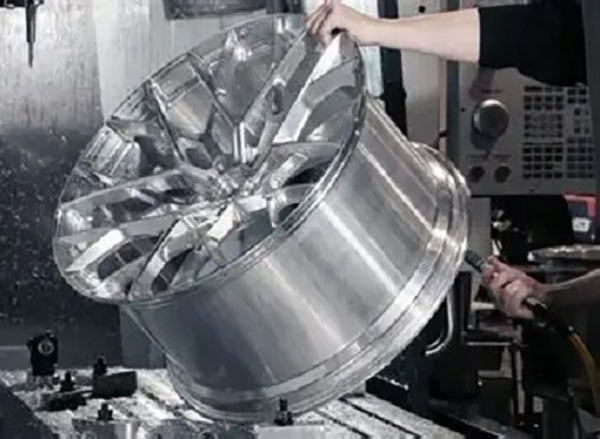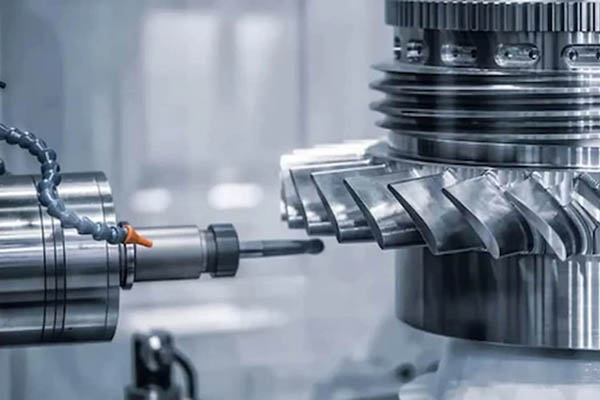
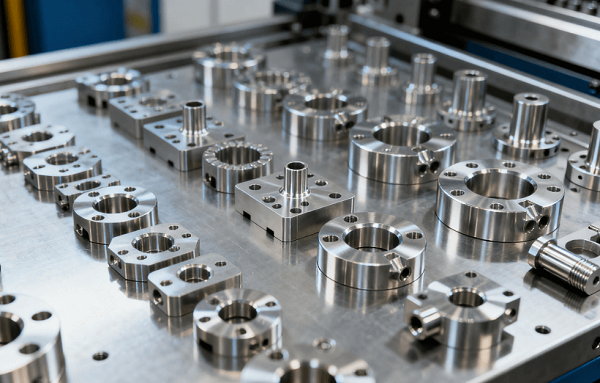
Needing precision CNC machining parts that fit right the first time? We break down tight tolerances, material selection, quality standards, and how to choose a partner who delivers.
Introduction
You have a design. It is complex. The features are small. The tolerances are tight. You send the file to a machine shop, cross your fingers, and hope the parts come back correct. But hope is not a strategy.
In industries like aerospace, medical devices, and automotive, precision CNC machining parts are not a luxury—they are a requirement. A part that is off by a fraction of a human hair can cause a hydraulic system to fail or a surgical tool to malfunction.
This guide walks you through everything that matters. We cover how precision is defined, why it matters, what materials work best, and exactly how to vet a machining partner so you stop gambling with your supply chain.
What Are Precision CNC Machining Parts?
Let us start with a clear definition. Precision CNC machining parts are components manufactured to extremely tight tolerances using computer-controlled machine tools. These parts meet exact dimensional specifications—often within microns—and feature complex geometries that standard machining cannot achieve.
Think of a hydraulic spool valve for a commercial airplane. The spool must slide perfectly inside the sleeve. If the clearance is too loose, fluid leaks. Too tight, the valve sticks. Manufacturers like C&S Machine Products in Michigan routinely hold grinding tolerances of 0.00005″ (about 1.25 microns) for these exact applications .
Precision machining is not about one machine or one process. It combines CNC turning, 5-axis milling, wire EDM, grinding, and Swiss-type machining to create parts that range from micro-diameter components to complex assemblies .
Why Does Precision Matter in Manufacturing?
You might ask: “Why spend the money on tight tolerances? My assembly has some wiggle room.”
Here is why precision matters across three critical dimensions:
1. Function and Performance
Parts must fit together. In a gearbox housing, multiple bores and flanges must align perfectly. A 2023 study showed that a 0.015 mm misalignment in a mounting hole can disrupt an entire aerospace actuator assembly . Precision ensures that parts not only fit but function as designed.
2. Reliability and Safety
In medical devices, failure is not an option. Spinal implants require smooth surfaces and precise screw holes. One case study highlighted a titanium implant where a 0.008 mm surface deviation was detected and corrected in-process, ensuring patient safety .
3. Cost Efficiency
Tight tolerances actually save money over the product lifecycle. Parts that fit correctly reduce assembly time. They eliminate rework. They prevent field failures. C&S Machine built its entire business niche on producing the “tough stuff” that other shops cannot handle—and they ship 20-40 pieces in a very small box at premium prices .
How Does CNC Technology Achieve Tight Tolerances?
Achieving tolerances down to 2 microns (0.00008″) does not happen by accident . It requires multiple layers of technology and process control.
Machine Design and Stability
Modern precision machining starts with the machine itself. The DMU 60 eVo 2. Generation from DMG MORI uses a temperature-controlled machine bed made of hybrid mineral casting. The gantry design provides exceptional rigidity. A comprehensive cooling concept keeps guide carriages, the Y-slide, and the B-axis at constant temperatures .
Why does temperature matter? Heat causes expansion. If the spindle grows by a few microns during a run, your parts grow with it. ANCA CNC Machines developed patented Motor Temperature Control (MTC) technology that lets operators set the spindle temperature and maintain it automatically. This eliminates thermal variation as a source of inaccuracy .
Inline Gauging and Real-Time Correction
Traditional inspection checks parts after machining. If a feature is wrong, the part is scrap. Inline gauging changes the game.
Tactile probes, optical sensors, and vision systems measure parts during the machining process. A 2024 study in Procedia CIRP found that inline gauging on milling machines cut dimensional errors by 28% compared to traditional methods .
Here is a real example: An aerospace manufacturer used a Renishaw scanning probe on a 5-axis CNC machine to measure slot widths on a compressor disc. The probe detected a 0.008 mm deviation caused by tool wear. The system automatically adjusted the tool offset and cut scrap rates by 20% .
Multi-Axis Capability
Complex geometries require complex machine motion. Four- and five-axis CNC systems allow machining intricate parts in fewer setups. Fewer setups mean fewer opportunities for error. You get higher accuracy, tighter tolerances, and shorter lead times .
What Materials Work Best for Precision Machining?
The material you choose affects everything—machinability, cost, and final part performance. Here is how materials break down for precision applications .
Metals and Alloys
| Material | Key Properties | Typical Applications |
|---|---|---|
| Aerospace Aluminum | High strength-to-weight, excellent machinability | Aircraft structural components, automotive parts |
| Stainless Steel (304/316) | Corrosion resistance, durability | Medical instruments, food processing equipment |
| Titanium | Biocompatible, high strength, lightweight | Surgical implants, aerospace fasteners |
| Nickel-Based Superalloys (Inconel, Hastelloy) | Extreme temperature stability | Jet engine turbine disks, “hot section” components |
| Hardened Steels (440C, 52100) | Wear resistance, high hardness | Hydraulic spool valves, bearing races |
Engineering Plastics and Composites
| Material | Key Properties | Typical Applications |
|---|---|---|
| PEEK | High thermal stability, chemical resistance | Semiconductor components, automotive |
| PTFE | Chemical inertness, low friction | Seals, bearings, electrical insulation |
| Carbon Fiber Reinforced Polymer | Unmatched stiffness-to-weight | Aerospace structures, high-performance automotive |
Machining Considerations by Material
Different materials demand different approaches:
- Aluminum and plastics: Use liquid coolant or compressed air. High cutting speeds work well.
- Stainless steels and titanium: Abundant cooling with emulsion or soluble oil prevents overheating.
- Composites and PEEK: Dry machining or minimal lubrication prevents delamination .
Which Industries Rely on CNC Precision Parts?
Precision machining touches nearly every advanced industry. Here is where it matters most.
Aerospace
Aircraft components face extreme conditions. C&S Machine produces parts for nearly every airplane platform flying today, both military and commercial. Critical assemblies include hydraulic spool and sleeve valves, turbine disks, and landing gear components. Materials range from titanium to nickel-based alloys .
Wire EDM technology now allows cutting fir tree patterns in jet engine turbine disks from 160 mm up to 680 mm in diameter—all in nickel-based alloys .
Medical Devices
Medical machining demands biocompatibility and absolute reliability. Precision shops produce surgical instruments, implants, and spinal components. One manufacturer used laser triangulation sensors to monitor nitinol stent machining, detecting a 0.007 mm deviation and correcting it in real time .
Automotive
Modern vehicles contain hundreds of precision-machined components. Transmission housings, engine blocks, and camshafts all require tight GD&T compliance. An automotive supplier used vision systems to check gearbox bore positions in-process, detecting a 0.025 mm misalignment and reducing scrap by 22% .
Power Generation and Industrial
Turbines, generators, and heavy equipment rely on precision components. Wind turbine gear manufacturers use digital twins to predict errors. One case showed a predicted 0.04 mm tooth profile error caught before machining, saving 12 hours of rework .
What Quality Standards Govern Precision Machining?
You need a common language to specify tolerances. Standards provide that language.
ISO 2768: General Tolerances
ISO 2768 is the most widely used standard for CNC machining. It comes in two parts :
ISO 2768-1: Linear and Angular Dimensions
Four tolerance classes: fine (f), medium (m), coarse (c), and very coarse (v).
ISO 2768-2: Geometrical Tolerances
Three classes: H, K, and L for features like flatness, straightness, and perpendicularity.
A drawing note like “ISO 2768-mK” tells the machinist: use medium tolerances for dimensions and K class for geometry .
ISO 286: Fit Tolerances
For mating parts like shafts and holes, ISO 286 defines standard tolerance grades from IT6 (precision) to IT8 (coarse). IT6 allows deviations as tight as 0.006 mm for small diameters .
Industry-Specific Standards
| Industry | Standard | Requirement |
|---|---|---|
| Aerospace | AS9100 | Quality management with traceability |
| Medical | ISO 13485 | Risk management, process validation |
| Special Processes | NADCAP | Heat treat, coatings, NDT certification |
C&S Machine holds all three: AS9100 for aerospace, ISO13485 for medical, and NADCAP for special processes .
The American Equivalent
For US buyers, ASME standards apply. ISO 2768 does not have a direct ASME equivalent, but ISO 286 IT grades correspond to ASME B4.1 grades .
How to Select the Right CNC Machining Partner?
Finding a machine shop is easy. Finding a partner who delivers precision parts on time, every time—that takes work.
Technical Capability Audit
Start with equipment. Does the shop have 5-axis CNC, wire EDM, cylindrical grinding, and Swiss turning? Can they hold tolerances down to ±0.005 mm? Ask for examples of similar parts they have produced .
Verify their metrology. Coordinate measuring machines (CMM), optical comparators, and laser interferometers should be standard. Calibration should be traceable to NIST .
Quality Systems and Traceability
ISO 9001 is the baseline. For critical applications, demand First Article Inspection reports (FAIR) , Material Test Reports (MTR), and process validation documentation. Shops with Statistical Process Control (SPC) demonstrate higher maturity .
Operational Responsiveness
Response time tells you how they treat customers. A quote within 4 hours suggests dedicated engineering support. Delayed replies may indicate they are overloaded or under-resourced .
On-time delivery rates matter. Look for 95% or better. Some suppliers advertise low prices but deliver late—verify performance before committing .
Sample Evaluation
Never skip the prototype phase. Order samples and inspect them against your drawing. Check fit, finish, and function. A shop confident in their work will welcome the chance to prove themselves .
Red Flags to Watch
- Unwilling to share CMM reports
- No documented QC procedures
- Long lead times with no explanation
- Pressure to pay 100% upfront
Conclusion
Precision CNC machining parts are the foundation of modern manufacturing. From jet engines to surgical implants, these components enable products to perform reliably in the most demanding environments.
Precision comes from the intersection of advanced machine tools, robust process control, and deep expertise. Machines like the DMU 60 eVo and technologies like inline gauging make micron-level tolerances achievable. Standards like ISO 2768 and AS9100 provide the framework for consistency. But the real differentiator is people—the engineers and machinists who understand materials, toolpaths, and quality systems.
When you select a machining partner, look beyond the brochure. Audit their capabilities. Verify their quality systems. Test their responsiveness. The right partner does not just make parts—they become an extension of your engineering team.
Frequently Asked Questions
What exactly are precision CNC machining parts?
They are components manufactured to extremely tight tolerances—often within microns—using computer-controlled machine tools. These parts feature complex geometries and must meet exact dimensional specifications to function correctly in assemblies .
What tolerance can CNC precision machining hold?
Advanced shops routinely hold tolerances down to ±0.005 mm (5 microns). Some specialized facilities achieve 2 microns (0.00008″) on critical features with the right equipment and process controls .
How do I specify tolerances on my drawing?
Use international standards like ISO 2768 for general tolerances. For mating features, specify ISO 286 grades (IT6 for precision). Add a note in the title block like “ISO 2768-mK” to communicate requirements clearly .
What materials are hardest to machine precisely?
Nickel-based superalloys (Inconel, Hastelloy) and titanium are challenging due to work hardening and heat generation. They require rigid machines, specialized tool coatings, and abundant cooling .
How do I know if a supplier is reliable?
Check their equipment list, quality certifications (ISO 9001, AS9100), and request sample parts with full inspection reports. On-time delivery history and response time to inquiries are strong indicators of operational discipline .
Can I get small quantities machined?
Yes. Many precision machine shops now accept low minimum order quantities. Some will machine a single prototype piece to validate the design before scaling to production runs .
Get projects quote with Moshijia Technology.
Ready to stop guessing and start machining? At Moshijia Technology, we combine advanced 5-axis CNC capabilities, rigorous quality systems, and engineering expertise to deliver precision CNC machining parts that meet your exact specifications.
Whether you need aerospace components with micron-level tolerances or medical devices requiring full traceability, our team delivers. We provide DFM feedback before production, inspect every critical feature, and ship on time.
Upload your CAD file today. Get a quote within 24 hours. Let’s build something precise.