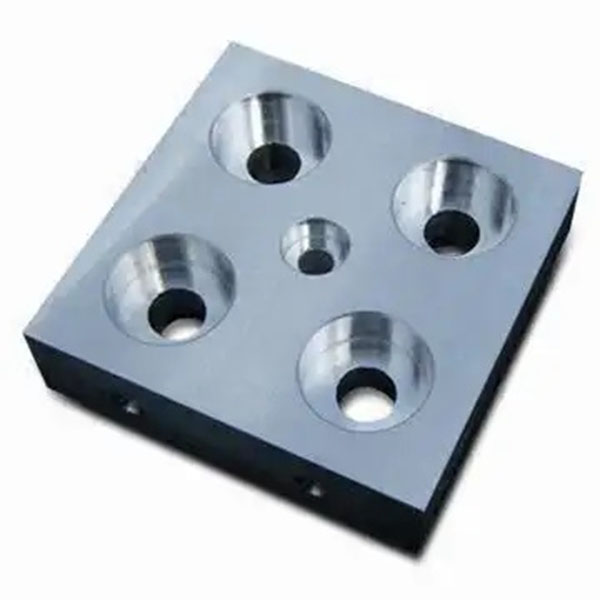
If you’re in manufacturing—whether aerospace, medical, or automotive—you’ve likely heard of CNC 5 axis machining and wondered how it differs from standard 3-axis systems, or if it’s the right choice for your complex parts. Simply put, CNC 5 axis machining is an advanced manufacturing process that lets a cutting tool move simultaneously across five axes (three linear: X, Y, Z; two rotational: A, B or C). This means it can create intricate, high-precision parts in fewer setups than 3-axis machines, with tolerances as tight as ±0.002 mm. For example, if you need a turbine blade with complex contours or a custom medical implant that matches a patient’s anatomy, 5-axis machining is often the most efficient and accurate solution.
What Is CNC 5 Axis Machining, and How Does It Work?
To understand CNC 5 axis machining, let’s start with the basics: how it moves and why those movements matter. Unlike 3-axis machines, which only move along the X (left-right), Y (front-back), and Z (up-down) axes, 5-axis systems add two rotational axes. These rotations let the tool or workpiece tilt and spin, so the cutting tool can approach the part from almost any angle—no need to stop and reposition the part mid-production.
Here’s a simple breakdown of the process:
- CAD Design: You start with a 3D CAD model (file formats like STEP, STP, or SLDPRT work best) of your part.
- CAM Programming: Software converts the CAD model into toolpaths, accounting for all five axes to avoid collisions and ensure smooth cuts.
- Machine Setup: The workpiece is secured, and the machine calibrates to the part’s position.
- Simultaneous Machining: The tool and workpiece move in tandem across all five axes, cutting complex shapes in one continuous operation.
A real-world example highlights its power: Italian engineer Andrea Piccino used CNC 5 axis machining (via Moshijia) to build a full-body passive exoskeleton—think an “Iron Man Suit” for industrial use. The exoskeleton required hundreds of intricate parts with curved surfaces and tight tolerances. With 5-axis machining, Andrea avoided the multiple setups that 3-axis would have needed, cutting production time by 40% and ensuring all parts fit perfectly together.
CNC 5 Axis vs. 3 Axis: Which Should You Choose?
Many manufacturers debate between 3-axis and 5-axis machining. The choice depends on your part’s complexity, volume, and budget. Below is a detailed comparison to help you decide:
| Factor | 3-Axis Machining | CNC 5 Axis Machining |
| Axes of Movement | X, Y, Z (linear only) | X, Y, Z (linear) + 2 rotational axes |
| Part Complexity | Best for simple parts (flat surfaces, basic holes) | Ideal for complex geometries (curves, undercuts, multi-angle features) |
| Setups Needed | Multiple setups for complex parts | 1 setup for most parts |
| Tolerances | ±0.01 mm (standard) | As tight as ±0.002 mm |
| Lead Time | Longer for complex parts (due to setups) | Faster for complex parts (2–3 days for standard orders) |
| Cost | Lower upfront (machines and programming) | Higher upfront, but lower per-part cost for complex projects |
| Ideal Industries | Construction, basic automotive parts | Aerospace, medical, advanced automotive |
For instance, if you’re making a simple aluminum bracket for a car, 3-axis is cost-effective. But if you’re producing a titanium compressor blade for a jet engine—with twisted surfaces and precise airfoils—CNC 5 axis machining is non-negotiable. It eliminates human error from repositioning the part and ensures the blade’s aerodynamic shape is consistent across every unit.
Key Types of CNC 5 Axis Machining Systems
Not all 5-axis machines work the same way. The two most common designs are trunnion-style and swivel-rotate-style, each suited to different part sizes and complexities.
Trunnion-Style Machining Centers
This design has a fixed spindle and a moving table (the trunnion) that rotates the workpiece along two axes. Think of it like a lazy Susan that tilts—your part sits on the table, which spins and tilts to present every angle to the tool.
Best for: Heavy or large parts (up to 4000×1500×600 mm, per Moshijia’s capabilities). The stable table supports weight without vibration, making it perfect for aerospace components like wing spars or marine parts like propeller hubs.
Swivel-Rotate-Style Machining
Also called “table-table” machining, this system has two moving tables: one spins the part, and the other tilts it. The spindle stays fixed. This design is more compact and precise for small, delicate parts.
Best for: Intricate parts like medical implants (e.g., hip joints) or small automotive components (e.g., fuel injector nozzles). For example, when making a cranial plate (used to repair skull fractures), swivel-rotate 5-axis machines can cut custom contours that match a patient’s skull—down to 0.5 mm accuracy—without damaging the thin metal.
There’s also a hybrid option: 3+2 axis machining. It’s a middle ground where the machine locks the rotational axes into place (like a “fixed angle”) and uses 3-axis cutting. This is cheaper than full 5-axis but still faster than 3-axis for parts that need a few specific angles. For example, Arco Aria used 3+2 axis machining to modify his tether car’s engine, redesigning the intake system for better speed. The process cut cycle time by 30% compared to 3-axis, without the cost of full 5-axis.
Materials & Surface Finishes for CNC 5 Axis Machining
CNC 5 axis machining works with a wide range of materials, from metals to plastics. The key is choosing a material that balances strength, machinability, and cost for your application.
Common Materials (with Use Cases)
| Material Type | Examples | Ideal Applications | Key Benefits |
| Metals | Aluminum 6061-T6, Titanium, Stainless Steel 316 | Aerospace parts (turbine blades), medical implants (hip joints) | Lightweight (aluminum), corrosion-resistant (stainless steel), biocompatible (titanium) |
| Alloys | Brass, Bronze, Aluminum 7075 | Electrical components (brass connectors), marine parts (bronze fittings) | Good conductivity (brass), high strength (7075 aluminum) |
| Plastics | ABS, PEEK, PMMA (Acrylic) | Consumer goods (ABS phone cases), medical tools (PEEK surgical instruments) | Impact-resistant (ABS), heat-resistant (PEEK), transparent (PMMA) |
For example, aluminum 6061-T6 is a top choice for aerospace: it’s lightweight (1/3 the weight of steel) and easy to machine, yet strong enough for aircraft frames. PEEK, on the other hand, is used in medical tools because it’s sterile, heat-resistant, and compatible with MRI machines.
Surface Finishes to Enhance Your Part
Finishes aren’t just about looks—they improve durability, corrosion resistance, and functionality. Here are the most popular options for CNC 5 axis machining:
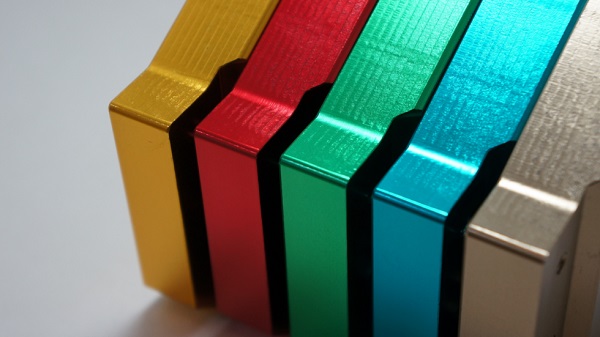
- Anodizing: Adds a protective layer to aluminum (Type II is common for black or glossy finishes). Great for aerospace parts that need to resist corrosion.
- Polishing: Creates a mirror finish (Ra0.2) for metals like stainless steel. Used in medical devices where smooth surfaces prevent bacteria buildup.
- Sand Blasting: Uses pressurized sand to create a matte, uniform texture (#220 grit is standard). Ideal for automotive parts that need a non-slip surface.
- Electroplating: Coats parts with nickel, gold, or silver. Gold plating is used in electronics for better conductivity.
Moshijia, for example, applied anodizing to Andrea’s exoskeleton parts: the black anodized finish protected the aluminum from scratches and corrosion, which was critical for industrial use.
CNC 5 Axis Machining Capabilities & Design Guidelines
To get the best results from CNC 5 axis machining, you need to design your part with the machine’s limits in mind. Below are key capabilities and guidelines to follow:
Core Capabilities (Data Backed)
- Maximum Part Size: Up to 4000×1500×600 mm (Moshijia) or 80”×48”×24” (Moshijia) for milled parts.
- Minimum Part Size: 5×5×5 mm (small enough for micro-medical parts).
- Tolerances: ±0.002 mm for metals; ±0.01 mm for plastics (per ISO 2768 standards).
- Lead Time: 2–3 days for standard parts; up to 2 weeks for highly complex projects.
Critical Design Guidelines
- Minimum Feature Size: Keep holes, slots, or text at least 0.5 mm wide/depth—smaller features risk breaking tools or losing precision.
- Threads: Stick to M2–M24 threads for tapped holes. Add a small relief (extra space) at the bottom of holes to ensure full threads.
- Text: Make text at least 1.5 mm tall and 0.5 mm deep—any smaller, and the text may be unreadable after machining.
- Internal Fillets: For corners inside the part, use fillets (rounded edges) 0.020”–0.050” larger than your drill size. This prevents tool breakage and ensures smooth cuts.
A common mistake: designing a part with a 0.3 mm slot. Most 5-axis machines can’t handle slots that small without vibration, leading to a rough finish or a broken tool. By following the 0.5 mm minimum, you avoid costly reworks.
Industries & Applications for CNC 5 Axis Machining
CNC 5 axis machining is used across industries where precision and complexity matter. Below are its most impactful applications:
Aerospace
Aerospace parts (turbine disks, compressor blades, swivel bearings) need to withstand extreme temperatures and pressure. CNC 5 axis machining ensures these parts have perfect aerodynamic shapes—critical for fuel efficiency. For example, a jet engine’s turbine blade has a twisted, curved surface that 3-axis can’t cut in one setup. With 5-axis, manufacturers produce blades with tolerances of ±0.005 mm, ensuring every blade spins evenly.
Medical
Custom medical implants (hip joints, cranial plates, dental abutments) are unique to each patient. CNC 5 axis machining cuts these parts from biocompatible materials like titanium, matching the patient’s anatomy exactly. A hip joint, for instance, has a ball-and-socket shape with a rough surface (to help bone grow into it). 5-axis machining creates both the shape and texture in one step, reducing surgery time for patients.
Automotive
Advanced automotive parts (transmission gears, engine mounts, electric vehicle (EV) components) are getting more complex. CNC 5 axis machining produces gears with precise teeth profiles—critical for smooth shifting. For EVs, it cuts battery housing parts with tight tolerances, ensuring the battery fits securely and doesn’t overheat.
Die & Mold Making
Molds for injection molding (used to make plastic parts like phone cases) have intricate cavities. CNC 5 axis machining cuts these cavities quickly, with smooth surfaces that transfer to the plastic part. A mold for a toy car, for example, has curves and undercuts—5-axis machining creates these features without needing to split the mold into multiple pieces.
Why Choose CNC 5 Axis Machining? Key Advantages
The benefits of CNC 5 axis machining go beyond just making complex parts. Here’s why it’s worth the investment:
- Faster Production: By eliminating multiple setups, it cuts lead time by 30–50% for complex parts. Moshijia reports that standard 5-axis orders ship in 2–3 days—far faster than 3-axis for the same part.
- Better Accuracy: Fewer setups mean less human error. Parts have consistent tolerances, so they fit together perfectly (no more “filing to fit”).
- Material Savings: The machine uses optimized toolpaths, reducing waste by up to 20%. This is a big deal for expensive materials like titanium (which costs \(30–\)50 per pound).
- Versatility: It works with over 50 materials (metals, plastics, alloys), so you can use the best material for your part—no compromises.
Moshijia Technology’s Perspective on CNC 5 Axis Machining
At Moshijia Technology, we believe CNC 5 axis machining is no longer a “luxury”—it’s a necessity for manufacturers looking to stay competitive. We’ve seen clients cut production costs by 25% after switching from 3-axis to 5-axis for complex parts. The key, we’ve found, is partnering with a provider that offers both advanced machines and engineering support. Many manufacturers struggle with CAD/CAM programming for 5-axis, so having experts to optimize toolpaths saves time and reduces errors. We also recommend starting small: test 5-axis with a single complex part (like a custom bracket) to see its value before scaling up. For most clients, the first project is enough to prove that 5-axis isn’t just about precision—it’s about growing their business.
FAQ About CNC 5 Axis Machining
1. Can CNC 5 axis machining handle tight tolerances?
Yes. It can achieve tolerances as tight as ±0.002 mm for metals, which is far more precise than 3-axis (±0.01 mm). This makes it ideal for parts like aerospace components or medical implants.
2. How much does CNC 5 axis machining cost?
Costs vary by part size, material, and complexity. A small aluminum part (50×50×10 mm) might cost \(50–\)100, while a large titanium aerospace part could cost \(500–\)1,000. The upfront cost is higher than 3-axis, but the per-part cost drops for high-volume orders.
3. When should I choose CNC 5 axis over 3 axis?
Choose 5-axis if your part has complex features (curves, undercuts, multi-angle surfaces) or if you need to reduce lead time. For simple parts (flat surfaces, basic holes), 3-axis is more cost-effective.
4. What file formats do I need for CNC 5 axis machining?
Most providers accept 3D CAD files like STEP, STP, SLDPRT, IPT, PRT, or SAT. These formats preserve the part’s 3D geometry, making it easy to generate toolpaths.
5. Is CNC 5 axis machining suitable for prototyping?
Yes. It’s great for prototyping because it produces accurate, functional parts quickly. You can test a prototype in days (instead of weeks) and make design changes fast—critical for product development.