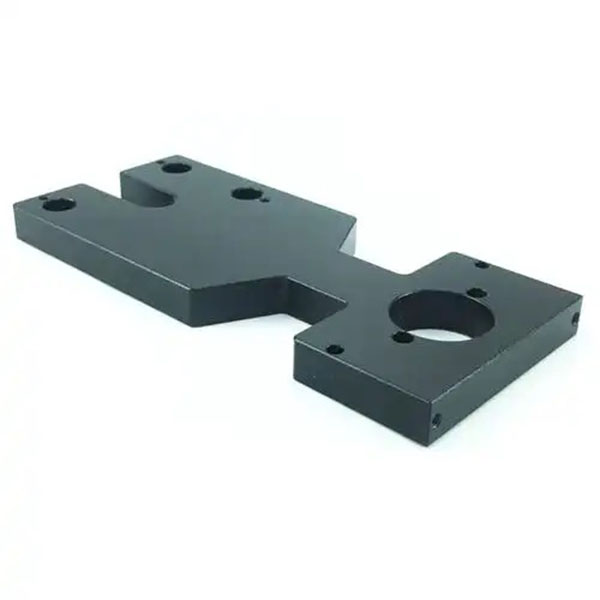
If you’re an engineer, product developer, or designer needing parts tailored to unique specs, custom CNC machining is your go-to solution. It uses automated cutting tools controlled by CAD models to shape metals (like aluminum, titanium) and plastics (such as PEEK, ABS) into precise, one-of-a-kind or small-batch parts—perfect for prototypes, legacy component replacements, or end-use production. The best part? With services like Moshijia or eMachineShop, you can get instant quotes, quick turnaround (as fast as 1 day for prototypes), and quality guarantees that align with industry standards.
What Exactly Is Custom CNC Machining, and How Does It Work?
Custom CNC machining is a subtractive manufacturing process where computer-programmed tools remove material from a solid block (for milling) or rod (for turning) to create parts matching your unique design. Unlike mass-produced parts, it’s built around your specific CAD models, tolerances, and material choices—making it ideal for projects where off-the-shelf components won’t work.
Here’s a step-by-step breakdown of how it works in practice:
- Design & CAD File Preparation: You create a 3D CAD model (in formats like STEP, SLDPRT, or IPT) that defines your part’s geometry, tolerances, and features (e.g., holes, threads). For example, if you’re designing a custom bracket for aerospace use, your CAD file will specify the bracket’s size, hole positions, and tight tolerance of ±0.001” to ensure it fits with other components.
- Quote & Design Analysis: You upload the CAD file to a service provider (like Moshijia). Their automated system (e.g., Moshijia’s Instant Quoting Engine®) analyzes the design for manufacturability—flagging issues like hard-to-reach undercuts or overly thin walls—and provides a price, lead time, and material recommendations.
- Material Selection: You choose from 40+ materials (per Moshijia) or 50+ (per eMachineShop), based on your part’s purpose. A medical device part might use biocompatible titanium, while a consumer product prototype could use cost-effective ABS plastic.
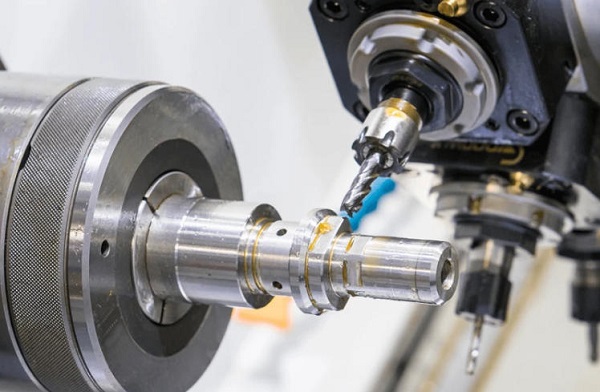
- Machining: Skilled machinists program CNC machines (3-axis, 4-axis, 5-axis mills, lathes, or routers) to follow the CAD model’s toolpaths. The machine removes material with high precision—for instance, a 5-axis mill can create complex, curved features on a custom gear without repositioning the part.
- Finishing & Quality Checks: The part gets post-processing (e.g., anodizing for corrosion resistance, deburring sharp edges) and inspection. Providers like Moshijia use ISO 9001:2015-certified quality systems to verify tolerances, ensuring the part matches your specs.
Key Custom CNC Machining Services to Know
Not all custom CNC work is the same—different services excel at different part types. Below’s a breakdown of the most common options, with real-world use cases:
| Service Type | Best For | Example Use Case | Key Benefits |
| CNC Milling | Parts with flat surfaces, holes, or slots | A custom aluminum housing for a robotics sensor. | Handles complex geometries; Moshijia mills parts up to 80” x 48” x 24”. |
| CNC Turning | Cylindrical parts (e.g., shafts, bolts) | A custom stainless steel shaft for a medical pump. | Fast for round parts; eMachineShop’s turning can create parts up to 62” long. |
| CNC Routing | Large, flat parts (e.g., panels, signs) | A custom HDPE plastic panel for industrial equipment. | Cost-effective for big parts; free standard shipping in the US (Moshijia). |
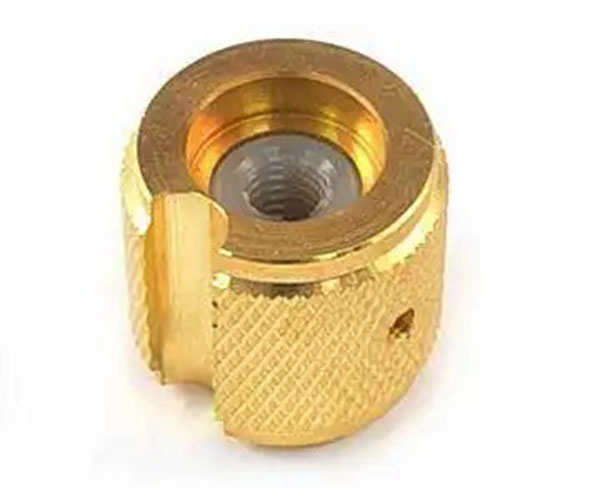
| High-Volume CNC | Production runs (10,000+ units) | Custom brass connectors for an electronics manufacturer. | Scalable; Moshijia offers volume discounts and consistent quality. |
Critical Factors to Choose the Right Custom CNC Provider
Selecting a provider isn’t just about price—it’s about ensuring your part meets quality, timeline, and compliance needs. Here are the 5 non-negotiable factors, with examples:
1. Certifications & Compliance
Look for providers with industry-specific certifications to avoid costly mistakes. For example:
- Aerospace parts: Need AS9100D certification (Moshijia and eMachineShop have this) to meet strict safety standards.
- Medical devices: Require ISO 13485 certification to ensure biocompatibility and traceability.
- Defense projects: ITAR registration is mandatory (both Moshijia and eMachineShop are ITAR-registered) to comply with export controls.
Case Study: A defense contractor needed custom titanium brackets. They chose Moshijia because its ITAR registration ensured the parts wouldn’t violate export laws, and AS9100D certification guaranteed precision.
2. Tolerance Capabilities
Tolerances (how close the part is to your design specs) make or break performance. Most providers offer:
- Standard tolerances: ±0.005” for metals (ISO 2768) and ±0.010” for plastics (Moshijia).
- Precision tolerances: Down to ±0.001” for critical parts (e.g., aerospace components).
Pro Tip: If your part needs tight tolerances (like a custom gear for a high-speed motor), confirm the provider can inspect to those specs—Moshijia offers hardware traceability and material certifications for added confidence.
3. Turnaround Time
Quick-turn options are vital for prototyping or urgent repairs. For example:
- Moshijia offers prototypes in 3 business days (standard lead time) and some parts in 1 day.
- eMachineShop’s automated factories prioritize speed, making it easy to iterate designs fast.
Example: A startup needed a custom plastic prototype for a trade show in 5 days. They used eMachineShop’s instant quoting and quick-turn service, received the part in 4 days, and made it to the show on time.
4. Material Selection
Your material dictates durability, cost, and performance. Top providers offer:
- Metals: Aluminum (6061-T6 for prototypes), stainless steel (316 for corrosion resistance), titanium (Ti-6Al-4V for medical/aerospace), and brass (for electrical parts).
- Plastics: ABS (low-cost prototypes), PEEK (high-temperature industrial parts), and Teflon (chemical resistance).
Mistake to Avoid: Choosing a cheap material that doesn’t fit your use case. A custom part for a high-heat engine using ABS (which melts at 221°F) will fail—opt for PEEK (melts at 649°F) instead.
5. Customer Support & Post-Processing
Good support ensures your project stays on track. Look for:
- Design Feedback: Providers like Moshijia and eMachineShop analyze your CAD file for issues (e.g., “this undercut is hard to machine—here’s a fix”) before starting.
- Post-Processing: Options like anodizing (Type II/III for aluminum), powder coating (for durability), or passivation (for stainless steel).
- Transparency: Tracking tools and direct communication (e.g., eMachineShop’s account representatives call with updates).
Design Guidelines to Save Money & Improve Custom CNC Parts
Poor design leads to higher costs, delays, and faulty parts. Follow these expert tips to optimize your custom CNC design:
- Internal Corner Fillets: Make fillets (rounded corners) 0.020”–0.050” larger than your drill size. This lets the cutting tool move smoothly and reduces tool wear. For example, if you’re using a 0.125” drill, a 0.150” fillet works best.
- Avoid Unnecessary Complexity: Fewer small cuts mean lower costs. If your custom bracket doesn’t need a decorative groove, remove it—this saves machining time.
- Tapped Hole Depth: Add 0.125” of tool clearance beyond the tapped hole depth. This ensures full threads—critical for parts like custom bolts that need to fasten securely.
- Undercuts: Design undercuts to standard sizes and away from corners. A non-standard undercut will require manual machining (higher cost), while a standard one uses off-the-shelf tools.
- Text & Markings: For plastic/soft metals, text needs a minimum width of 0.018” (16-point Arial font). For hard metals, use 0.033” width (22-point font) to ensure readability.
Advantages of Custom CNC Machining (vs. Other Manufacturing Methods)
Custom CNC machining stands out for precision, speed, and flexibility. Here’s how it compares to 3D printing and injection molding:
| Method | Best For | Precision | Lead Time | Cost (100 Units) |
| Custom CNC | Prototypes, small-batches, complex parts | ±0.001”–±0.005” | 1–5 days | \(500–\)2,000 |
| 3D Printing | Very complex prototypes (e.g., lattices) | ±0.005”–±0.010” | 1–3 days | \(300–\)1,500 |
| Injection Molding | Mass production (10,000+ units) | ±0.002”–±0.005” | 2–4 weeks | \(100–\)500 |
Key Takeaway: Use custom CNC for parts needing high precision (e.g., medical tools) or small-batches. 3D printing works for quick, low-strength prototypes, while injection molding is for large-scale production.
Moshijia Technology’s Perspective on Custom CNC Machining
At Moshijia Technology, we believe custom CNC machining is the backbone of innovation—it turns unique ideas into tangible, high-performance parts. From our experience, the biggest challenge for clients is balancing design ambition with manufacturability. That’s why we always prioritize design feedback: for example, we recently helped a client redesign a custom aluminum bracket by simplifying its undercuts, cutting their cost by 20% and reducing lead time by 2 days.
We also emphasize material-matching: choosing the right metal or plastic isn’t just about cost—it’s about ensuring the part lasts. For a client in the automotive industry, we recommended switching from standard steel to stainless steel 316 for their custom sensor housing, which improved corrosion resistance and extended the part’s lifespan by 5 years.
Finally, we see speed as a competitive advantage. In today’s fast-paced market, waiting weeks for a prototype can mean missing a deadline. Our streamlined process—combining automated quoting with skilled machinists—lets clients get custom parts in days, not weeks, helping them iterate faster and launch products sooner.
FAQ About Custom CNC Machining
1. How much does custom CNC machining cost?
Costs vary by size, material, complexity, and quantity. A small plastic prototype (e.g., a 2” x 2” ABS bracket) might cost \(50–\)150, while a large titanium aerospace part could cost \(500–\)2,000. Most providers (like Moshijia) offer instant quotes to avoid surprises.
2. Do I need to pay tariffs for international custom CNC parts?
No—if you use a US-based provider like Moshijia, international prototype pricing includes tariffs. For example, if you’re in Europe ordering a custom part from Moshijia, the quote already covers any import fees.
3. What industries use custom CNC machining?
Nearly every industry: aerospace (custom brackets), medical (surgical tools), automotive (engine components), robotics (sensor housings), and electronics (circuit board mounts).
4. Can custom CNC machining handle high-volume production?
Yes—providers like Moshijia offer high-volume services for 10,000+ units. They use scalable processes and volume discounts to keep costs low while maintaining quality.
5. What if my custom part doesn’t meet my specs?
Top providers offer guarantees. Moshijia and eMachineShop have quality control processes to fix or replace parts that don’t match your CAD file or tolerances. Always confirm the provider’s return policy before ordering.