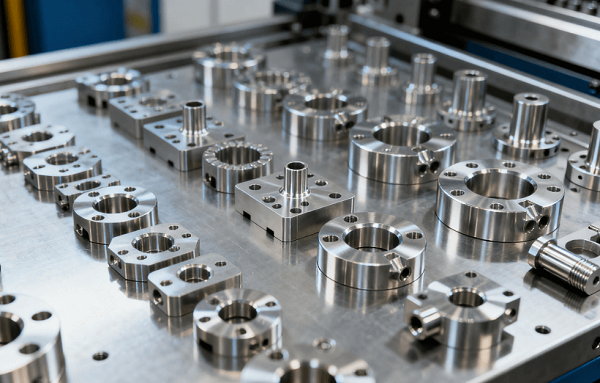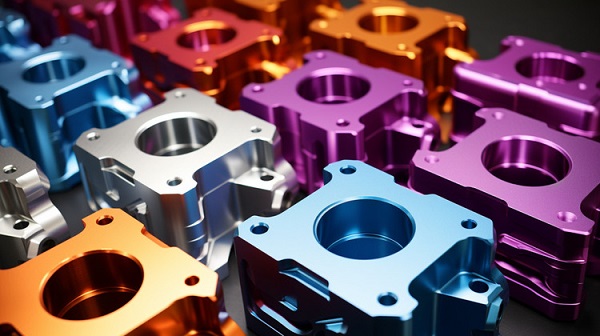
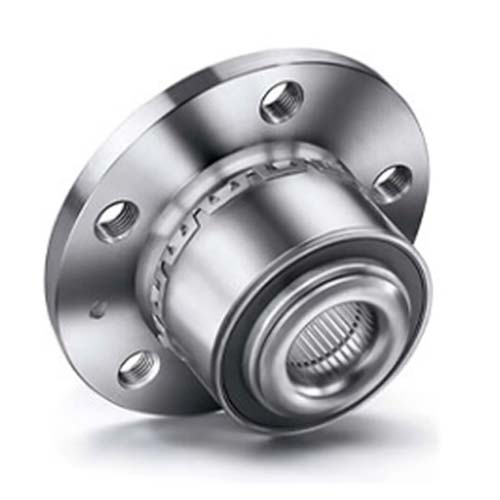
Turning Designs into Reality
You have a carefully designed CAD model – a digital plan for an important part. The challenge now is turning that computer file into a real, physical part that meets every requirement with perfect quality. This is where looking for a manufacturing solution begins, and for projects that need high accuracy, complex shapes, and consistent results, the answer is CNC machining. It stands as the best method for custom manufacturing.
This article serves as your complete guide. We will make the world of CNC machining services easier to understand, moving past technical language to provide a clear, useful framework. Our goal is to give you the knowledge to understand the processes, recognize the strategic benefits, and, most importantly, check and choose a truly reliable partner. Finding the right service isn’t just about getting a part made; it’s about building a relationship that supports your innovation and ensures your project’s success from prototype to production.
What Is a CNC Service?
A common mistake is thinking that a CNC machining service is simply a company that owns CNC machines. In reality, it is a complete manufacturing partnership designed to bring a client’s specific designs to life. The “service” part is the critical difference, covering a full range of expertise, technology, and process management.
A Complete Solution
A true CNC machining service provider works as an extension of your own team. They don’t just take a file and press “start.” They engage in a complete process that ensures quality, efficiency, and manufacturability. This integrated solution typically includes:
- Design review and feedback (Design for Manufacturability – DFM)
- Material sourcing and expertise
- Programming and toolpath generation (CAM)
- Precision machining and fabrication
- Quality control and inspection
- Finishing and post-processing services
This complete approach means you are not just buying machine time; you are investing in a streamlined workflow managed by experts, from initial design validation to the final, inspected part arriving at your door.
Subtractive Manufacturing Principle
At its core, CNC machining is a form of subtractive manufacturing. This means it starts with a solid block of material (a workpiece) and systematically removes material to achieve the final desired shape. Think of it as a highly sophisticated, automated sculptor working from a digital blueprint.
The process is controlled by Computer Numerical Control (CNC). A CAD (Computer-Aided Design) file is translated into a set of instructions for the machine. These instructions control the precise movements of the cutting tools, the rotation speed of the workpiece, and the flow of coolant. This digital control is what guarantees exceptional accuracy and repeatability. Whether you need one part or one thousand, each one will be virtually identical, following the tightest tolerances specified in your design.
Core CNC Machining Processes
Understanding the basic types of CNC machining helps you have more informed conversations with potential suppliers and better understand the quotes you receive. While many specialized processes exist, most parts are created using a combination of three core methods: milling, turning, and drilling.
CNC Milling
CNC milling involves a rotating multi-point cutting tool that moves along multiple axes to remove material from a stationary workpiece. It is exceptionally versatile and is the go-to process for producing parts with flat surfaces, complex contours, pockets, and slots.
The capability of a milling machine is often defined by its number of axes. A 3-axis machine moves in the X, Y, and Z linear directions and is perfect for simpler parts. 4-axis and 5-axis machines add rotational axes, allowing the cutting tool to approach the workpiece from more angles. This enables the creation of highly complex geometries in a single setup, improving accuracy and reducing production time for parts like impellers, medical implants, and aerospace components.
CNC Turning
CNC turning, performed on a machine called a lathe, works on the opposite principle of milling. Here, the workpiece rotates at high speed while a stationary single-point cutting tool moves along its surface to remove material.
This process is ideal for creating any component with rotational symmetry. Think of parts that are cylindrical, conical, or spherical in shape. Common applications include shafts, pins, custom bolts and screws, nozzles, and flanges. Live-tooling lathes can also incorporate secondary milling and drilling operations, allowing for the creation of more complex turned parts with features like off-center holes or flattened faces in one operation.
CNC Drilling
While drilling can be considered a subset of milling and turning, it is a fundamental process in its own right. CNC drilling is used to create, size, or finish holes with high precision. A CNC machine controls the exact location, diameter, and depth of each hole, ensuring perfect alignment and repeatability, which is critical for assembly and function. This process is almost always integrated into CNC milling centers and turning lathes.
Process Comparison Table
To help visualize which process is right for your part, here is a quick comparison:
| Process | How It Works | Best For (Part Geometry) | Common Products |
| Milling | A rotating tool removes material from a fixed workpiece. | Complex shapes, flat surfaces, pockets. | Enclosures, brackets, molds, engine blocks, heatsinks. |
| Turning | A rotating workpiece is shaped by a fixed tool. | Cylindrical, conical, and round parts. | Shafts, pins, bolts, nozzles, pulleys, connectors. |
| Drilling | A rotating tool creates or refines holes. | Creating precise holes in any part. | Mounting holes, fluid passages, threaded holes. |
Strategic Outsourcing Benefits
For many companies, the decision to outsource CNC machining is not just a cost-saving tactic but a strategic move that unlocks growth, innovation, and efficiency. By partnering with a specialized service provider, you can leverage their infrastructure and expertise to gain a significant competitive advantage.
Access Expertise and Technology
Building an in-house CNC machining facility requires a massive capital investment in machinery, software, and facilities, not to mention the ongoing cost of hiring and training skilled machinists and programmers. Outsourcing eliminates this barrier. You gain immediate access to a full suite of advanced technology, including multi-axis machines, high-end inspection equipment, and the latest CAM software. We’ve seen clients immediately leverage capabilities like 5-axis machining for complex geometries, something prohibitively expensive to bring in-house for a single project. More importantly, you tap into the collective experience of engineers and machinists who work with diverse materials and complex designs every day.
Enhance Focus and Scalability
Outsourcing non-core functions allows your team to concentrate on what it does best: design, innovation, research, and bringing products to market. Instead of managing production lines, maintenance schedules, and material procurement, your engineers can focus on developing the next generation of your product. This model also provides unparalleled scalability. You can seamlessly move from a single prototype for validation to low-volume production runs of hundreds or thousands of units without worrying about production capacity. Your manufacturing capability grows and shrinks precisely with your demand.
Reduce and Predict Costs
An in-house machine shop comes with significant fixed costs: facility overhead, machine maintenance, and skilled labor salaries. By outsourcing, you convert these fixed costs into predictable, variable costs. You pay only for the parts you produce, making budgeting and financial planning far more straightforward. Furthermore, a professional CNC service operates at a scale that reduces material waste through optimized nesting and toolpaths. They absorb the costs of machine maintenance, tooling, and operator training, leading to a lower total cost of ownership for your parts.
Mitigate Risk, Ensure Quality
Manufacturing comes with inherent risks, from machine downtime and operator error to material defects. When you outsource to a reliable partner, they assume this manufacturing risk. Reputable CNC machining services are often certified to rigorous quality management standards like ISO 9001 or AS9100 (for aerospace). These certifications are not just logos on a website; they guarantee a documented, repeatable process for quality control, inspection, and traceability. You benefit from their established quality assurance protocols, ensuring that every part you receive meets your specifications without you having to build that system from scratch.
Choosing the Right Provider
Selecting a CNC machining service is one of the most critical decisions you will make in the product development lifecycle. A poor choice can lead to delays, budget overruns, and subpar parts, while the right partner becomes a cornerstone of your success. This step-by-step guide provides a framework for vetting potential suppliers and making an informed decision.
Step 1: Define Project Needs
Before you even request a quote, you must have a clear and detailed definition of your project requirements. A CAD file alone is not enough. A professional service will need the following to provide an accurate quote and a successful part:
- Material: Be specific. Instead of “aluminum,” specify “Aluminum 6061-T6” or “Stainless Steel 304.” The specific alloy and temper dramatically affect cost and performance.
- Quantity: Clearly state if you need a single prototype, a small batch of 10-50 for testing, or a low-volume production run of 500+.
- Tolerances: Identify the critical dimensions and their required tolerances on your 2D drawing. Not every dimension needs to be held to a high tolerance, and over-tolerancing is a common driver of unnecessary cost.
- Surface Finish: Specify the required surface roughness (Ra) or the type of finish needed (e.g., as-machined, bead blasted, anodized Type II).
- Inspection Requirements: Do you need a First Article Inspection Report (FAIR), a certificate of conformance, or material traceability documents? Define these needs upfront.
Step 2: Evaluate Capabilities
Once you have a short list of potential suppliers, dig deeper than their marketing materials. You need to ensure their technical capabilities align with your project’s specific needs.
- Ask about their machine list. Do they have the right equipment for your part’s size and complexity? If your part requires complex 3D surfacing, do they have 5-axis milling capabilities?
- Inquire about their quality control equipment. Do they use Coordinate Measuring Machines (CMMs) for complex inspections? What other measurement tools do they have, like profilometers or vision systems?
- Review their case studies or gallery. Look for examples of parts they have made that are similar to yours in terms of complexity, material, or industry.
Step 3: The “RFQ Test”
The Request for Quotation (RFQ) process is your first and best test of a potential partner. How they respond to your RFQ is often more telling than the price they provide.
*Positive Signs to Look For:*
- They ask clarifying questions. A good partner will review your design and may ask about specific features, tolerances, or the part’s end-use to ensure they understand the requirements fully.
- They provide DFM feedback. The best partners offer Design for Manufacturability suggestions. This is a clear sign of expertise and a collaborative mindset. For example, a great partner might say, “If we increase this internal radius slightly from 0.5mm to 1mm, we can use a standard end mill and cut your cost per part by 15% without affecting function.”
- Their quote is detailed. A professional quote will break down costs, including setup fees, material costs, machining time, and any secondary finishing operations. It will also clearly state lead times.
*Red Flags to Watch For:*
- An instant, automated quote for a complex part. While useful for simple parts, a lack of human review for a nuanced design is a warning sign.
- No questions asked. If they simply return a price without any engagement, it suggests they may not be paying close attention to the details of your design.
- Unwillingness to discuss their process. A transparent partner will be happy to talk about how they plan to manufacture and inspect your part.
Step 4: Verify Quality Systems
Quality isn’t an accident; it’s a system. Verify that the provider has robust quality management processes in place.
- Ask for proof of certifications. Request a copy of their ISO 9001 or other relevant certifications (like AS9100 for aerospace or ISO 13485 for medical).
- Request sample parts. If possible, ask to see a sample part, ideally one that showcases their capabilities in a material similar to yours.
- Check references. Don’t hesitate to ask for references from current clients, especially those in your industry.
Step 5: Communication and Support
A manufacturing project is a collaboration. Clear, consistent, and responsive communication is non-negotiable.
- Is it easy to get in touch with an engineer or a dedicated project manager?
- During the quoting process, were their responses prompt, clear, and professional?
- A strong partnership is built on communication. Ensure you are comfortable with their communication style and that you feel they will be a responsive partner throughout the production process.
Good Service vs. Great Partner
Any competent machine shop can take a design and produce a part. However, a truly great CNC machining service transcends the role of a supplier and becomes a strategic partner. This distinction is what separates a transactional relationship from one that actively contributes to your product’s improvement and your company’s success. Here are the key differentiators that elevate a service to a partnership.
Proactive DFM Feedback
A basic service will manufacture your design exactly as submitted, even if it contains features that are difficult or expensive to machine. A great partner, on the other hand, provides proactive Design for Manufacturability (DFM) feedback. They don’t just execute; they collaborate. Their engineers review your design with a machinist’s eye, looking for opportunities to improve it. For example:
- *Before DFM:* A design features a sharp, 90-degree internal corner.
- *After DFM:* The partner suggests adding a small internal radius. This simple change allows the part to be made with a standard CNC end mill instead of requiring a slow and expensive secondary process like Electrical Discharge Machining (EDM), drastically reducing cost and lead time.
This kind of feedback saves you money, shortens production timelines, and can even result in a more robust final part.
Material Sourcing Expertise
A top-tier service acts as a materials consultant. They understand that material selection has profound implications for a part’s performance, cost, and machinability. While you may have a material specified, a great partner can:
- Recommend alternatives based on your application’s requirements, such as strength, weight, corrosion resistance, or thermal properties.
- Advise on the cost-performance trade-offs between different materials or even different tempers of the same alloy.
- Leverage their trusted supply chains to source certified materials and provide full traceability, which is critical for industries like aerospace and medical devices.
This expertise ensures you are using the optimal material for both function and budget.
Understanding Tolerances and Finishes
Tolerances and surface finishes are two of the biggest cost drivers in CNC machining. A great partner helps you navigate these complexities. They understand the principle of “as loose as possible, as tight as necessary.”
They will work with you to understand which features on your part are truly critical and require tight tolerances, and which can be loosened without affecting function. This practical approach can lead to significant cost savings, as every decimal point added to a tolerance can increase machining time and inspection requirements. Likewise, they can advise on the most cost-effective surface finish that meets your needs, whether it’s for cosmetic appearance, wear resistance, or creating a proper sealing surface. This deep, practical expertise is a hallmark of a true manufacturing partner.
A Partner for Success
The journey from a digital concept to a physical, high-quality component is complex. As we’ve explored, it involves understanding the core CNC machining processes, recognizing the immense strategic value of outsourcing, and, most critically, executing a careful vetting process.
The ultimate goal should not be to simply buy a part at the lowest possible price. The goal is to find a reliable manufacturing partner who invests in your success. This means choosing a service that communicates clearly, offers expert DFM feedback, and maintains rigorous quality standards. By using this guide, you are now equipped to look beyond the quote and identify a partner who will provide not just components, but confidence, expertise, and a foundation for your innovation. Make your choice with these principles in mind, and you will secure a relationship that is vital to your project’s successful outcome.