If you’re in the medical, aerospace, or industrial sector, you’ve likely asked: What makes precision CNC milling parts reliable for critical applications? Simply put, these parts are crafted using advanced CNC milling machines that combine tight tolerances, complex geometric capabilities, and seamless secondary operations—all to meet the strict standards of industries like medical device manufacturing and aerospace. In this guide, we’ll break down everything you need to know, from the core components that ensure precision to real-world examples of how these parts perform.
What Are Precision CNC Milling Parts?
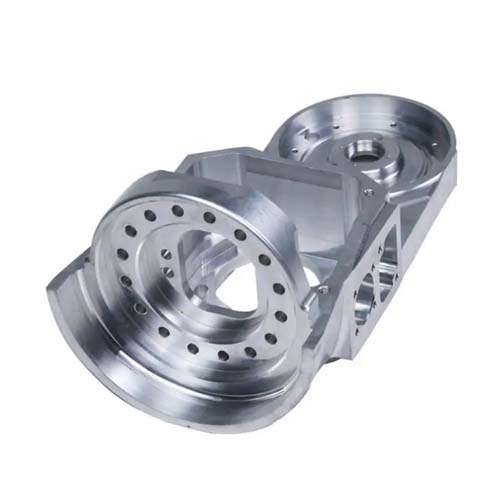
Precision CNC milling parts are custom-machined components produced by Computer Numerical Control (CNC) milling machines. Unlike standard machined parts, they boast extremely tight tolerances (often as low as ±0.0005 inches) and the ability to create intricate geometries—think the small, detailed components in orthopedic medical instruments or lightweight aerospace sensor parts.
A key differentiator is that reputable manufacturers like Moshijia manage all secondary operations in-house. This means from initial cutting to finishing touches like polishing or coating, the entire process is controlled, simplifying your supply chain and reducing the risk of errors. For example, Moshijia’s anterior cervical fusion plates (used in spinal surgery) are milled with such precision that they fit perfectly with other implant components, minimizing surgical risks. A senior supplier quality engineer at a North Haven, Connecticut-based medical OEM even confirmed during an audit: “Moshijia is undeniably capable of meeting our requirements.”
Core Components of CNC Mills: The Building Blocks of Precision
To understand why precision CNC milling parts are so reliable, you first need to look at the machines that make them. Every CNC milling machine has four core components that work together to ensure accuracy:
1. CNC Controller: The “Brain” of the Machine
The CNC controller is where the magic starts. It interprets G-code (the programming language for CNC machines) and translates it into precise movements for the machine’s axes and tools. For example, if you’re milling a complex aerospace sensor component with multiple holes and slots, the controller will send signals to the motors to move the tool exactly where it needs to be—down to the thousandth of an inch.
What makes a high-quality controller stand out? It can handle complex G-code programs quickly, verify tool positions using feedback from sensors, and even adjust for minor errors in real time. This is critical for parts like cardiology components, where a tiny miscalculation could render the part useless.
2. Column and Base Structure: The “Backbone” for Stability
Imagine trying to draw a straight line while your desk shakes—that’s what machining without a stable base is like. The column (the vertical support) and base (the horizontal foundation) of a CNC mill are typically made from rigid materials like cast iron or epoxy-granite. These materials minimize vibrations and deflections during machining, which is essential for maintaining precision.
For instance, when milling a large industrial valve component, the column and base must support the weight of the workpiece and tool without bending. If the structure flexes even slightly, the part’s dimensions could be off, leading to leaks or malfunctions. Epoxy-granite is especially popular here because it damps vibrations better than steel, making it ideal for high-precision jobs.
3. Power Feed Mechanism: The “Mover” for Accurate Motion
The power feed mechanism controls how the workpiece and tool move along the machine’s axes. It includes parts like the knee (which raises and lowers the table) and T-slots (which secure the workpiece). For example, when milling a flat surface on an industrial machined component, the power feed will move the table at a steady speed, ensuring the tool cuts evenly across the material.
Advanced 5-axis mills take this a step further: their power feed mechanisms can rotate the workpiece along additional axes, allowing for complex 3D shapes. This is how manufacturers create parts like turbine blades for aerospace—parts that require precision on every surface.
4. Spindle and Servo Motors: The “Driving Force”
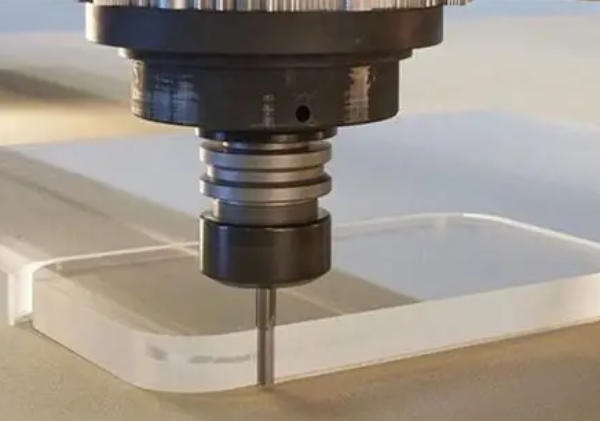
The spindle is the part that holds and spins the cutting tool, while servo motors control the movement of the axes. A high-performance spindle will maintain a consistent speed (even under load), which is crucial for achieving smooth surface finishes. Servo motors, meanwhile, are responsive and accurate—they can adjust the tool’s position in milliseconds.
Take orthopedic drill bits as an example: the spindle must spin the bit at a precise speed to avoid overheating the metal, while the servo motors guide the bit to create holes of exact depth and diameter. If the spindle slows down or the motor lags, the drill bit could damage the part or produce an inconsistent hole.
Axes: The Key to 3D Precision
CNC milling machines use axes to move the tool and workpiece, and the number of axes directly impacts the complexity of parts they can produce. The three basic axes—X, Y, and Z—are the foundation for most precision parts:
| Axis | Movement | Purpose in Precision Parts |
| X | Left/Right (Horizontal) | Creating long, straight features (e.g., slots in aerospace brackets) |
| Y | Front/Back (Horizontal) | Adding width to features (e.g., pockets in medical instrument housings) |
| Z | Up/Down (Vertical) | Controlling depth (e.g., holes in industrial valves) |
For even more complex parts, 4-axis and 5-axis mills add rotational axes. For example, a 5-axis mill can tilt the workpiece while moving it along the X, Y, and Z axes—perfect for creating the curved surfaces of orthopedic implants.
A real-world example: When machining an aerospace sensor component with a curved channel, a 5-axis mill can approach the part from multiple angles, ensuring the channel is smooth and meets the ±0.001-inch tolerance required by the aerospace industry. Without multiple axes, this part would require multiple setups, increasing the risk of errors.
Tools and Attachments: Enhancing Precision and Efficiency
Even the best CNC mill can’t produce quality parts without the right tools and attachments. Here are two essentials:
1. Automatic Tool Changer (ATC)
An ATC is a game-changer for efficiency and precision. It stores multiple cutting tools (often 20 or more) and switches between them automatically during the machining process. This means you can mill a part with multiple features—like a medical instrument with holes, slots, and a polished surface—without stopping the machine to change tools manually.
For example, when producing Moshijia’s anterior cervical fusion plates, the ATC switches from a drill bit (for holes) to an end mill (for shaping the plate’s edges) to a chamfer tool (for smoothing sharp corners)—all in seconds. This not only speeds up production but also reduces the risk of human error, as the machine never loses its precise position.
2. Coolant Systems: Extending Tool Life and Improving Finishes
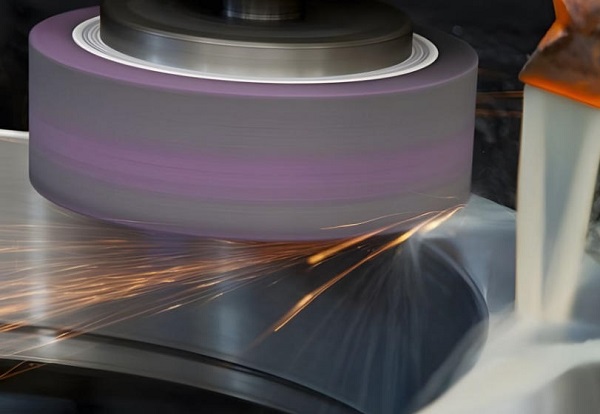
Milling generates heat, which can warp the workpiece and wear out the cutting tool. Coolant systems solve this by spraying a liquid (usually a mix of water and oil) onto the tool and workpiece during machining. The coolant does three key things:
- Reduces heat to prevent part warping (critical for thin aerospace components)
- Lubricates the tool to reduce friction and wear (extending tool life by up to 50%)
- Flushes away chips (small pieces of metal) to keep the cutting area clean
For instance, when milling titanium aerospace parts (which are hard and generate a lot of heat), a high-pressure coolant system is a must. It ensures the tool stays sharp longer and the part maintains its precise dimensions—even after hours of machining.
Secondary but Essential Parts: Don’t Overlook the “Small Stuff”
While the core components get most of the attention, secondary parts are just as important for precision:
1. Work Table and T-Slots
The work table is where the workpiece is secured, and T-slots are the grooves that hold clamps or fixtures. A high-quality work table is flat and rigid, so the workpiece doesn’t move during machining. T-slots are spaced evenly to accommodate different-sized fixtures—perfect for switching between small medical parts and large industrial components.
For example, when milling a large industrial gear, the work table’s T-slots hold a fixture that clamps the gear in place. The fixture ensures the gear doesn’t shift while the tool cuts its teeth, maintaining the precise spacing required for the gear to work with other components.
2. Linear Guides and Ball Screws
Linear guides and ball screws are the “hidden” parts that ensure smooth, accurate movement of the axes. Linear guides are like rails that the table or tool slides along, while ball screws convert rotational motion (from the motors) into linear motion. Together, they reduce friction and eliminate “play” (looseness) in the axes—so the tool moves exactly where it’s supposed to.
A common issue with low-quality machines is worn ball screws, which can cause the tool to drift slightly. This is a big problem for precision parts: a 0.0005-inch drift in a cardiology component could mean it doesn’t fit with other parts in a heart device.
Customizing Precision CNC Milling Parts for Your Needs
Every industry has unique requirements, so customizing the CNC milling process is key. The first step is deciding between manual machining and CNC precision:
| Factor | Manual Machining | CNC Precision |
| Complexity | Best for simple parts (e.g., basic brackets) | Ideal for complex geometries (e.g., orthopedic implants) |
| Tolerance | ±0.005 inches (max) | ±0.0005 inches (or tighter) |
| Production Volume | Low (1-10 parts) | High (100+ parts) |
| Consistency | Varies by operator | Uniform across all parts |
For example, if you need 500 aerospace sensor components with intricate wiring channels, CNC milling is the way to go. The machine will produce each part exactly the same, meeting the strict aerospace standards. On the other hand, if you need a one-off prototype of a simple industrial valve, manual machining might be more cost-effective.
Another customization factor is material selection. Different materials require different milling strategies:
- Aluminum: Soft and easy to mill; good for lightweight aerospace parts. Uses high cutting speeds.
- Titanium: Hard and heat-resistant; common in medical implants. Requires slow speeds and high coolant pressure.
- Stainless Steel: Corrosion-resistant; used in industrial valves. Needs sharp tools to avoid work hardening.
CNC Milling in Action: From Raw Material to Finished Part
Let’s walk through how a precision aerospace sensor component is made—step by step—to see the process in action:
- Material Preparation: Start with a block of aluminum alloy (chosen for its lightweight and strength). The block is cut to size and cleaned to remove debris.
- Fixture Setup: The aluminum block is clamped to the work table using a fixture secured by T-slots. The fixture is aligned using the machine’s sensors to ensure it’s perfectly positioned.
- Programming: The CNC controller is loaded with a G-code program that outlines every cut, hole, and feature of the sensor component. The program is tested on a dummy part first to check for errors.
- Machining: The machine starts by using a drill bit (from the ATC) to create small holes for wiring. Next, an end mill shapes the outer contour of the sensor. A coolant system sprays continuously to keep the tool and part cool.
- Finishing: The ATC switches to a polishing tool to smooth the sensor’s surface. Any burrs (sharp edges) are removed using a deburring tool.
- Inspection: The finished part is measured using a coordinate measuring machine (CMM) to check tolerances. If it meets the aerospace standards (±0.001 inches), it’s sent for secondary operations like coating.
This process ensures that every aerospace sensor component is identical and reliable—critical for applications where failure is not an option.
Moshijia Technology’s Perspective on Precision CNC Milling Parts
At Moshijia Technology, we believe precision CNC milling parts are the backbone of modern manufacturing—especially for critical industries. What sets exceptional parts apart is not just tight tolerances, but a holistic approach: from choosing the right material to optimizing the CNC program. We’ve seen firsthand how in-house secondary operations (like Moshijia’s model) reduce lead times and improve quality. For our clients in medical and aerospace, we always recommend 5-axis milling for complex parts—it’s the only way to achieve the precision they need. We also emphasize regular maintenance of CNC mills, especially checking linear guides and ball screws, to ensure consistent performance. In short, precision isn’t just a feature—it’s a process.
Frequently Asked Questions (FAQ)
1. Why are precision CNC milling parts more expensive than standard machined parts?
Precision CNC milling parts cost more due to three factors: (1) CNC machines are expensive (often $100,000+ for high-precision models), (2) the process requires skilled programmers and operators, and (3) tight tolerances mean more time spent on programming, testing, and inspection. However, the cost is worth it for critical applications—like medical devices—where errors could be life-threatening.
2. What tolerances can precision CNC milling parts achieve?
Most precision CNC milling parts have tolerances between ±0.0005 inches and ±0.001 inches. For ultra-precise parts (like aerospace sensors), tolerances can be as tight as ±0.0001 inches. This is far better than manual machining, which typically maxes out at ±0.005 inches.
3. Can precision CNC milling parts be made from any material?
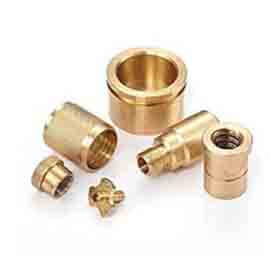
Almost! Common materials include aluminum, titanium, stainless steel, brass, and even some plastics (like PEEK for medical parts). The key is choosing a material that works with your CNC mill’s capabilities—for example, hard materials like titanium require specialized tools and coolant systems.
4. How long does it take to produce precision CNC milling parts?
It depends on the part’s complexity and production volume. A simple part (like a small bracket) might take 10-15 minutes per unit, while a complex aerospace component could take 1-2 hours per unit. However, CNC mills can run 24/7, so large batches (1000+ parts) can be produced quickly once the program is set up.
5. How do I ensure the precision CNC milling parts I order meet my standards?
Work with a manufacturer that offers in-house inspection (using tools like CMMs) and provides certification of tolerances. Ask for references from clients in your industry—for example, if you need medical parts, choose a manufacturer with experience in medical device machining (like Moshijia). Finally, start with a small prototype batch to test the parts before placing a large order.