If you’ve ever wondered how industries like automotive or medical create parts with tolerances as tight as ±0.001 inches—tighter than a human hair—precision CNC machining is the answer. Unlike standard machining, which struggles with such accuracy, precision CNC machining uses computer-controlled tools, optimized parameters, and expert handling to produce consistent, high-precision components. Whether you’re a manufacturer needing identical parts, an engineer designing a medical implant, or a buyer researching suppliers, this guide breaks down everything you need to know to leverage this technology effectively.
What Is Precision CNC Machining, and How Does It Differ from Standard Machining?
At its core, CNC machining is an automated process where computer programs control tool movement to shape raw materials. Precision CNC machining takes this a step further: it focuses on achieving ultra-tight tolerances (typically ±0.1 to 0.2 mm, or as low as ±0.001 inches for advanced setups) and consistent results across every part.
The key difference from standard machining lies in three areas:
- Tolerance capabilities: Standard machining might hit ±0.1 inches—100 times less precise than precision CNC. For example, a medical implant like a hip replacement needs precision CNC to ensure it fits perfectly; a 0.01-inch error could cause patient discomfort or failure.
- Automation and repeatability: Precision CNC uses pre-programmed G&M codes (generated via CAM software) to eliminate human error. A manufacturer producing 1,000 aircraft engine brackets can get identical results with precision CNC, whereas standard machining would have variations.
- Tooling and setup: Precision CNC requires specialized tools (e.g., diamond-coated carbides for hard metals) and stable workholding. For instance, when machining titanium for aerospace parts, a precision CNC mill with a rigid chuck prevents tool deflection—something standard mills can’t guarantee.
A real-world example: A automotive supplier switched from standard machining to precision CNC for shock absorber mounts. Before, 15% of parts were rejected due to size variations; after, rejection rates dropped to 0.5%, saving $50,000 annually in material waste.
The Step-by-Step Precision CNC Machining Process (With Practical Tips)
Creating a precision part isn’t just “pressing a button”—it’s a structured process that requires attention to detail at every stage. Below is a breakdown of each step, plus expert tips to avoid common mistakes.
| Step | Key Actions | Expert Tips |
| 1. Design & CAD Modeling | – Create a 3D model with dimensions, tolerances, and material specs using AutoCAD or SolidWorks.- Follow Design for Manufacturability (DFM) principles (e.g., avoid sharp internal corners that are hard to machine). | – Always share your DFM checklist with your machining partner—this reduces rework. For example, a client once designed a plastic housing with a 0.5mm internal corner; we adjusted it to 1mm, cutting production time by 20%.- Label critical tolerances (e.g., “±0.005 inches for mating surface”) to avoid misinterpretation. |
| 2. CAM Programming & Simulation | – Convert the CAD model into G&M codes (machine-readable instructions) using CAM software (e.g., Fusion 360).- Simulate tool paths to check for collisions or rounding errors. | – Use CAM simulation to test “what-if” scenarios. If you’re machining a complex medical instrument, simulate a faster feed rate to see if precision holds—we once optimized a path for a surgical scalpel, cutting cycle time by 12% without losing accuracy. |
| 3. Machine Setup | – Install tools (e.g., end mills for milling, drill bits for holes) in a collet or automatic tool changer (ATC).- Secure the workpiece to the machine bed with clamps or a chuck. | – For high-precision jobs, use a probe to calibrate tool and workpiece alignment. A client once skipped this step for stainless steel 316 parts; the first 20 parts were 0.01 inches off—costing them $2,000 in material. |
| 4. Machining the Part | – Set parameters: spindle speed (up to 24,000 RPM for precision mills), feed rate, and depth of cut.- Run a test part first to fine-tune settings. | – For metals like aluminum 6061, use a coolant to reduce heat buildup (heat warps parts). We once machined 500 aluminum brackets without coolant—10% of parts had dimensional errors. Adding coolant fixed the issue. |
| 5. Post-Processing & Finishing | – Remove burrs or tool marks with grinding or deburring.- Apply finishes (e.g., electroplating for corrosion resistance, polishing for low-friction parts like hydraulic rods). | – Match the finish to the part’s use. For a food-grade plastic component (e.g., a connector in a beverage machine), use bead blasting instead of electroplating—this avoids chemical residues. |
Types of Precision CNC Machines (Which One Do You Need?)
Not all precision CNC machines are the same—each is designed for specific tasks. Choosing the right one depends on your part’s shape, material, and tolerance needs. Here’s a breakdown of the most common types:
1. CNC Milling Machines
- How it works: Uses a rotating cutting tool to shape flat or 3D workpieces (e.g., aircraft structural components). Can move along 3–5 axes for complex geometries.
- Key specs: Tolerances as low as ±0.0025 mm; spindle speeds up to 24,000 RPM.
- Best for: Parts with flat surfaces, holes, or pockets (e.g., electronic sensor housings, custom brackets).
- Example: A aerospace client needed 200 turbine blade housings (aluminum 7075) with a ±0.003-inch tolerance. We used a 5-axis CNC mill to machine the curved surfaces—all parts passed inspection on the first try.
2. CNC Lathes (Turning Machines)
- How it works: Rotates the workpiece while a tool moves linearly to create symmetrical shapes (e.g., cylindrical parts).
- Key specs: Ideal for axially symmetric parts; tolerances down to ±0.001 inches.
- Best for: Shafts, bolts, or medical implants like hip stems (titanium Ti-6Al-4V).
- Pro tip: For long parts (e.g., a 12-inch hydraulic rod), use a lathe with a tailstock to prevent wobbling—this ensures consistent diameter across the entire length.
3. Electrical Discharge Machines (EDM)
- How it works: Uses electric sparks (in a dielectric fluid) to erode hard materials (e.g., tungsten, tool steel) without physical contact.
- Key specs: No mechanical stress on parts; tolerances as low as ±0.0005 inches.
- Best for: Intricate shapes like dies, molds, or surgical instrument blades (stainless steel 17-4 PH).
- Real example: A tooling company needed a mold for a plastic medical connector with tiny holes (0.5mm diameter). EDM was the only way to machine the holes without breaking tools—standard drills would have snapped.
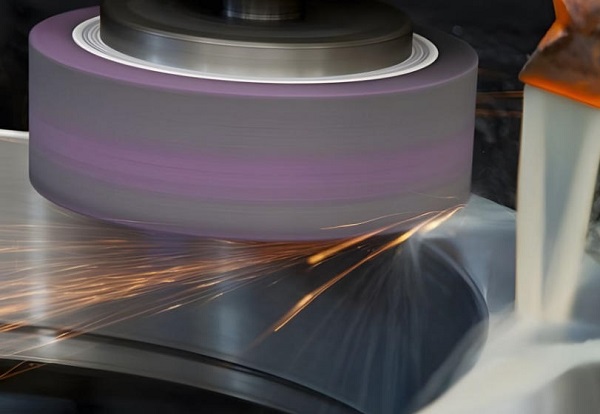
4. CNC Grinding Machines
- How it works: Uses a rotating abrasive wheel to smooth surfaces and refine dimensions (post-processing step).
- Key specs: Surface roughness (Ra) as low as 0.8 μm (mirror-like finish); tolerances down to ±0.0001 inches.
- Best for: Parts needing ultra-smooth surfaces, like bearing races (steel 4140) or optical components.
5. CNC Plasma Cutters
- How it works: Uses a high-temperature plasma beam (up to 10,000°C) to cut conductive materials (e.g., steel, aluminum).
- Key specs: Tolerances as low as ±0.001 inches; fast cutting for thick materials (up to 2 inches).
- Best for: Large, flat parts like heat shields (inconel 718) for aerospace or industrial equipment.
Materials for Precision CNC Machining (Which Should You Choose?)
The right material determines your part’s strength, durability, and cost. Precision CNC works with metals, plastics, and composites—but metals and plastics are the most common. Below is a curated list of top materials, their uses, and tips for machining:
Metals (Most Common for High-Precision Parts)
| Material | Key Properties | Typical Applications | Machining Tips |
| Aluminum 6061 | Lightweight, corrosion-resistant, easy to machine | Aircraft components, electronic housings | Use high spindle speeds (10,000–15,000 RPM) to avoid chipping. |
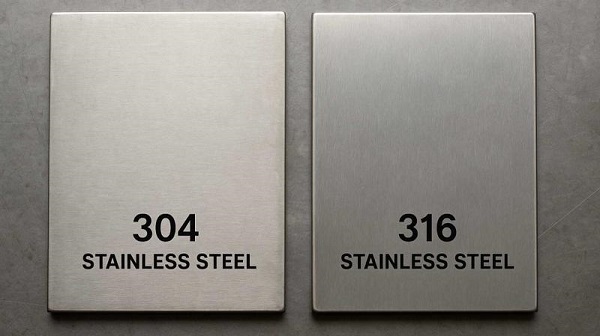
| Stainless Steel 316 | Corrosion-resistant (ideal for wet environments) | Medical implants, marine parts | Use coolant to reduce heat; avoid low feed rates (causes work hardening). |
| Titanium Ti-6Al-4V | Strong, biocompatible, heat-resistant | Surgical instruments, aerospace parts | Use diamond-coated tools; machine slowly (titanium is hard and generates heat). |
| Steel 4140 | High strength, wear-resistant | Engine parts, tooling | Use carbide tools; pre-heat if machining thick sections. |
Plastics (Best for Low-Weight, Low-Friction Parts)
- Nylon 6/6: Durable, low-friction—good for gears or bushings. Machining tip: Use sharp tools to avoid melting (nylon is heat-sensitive).
- PEEK: Heat-resistant (up to 250°C), chemical-resistant—ideal for medical or aerospace components. Machining tip: Slow feed rates (PEEK is rigid and can crack).
- Acrylic (PMMA): Clear, easy to polish—used for optical parts or display cases. Machining tip: Use a coolant to prevent scratching.
Pro advice: Balance cost and performance. For a non-critical part (e.g., a plastic prototype), aluminum 6061 is cheaper than titanium. For a life-saving medical implant, titanium is worth the extra cost—it’s biocompatible and won’t corrode in the body.
Key Industries & Applications for Precision CNC Machining
Precision CNC isn’t just for “high-tech” industries—it’s used wherever accuracy matters. Here are the top sectors and real-world applications:
1. Automotive
- Needs: Custom parts, prototypes, and components that fit perfectly (e.g., transmission parts).
- Examples: Shock absorber mounts (steel 1018), custom dashboards (ABS plastic), engine brackets (aluminum 6061).
- Impact: A car manufacturer switched to precision CNC for transmission gears—warranty claims related to gear failure dropped by 30%.
2. Medical
- Needs: Biocompatible, ultra-precise parts (tolerances often ±0.001 inches) for implants and instruments.
- Examples: Orthopedic implants (titanium Ti-6Al-4V), dental prosthetics (cobalt-chrome), surgical scalpels (stainless steel 440C).
- Regulatory note: Medical parts must meet ISO 13485 standards—choose a machining partner with this certification.
3. Aerospace
- Needs: Heat-resistant, lightweight parts with critical tolerances (e.g., turbine blades).
- Examples: Fuel nozzles (inconel 718), landing gear parts (steel 4340), satellite components (aluminum 7075).
- Key spec: Aerospace parts often require AS9100 certification—verify this before hiring a supplier.
4. Electronics
- Needs: Compact, precise parts for devices (e.g., smartphones, sensors).
- Examples: PCB enclosures (aluminum 5052), heat sinks (copper C110), camera modules (plastic POM).
- Trend: As electronics get smaller, precision CNC is becoming more important—parts like micro-sensors need tolerances of ±0.0005 inches.
How to Choose a Precision CNC Machining Partner (Avoid Costly Mistakes)
The right partner can make or break your project. Here’s a checklist to evaluate suppliers:
- Technical Capabilities:
- Do they have the machines you need? (e.g., 5-axis mills for complex parts, EDM for hard metals).
- What’s their maximum tolerance? (Look for ±0.002 inches or better for critical parts).
- Example: A client once hired a supplier without a 5-axis mill for a curved aerospace part—they had to outsource the job, delaying production by 2 weeks.
- Certifications:
- Essential certifications: ISO 9001 (quality management), AS9100 (aerospace), ISO 13485 (medical).
- Avoid suppliers without certifications—this increases the risk of defective parts.
- Experience in Your Industry:
- Ask for case studies: “Have you machined parts for medical implants before?”
- A supplier with automotive experience might not understand medical regulations—choose someone with niche expertise.
- Quality Control (QC) Processes:
- Do they use measuring tools like CMMs (Coordinate Measuring Machines) to check tolerances?
- What’s their inspection rate? (100% inspection is better for critical parts like medical implants).
- Lead Times and Flexibility:
- Can they handle small batches (e.g., 10 prototypes) or large runs (e.g., 10,000 parts)?
- A good partner offers “just-in-time” manufacturing to reduce your inventory costs.
Recommendation: Request a sample part before placing a large order. For example, if you need 500 stainless steel 316 brackets, ask for 1–2 samples to test tolerances and finish—this avoids wasting money on defective parts.
Moshijia Technology’s Perspective on Precision CNC Machining
At Moshijia Technology, we’ve seen how precision CNC machining transforms businesses—from reducing waste to enabling innovation. One of our clients, a medical device startup, needed custom orthopedic screws with a ±0.001-inch tolerance. Using our 5-axis CNC lathes and strict QC (CMM inspections for every part), we delivered 100% compliant parts on time.
What sets successful projects apart? Collaboration. We work with clients early in the design phase to optimize for CNC machining—this reduces rework and cuts costs. For example, a client once designed a plastic housing with a thin wall (0.5mm); we suggested thickening it to 1mm, which prevented warping during machining.
Precision CNC isn’t just about technology—it’s about expertise. Our team of engineers has 10+ years of experience in aerospace and medical machining, so we know how to handle tricky materials like titanium or PEEK. We also invest in advanced equipment (e.g., EDM machines with ±0.0005-inch tolerance) to meet the most demanding needs.
FAQ: Common Questions About Precision CNC Machining
- Is precision CNC machining more expensive than standard machining?
Yes, upfront costs are higher (due to specialized equipment and programming). But long-term, it’s cheaper: precision CNC reduces waste (fewer rejected parts) and speeds up production. For example, a manufacturer making 10,000 parts might pay \(5,000 more upfront for precision CNC but save \)20,000 in material waste.
- What’s the tightest tolerance possible with precision CNC machining?
Advanced setups (e.g., EDM or grinding machines) can achieve tolerances as low as ±0.0001 inches. Most standard precision jobs use ±0.001 to ±0.005 inches.
- Can precision CNC machine wood or composites?
Yes, but it’s less common. Precision CNC works best with metals and plastics—wood can splinter, and some composites (e.g., carbon fiber) require specialized tools to avoid fraying.
- How long does it take to get a precision CNC part?
It depends on complexity: a simple aluminum bracket might take 1–2 days; a complex medical implant could take 1–2 weeks (including design, programming, and QC).
- Do I need to provide a CAD model, or can the supplier create one?
Most suppliers prefer a CAD model (in STEP or IGES format) to avoid errors. If you don’t have one, many suppliers offer design services—just be sure to share your specs (dimensions, tolerances, material) clearly.