In the product development stage, rapid prototyping is the core link to shorten the cycle and reduce costs, and CNC rapid prototype plastic machining has become the preferred solution for many enterprises with its advantages of high precision and strong material adaptability. But how to control process parameters, select the right materials, and optimize the design? This article will break down the key points of CNC plastic rapid prototyping, from principles to applications.
1. Process Principles and Material Properties: The core logic of CNC plastic machining
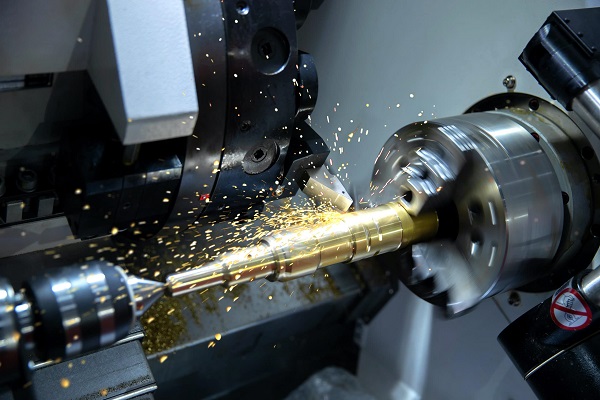
The essence of CNC rapid prototype plastic machining is to control the tool through the CNC system to mill, drill and other cutting processes on the plastic sheet, and directly carve and mill the target prototype from the whole material without the need for molds. The following key parameters and technologies are essential for high-precision machining.
The cutting speed is usually controlled at 100–300m/min, and the feed should match the tool diameter to avoid melting the material due to too fast speed, or the surface roughness caused by too slow speed. The second is plastic thermal deformation control, the heat generated during the cutting process will make the plastic parts expand, and the cooling shrinkage after processing is prone to dimensional deviations.
The choice of tool is also critical, the tool material and coating prefer carbide or diamond coated tools, the former has strong wear resistance, and the latter can reduce the sticking phenomenon. Vacuum clamping is recommended for clamping, especially suitable for thin-walled parts processing, which can avoid the stress deformation of traditional fixtures and ensure clamping stability. For complex surface prototypes, five-axis linkage accuracy is the key, which can achieve multi-sided processing in one clamping, reduce secondary clamping errors, and finally meet the requirements of micron-level surface roughness.
Here it is necessary to distinguish between non-metallic CNC and metal CNC differences: non-metallic machining pays more attention to thermal deformation control and tool anti-sticking, with less cutting force and no need for high-rigidity machines; Metal processing, on the other hand, has higher requirements for machine tool rigidity and tool hardness, and the process parameters of the two cannot be compatible.
2. Comparison of material selection and performance: Choosing the right material = half the success
The material selection for CNC plastic rapid prototypes directly determines the performance and applicable scenarios of the prototype. The following is a comparison of the properties of common materials and selection suggestions to help you quickly match your needs:
| Material model | Core features | Applicable scenarios | Key certifications | Cost gradient |
|---|---|---|---|---|
| ABS | Good toughness, easy processing, and paintable | Consumer electronics shells, toy prototypes | No special certifications | low |
| PC | High transparency, impact resistance, temperature resistance | UAV transparent hatch, optical components | Some models are food grade | middle |
| PMMA | High light transmittance and easy polishing | Transparent displays, lens prototypes | Food grade | middle |
| POM | Self-lubricating, wear-resistant, dimensionally stable | Gears, snaps, valve bodies | Food grade | Middle and high |
| PA+GF | High strength, creep resistance | Automotive structural parts, robot joints | Some models are weather-resistant | high |
| PEEK | High temperature and chemical resistance | Medical implants, aerospace components | FDA, medical grade | Extremely high |
| PPSU | Steam resistant and flame retardant | Maternal and infant products, medical equipment shells | Medical grade, UL94 V-0 | Extremely high |
In addition to mechanical properties, consider flame retardant grades (e.g., UL94 V-0 for electronic components), UV resistance (essential for outdoor products), isotropic/isotropic shrinkage (affecting dimensional accuracy), and adhesion and paintability (to meet post-process requirements). For example, medical-grade plastics must be selected in the medical field, and food-grade certification must be obtained for food contact parts.
3. Design Optimization and DFM Guidelines: Making CNC Machining Smoother
To reduce machining costs and improve prototype quality, DFM (Design for Manufacturing) is key. Here are a few core design principles, all of which are experienced by senior engineers:
- Wall thickness uniformity: Excessive wall thickness differences will lead to uneven cooling shrinkage, resulting in warping and deformation, and it is recommended to control the wall thickness deviation within ±0.2mm to avoid sudden changes in thin-walled and thick-walled areas.
- Stiffener layout: The height of the stiffener should not exceed 3 times the wall thickness, the width should be 0.7–0.9 times the wall thickness, and the spacing should be at least 2 times the wall thickness to prevent the root of the rib from cracking due to concentrated stress.
- Rounded Corner Radius: It is recommended to design rounded corners above R0.5 at all right angles, which not only reduces stress concentration, but also avoids tool chipping, while improving the feel and aesthetics of the prototype.
- Combined design to reduce the number of clamping: try to integrate multiple components into an overall structure, or design a unified clamping datum to reduce errors caused by secondary clamping.
- Alternative to CNC non-machinable dead corners: For recessed dead corners that cannot be reached by the tool, split machining and bonding can be used, or insert structures (such as female inserts) can be used instead.
- Tolerance stack analysis: Assembly prototypes need to analyze the tolerance superposition of each component in advance, and the critical dimensional tolerance is recommended to be controlled within ±0.05mm, and the non-critical dimension can be relaxed to ±0.1mm to avoid assembly failure due to tolerance accumulation.
In addition, the damping structure design to reduce thin-wall tremor for thin-walled parts processing, such as adding auxiliary support bars on the back of the thin-walled parts, can effectively improve the machining stability after processing.
4. CNC Rapid Prototyping vs. Other Rapid Prototyping: How to Choose?
Many R&D personnel will be entangled: which process is more suitable for them, CNC, SLA, SLS? The following is a comparison of core dimensions to help you find the answer:
| Contrast dimensions | CNC plastic prototypes | SLA light curing | SLS Nylon Sintered | High speed injection molding |
|---|---|---|---|---|
| precision | ±0.05mm (micron level) | ±0.1mm | ±0.15mm | ±0.03mm (batch) |
| Finish | Ra 0.8–1.6 μm (polished to Ra 0.2 μm) | Ra 0.4–0.8μm (post-curing required) | Ra 1.6–3.2μm (rough surface) | Ra 0.4–0.8μm (batch consistent) |
| Delivery date | 1–3 days (single piece) | 0.5–2 days | 1–4 days | 3–7 days (mold opening + trial production) |
| Cost per piece | Medium (for 1–50 pieces) | Low (for 1–10 pieces) | Medium (suitable for 10–100 pieces) | Low (for more than 500 pieces) |
| Mechanical properties of materials | Consistent with mass-produced materials | Brittle and not durable | Good toughness and impact resistance | Consistent with mass-produced materials |
| Color / transparency | It can be used directly with colored plates, and the transparent parts have a good effect | It can be colored, and the transparent parts are easy to turn yellow | Nylon is the natural color and can be dyed | Customizable color, transparent parts are stable |
The cost tipping point for a single piece / small batch is key: SLA is the most cost-effective if only 1–10 prototypes are required; 1–50 pieces of CNC can ensure that the material properties are consistent with mass production; For more than 500 pieces, high-speed injection molding is recommended. In addition, CNC has obvious advantages in color/transparency achievement capabilities, especially suitable for prototyping that requires transparency or specific colors.
5. Typical Industry Application Cases: The practical value of CNC plastic prototypes
The advantages of CNC plastic rapid prototyping are vividly demonstrated in real-world cases across various industries:
- Automotive industry: When a car company developed an automotive air conditioning housing, it used PA+GF materials to process the prototype and verify the rationality of the structure through air duct flow testing, which shortened the R&D cycle by 2 weeks compared to traditional mold opening.
- Medical industry: A medical enclosure prototype of a device company uses medical-grade PPSU material, passed FDA biocompatibility testing, and is directly used for clinical trials, avoiding secondary validation caused by material substitution.
- Consumer electronics industry: A prototype of a brand’s 5G antenna cavity is processed with PC material, with an accuracy controlled at ±0.03mm, ensuring stable antenna signal transmission and successfully passing the RF test.
- Aerospace field: The aerospace heat shield prototype is made of PEEK material, which can withstand a high temperature of 200°C and has passed the thermal shock test, providing reliable structural data for subsequent mass production.
6. Surface treatment and post-processing: bring the prototype closer to mass production
CNC machined plastic prototypes will have knife patterns on the surface, which need to be improved in appearance and performance through post-processing. Common processes include:
- Polishing: Steam polishing is suitable for PEEK, POM and other materials, which can achieve a mirror effect on the surface; Flame polishing is mostly used for PMMA transparent parts to quickly remove knife patterns; Vapor Smoothing is suitable for powder sintered parts such as nylon to fill surface porosity.
- Coating: pearlescent paint improves texture, rubber paint increases anti-slip feel, UV highlight makes the surface more wear-resistant, and after painting, it needs to be tested for adhesion to ensure that the paint film does not fall off.
- Decorative: Laser engraving can achieve fine patterns, silk screen/pad printing is suitable for batch logo printing, and metallized coating can give plastic parts a metallic texture, often used in consumer electronics shells.
- Functional: waterproof sealing ring bonding to improve the protection level, explosion-proof film lamination is suitable for outdoor transparent parts, after all processes are completed, it is recommended to do salt spray test to verify corrosion resistance.
7. Quality inspection and performance verification: ensure that the prototype meets the design requirements
After the prototype is processed, it must pass rigorous testing before it can be used for subsequent performance verification. Core testing items include:
- Accuracy Inspection: Generate accuracy report with coordinate measuring instrument, 100% detection of key dimensions; CT scans internal defects to check for internal cracks, bubbles and other problems.
- Appearance inspection: read with a colorimeter to ensure that the color is consistent with the design; Check whether the surface roughness meets the requirements.
- Performance verification: impact strength test verifies toughness, heat deflection temperature (HDT) test temperature resistance ability, UL94 flame retardant test confirms flame retardant rating; Medical and food-grade products need to pass FDA biocompatibility, ROHS/REACH compliance testing; outdoor products need to undergo xenon lamp aging tests to verify UV resistance.
- Reliability testing: vibration fatigue test simulates the transportation environment, drop test verifies structural strength, and air tightness test is suitable for products with waterproof and airtightness requirements.
8. Moshijia Technology’s point of view
CNC plastic rapid prototyping is a key bridge connecting product design and mass production, with its core advantages being high precision, strong material consistency, and adaptability to small-batch verification scenarios. When applying it, enterprises need to start from the three dimensions of process parameters, material selection, and design optimization, and combine post-process and quality testing to maximize its value. In the future, with the popularization of five-axis CNC equipment and the iteration of new materials, the machining efficiency and cost advantages of CNC rapid prototypes will become more prominent, empowering product research and development.
FAQ
- Q: What is the accuracy of CNC plastic rapid prototyping? A: The conventional machining accuracy can be controlled at ±0.05mm, and the five-axis linkage machining with high-precision machine tools can achieve micron-level accuracy of ±0.02mm, meeting the verification needs of most precision products.
- Q: Which plastic material is suitable for high-temperature CNC prototypes? A: PEEK, PPSU, PA+GF and other materials have good temperature resistance, among which PEEK has a thermal deformation temperature of up to 260°C, making it suitable for prototype verification in high-temperature environments.
- Q: Is there a big difference in performance between CNC prototypes and injection molded parts? A: If the materials are consistent with mass production, the mechanical properties of CNC prototypes are basically the same as injection molded parts, the difference is mainly due to the more uniform molecular arrangement of injection molded parts, while CNC parts are cut molded without molecular orientation issues.
- Q: How can I reduce the machining cost of CNC plastic rapid prototyping? A: It can be achieved by optimizing the design to reduce the processing area, incorporate the number of clamps, select cost-effective materials (such as ABS instead of PC, non-critical parts), and share costs in batch processing.
- Q: What tests do I need to do after surface treatment? A: We mainly do Baige adhesion test, salt spray test, and color difference test to ensure that the surface treatment effect meets the design requirements and has good durability.