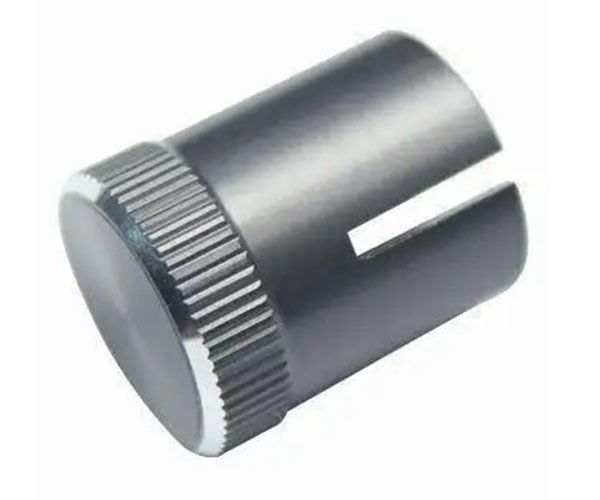
With its excellent corrosion resistance, strength, and toughness, stainless steel has become a core material in machinery manufacturing, aerospace, and other fields, but its high hardness, work hardening, and long chips frequently cause problems such as fast tool wear, difficult to control precision, and low efficiency during CNC machining. This article disassembles the 6 core links from material selection to defect solving, and uses data, cases and practical solutions to help you break through the pain points of the whole process of stainless steel CNC machining.
1. Material characteristics and selection: Choosing the right raw material = half the success
304, 316, 17-4PH: Who is your optimal solution?
The processing difficulty and applicable scenarios of different grades of stainless steel vary significantly, and the following is the measured comparison data:
| trademark | Chromium content | Corrosion resistance | Work hardening rate | Applicable scenarios | Processing difficulty rating |
| 304 | 18-20% | medium | Medium (≈30%) | General machinery, kitchenware | ★★☆☆☆ |
| 316 | 16-18% | high | Medium to High (≈35%) | Chemical equipment, marine engineering | ★★★☆☆ |
| 17-4PH | 15-17% | Higher | High (≈45%) | High pressure valves, aviation parts | ★★★★☆ |
Case: When a machinery factory processes offshore platform connectors, 304 stainless steel is initially selected, and the product life is less than 6 months due to seawater corrosion. Switching to 316 stainless steel extends the service life to more than 3 years, increasing raw material costs by 15% but increasing overall cost performance by 40%.
Austenitic / Martensite / Ferrite: Cutting properties vary greatly
- Austenitic stainless steel (such as 304, 316): strong toughness, obvious work hardening, easy to stick to the knife during cutting, need to be equipped with sharp tools and reasonable cooling;
- Martensitic stainless steel (such as 410): high hardness (HRC 30-45), brittleness, large cutting force but smooth chip evacuation, suitable for heavy-duty processing;
- Ferritic stainless steel (such as 430): Somewhere in between machinability, with moderate corrosion resistance, suitable for simple parts for mass production.
High hardness 2205 duplex steel: machinability ratings and responses
2205 duplex steel has 2 times the yield strength of 304, hardness up to HB 290-320, and a machinability rating of ★★★★★ (extremely difficult). Compared to traditional austenitic stainless steel, it offers 25-30% more cutting force and 50% faster tool wear, requiring carbide tools + high-pressure cooling solutions.
Coefficient of thermal expansion: the invisible killer of precision machining
The coefficient of thermal expansion of stainless steel (16-18×10⁻⁶/°C) is 1.5 times that of carbon steel, and the increase in temperature during processing can easily lead to deformation of parts. Solution: Adopting a “low-temperature machining” strategy to control the cutting area temperature below 150°C, with a constant temperature workshop (temperature fluctuation ±0.5°C), the dimensional accuracy can be improved from ±0.02mm to ±0.005mm.
Selection of economical raw materials according to corrosion resistance level: 3-step decision method
- Clarify the use environment: 304 for light corrosion (air, fresh water), 316 for moderate corrosion (weak acid, humid environment), and 2205 duplex steel for severe corrosion (seawater, strong acid);
- Accounting for processing costs: The processing cost of highly corrosion-resistant materials typically increases by 20-50%, balancing life needs and budget.
- Reference industry standards: food machinery follows GB/T 20878, aviation parts follow AMS 5640.
2. Tools and cutting parameters: the balance between efficiency and life
Coating Showdown: Who can play better with AlTiN, TiAlN, or SiAlON?
| Coating type | Hardness (HV) | Maximum temperature resistance | Abrasion resistance | Applicable scenarios |
| AlTiN | 3200-3500 | 800℃ | medium | Ordinary stainless steel finishing |
| TiAlN | 2800-3000 | 700℃ | Higher | Medium and low speed processing of stainless steel |
| SiAlON | 3800-4000 | 1200℃ | high | High-hardness stainless steel (2205, 17-4PH) high-speed processing |
Practical conclusion: When machining 316 stainless steel, the life of TiAlN coated tools is 3 times longer than that of uncoated tools. When machining 2205 duplex steel, SiAlON coated tool life is 2.5 times longer than AlTiN.
Tool material selection: carbide vs ceramic vs CBN
- Carbide: The king of cost performance, suitable for 80% of stainless steel machining scenarios, with a medium life (about 80-120 minutes for machining 304);
- Ceramic tools: high temperature resistance, strong wear resistance, suitable for high-speed finishing, but large brittleness, need to meet the rigidity of the machine tool (spindle runout ≤ 0.002mm);
- CBN (cubic boron nitride): superhard material, the life is 10 times that of cemented carbide, but the cost is high (unit price is about 3000 yuan/hand), suitable for batch processing of high-hardness stainless steel.
Stainless Steel CNC Cutting Parameter Quick Check Table (Lijia General)
| material | Tool diameter (mm) | Cutting speed (m/min) | Feed Rate (mm/r) | Depth of Cut (mm) |
| 304 | 10 (carbide) | 120-150 | 0.15-0.20 | 1.5-2.0 |
| 316 | 10 (TiAlN Coating) | 100-130 | 0.12-0.18 | 1.0-1.5 |
| 17-4PH | 10(SiAlON) | 80-100 | 0.10-0.15 | 0.8-1.2 |
| 2205 Duplex steel | 10(CBN) | 60-80 | 0.08-0.12 | 0.5-0.8 |
MQL vs. Oil Mist Cooling: A Cost-Benefit Competition
- Micro lubrication (MQL): only 0.05-0.1L/h oil consumption, 30% reduction in processing cost, but limited cooling effect, suitable for finishing;
- Oil mist cooling: Sufficient cooling, 20% increase in tool life, but high fuel consumption (1-2L/h), need to be equipped with oil mist recovery equipment, and increase the comprehensive cost by 15%.
Decision-making suggestions: oil mist cooling for roughing and MQL for finishing; When mass production, oil mist cooling has a lower cost per part.
Anti-BUE edge design: 3 key takeaways
Edge-edge accumulation (BUE) can cause a deterioration in surface roughness (Ra from 0.4μm to 1.2μm) and even scratch the part. The anti-BUE design must meet:
- Cutting edge rake angle: 10-15° (sharp and not easy to break);
- Chamfering edge: 0.02-0.05mm (reduced impact);
- Coating smoothness: Ra≤0.02μm (reduces knife sticking probability).
3. Machine tools and fixtures: hardware guarantee for stable processing
Machine rigidity vs. spindle power: what are the minimum requirements?
When processing stainless steel, the machine tool needs to meet:
- Rigidity: bed deformation ≤0.001mm/1000N;
- Spindle power: When machining φ20mm stainless steel, the power ≥ 11kW (plus);
- Spindle speed: maximum speed ≥8000rpm (finishing).
Case: A small factory uses an 8kW spindle to machine 316 stainless steel shaft parts, but due to insufficient power, the cutting speed can only reach 80m/min, the efficiency is 40% lower than that of the 11kW machine tool, and the surface has vibration lines.
Lying Plus vs Standing Plus: Long chip removal efficiency showdown
| Machine type | Chip removal method | Chip removal efficiency (φ10mm tool) | Applicable part types |
| Immediately added | Gravity + high-pressure flushing | Medium (≈80%) | Small and medium-sized and complex structural parts |
| Wojia | Forced chip extractor | High (≈95%) | Long shaft and deep hole parts |
Conclusion: When processing long-chip stainless steel (such as 304), the chip removal efficiency of the horizontal addition is 15-20% higher than that of the vertical addition, which can reduce the downtime caused by chip entanglement.
High corrosion resistance fixture: anti-galvanic corrosion solution
Galvanic corrosion occurs when stainless steel comes into contact with regular carbon steel fixtures (corrosion rates up to 3 times faster). Solution:
- The fixture material is titanium alloy or Hastloy (high cost);
- Low-cost solution: PTFE gasket is placed on the contact surface between the fixture and the part to isolate the electrochemical reaction.
Deformation control of thin-walled stainless steel: vacuum suction cups vs hydraulic clamps
- Vacuum suction cup: uniform clamping force, deformation ≤ 0.01mm, suitable for thin-walled parts with a thickness of ≥1mm;
- Hydraulic clamps: large clamping force, deformation ≤ 0.005mm, suitable for high-precision thin-walled parts with a thickness of < 1mm, but the cost is 50% higher than vacuum suction cups.
Five-axis synagetic machining stainless steel impeller: list of optimal configurations
| Configure items | request | Recommended brands |
| Machine model | 5-axis machining center (cradle type) | DMG MORI, Haas |
| Spindle speed | ≥15000rpm | – |
| Handle type | HSK-A63 (High Precision) | Xiong Ke |
| cutting tool | Solid carbide ball head knife (φ6mm) | Sandvik |
| Cooling system | High pressure cooling (70bar) + MQL combination | Michelin |
4. Programming and path strategy: core skills for efficiency improvement
Adaptive dynamic tool path: Actual measurement of roughing efficiency improvement
Adaptive Clearing avoids tool overload by adjusting cutting parameters in real time, when machining 316 stainless steel:
- Efficiency Improvement: 40-50% higher than traditional bore milling (feed speed from 800mm/min to 1200mm/min for φ20mm tooling and cutting depth of 2mm);
- Tool life: 30% longer (from 80 minutes to 104 minutes).
Case: An aviation parts factory uses adaptive toolpath to process 17-4PH stainless steel brackets, reducing the processing time from 45 minutes to 27 minutes, and increasing the daily production capacity from 32 to 53 pieces.
Superalloy knife path to stainless steel: the key logic of reducing speed by 30%
Superalloys (such as Inconel 718) typically have cutting speeds of 30-50m/min, which need to be reduced by 30% when switched to stainless steel, because:
- The work hardening rate of stainless steel is lower than that of superalloys, but it has stronger toughness, and reducing speed can reduce knife sticking.
- Avoid aggravated cutting edge wear caused by high cutting speed.
Finishing allowance: 0.1mm vs 0.05mm?
| Finishing allowance | Surface Roughness (Ra) | Processing time | Tool wear |
| 0.1mm | 0.3-0.4μm | 8 minutes | Smaller |
| 0.05mm | 0.2-0.3μm | 5 minutes | Larger |
Decision suggestion: Choose 0.1mm allowance for ordinary precision parts (Ra≤0.4μm), high efficiency and low cost; For high-precision parts (Ra≤0.3μm), choose 0.05mm allowance, and use high-quality tools.
Reverse Milling vs Forward Milling: Impact on Case Hardening Layers
- Forward milling: small cutting force, thin (≈0.1mm) thickness of the hardened layer, suitable for finishing;
- Reverse milling: large cutting force, thick case hardening layer thickness (≈0.3mm), but long tool life, suitable for rough machining.
The “three-knife method” deformation compensation macro program for thin-walled parts
For stainless steel thin-walled parts with a thickness of < 2mm, the “rough cutting-semi-fine-cutting-fine cutting” three-knife method is adopted, with the deformation compensation macro program:
- Rough cutting: remove 70% allowance and leave 0.3mm semi-fine cutting allowance;
- Semi-fine cutting: remove 0.2mm allowance, release internal stress, and leave 0.1mm fine cutting allowance;
- Fine cutting: Low speed and high feed (cutting speed 80m/min, feed 0.2mm/r), macro program automatically compensates for deformation (compensation value 0.005-0.01mm).
5. Cooling and surface treatment: the last mile of quality assurance
High-pressure cooling: The effect of 70bar on the cutting life of the 316L
Measured data shows that when the cooling pressure is increased from 20 bar to 70 bar:
- Tool life increased from 60 minutes to 150 minutes (150% improvement) for 316L stainless steel;
- Cutting zone temperature reduced from 280°C to 120°C;
- Surface roughness decreased from Ra 0.6μm to Ra 0.3μm.
Surface Treatment Process Selection Tree
Selection tree for surface treatment of stainless steel parts ▽ - Prioritize corrosion resistance │ ▽ - Mild corrosion environment → Passivation treatment (low cost, corrosion resistance level ≥ 5) │ └ - Severe corrosion environment → Electrolytic polishing (corrosion resistance level ≥ 8, cost 3 times higher) │ - Prioritize surface smoothness │ ▽ - Ra ≤ 0.4 μ m → Electrolytic polishing │ └ - Ra ≤ 1.6 μ m → Sandblasting treatment (low cost, high efficiency) └ - Prioritize wear resistance → Nitriding treatment (surface hardness up to HV 800-1000)Coolant chloride control: the key to preventing stress corrosion
When the chloride ion content in the coolant > 60ppm, stainless steel parts are prone to stress corrosion cracking (SCC). Control Scheme:
- Select special stainless steel coolant (chloride ion content < 30ppm);
- Check the chloride ion content of the coolant every 2 weeks, and replace it in time when it exceeds the standard.
Cryogenic air coolers: feasibility of dry processing
Cryogenic air coolers (outlet temperature – 5°C) can replace coolant for dry machining of stainless steel:
- Advantages: no waste liquid treatment cost, high surface cleanliness;
- Disadvantages: 20% shorter tool life than oil mist cooling, suitable for small-batch, high-precision part machining.
Surface roughness Ra≤0.4μm: The process window is revealed
To achieve a stable Ra ≤ of 0.4 μm, the following parameters need to be controlled:
- Cutting speed: 120-150m/min (carbide tools);
- Feed rate: 0.1-0.15mm/r;
- Fine cutting allowance: 0.1mm;
- Cooling method: high-pressure cooling (≥50bar).
6. Quality inspection and defect analysis: a guide to problem solving
Stainless steel parts burr formation map with deburring SOP
| Processing process | Burr location | Formation causes | Deburring SOP |
| drill | Exit | Passivation of the cutting edge of the tool | 1. Use φ6mm diamond deburring tool; 2. Rotation speed 3000rpm, feed 50mm/min; 3. Machining depth 0.5mm |
| Milling | Edged and angular places | The cut is too deep | 1. Use a chamfering knife (angle 45°); 2. Rotation speed 5000rpm, feed 100mm/min |
| turning | At the end of the face | The amount of feed is too large | 1. Polishing machine with abrasive belt; 2. Polishing speed 10m/s, polishing time 30 seconds |
Processing-induced phase change: ferrite content detection standard
When processing martensitic stainless steel, it is easy to produce α’martensitic phase transition, and the ferrite content needs to meet:
- Common parts: ferrite content ≤8% (ASTM E566 standard);
- Aerospace parts: ferrite content ≤ 5% (AMS 2759 standard).
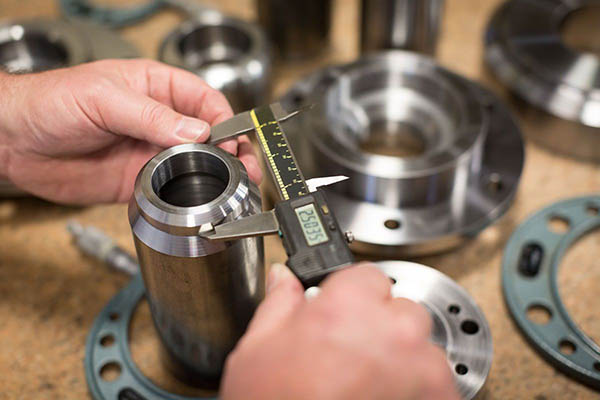
Roundness meter + roughness meter joint inspection: bearing housing case
A bearing factory processes 316 stainless steel bearing housing (inner diameter φ50mm, roundness requirement ≤0.003mm):
- Use a roundness meter (accuracy 0.0001mm) to detect the roundness of the inner diameter;
- Detect the Ra value of the inner surface with a roughness meter (required ≤ 0.2μm);
- After joint testing, the failure rate decreased from 8% to 1.5%.
Drilling Exit Burr: DOE Experimental Design Template
| Experimental factors | Level 1 | Level 2 | Level 3 |
| Cutting speed (m/min) | 80 | 100 | 120 |
| Feed Rate (mm/r) | 0.10 | 0.15 | 0.20 |
| Drill Top Angle (°) | 118 | 125 | 135 |
| Cooling pressure (bar) | 20 | 50 | 70 |
Experimental objective: The parameter combination of the minimum burr height was found through orthogonal tests, and the measured optimal scheme was: cutting speed 100m/min + feed rate 0.15mm/r + drill bit top angle 125°+ cooling pressure 70bar, and the burr height was reduced from 0.2mm to 0.03mm.
Knife marks and “fish scales”: a list of root causes and improvements of defects
| Defect type | Core root causes | Improvement measures |
| Knife marks | 1. Cutting edge wear; 2. Uneven feed rate; 3. Machine tool vibration | 1. Check the tool regularly (replace it when the cutting edge wears > 0.02mm); 2. Optimized programming, using constant feed control; 3. Adjust the anchor bolts of the machine tool to reduce vibration |
| Fish scale pattern | 1. Chip winding cutter; 2. Insufficient cooling; 3. Edges on the tip of the knife | 1. Chip breaker tool is used; 2. Increase the cooling pressure to more than 50bar; 3. TiAlN/SiAlON coated tools are selected |
Case: When processing a 304 stainless steel exhaust pipe in an auto parts factory, obvious fish scale patterns (Ra=1.0μm) appeared on the surface, and by replacing the TiAlN coating tool with chip breaker + increasing the cooling pressure to 60bar, the fish scale pattern was completely eliminated, and the surface roughness reached Ra=0.3μm.
7. Moshijia Technology’s point of view
The core pain point of stainless steel CNC machining lies in the contradiction between efficiency and precision caused by the coexistence of “hardness and toughness”, and the key to solving the problem is not the optimization of a single link, but the collaborative matching of the entire process. From the balance of “corrosion resistance-machining difficulty” in material selection, to the precise adaptation of tools and cutting parameters, to the dynamic adjustment of cooling and programming strategies, every step needs to be supported by data. In the future, with the popularization of five-axis linkage technology and intelligent tool monitoring systems, stainless steel machining will develop in the direction of “higher efficiency, lower loss, and more stable quality”. Enterprises should avoid blindly pursuing high-end equipment, but build exclusive solutions of “material-tool-process” according to their own product characteristics in order to gain an advantage in the competition to reduce costs and increase efficiency.
8. FAQ
- Q: What should I do if the tool wears out too quickly when machining 316 stainless steel?
A: TiAlN coated carbide tools are preferred, the cutting speed is controlled at 100-130m/min, with 70bar high-pressure cooling; For mass production, CBN tools can be used, which reduces the cost per part by 60% despite the high initial investment.
- Q: How to solve the serious deformation of thin-walled stainless steel parts (thickness 0.8mm) after processing?
A: The “hydraulic clamp + three-knife method” scheme is adopted: the hydraulic clamp ensures uniform clamping force, rough cutting removes 70% of the margin (leave 0.3mm), semi-fine cutting releases stress (leave 0.1mm), and fine cutting adopts low speed and high feed (80m/min+0.2mm/r), with the deformation compensation macro program, the deformation can be controlled within 0.005mm.
- Q: Does stainless steel need to be passivated after processing?
A: Depends on the use environment: mild corrosive environments (such as indoor machinery) can be omitted; Moderate/severe corrosive environments (such as marine, chemical) must be passivated, and citric acid passivation process (corrosion resistance level ≥ 6) is recommended, which is low cost and environmentally friendly.
- Q: What is the difference between austenitic and martensitic stainless steels?
A: Martensitic stainless steel (such as 410) has higher hardness, which requires reducing cutting speed (20-30% lower than austenitic) and reducing cutting depth (30% less than austenitic), and tools should preferably be made of ceramic or CBN material; Austenitic stainless steels (such as 304) require a focus on anti-stick knives, with sharp edges + TiAlN coated knives.
- Q: How to avoid stress corrosion cracking during stainless steel processing?
A: The core is “chlorine control + stress relief”: the chloride ion content of the coolant < 30ppm, and the stress relief annealing is carried out after processing (temperature 200-300°C, heat preservation for 2 hours); Avoid parts in a superimposed state of “tensile stress + corrosive environment” for a long time.