Need CNC machining manufacturing that delivers precision parts at scale? We cover machine types, process flow, software, cost factors, and how to choose the right production partner.
Introduction
You have a product idea. Maybe it is a new drone component. Maybe it is a medical device. Maybe it is an automotive upgrade. Now you need to turn that idea into actual hardware that you can sell.
That is where CNC machining manufacturing comes in.
Computer Numerical Control machining has transformed how things get made. It takes digital designs and turns them into physical parts with accuracy down to fractions of a human hair. No special tooling required. No long lead times for molds. Just a solid block of material and a machine that follows instructions.
But here is the challenge—understanding how CNC manufacturing really works helps you make better decisions. What machines do you need? How does the process flow? What drives costs up or down? This guide answers those questions.
We cover the types of CNC machines, the industries that rely on them, the software that runs everything, and exactly how to plan your next production run.
What Is CNC Machining Manufacturing?
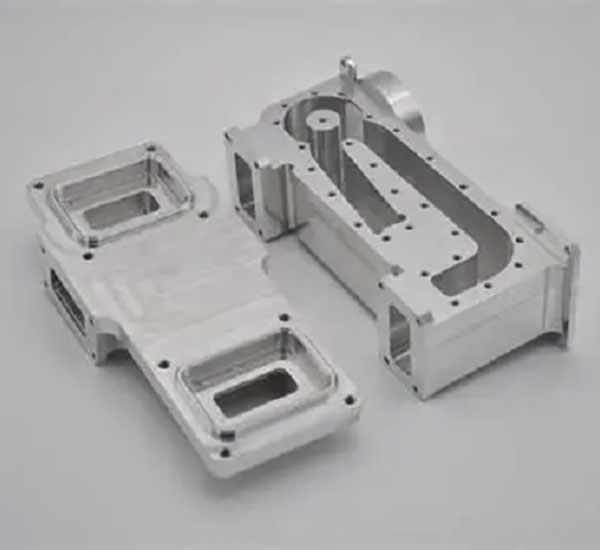
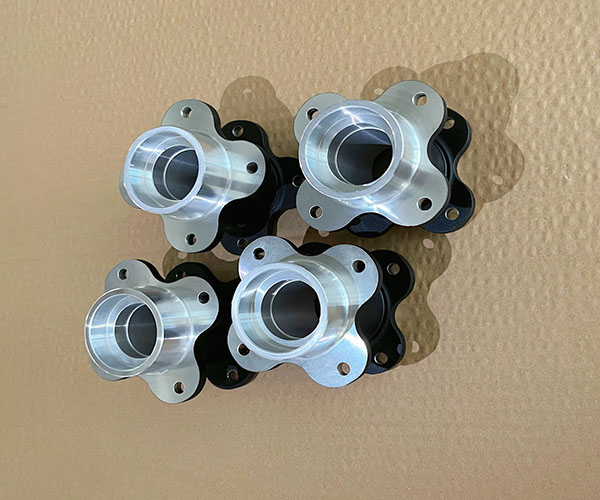
Let us start with a clear definition. CNC machining manufacturing is a subtractive production process. It uses computer-controlled machine tools to remove material from a solid workpiece. The result is a finished part that matches a 3D model within tight tolerances.
The “CNC” part stands for Computer Numerical Control. A computer reads G-code instructions and moves the machine axes accordingly. The operator loads material, starts the program, and the machine does the rest.
This differs from additive manufacturing (3D printing) which builds parts layer by layer. It also differs from forming processes like injection molding which require custom tooling.
CNC machining manufacturing offers several advantages:
- Precision: Hold tolerances down to microns
- Repeatability: Every part matches the first one
- Material flexibility: Cut metals, plastics, composites
- No tooling cost: Start production immediately
- Complex geometry: Make shapes impossible by hand
A medical device company learned the value of this flexibility. They needed 500 titanium bone screw prototypes in six different lengths. Traditional methods would require custom dies and weeks of lead time. CNC machining delivered all 500 parts in three days. The design evolved twice during testing. Each time, they updated the CAM program and ran new parts overnight.
How Did CNC Revolutionize Production?
Before CNC, machinists turned handwheels. Every cut required manual skill. Every part required constant attention. Tolerances depended on the machinist’s experience and attention span.
CNC changed everything.
The Manual Era
In the 1940s and 50s, machine tools were manual. A skilled machinist read a blueprint, set up the work, and moved levers to control cuts. Production was slow. Complexity was limited. Night shifts meant lower quality because tired hands make mistakes.
The NC Beginning
Numerical Control (NC) arrived in the 1950s. Punched paper tape told machines where to move. No handwheels needed. The US Air Force funded early development to make complex aircraft parts consistently.
The CNC Revolution
Computers replaced tape in the 1970s and 80s. Now programs could be edited on screen. Tools could change automatically. Machines could run unattended.
Modern CNC machining manufacturing operates lights-out. Machines run 24/7 with minimal human intervention. A single operator manages multiple machines. Part quality stays consistent from first piece to thousandth.
Impact Numbers
- Productivity increase: 500% to 1000% compared to manual methods
- Error reduction: Near elimination of human errors in positioning
- Complexity: Parts with thousands of features now routine
- Lead times: Weeks reduced to days, days to hours
An aerospace supplier quantified the difference. A turbine disk that took 40 hours manual machining now runs in 6 hours on a 5-axis CNC. Tolerances improved from ±0.003″ to ±0.0005″. Scrap dropped from 15% to under 1%.
What Types of CNC Machines Exist?
CNC machining manufacturing uses several machine types. Each serves different purposes.
CNC Mills
Milling machines use rotating cutting tools to remove material. The workpiece stays fixed while the tool moves—or the table moves while the tool spins.
3-axis mills are the workhorses. They move in X, Y, and Z. Perfect for most parts with features on one face.
4-axis mills add rotation around one axis. This allows machining cylindrical features or indexing to different sides without re-clamping.
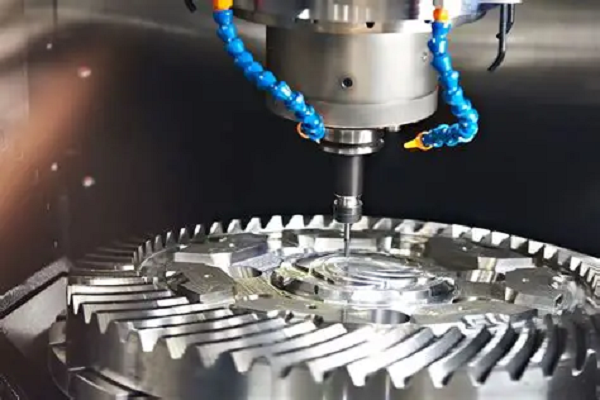
5-axis mills add two rotary axes. They machine complex shapes in one setup. Impellers, turbine blades, and medical implants need 5-axis capability.
CNC Lathes
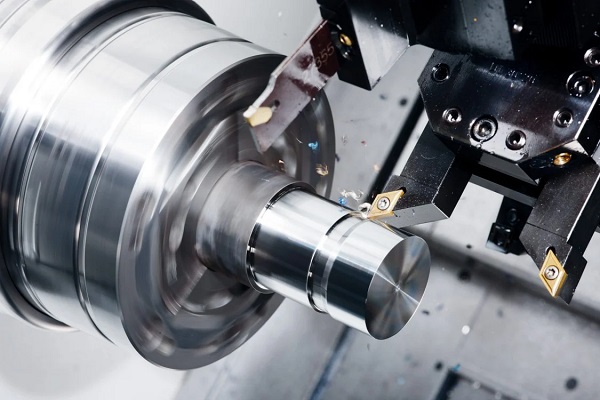
Lathes spin the workpiece while a stationary cutting tool removes material. They create cylindrical parts.
2-axis lathes turn diameters and face ends. Live tooling lathes add milling capability—they drill cross holes and cut flats while the part rotates.
CNC Routers
Routers are like mills but built for large sheets. They cut wood, plastics, and aluminum sheet stock. Common in sign making, cabinetry, and prototyping.
CNC EDMs
Electrical Discharge Machines use sparks to erode material. They cut hardened steel and exotic alloys. Wire EDM uses a thin wire to cut through parts. Sinker EDM uses shaped electrodes to create cavities.
CNC Grinders
Grinding machines achieve the finest finishes and tightest tolerances. They use abrasive wheels to remove tiny amounts of material. Bearing surfaces and hydraulic spools often require grinding.
Machine Type Comparison
| Machine Type | Best For | Tolerance | Surface Finish |
|---|---|---|---|
| 3-Axis Mill | General machining | ±0.001″ | 32-64 Ra |
| 5-Axis Mill | Complex 3D shapes | ±0.0005″ | 16-32 Ra |
| CNC Lathe | Round parts | ±0.0005″ | 16-32 Ra |
| Wire EDM | Hard materials, thin walls | ±0.0002″ | 8-16 Ra |
| Grinder | Ultra-precision | ±0.0001″ | 2-8 Ra |
Which Industries Depend on CNC Manufacturing?
CNC machining manufacturing touches nearly every industry. Here is where it matters most.
Aerospace
Aircraft components face extreme conditions. Turbine disks run at red heat. Landing gear handles massive loads. Control surfaces must move freely at -60°F.
CNC machines produce wing ribs, engine mounts, hydraulic manifolds, and fastener holes. Materials range from aluminum to titanium to Inconel. Tolerances often hit ±0.0005 inches.
A Boeing supplier machines titanium fittings for the 787. Each part takes 8 hours of 5-axis work. Scrap is unacceptable—each fitting costs thousands in material alone. In-process probing catches deviations before they become scrap.
Automotive
From prototype parts to production volumes, automotive relies on CNC. Engine blocks, transmission housings, cylinder heads—all machined after casting.
Racing teams machine custom parts for every race. Formula 1 teams produce new suspension components overnight based on track data. CNC makes that speed possible.
Medical
Surgical instruments must be sterile and precise. Implants must match patient anatomy. Device housings must protect sensitive electronics.
CNC machines produce knee implants from cobalt-chrome. They machine spinal cages from titanium. They create surgical guides from PEEK. Each part carries full traceability.
Defense
Military hardware must perform in extreme conditions. Night vision housings, weapon components, communication devices—all rely on CNC machining.
Supply chain security matters. Many defense contracts require domestic production. US-based machine shops with ITAR compliance handle sensitive work.
Electronics
Consumer electronics demand precision at scale. Smartphone cases, laptop hinges, connector housings—all machined or mold machined.
Heat sinks for high-power electronics are often CNC machined from aluminum or copper. The fins maximize surface area for cooling.
Energy
Oil and gas equipment faces high pressure and corrosion. Valve bodies, drill components, and pump parts come from CNC machines.
Wind turbine components require large-scale machining. Gearboxes and bearing housings can weigh tons. Specialty machines handle the size.
How Does the CNC Process Flow?
Understanding the CNC machining manufacturing process helps you plan projects and set expectations.
Step 1: Design
It starts with CAD. You create a 3D model of your part. Every feature, every dimension, every tolerance gets defined.
Best practice: Design with manufacturing in mind. Avoid impossible features. Specify tolerances only where needed.
Step 2: CAM Programming
CAM software takes your model and generates toolpaths. The programmer selects tools, sets speeds and feeds, and defines cutting strategies.
Simulation shows the tool moving through material. It catches collisions and errors before metal gets cut.
Step 3: Setup
The machinist mounts material in the machine. They indicate it true—making sure it sits square and centered. They load tools into the magazine. They set work offsets so the machine knows where the part starts.
Setup time can equal machining time for simple parts. Complex setups take hours. Production runs spread that cost across many parts.
Step 4: Machining
The cycle starts. The machine follows the program. Tools change automatically. Coolant floods the cut zone. Chips fly.
Modern machines run unattended. Operators monitor from screens. Alerts notify them if tools break or measurements drift.
Step 5: Inspection
Parts come off the machine. They go to inspection. Calipers check basic dimensions. CMMs measure complex features. Surface testers verify finish.
First article inspection documents that the process produces good parts. In-process inspection catches drift before it makes scrap.
Step 6: Secondary Operations
Some parts need more than machining. Deburring removes sharp edges. Tumbling smooths surfaces. Anodizing adds color and protection. Assembly joins components.
Step 7: Shipping
Final parts get packaged. Documentation accompanies them—certificates of conformance, material test reports, inspection data. Then they ship to you.
Process Timeline Example
A simple aluminum bracket:
- CAD design: 2 hours
- CAM programming: 1 hour
- Setup: 30 minutes
- Machining: 15 minutes per part
- Inspection: 5 minutes per part
- Total for 10 parts: 3.5 hours machining + 4.5 hours engineering
A complex titanium aerospace part:
- CAD design: 40 hours
- CAM programming: 20 hours
- Fixture design: 10 hours
- Setup: 4 hours
- Machining: 6 hours per part
- Inspection: 2 hours per part
- Total for 5 parts: 30 hours machining + 74 hours engineering
What Software Drives CNC Operations?
Software makes modern CNC machining manufacturing possible. Here is the stack.
CAD Software
Computer-Aided Design creates the model. Popular options:
- SolidWorks: Industry standard for mechanical design
- Fusion 360: Cloud-based, popular with startups
- AutoCAD: 2D drafting and basic 3D
- CATIA: Aerospace and automotive power user
- Creo: High-end parametric modeling
CAM Software
Computer-Aided Manufacturing turns models into toolpaths. Leading choices:
- Mastercam: Most widely used, huge user base
- Fusion 360 CAM: Integrated CAD/CAM, affordable
- GibbsCAM: Strong in multitasking and Swiss machining
- PowerMill: 5-axis specialist
- Esprit: High-end for complex machines
Simulation Software
Before cutting metal, simulate everything. Software like Vericut runs the G-code virtually. It checks for collisions, verifies material removal, and optimizes toolpaths.
A shop avoided a $50,000 crash using simulation. The CAM program had a rapid move straight through a fixture. Simulation caught it. The programmer fixed it. No damage occurred.
DNC Software
Distributed Numerical Control sends programs to machines. Modern DNC systems manage program versions, track changes, and log production data.
Inspection Software
CMMs need software too. PC-DMIS and Calypso are common. They compare measured points to CAD models and generate reports.
Manufacturing Execution Systems
MES software tracks jobs through the shop. It knows which parts are running, which machines are busy, and which orders are late. It provides visibility for customers and managers.
What Are the Cost Factors?
Understanding cost helps you budget and design economically.
Material Cost
Raw material drives base cost. Aluminum costs less than stainless. Titanium costs more than both. Exotic alloys cost even more.
Rule: Material price × 1.5 to 2 covers purchasing, storage, and handling.
Machine Time
Machines cost money to run. Shop rates typically run $75 to $150 per hour depending on equipment and location. Five-axis machines cost more than three-axis. Grinders cost more than mills.
Setup Time
Every job requires setup. Fixtures must be built or configured. Tools must be loaded. Offsets must be set. Setup costs amortize over quantity.
For small runs: Setup dominates cost. Ten parts might cost $100 each. One thousand parts might cost $20 each.
Complexity
Complex parts take longer to program and machine. Deep pockets need long tools and slow passes. Tight tolerances need careful process control. Thin walls need conservative cuts.
Quantity
More parts lower per-piece cost. Setup spreads across more units. Programming cost spreads similarly. Material purchasing gets volume discounts.
Tolerances
Tighter tolerances cost more. They require better machines, better tools, better inspection, and slower speeds. A ±0.001″ tolerance might cost twice what ±0.005″ costs.
Surface Finish
Better finishes cost more. As-machined is cheapest. Bead blasting adds a little. Anodizing adds more. Polishing adds significant time.
Secondary Operations
Painting, plating, heat treating, and assembly all add cost. Each operation means handling, transportation, and risk.
Cost Reduction Strategies
- Design for manufacturability: Avoid features that require special tooling
- Consolidate parts: Combine multiple components into one machined part
- Relax tolerances: Only tighten what matters
- Increase quantity: Spread fixed costs
- Choose standard materials: Avoid exotic alloys when possible
A robotics company redesigned a gearbox housing. Original design used 12 separate parts machined and assembled. New design machined from a single aluminum billet. Assembly time vanished. Part count dropped. Strength increased. Cost dropped 40%.
Conclusion
CNC machining manufacturing has revolutionized how things get made. From aerospace turbines to medical implants to consumer electronics, CNC delivers precision, repeatability, and flexibility that manual methods cannot match.
Understanding the process helps you make better decisions. You know what machines do what. You know how parts flow from design to shipping. You know what drives costs up or down.
Whether you need one prototype or ten thousand production parts, CNC manufacturing delivers. The technology is proven. The processes are mature. The results speak for themselves.
Frequently Asked Questions
What is the difference between CNC machining and 3D printing?
CNC machining is subtractive—it removes material from a solid block. 3D printing is additive—it builds parts layer by layer. CNC works with more materials and achieves better tolerances. 3D printing handles complex internal geometries that machining cannot reach.
How much does CNC machining cost per hour?
Shop rates typically range from $75 to $150 per hour for standard equipment. Five-axis machines, large-format machines, and specialty equipment cost more. Rates vary by location, overhead, and capability.
What materials can CNC machines cut?
CNC machines cut almost any solid material. Common choices include aluminum, steel, stainless steel, titanium, brass, copper, plastics (Delrin, nylon, PEEK), and composites. Hardness affects tooling and speeds but does not prevent machining.
How long does CNC machining take?
Simple parts can machine in minutes. Complex parts can take hours. Lead time includes programming, setup, machining, and inspection. Most shops quote 1-3 weeks for typical work. Rush service may cost extra.
What file formats do machine shops need?
Most shops accept STEP files for geometry and PDF drawings for specifications. STEP files transfer solid models cleanly between systems. Some also accept native CAD formats like SolidWorks or Fusion 360.
Can CNC machining produce threads?
Yes. Threads can be cut with taps, thread mills, or single-point tools on lathes. Thread milling is often preferred for hard materials and large diameters.
Get projects quote with Moshijia Technology.
Ready to start your next production run? At Moshijia Technology, we specialize in CNC machining manufacturing for prototypes and production volumes. Our facility runs 3-axis, 4-axis, and 5-axis CNC centers around the clock.
We work with all common materials—aluminum, steel, stainless, titanium, and engineering plastics. We help you optimize designs for manufacturability. We inspect every critical feature and deliver parts that meet your specifications.
Upload your CAD file today. Get a quote within 24 hours. Let’s make your next project a success.