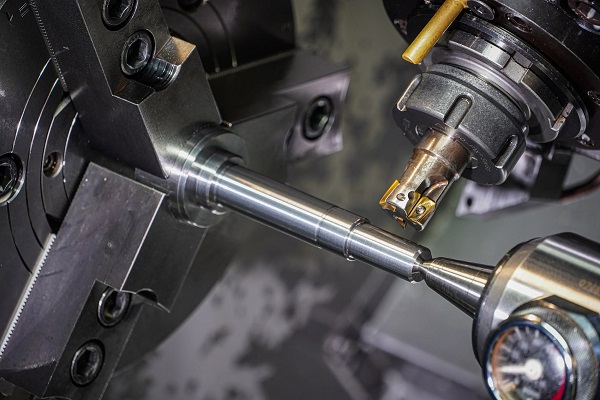
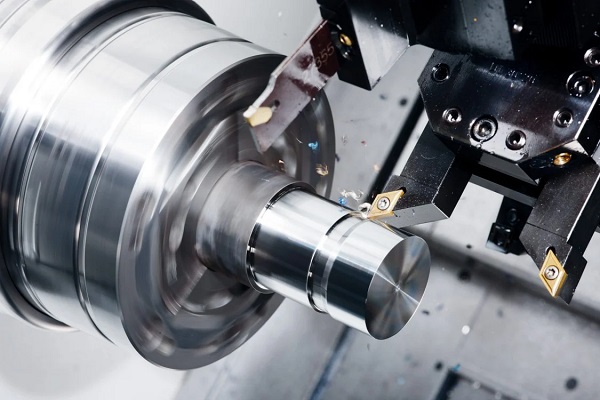
You already know basic CNC turning. But making perfect parts every time? That takes secrets most operators never learn. Why do some machinists get mirror finishes while others fight chatter and scrap? The answer lies in advanced techniques: mastering speeds and feeds, choosing the right toolpath strategy, and controlling vibration. Below are the proven methods that separate good parts from great ones. These are the secrets of CNC turning that experienced pros use daily.
1. What Are the Core Operations?
Before diving into secrets, you need a solid foundation. Every advanced technique builds on these basic operations.
The essential seven
| Operation | What It Does | When to Use |
|---|---|---|
| Facing | Cuts the end flat and square | Every part needs a clean end |
| Straight turning | Reduces diameter along length | Creating shafts or cylinders |
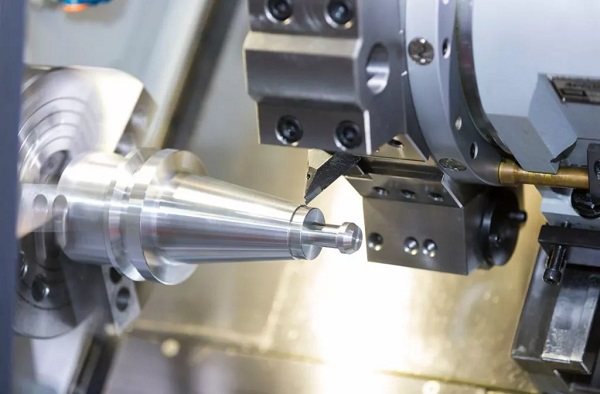
| Taper turning | Makes angled surfaces | Cones, tool holders, fittings |
| Grooving | Cuts narrow slots | For O-rings or snap rings |
| Parting | Cuts off finished part | Separating from bar stock |
| Boring | Enlarges existing holes | Precision internal diameters |
| Threading | Cuts screw threads | Bolts, fittings, lead screws |
Why mastering fundamentals matters
A CNC turning expert doesn’t just know these operations. They know how to combine them efficiently. For example, a hydraulic fitting might need facing, straight turning, threading, and boring in one setup. The secret is minimizing tool changes and optimizing the order of operations.
2. How Do Speeds and Feeds Unlock Quality?
The number one mistake in CNC turning is using generic speed and feed settings. Generic equals mediocre results. The secret is matching parameters to your exact situation.
Understanding the three numbers
SFM (Surface Feet per Minute) — How fast the material surface moves past the cutting edge. Harder materials need lower SFM. Soft materials can handle higher SFM.
RPM — Calculated from SFM and part diameter. Larger diameter = lower RPM for the same SFM.
Feed rate — How fast the tool advances. Measured in inches per revolution (IPR) or mm per revolution.
Pro rules that work
| Material | SFM Range (Roughing) | SFM Range (Finishing) | Feed (IPR) |
|---|---|---|---|
| 1018 Steel | 400–600 | 600–800 | 0.008–0.015 |
| 4140 Hardened | 200–350 | 350–500 | 0.006–0.012 |
| 6061 Aluminum | 800–1200 | 1200–1600 | 0.010–0.020 |
| 316 Stainless | 250–400 | 400–550 | 0.006–0.012 |
| Titanium Grade 5 | 80–150 | 150–200 | 0.004–0.008 |
Real-world example: A shop machining 316 stainless dropped SFM from 450 to 280. Tool life went from 18 parts per edge to 85 parts. Surface finish improved from Ra 1.6 to Ra 0.8.
Wrong speeds create predictable problems
- Too fast → Heat, blue inserts, rapid wear
- Too slow → Rubbing, built-up edge, poor finish
- Wrong feed → Chatter, broken inserts, bad chip control
3. Which Toolpath Strategy Works Best?
Toolpath strategy is a hidden secret of CNC turning. Most operators use the same path every time. Pros choose the strategy based on the goal.
Climb vs. conventional turning
Conventional turning — Tool moves against spindle rotation. More friction. Better for roughing when surface scale is present.
Climb turning — Tool moves with spindle rotation. Smoother finish. Less tool wear. Use this for finishing passes whenever possible.
Roughing vs. finishing passes
| Pass Type | Depth of Cut | Feed Rate | Goal |
|---|---|---|---|
| Roughing | 2–5 mm | 0.015–0.030 IPR | Remove material fast |
| Finishing | 0.2–0.5 mm | 0.004–0.010 IPR | Achieve tolerance and finish |
The spring pass secret
A spring pass is a final cut at zero depth or very light depth. It removes springback from the previous cut. The result? Better roundness and a mirror finish. Always add a spring pass on critical diameters.
Toolpath smoothing
Modern CAM software offers toolpath smoothing. This eliminates small direction changes that cause dwell marks. The tool moves in continuous arcs instead of tiny straight lines. Surface finish improves dramatically.
4. How Does Tool Selection Change Everything?
Tool geometry is not a detail. It is a secret weapon in CNC turning. The right insert makes difficult materials easy.
Insert geometry by material
- Sharp edges, polished surface → Aluminum, plastics, soft metals
- Strong edges, honed surface → Steel, stainless steel
- Hard coating (TiAlN, AlCrN) → Hardened steel, titanium, high heat alloys
- Ceramic or CBN → Hard turning (HRC 50+)
Nose radius trade-offs
| Nose Radius | Strength | Finish Quality | Chatter Risk |
|---|---|---|---|
| 0.2 mm | Low | Very fine | High |
| 0.4 mm | Medium | Fine | Medium |
| 0.8 mm | High | Good | Low |
| 1.2 mm | Very high | Acceptable | Very low |
Pro tip: Use the largest nose radius that fits your part features. It strengthens the cutting edge and reduces chatter. But switch to a smaller radius for shoulders or fine details.
Coolant strategy matters
Standard coolant is not enough for tough jobs. Use high-pressure through-tool coolant (1000+ PSI) for:
- Deep hole boring and drilling
- Hard materials like titanium and Inconel
- Chip breaking in gummy materials like 316 stainless
The high pressure breaks chips and pushes heat away from the cutting zone.
5. What Causes Chatter and How to Stop It?
Chatter is the enemy of surface finish. It ruins parts and wears out tools fast. Stopping it requires understanding the root cause.
The five causes of chatter
- Too much tool overhang — Stick out more than 4x tool height
- Long thin parts — Length-to-diameter ratio over 4:1 without support
- Wrong speeds — Hitting the natural frequency of the setup
- Weak workholding — Insufficient chuck pressure or worn jaws
- Dull inserts — Worn tools create more cutting force
Chatter fixes that work
| Cause | Solution |
|---|---|
| Tool overhang | Shorten to 3x height max |
| Long part | Add tailstock or steady rest |
| Resonance | Change RPM by 10–20% |
| Weak clamping | Increase chuck pressure (check part distortion) |
| Dull tool | Index or replace insert |
The damping bar secret
For deep internal bores (depth over 4x diameter), standard boring bars chatter. Use a damping bar filled with metal shot or a mechanical damper. These absorb vibration and allow bores up to 10x diameter.
Real-world example: A shop boring a 250mm deep hole with a 25mm diameter standard bar. Chatter was uncontrollable. Switching to a damping bar eliminated chatter completely. Cycle time dropped 40% because they could increase depth of cut.
6. What Are the Advanced CNC Turning Techniques?
Basic turning gets simple parts. Advanced techniques unlock complex geometries and difficult materials. These are the real secrets of CNC turning that high-end shops use.
Live tooling (turn-mill)
A standard lathe only spins the workpiece. Live tooling adds rotating tools on the turret. Now you can mill flats, drill cross-holes, tap threads, and cut hex shapes without a second machine.
What live tooling enables:
- Hex heads on shafts
- Cross holes at any angle
- Slots and keyways
- Off-center features (with Y-axis)
Hard turning (replace grinding)
Hard turning cuts materials at HRC 45–65 using CBN or ceramic inserts. It replaces grinding for many applications.
Benefits over grinding:
- Faster cycle times (5–10x)
- No coolant needed (dry cutting)
- One setup instead of separate turning and grinding
- Lower equipment cost
Limitations: Surface finish is Ra 0.4–0.8 (grinding can achieve Ra 0.1). For most applications, that is plenty.
High-speed machining (HSM) for turning
HSM uses light depths of cut (0.1–0.3 mm) with very high speeds and feeds. The heat goes into the chip, not the part.
Best for: Aluminum, plastics, and difficult materials that work-harden (like stainless and Inconel).
Non-round turning
With a C-axis and live tooling, you can create non-round features:
- Polygon turning — Cuts hex or square shapes while the part spins
- Eccentric turning — Features off the main centerline
- Cam profiles — Non-circular contours
Thread whirling
For long, fine-pitch threads on medical bone screws or lead screws. A whirling ring with multiple inserts cuts the thread in one pass. Much faster than single-point threading.
Deep hole drilling and boring
| Hole Depth | Recommended Method |
|---|---|
| Up to 4x diameter | Standard drill or boring bar |
| 4x–15x diameter | Gundrilling (single flute, high pressure coolant) |
| 15x+ diameter | BTA drilling (larger diameters) |
7. Which Programming Hacks Save Time?
G-code has secrets that most operators never use. These CNC turning programming hacks cut cycle time and improve quality.
Use G96 (constant surface speed)
Without G96, RPM stays fixed. As the tool moves toward center, SFM drops. Surface finish suffers.
G96 maintains constant SFM by increasing RPM as diameter decreases. Use it for facing and turning operations.
Use G99 (feed per revolution)
G99 sets feed rate per spindle revolution. This keeps chip thickness consistent regardless of RPM changes. Always use G99 for turning.
Roughing cycles automate material removal
| Cycle | What It Does |
|---|---|
| G71 | Stock removal for OD turning |
| G72 | Stock removal for facing |
| G76 | Threading cycle with multiple passes |
These cycles handle the math automatically. You just specify depth of cut, finish allowance, and final dimensions.
CAM smoothing eliminates dwell marks
Standard CAM output moves in small straight lines. Each direction change leaves a tiny dwell mark. Smoothing converts these into continuous arcs. Surface finish improves by 30–50%.
Conclusion
The secrets of CNC turning come down to five areas: mastering speeds and feeds, choosing the right toolpath strategy, selecting optimal tool geometry, controlling chatter, and applying advanced techniques like live tooling and hard turning. Start with the area that fixes your biggest problem today. Then add the other secrets one by one. Your scrap rate will drop. Your surface finish will improve. And you will make parts that others cannot.
FAQ
What is the most common mistake in CNC turning?
Using generic speeds and feeds instead of matching parameters to the specific material and operation. This causes chatter, poor finish, and short tool life.
How do I get a mirror finish on CNC turning?
Use a finishing pass with light depth of cut (0.2–0.5 mm), higher SFM, climb turning direction, a spring pass, and toolpath smoothing in your CAM software.
What is hard turning in CNC turning?
Hard turning cuts materials at HRC 45–65 using CBN or ceramic inserts. It replaces grinding for many applications, offering faster cycles and lower cost.
Can CNC turning make non-round parts?
Yes. With a C-axis and live tooling, you can create hex shapes, squares, eccentrics, and cam profiles without moving the part to a mill.
How do I stop chatter in deep hole boring?
Use a damping boring bar, reduce tool overhang, lower depth of cut, or change spindle RPM by 10–20% to avoid resonant frequencies.
Get projects quote with Moshijia Technology
Need advanced CNC turning for complex parts? Moshijia Technology specializes in hard turning, live tooling, and difficult materials. Upload your CAD file for a free engineering review and quote.