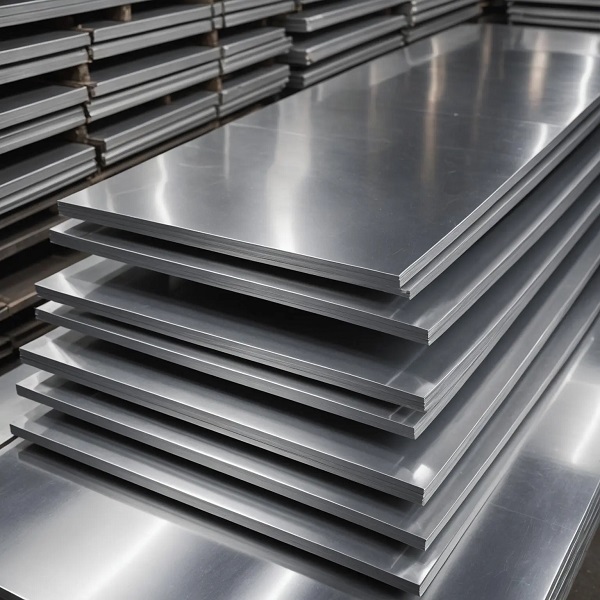
Where do you actually see stainless steel sheet metal every day? Walk into any commercial kitchen, hospital, or modern office building. Look at the exhaust system on a car or the tank at a food plant. Stainless steel is everywhere. Why? Because it resists rust, cleans easily, and lasts for decades. This guide shows you seven real-world applications where stainless sheet metal is the only smart choice. Each use case includes specific grade recommendations and real performance data.
Use 1: Commercial Kitchens and Cookware
Why Do Chefs Prefer Stainless Surfaces?
Stainless steel sheet metal dominates commercial kitchens for three reasons: it’s non-reactive, easy to sanitize, and withstands high heat. Acidic tomato sauce won’t pit it. Bleach cleaners won’t stain it. A 300°F pan won’t warp it.
Common applications:
- Countertops and work tables
- Sinks and backsplashes
- Exhaust hoods and ductwork
- Refrigerator interiors
- Cookware (pots, pans, griddles)
Grade and Thickness Guide
| Application | Grade | Thickness | Why |
|---|---|---|---|
| Countertops | 304 | 1.6mm (16 ga) | Balance of cost and durability |
| Sinks | 304 or 316 | 1.2-1.6mm | Deep drawing required |
| Exhaust hoods | 304 | 0.8-1.2mm | Lightweight, heat resistant |
| Cookware bottoms | 430 (magnetic) | 2-3mm | Works on induction cooktops |
Real example: A restaurant chain replaced laminate counters with 304 stainless at 1.6mm thickness. After five years of daily bleach cleaning and hot pan contact, no rust, no stains, no replacement needed. Laminate lasted 18 months.
Maintenance Tip
Clean with mild detergent and a soft cloth. Wipe in the direction of the grain. Never use steel wool—it embeds carbon particles that cause rust spots.
Use 2: Food and Pharmaceutical Processing
Why Is Stainless Mandatory for Hygiene?
The food and drug industries have zero tolerance for contamination. Stainless steel sheet metal is non-porous, so bacteria can’t hide. It withstands caustic cleaning chemicals and high-temperature sterilization (autoclaving at 121°C/250°F).
Key applications:
- Storage tanks (milk, beer, chemicals)
- Conveyor belts and tables
- Mixing vessels and hoppers
- Drying racks and trays
- Pharmaceutical tablet presses
The 316 Advantage for Harsh Environments
For food containing salt or acids (pickles, cheese, seafood), use 316 stainless. The added molybdenum (2-3%) resists pitting from chlorides. 304 works for dry or low-salt foods.
Case study: A dairy processor switched from 304 to 316 for their cheese brine tanks. 304 developed pitting after 8 months from salt exposure. 316 has run for 4 years with no visible corrosion.
Weld Quality Matters
Inside food tanks, welds must be smooth with no cracks or crevices. Back purging with argon prevents sugaring on the interior surface. After welding, electrochemical passivation restores corrosion resistance. A rough weld traps bacteria and fails health inspections.
Industry standard: 3-A Sanitary Standards require surface roughness under 0.8 micrometers (32 microinches) for food contact surfaces.
Use 3: Architectural Cladding and Facades
Why Do Architects Love Stainless?
Stainless steel sheet metal turns buildings into landmarks. It reflects light, resists pollution, and never needs painting. The Chrysler Building’s stainless crown (completed 1930) still shines today—no repainting ever.
Common architectural uses:
- Building facades and curtain walls
- Elevator interiors and doors
- Column covers and handrails
- Decorative screens and panels
- Roofing and gutters
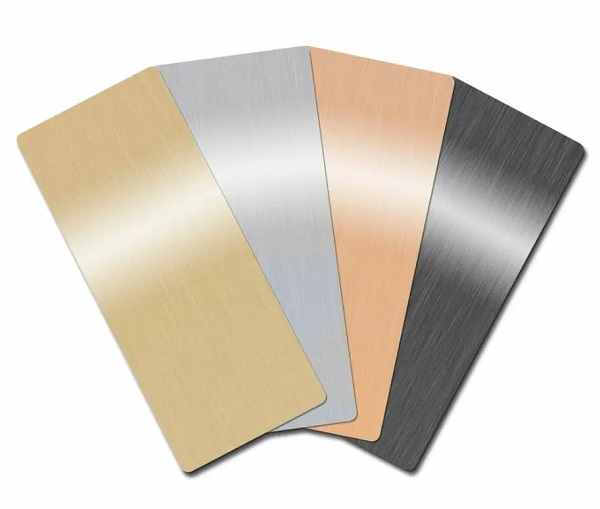
Finish Options for Different Looks
| Finish Type | Appearance | Best For |
|---|---|---|
| #4 Brushed | Satin, fine lines | Elevators, handrails |
| #8 Mirror | Highly reflective | Lobbies, accent walls |
| 2B (mill) | Smooth, dull | Hidden structural parts |
| Bead blasted | Matte, non-glare | Exterior facades |
| Patterned/embossed | Textured | Anti-slip flooring, decorative |
Grade Selection for Buildings
Indoor: 304 is standard. It resists fingerprints (especially with fingerprint-resistant coatings).
Outdoor near coast: 316 or 2205 duplex. Salt spray tests show 304 pits within 6 months in marine environments. 316 lasts 5+ years.
Real example: A beachfront hotel used 304 for balcony railings. Within one year, rust spots appeared. They replaced with 316 and have gone 7 years without issues. The upgrade cost 25% more but avoided replacement every 2 years.
Use 4: Automotive Exhaust Systems
Why Can’t Cars Use Regular Steel for Exhausts?
Exhaust systems see temperatures from ambient to 900°C (1650°F). Add road salt, moisture, and vibration. Mild steel rusts through in 2-3 years. Stainless steel sheet metal lasts 15-20 years.
Components made from stainless:
- Exhaust pipes and mufflers
- Catalytic converter shells
- Heat shields
- Flexible connectors
- Turbocharger housings (high-grade)
Grades for Different Temperatures
| Exhaust Section | Grade | Max Temp | Why |
|---|---|---|---|
| Rear pipes (cool) | 409 (ferritic) | 600°C | Low cost, good salt resistance |
| Middle section | 304 | 800°C | Better high-temp strength |
| Front (near engine) | 321 or 316Ti | 900°C | Titanium prevents carbide precipitation |
| Turbo housings | 309 or 310 | 1100°C | High chromium for extreme heat |
Real data: A study of aftermarket exhaust systems found 409 stainless lasted 8-10 years in salt-belt states (Michigan, New York). 304 lasted 12-15 years. Mild steel: 2-3 years.
Forming Challenges
Stainless work-hardens during bending. Exhaust tubes need mandrel bending to prevent wrinkling and wall thinning. For thin-wall tube (1.2-1.6mm), use a bend radius of 2-3x the tube diameter.
Use 5: Medical and Surgical Equipment
Why Is Stainless in Every Operating Room?
Hospitals require materials that survive autoclaving (steam at 121-134°C), resist bodily fluids, and clean to sterile levels. Stainless steel sheet metal meets all three requirements. It doesn’t corrode from iodine or bleach.
Medical applications:
- Operating tables and instrument trays
- Surgical tools (scalpels, forceps, retractors)
- Sterilization containers (Cassettes)
- Medical carts and cabinets
- MRI room components (non-magnetic grades)
Grade Requirements for Medical Use
304: Most surgical instruments and tables. Easy to clean, widely available.
316: Implants and tools contacting bodily fluids for extended time. The molybdenum improves pitting resistance to chlorides in blood and saline.
430 (magnetic): Not for medical. It rusts faster and can’t be passivated as effectively.
Real example: A hospital replaced carbon steel instrument trays with 304 stainless. The carbon steel trays rusted after 50 autoclave cycles. Stainless trays have exceeded 2,000 cycles with no corrosion.
Passivation Is Critical
Medical stainless must be passivated after fabrication. This removes free iron from the surface and restores the chromium oxide layer. ASTM A967 specifies the process: nitric or citric acid bath, then thorough rinsing.
Use 6: Industrial Filtration and Screening
Why Use Stainless for Filters?
Chemical plants, oil refineries, and water treatment facilities need screens that resist corrosion while handling abrasive materials. Perforated stainless steel sheet metal or woven wire mesh does the job.
Applications:
- Vibrating screens for mining
- Filter baskets for chemical processing
- Strainers for wastewater treatment
- Centrifuge screens
- Catalyst support grids
Perforated Sheet Specifications
| Opening Size | Sheet Thickness | Open Area | Typical Use |
|---|---|---|---|
| 0.5mm round | 0.5mm | 30-40% | Fine chemical filtration |
| 2mm round | 1.2mm | 40-50% | Food processing screens |
| 5mm square | 2mm | 50-65% | Aggregate sifting |
| 10mm round | 3mm | 60-70% | Heavy mining screens |
Grade Selection for Corrosive Environments
304: Fresh water, mild chemicals, food.
316: Salt water, chlorinated water, acidic chemicals.
904L (super austenitic): Sulfuric acid, extreme chloride conditions. Used in offshore oil platforms.
Case study: A desalination plant used 304 screens for saltwater intake. After 6 months, crevice corrosion destroyed the screens. Upgrading to 316L extended life to 5 years. 904L would last 15+ years but costs 4x more.
Use 7: Appliances and Consumer Goods
Why Do Refrigerators Use Stainless?
Consumers pay more for stainless steel sheet metal appliances because they look premium and hide fingerprints (with coatings). They also resist dents better than painted steel.
Common consumer products:
- Refrigerators and freezers
- Dishwashers and washing machines
- Ovens and microwaves
- Toaster ovens and coffee makers
- BBQ grills and outdoor kitchens
Grade and Finish for Appliances
| Appliance | Typical Grade | Finish | Thickness |
|---|---|---|---|
| Refrigerator door | 304 | Brushed #4 | 0.6-0.8mm |
| Dishwasher tub | 430 or 304 | 2B mill | 0.8-1.0mm |
| Oven interior | 304 | 2B | 0.6-0.8mm |
| BBQ grill hood | 430 or 201 | Brushed | 1.2-1.6mm |
The 430 vs 304 Debate for Appliances
430 (ferritic): Magnetic, lower cost, good corrosion resistance for dry indoor use. But it rusts faster if wet. Many “stainless look” budget appliances use 430.
304 (austenitic): Non-magnetic, better corrosion resistance, more expensive. High-end appliances use 304.
Real test: A dishwasher tub in 430 showed rust spots after 3 years in a home with hard water. The same tub in 304 showed no rust after 10 years. The 430 saved $15 at manufacturing but caused warranty claims.
Fingerprint Resistance
Many appliance makers apply a clear polymer coating or use fingerprint-resistant (FP) stainless. This reduces visible smudges by 80% compared to uncoated brushed stainless.
Comparison Table: Which Grade for Which Use?
| Application | Best Grade | Thickness | Key Property |
|---|---|---|---|
| Commercial kitchen counter | 304 | 1.6mm | Heat + chemical resistance |
| Food tank (salt exposure) | 316 | 2-3mm | Chloride pitting resistance |
| Building facade (marine) | 316 or 2205 | 1.2-2mm | Salt spray durability |
| Auto exhaust (rear) | 409 | 1.5-2mm | Low cost + heat resistance |
| Surgical instrument | 304 or 316 | 0.8-2mm | Sterilization survival |
| Chemical filter screen | 316L or 904L | 1-3mm | Acid resistance |
| Refrigerator door | 304 (FP coated) | 0.6mm | Appearance + dent resistance |
Conclusion
Stainless steel sheet metal serves seven major industries because it solves one core problem: corrosion. Kitchens need cleanable surfaces. Hospitals need sterilizable tools. Buildings need weatherproof facades. Cars need heat-resistant exhausts. Each use demands the right grade—304 for general duty, 316 for salt and chemicals, 409 for automotive heat, and specialized grades for extreme conditions. Choose wrong, and you’ll replace it in months. Choose right, and stainless outlasts the building around it.
FAQ
What is the most common grade of stainless steel sheet metal for general use?
304 stainless (austenitic) is the most common. It handles 90% of indoor and outdoor applications, including kitchens, appliances, and architecture. Use 316 when salt or heavy chemicals are present.
Can stainless steel sheet metal rust?
Yes, under the right conditions. Surface contamination from carbon steel tools causes rust. Chlorides (salt, bleach) can pit 304 grade. And welding without passivation leaves vulnerable areas. Proper grade selection and cleaning prevent rust.
Which stainless steel grade is best for outdoor coastal use?
316 or 2205 duplex. Both contain molybdenum (2-3% for 316, 3-4% for 2205) which resists pitting from salt spray. 304 will show rust within 6-12 months on a beachfront property.
Is stainless steel sheet metal expensive?
Yes, compared to carbon steel or aluminum. As of 2024, 304 stainless costs roughly 3-4x more than hot-rolled mild steel. But it lasts 10-20x longer in corrosive environments, making it cheaper over the product lifetime.
How do you clean stainless steel sheet metal without damaging it?
Use warm water, mild dish soap, and a soft cloth or sponge. Wipe in the direction of the grain. Rinse and dry immediately. Avoid steel wool, abrasive pads, bleach, and chloride-based cleaners. For stubborn marks, use a dedicated stainless cleaner.
Get projects quote with Moshijia Technology
Need stainless steel sheet metal fabricated for your industry? Moshijia Technology provides laser cutting, bending, welding, and passivation for food, medical, architectural, and industrial applications. Send your drawings for a quote within 24 hours.