Why choose stainless steel sheet metal over carbon steel or aluminum? The short answer: it lasts longer, cleans easier, and handles extreme conditions without failing. Yes, the upfront cost is higher. But over a 50-year lifespan, stainless often costs less than cheaper metals that rust, warp, or need replacement every few years. This guide breaks down eight measurable benefits, backed by real data and industry examples.
Benefit 1: Exceptional Corrosion Resistance
How Does Stainless Steel Fight Rust?
Stainless steel sheet metal contains at least 10.5% chromium. When chromium hits oxygen, it forms a thin, transparent oxide layer just a few atoms thick. This layer blocks rust. If scratched, the layer instantly reforms—as long as oxygen is present.
Key fact: Carbon steel rusts continuously. Aluminum forms an oxide layer but loses it in high-chloride environments. Stainless self-heals.
Real-World Performance Data
| Environment | Carbon Steel Lifespan | 304 Stainless | 316 Stainless |
|---|---|---|---|
| Indoor, dry | 20+ years | 50+ years | 50+ years |
| Outdoor, rural | 5-10 years | 20-30 years | 30-40 years |
| Coastal (salt spray) | 1-3 years | 5-8 years | 20-30 years |
| Chemical plant | Months | 5-10 years | 15-25 years |
Case study: A waterfront restaurant built a kitchen exhaust hood from carbon steel. It rusted through in 18 months. Replacement with 304 stainless cost 3x more upfront but has lasted 12 years with no rust.
Benefit 2: High Strength and Durability
How Strong Is Stainless Steel Sheet Metal?
Stronger than you think for its weight. Stainless steel sheet metal offers tensile strength between 205 MPa and 515 MPa (30,000 to 75,000 psi), depending on the grade.
Strength comparison:
| Material | Tensile Strength (MPa) | Yield Strength (MPa) | Density (g/cm³) |
|---|---|---|---|
| 304 stainless | 515-620 | 205-240 | 8.0 |
| 316 stainless | 550-620 | 240-290 | 8.0 |
| Carbon steel (mild) | 400-550 | 250-300 | 7.85 |
| Aluminum 6061 | 240-310 | 170-240 | 2.70 |
Real impact: A 1.6mm stainless sheet resists dents that would permanently deform 2.5mm aluminum. For structural applications, stainless often lets you use thinner material—saving weight and cost.
Impact Resistance Example
A food processing plant used aluminum covers on conveyor belts. Forklifts regularly dented them, creating crevices where bacteria grew. Switching to 1.6mm 304 stainless eliminated dents completely. The covers are now 8 years old with no replacement.
Benefit 3: Superior Hygiene and Cleanliness
Why Do Hospitals and Kitchens Use Stainless?
The surface of stainless steel sheet metal is non-porous. Bacteria, mold, and viruses have no pores to hide in. A simple wipe with sanitizer kills 99.9% of surface pathogens.
Hygiene benefits:
- No cracks or crevices for organic matter
- Withstands bleach, ammonia, and peracetic acid
- Survives autoclaving at 121°C (250°F)
- Non-reactive with acidic foods (tomatoes, citrus, vinegar)
Real Testing Data
A university study compared bacterial retention on food-contact surfaces:
- 304 stainless: 99.9% reduction after standard cleaning
- Polyethylene cutting board: 85% reduction (scratches trap bacteria)
- Wood: 70% reduction (porous, cannot sterilize fully)
Industry requirement: FDA and USDA mandate stainless steel for food contact surfaces in commercial facilities. No alternative material meets all three requirements: non-reactive, cleanable, and durable.
Benefit 4: Temperature Resistance
How Hot (or Cold) Can Stainless Go?
Stainless steel sheet metal performs from cryogenic temperatures (-196°C / -320°F) up to 1150°C (2100°F), depending on the grade. Unlike carbon steel, stainless doesn’t become brittle in extreme cold. Unlike aluminum, it doesn’t soften or melt at high heat.
Temperature limits by grade:
| Grade | Max Continuous Service | Cryogenic Toughness |
|---|---|---|
| 304 | 870°C (1600°F) | Excellent to -196°C |
| 309 | 1095°C (2000°F) | Good |
| 310 | 1150°C (2100°F) | Good |
| 316 | 870°C (1600°F) | Excellent to -196°C |
| Aluminum 6061 | 200°C (400°F) | Brittle below -80°C |
Real Application: Industrial Ovens
A bakery used carbon steel oven racks. After 2 years, rust flaked onto products. Switching to 304 stainless eliminated rust. The same racks have run at 260°C (500°F) for 10 years with no degradation.
Cryogenic example: Liquid nitrogen storage tanks use 304 or 316 stainless. Carbon steel shatters at -196°C. Stainless remains ductile and safe.
Benefit 5: Sustainability and Recyclability
Is Stainless Steel Environmentally Friendly?
Yes. Stainless steel sheet metal is 100% recyclable with zero quality loss. A stainless part made from recycled material performs identically to one made from virgin ore.
Key sustainability facts:
- Global average recycled content: 85%
- Some grades contain over 90% recycled material
- Stainless never degrades through recycling (unlike plastic)
- Recycling uses 66% less energy than primary production
Lifecycle Comparison
| Material | Recyclable? | Recycled Content Typical | Energy to Recycle |
|---|---|---|---|
| Stainless steel | Yes, 100% | 80-90% | Low |
| Carbon steel | Yes, 100% | 30-40% | Low |
| Aluminum | Yes, 100% | 40-50% | Very low |
| Plastic | Limited | 5-15% | N/A (downcycles) |
Real impact: A construction firm specified 304 stainless for building cladding. At end of life (estimated 60+ years), the material will be sold as scrap and remelted into new stainless. Zero landfill contribution.
Benefit 6: Ease of Fabrication
Can You Cut, Weld, and Bend Stainless Easily?
Yes, with the right tools. Modern laser cutters, CNC press brakes, and TIG welders handle stainless steel sheet metal as easily as carbon steel. The key is matching techniques to the material.
Fabrication capabilities:
- Laser cutting: Clean edges, minimal heat-affected zone
- Bending: Spring-back requires 10-15% overbend
- Welding: TIG and MIG both work with proper gas and filler
- Perforating: Up to 70% open area without losing integrity
Complexity Example
An architectural firm needed curved stainless panels with precise holes for a building facade. Using 1.2mm 304 stainless, a fabricator laser-cut the holes, roll-formed the curve, and TIG-welded stiffeners. Total time: 3 days for 20 panels. Aluminum would have required thicker material and would dent during installation.
Cost consideration: Stainless fabricates slower than mild steel (25-40% longer cycle times). But the finished part lasts 5-10x longer, making fabrication time irrelevant over the product life.
Benefit 7: Low Maintenance and Long-Term Value
Does Stainless Save Money Over Time?
Yes. Calculate total lifecycle cost, not just purchase price. A stainless part that lasts 50 years with zero maintenance often beats carbon steel that needs painting every 3-5 years and replacement after 15.
20-year lifecycle cost comparison (per square meter):
| Material | Initial Cost | Annual Maintenance | Replacements | 20-Year Total |
|---|---|---|---|---|
| 304 stainless (1.6mm) | $120 | $0 | 0 | $120 |
| Carbon steel (painted) | $50 | $15 (repaint) | 1 (at year 12) | $290 |
| Aluminum (1.6mm) | $80 | $5 (cleaning only) | 0 | $180 |
Real case: A municipal water treatment plant used carbon steel grating on walkways. Replacement every 8 years due to rust. Switching to 304 stainless grating cost 2.5x more upfront but has lasted 15 years with zero maintenance. Payback period: 6 years.
Maintenance Requirements by Material
| Material | Cleaning | Painting/Coating | Repair | Total Hours/Year |
|---|---|---|---|---|
| Stainless | Wipe only | None | None | 1 |
| Carbon steel | Wipe + rust check | Every 3-5 years | Spot repair | 8-12 |
| Aluminum | Wipe | None (but anodize may fade) | None | 2 |
Benefit 8: Aesthetic Appeal
Why Do Designers Specify Stainless?
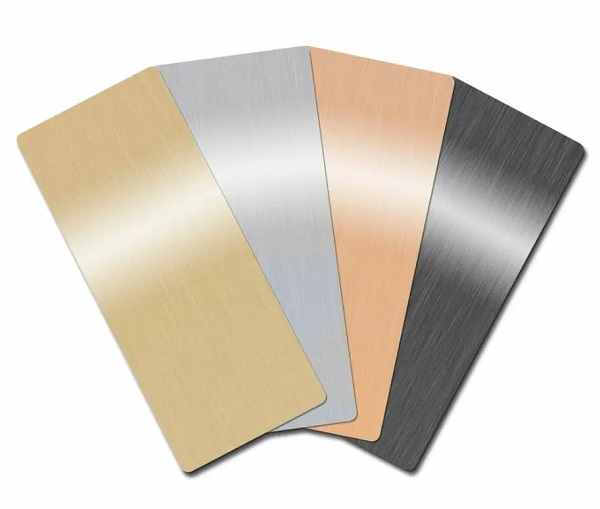
Stainless steel sheet metal looks modern, clean, and professional. Available finishes range from mirror (#8) to matte (bead blast) to patterned (embossed). The material reflects light without being harsh.
Finish options:
| Finish | Appearance | Best For |
|---|---|---|
| #4 Brushed | Satin, directional grain | Elevators, kitchens, appliances |
| #8 Mirror | Highly reflective | Lobbies, accent walls, art |
| 2B Mill | Smooth, dull | Hidden structural parts |
| Bead blasted | Soft, non-glare | Medical equipment, exterior |
| Patterned | Textured | Anti-slip flooring, decorative |
Real example: A hotel lobby installed carbon steel column covers. They looked industrial but rusted from humidity. Replacement with #4 brushed 304 stainless cost more but transformed the space. Guest feedback specifically mentioned the “clean, premium look.”
Comparison Table: Stainless vs. Alternatives
| Property | 304 Stainless | Carbon Steel | 6061 Aluminum |
|---|---|---|---|
| Corrosion resistance | Excellent | Poor (needs coating) | Good (but pits in salt) |
| Strength-to-weight | Very good | Good | Fair |
| Max service temp | 870°C | 540°C | 200°C |
| Cryogenic toughness | Excellent | Poor (brittle) | Poor |
| Hygiene (non-porous) | Yes | No (pores) | Yes |
| Recycled content | 85% | 35% | 45% |
| Lifespan (typical) | 50+ years | 10-20 years | 30-40 years |
| Initial cost | High | Low | Medium |
| Lifecycle cost | Low | High | Medium |
Conclusion
Stainless steel sheet metal delivers eight distinct benefits: corrosion resistance, strength, hygiene, temperature tolerance, recyclability, fabricability, low maintenance, and aesthetic appeal. No other material matches this combination. Yes, the upfront price is higher than carbon steel or aluminum. But over a 50-year lifespan, stainless often costs less—and performs better the entire time. For applications involving water, heat, chemicals, food, or public visibility, stainless isn’t just a good choice. It’s the only choice.
FAQ
Is stainless steel sheet metal worth the extra cost?
Yes, for any application lasting over 5 years. The lifecycle cost of stainless is often lower than carbon steel because you eliminate painting, rust repair, and early replacement. A typical 304 stainless part lasts 50+ years with zero maintenance.
Does stainless steel rust in salt water?
Some grades do. 304 stainless can pit in salt water after months to years. 316 stainless (with molybdenum) resists salt water for decades. For continuous saltwater immersion, use 2205 duplex or super austenitic grades like 904L.
Can you weld stainless steel sheet metal to carbon steel?
Yes, using a 309L filler rod. The weld will be stainless, but the carbon steel side will rust unless painted. This mixed joint is common in industrial equipment where stainless touches carbon steel frames.
How do you clean stainless steel without scratching it?
Use a soft cloth, warm water, and mild dish soap. Wipe in the direction of the grain (if visible). Rinse and dry immediately. Never use steel wool, abrasive pads, or chlorine bleach. For tough marks, use a dedicated stainless cleaner with a non-scratch pad.
What is the most environmentally friendly metal?
Stainless steel is among the most sustainable. It is 100% recyclable, typically contains 85-90% recycled content, and recycling uses 66% less energy than primary production. Unlike plastic or coated materials, stainless never downcycles.
Get projects quote with Moshijia Technology
Need stainless steel sheet metal for your next project? Moshijia Technology provides cutting, bending, welding, and finishing with fast turnaround. Upload your drawings for a free lifecycle cost analysis and quote.