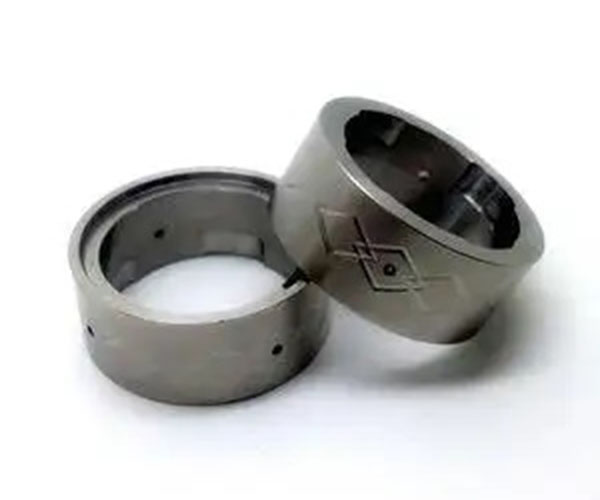
1. Core process and principle: the underlying logic of high-precision machining
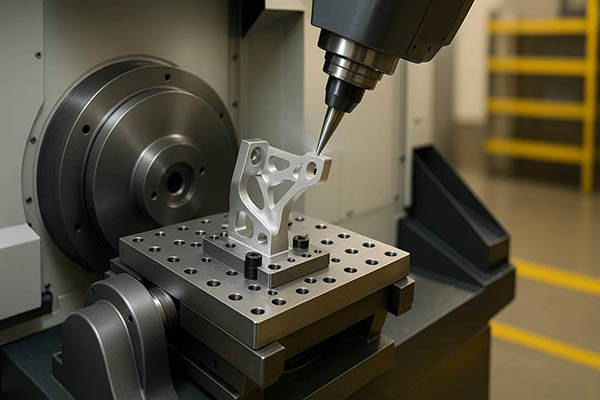
If you want to do a good job in CNC precision metal parts machining, you must first understand the core process principles. The essence of CNC cutting principles is to control the relative movement of the tool and the workpiece through digital instructions, achieving precise material removal. Among them, five-axis linkage machining is the “ultimate solution” for complex parts – when an aviation manufacturing company uses this technology to process engine blades, it achieves 0.02mm margin control through the B-axis and C-axis linkage, shortens the machining time of a single piece by 45%, and achieves a surface roughness of Ra0.4μm.
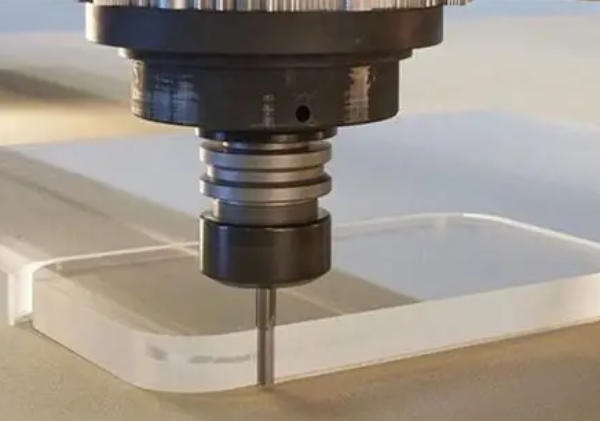
In actual production, the combination of metal cutting parameters directly determines the machining effect: the cutting speed, feed rate, and back eating tool volume need to be dynamically adjusted according to the material. For example, when processing aluminum alloys, medium and high speed (120-200m/min) cutting can avoid edge accumulation, and the feed rate can be controlled below 0.1mm/r to stabilize the Ra value within 1.6μm. At the same time, tool compensation and tool pass strategy optimization are the keys to improving efficiency, reasonable path planning can reduce empty travel, and with the fine debugging of G-code programming, stable output with micron-level accuracy (±0.0015mm) can be achieved.
2. Material selection guidelines: take into account performance, processability and cost
Choosing the right metal material is the first step to a successful project. The following is a comparison of the core characteristics of mainstream materials:
| Material model | Hardness (HB) | Machinability | Typical application scenarios | Material Cost Index (Relative) |
| Aluminum alloy 6061-T6 | 95-105 | ★★★★★ | 5G radiators, UAV structural parts | 1.0 (Benchmark) |
| Stainless steel 316L | 170-190 | ★★★☆☆ | Medical implants, marine parts | 2.8 |
| Titanium alloy TC4 | 300-350 | ★★☆☆☆ | Aerospace parts, robot joints | 6.5 |
| Brass H59 | 80-90 | ★★★★☆ | Fiber optic module cavity, connector | 1.5 |
| Magnesium alloy AZ91D | 65-75 | ★★★★☆ | Lightweight structural parts | 3.2 |
Note: The cost index is based on 6061-T6, and the data is derived from the 2025 edition of the Industry Material Cost Database.
In terms of material treatment, stress relief annealing reduces machining deformation (especially for thin-walled parts), while metal heat treatment improves material hardness – for example, stainless steel 316L is solution treated with a 30% increase in corrosion resistance but slightly more difficult to cut. It is recommended to give preference to materials with high machinability scores, unless the product has special performance requirements.
3. Equipment and tools: the core guarantee of processing capabilities
The combination of equipment and tools directly determines the machining limit. Vertical machining centers are suitable for mass production of small and medium-sized parts, while gantry five-axis machines excel in large and complex structural parts (such as military radar boxes, automotive turbocharger shells). When purchasing equipment, three core indicators need to be paid attention to: spindle thermal elongation compensation (error control within 0.002mm), machine rigidity test (radial runout ≤0.003mm), and tool magazine capacity (recommended for mass production≥24 units).
Tool selection is also critical: carbide milling cutters are the most versatile and suitable for most metal materials; Ceramic tools are suitable for high-speed finishing (cutting speed can reach more than 300m/min), but the brittleness needs to be matched with high-rigidity machine tools; When machining difficult-to-cut materials like titanium alloys, it is recommended to use cubic boron nitride (CBN) tools. A medical device manufacturer has proven that intelligent tool management can reduce scrap rates to less than 0.5% by reducing consumables costs by 18% through tool life prediction systems.
4. Quality inspection: the whole process control from the first article to the batch
High-precision parts are inseparable from strict quality control. First-article inspection is the first line of defense, verifying critical dimensions (e.g., roundness, coaxiality) through coordinate measurements to ensure compliance with design requirements. During the mass production phase, SPC process control was used to monitor machining fluctuations in real time, with the goal of achieving a CPK≥ of 1.67 (meaning a defect rate of only 0.6 per million).
The selection of inspection equipment needs to be targeted: roughness meters are used to verify surface quality (Ra0.1-0.4μm for precision parts), profilometers are suitable for complex surface inspection, and laser marking UIDs can achieve batch traceability to meet compliance requirements in medical, aviation, and other industries. A semiconductor fixture manufacturer has improved the product qualification rate from 98.2% to 99.8% through this testing system.
5. Cost and delivery optimization: the way to reduce costs from small batches to large quantities
The core of controlling costs and delivery times is process optimization. Rapid proofing can be achieved through a digital process design system, reducing the time to convert customer requirements into production code by 40%. For small batch orders (e.g., MOQ≤50 pieces), it is recommended to use a small batch flexible production line to reduce line changeover time (target ≤ 30 minutes) through parallel engineering; for high-volume production, it is necessary to focus on improving material utilization (optimized nesting can be increased to 92%) and implement DFM manufacturability review to avoid processing difficulties in advance.
In terms of cost control, tiered quotation is a common strategy – for every 100 units of the order volume, the unit price can be reduced by 5%-8%; In the long run, the total cost of ownership (TCO) is more important than the single purchase price, including full-cycle costs such as equipment depreciation, consumables, and maintenance. If the domestic supply chain cannot meet the demand, the overseas supply chain can be considered, but an additional delivery time of 15-20 days is required.
6. Surface treatment: a key step in improving performance and appearance
Surface treatment not only affects the appearance but also improves the performance of the part. Common process selection guidelines are as follows:
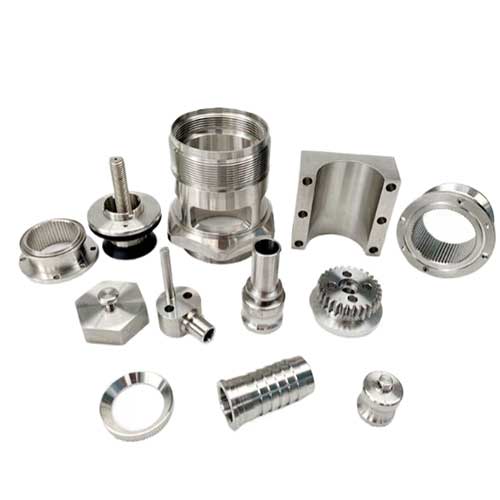
- Anti-corrosion requirements: anodizing (aluminum alloy is preferred, corrosion resistance is increased by 5 times), passivation (stainless steel only), electroless nickel plating (wear resistance + anti-corrosion dual effect)
- Appearance requirements: sandblasting (matte texture), brushing (linear texture), laser engraving (personalized logo)
- Accuracy retention: electropolishing (Ra value can be reduced by 50% without compromising dimensional accuracy), deburring (avoiding scratches on assembly)
- High-end needs: hard oxidation (hardness up to HV500 or above), vacuum coating (wear resistance + decoration dual functions)
A high-end bicycle manufacturer uses an “anodizing + laser engraving” process to make the chainring not only corrosion-resistant, but also achieve brand differentiation, and increase product premium by 20%.
7. Industry application cases: processing solutions for different scenarios
The requirements for CNC parts vary significantly across industries:
- Aerospace: To meet extreme environmental resistance, titanium alloy TC4 is commonly used, the processing accuracy is required to be ±0.005mm, and the surface treatment is mostly passivated
- Medical implants: Biocompatible materials (e.g., stainless steel 316L) must be used, subject to SPC control and batch traceability, with a surface roughness ≤ Ra0.2μm
- 5G heat sink: Aluminum alloy 6061-T6 is preferred, taking into account thermal conductivity and processability, and the surface treatment is commonly anodized (black has the best heat dissipation effect).
- Robot joint: The core is the balance of strength and precision, using five-axis linkage processing, and the key dimension coaxiality is ≤ 0.01mm
Moshijia Technology Perspective
The core competitiveness of CNC precision metal parts machining lies in the dynamic balance of “precision, cost, and delivery time”. With the upgrade of intelligent manufacturing, digital processes (such as CAD/CAM integration), intelligent device monitoring, and AI tool life prediction will become standard in the industry. Enterprises should give priority to flexible production capacity, avoid risks in advance through DFM review, and establish a full-process quality traceability system. For high-end manufacturing, choosing a supplier with five-axis machining capabilities and customized services can effectively reduce trial and error costs and shorten the time-to-market cycle.
FAQ FAQ
- How to Choose the Right CNC Machining Material?
A: Prioritize determining performance requirements (such as corrosion resistance, strength) according to the application scenario, and then take into account machinability and cost index. Aluminum alloy 6061-T6 is the best choice for versatility, stainless steel 316L is suitable for medical/marine scenarios, and titanium alloy TC4 is used for high-end aerospace products.
- What are the advantages of five-axis linkage machining over three-axis machining?
A: It can process complex surfaces (such as engine blades, robot joints), reduce the number of clamping times (reduce positioning errors), shorten the processing time of a single piece by 30%-50%, and increase the surface roughness by 1-2 levels.
- How to Reduce CNC Machining Costs by More Than 10%?
A: Optimize material nesting to improve utilization (target ≥90%), use a tool life prediction system to reduce consumables waste, simplify the processing process through DFM review, and select flexible production lines for small batches to reduce line change costs.
- How can the surface roughness of precision parts be controlled within Ra0.4μm?
A: Choose carbide or ceramic tools, use high-speed milling (cutting speed ≥ 180m/min), feed ≤ 0.1mm/r, with high-pressure cooling system, finishing back eating amount is controlled at 0.1-0.3mm.
- How can product consistency be guaranteed during mass production?
A: Implement SPC process control (target CPK≥1.67), regularly calibrate machine tools and testing equipment, use laser marking UID to achieve batch traceability, and first article inspection to strictly verify key dimensions.