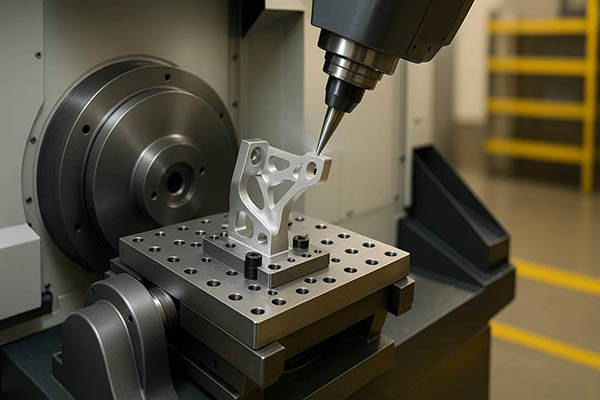
Discover the key advantages of custom manufacturing services. Learn how tailored CNC machining, 3D printing, and injection molding optimize costs and performance.
The Industrial Production Dilemma
Imagine buying a high-end off-the-rack Italian suit. The fabric is premium quality. The stitching is strong. However, when you put it on, the sleeves cover your hands. The waist is too tight. You cannot wear it to an important board meeting.
This is exactly what happens when B2B procurement managers buy standard off-the-shelf industrial parts for specialized systems.
Standard parts are built for average use cases. Yet, modern high-tech industries do not operate on averages. Whether you are building medical devices, aerospace instruments, or advanced robotics, standard components often force compromises. They lead to lower system efficiency, premature component failure, and costly field modifications.
[Standard Parts] ---> Compromised Fit ---> Efficiency Loss ---> Higher Long-term Cost
[Custom Parts]   ---> Perfect Fit       ---> Peak Performance ---> Lower Total Cost
B2B enterprises face a tough choice. Should you build massive in-house production lines? Or should you outsource to specialized partners? In-house production demands immense capital expenditure. It ties up your liquid cash. Outsourcing to a dedicated custom manufacturing services provider solves this dilemma. It bridges the gap between design intent and physical reality.
Defining Custom Manufacturing Services
What Is Custom Manufacturing?
Custom manufacturing services involve fabricating parts based on unique client specifications. Unlike mass production, this approach does not rely on rigid, high-volume assembly lines. Instead, it utilizes flexible manufacturing cells. These cells adapt to distinct material requirements, tolerances, and geometries.
Custom Versus Mass Production
Mass production relies on economies of scale. It reduces per-unit costs by producing millions of identical items. However, it requires expensive, hard tooling. It also demands long setup times.
Custom manufacturing focuses on agility and precision. It serves low-to-medium volume production runs. It adapts quickly to design revisions.
| Feature | Mass Production | Custom Manufacturing Services |
| Minimum Order Volume | Very High (e.g., 10,000+ units) | Low to Medium (1 to 1,000 units) |
| Initial Tooling Cost | High upfront investment | Low to moderate investment |
| Design Flexibility | Extremely rigid | Highly adaptable |
| Setup Time | Weeks to months | Hours to days |
| Primary Value | Lowest per-unit price | Maximum performance and fit |
7 Core Advantages of Custom Services
Perfect Engineering Alignment
Custom parts deliver exact dimensional accuracy. Off-the-shelf components require you to alter your overall system design. Custom parts fit your design perfectly.
For instance, a standard aluminum heat sink might be $10\text{mm}$ too wide for a compact drone chassis. Shaving it down manually compromises structural integrity. A custom CNC-machined enclosure integrates the heat sink fins directly into the outer wall. This saves space and maximizes thermal dissipation.
Boundless Design Innovation
Standard catalog parts limit your engineering team. Designers start designing around catalog limitations rather than optimization targets.
Custom manufacturing removes these physical boundaries. Engineers can explore complex internal channels, organic shapes, and consolidated assemblies. You can combine a three-part bracket assembly into a single, topology-optimized 3D-printed titanium component. This eliminates assembly labor and reduces failure points.
Precise Material Control
Industrial applications demand specific material characteristics. You might need high tensile strength, chemical resistance, or strict biocompatibility.
Material Selection Matrix:
├── Plastics (PEEK, PTFE, Polycarbonate) -> Chemical Resistance & Insulation
└── Metals (Titanium, Al 7075, Stainless)  -> Structural Integrity & Thermal Load
Custom fabrication allows you to select the exact material grade required. You are not limited to standard commercial plastics. You can specify aerospace-grade Aluminum 7075-T6, medical-grade Titanium Ti-6Al-4V, or high-performance polymers like PEEK. This ensures your component survives harsh working environments.
Long-Term Operational Savings
The initial price tag of a custom part is higher than a mass-produced catalog item. However, the total cost of ownership is significantly lower.
Consider a automated packaging line. A standard plastic conveyor guide wears out every three months. Each failure causes two hours of line downtime, costing $5,000 per hour. Replacing it with a custom-machined PTFE guide reinforced with glass particles costs more upfront. However, it lasts three years. The calculation is simple:
$$\text{Savings} = (\text{Downtime Cost} \times \text{Failures Saved}) – \text{Custom Tooling Premium}$$
Custom parts eliminate frequent replacement costs, downtime losses, and emergency maintenance labor.
Agility and Speed
Market windows are shrinking. If your product launch takes twelve months, your competitors will beat you to market.
Custom manufacturing relies on digital fabrication technologies like CNC milling and direct 3D printing. These processes do not require complex molding tools to start production. A digital CAD file goes straight to the machine. This allows you to receive functional prototypes or first-article production units in days rather than months.
Seamless Production Scaling
B2B product lifecycles require different volume tiers at different stages. You need five prototypes for internal testing. Next, you need fifty units for field beta testing. Finally, you need one thousand units for commercial launch.
Custom manufacturing service providers manage this transition smoothly. They scale production methods seamlessly. They might move your project from rapid SLS 3D printing to temporary aluminum bridge tooling, and finally to steel injection molds as your volume grows.
Collaborative Engineering Support
When you buy from a parts distributor, you get zero engineering assistance. If the part fails, you are on your own.
Working with a custom manufacturer gives you direct access to experienced production engineers. They review your drawings for Manufacturability (DFM). They catch design flaws early. For example, they might notice a sharp internal corner that will cause stress concentration, or a deep pocket that is impossible to clear with standard CNC tooling. They suggest fixes before chips fly.
Pillar Technologies in Custom Manufacturing
Precision CNC Machining
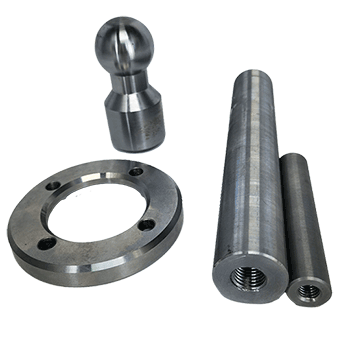
CNC machining is the workhorse of custom manufacturing. It is a subtractive method. It carves blocks of raw metal or plastic into final shapes using computer-controlled cutting tools.
Modern 5-axis CNC centers achieve tolerances as tight as $\pm 0.005\text{mm}$. This process is ideal for structural brackets, engine blocks, optical housings, and high-precision shafts. It delivers excellent mechanical properties because it uses raw, wrought metal stock.
Industrial 3D Printing
3D printing is an additive manufacturing technology. It builds parts layer by layer from digital files. It shines in low-volume production and hyper-complex geometries.
Technologies like Selective Laser Melting (SLM) print fully functional metal components in aluminum or stainless steel. Stereolithography (SLA) creates highly detailed master patterns for urethane casting. It eliminates tooling costs completely, making it highly affordable for single-digit production runs.
Rapid Sheet Metal Fabrication
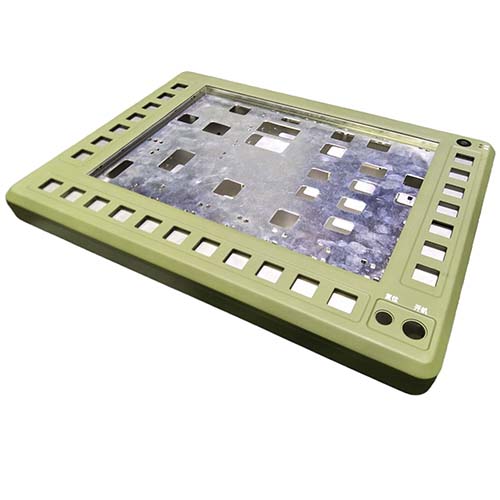
Sheet metal fabrication cuts, punches, and bends flat metal sheets into final shapes. It uses laser cutters and press brakes to create enclosures, chassis, brackets, and internal shielding frames.
It provides excellent structural durability and electrical grounding capabilities. It is widely used in the telecom, electronics, and power distribution sectors.
Rapid Injection Molding
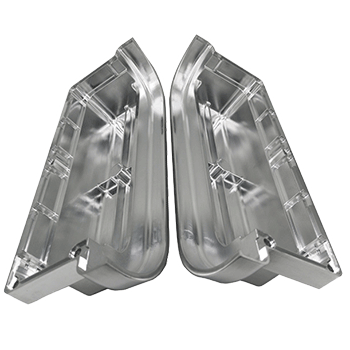
Injection molding is the preferred method for plastic parts once volumes cross the thousands. Liquid plastic resin is forced under high pressure into a mold cavity.
Traditional molding requires expensive steel tools that take weeks to cut. Rapid injection molding uses modular mold bases and soft aluminum cavities. This reduces tooling costs by up to $70\%$ and cuts lead times down to two weeks.
Choosing Your Manufacturing Partner
Evaluating a supplier requires looking beyond the unit price. You must check their quality systems, equipment capacity, and engineering capability. Use the checklist below to verify your next partner:
- ISO 9001:2015 Certification: Ensures a consistent quality management system.
- Material Traceability: Supplier must provide Mill Test Reports (MTRs) and material certifications.
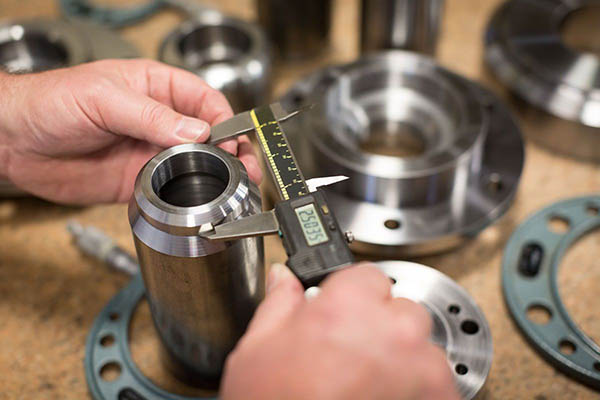
- In-house CMM Inspection: Coordinate Measuring Machines guarantee dimensional compliance.
- DFM Feedback: The partner should provide automated or engineer-led design feedback within 24 hours.
- Scalable Capacity: They must own diverse machinery so they do not bottleneck your supply chain.
Real Industry Success Stories
Medical Device Thermal Management
A medical electronics manufacturer faced overheating issues with their new diagnostic scanner. The standard rectangular cooling plates could not fit inside the compact, curved housing.
They partnered with a custom CNC machining shop. The shop developed a curved aluminum cold plate with internal fluid micro-channels.
- Result: Operating temperatures dropped by $18^\circ\text{C}$. Scanner reliability increased by $40\%$.
Aerospace Weight Reduction
A satellite hardware startup needed to cut weight from a sensor mounting bracket. Every gram saved saved thousands of dollars in launch fuel costs.
Using custom SLM titanium 3D printing, engineers hollowed out the solid sections of the bracket. They created an internal lattice structure that is impossible to machine conventionally.
- Result: Bracket weight dropped by $55\%$ while maintaining full structural stiffness under launch loads.
FAQ
What is the minimum order quantity (MOQ) for custom manufacturing?
There is no universal minimum. Many advanced shops accept orders for a single prototype unit. For processes like CNC machining and 3D printing, an MOQ of 1 unit is common. For rapid injection molding, MOQs usually start around 100 units due to initial mold setup demands.
How long does a typical custom manufacturing run take?
Lead times depend entirely on part complexity and selected technology. CNC machined parts and 3D printed components typically ship within 3 to 7 business days. Complex sheet metal assemblies or rapid injection molded parts take between 10 to 20 business days.
Can custom manufacturing match the surface finish of mass-produced parts?
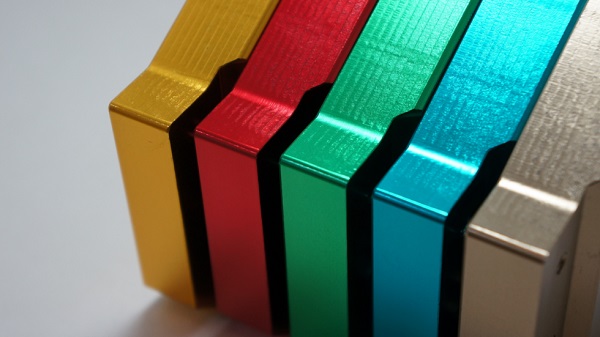
Yes. Custom manufacturers offer post-processing services. These include bead blasting, anodizing, powder coating, electropolishing, and chemical etching. You can specify the exact surface roughness ($Ra$ values) required for your application.
How do I protect my intellectual property (IP) when outsourcing?
Always sign a comprehensive Non-Disclosure Agreement (NDA) before sharing CAD models or blueprints. Choose established partners with secure digital infrastructure and strict internal data controls.
Get Project Quotes with Moshijia Technology
Ready to transform your complex designs into precision physical realities? Moshijia Technology offers world-class custom manufacturing services tailored for B2B enterprises. We provide expert CNC machining, rapid prototyping, and sheet metal fabrication with fast turnaround times and strict ISO-compliant quality control.