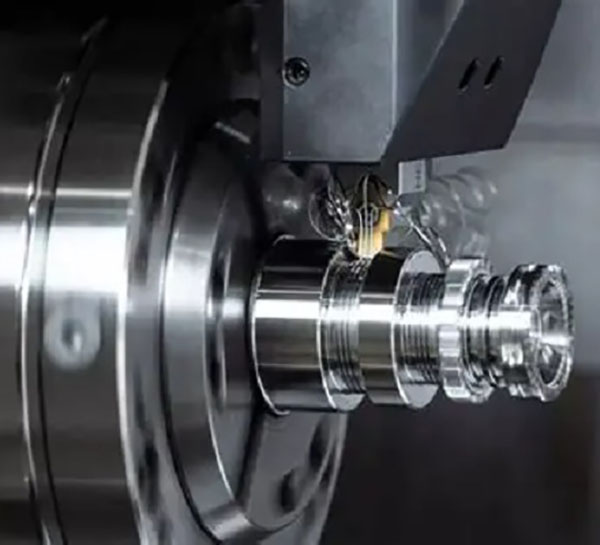
CNC machining stainless steel is a cornerstone of modern manufacturing, powering everything from life-saving medical devices to robust industrial equipment. This high-strength, corrosion-resistant alloy offers an exceptional blend of durability, versatility, and aesthetic appeal, making it a top choice for engineers and designers. But with so many grades and manufacturing considerations, navigating the world of CNC machining stainless steel can be complex. This definitive guide cuts through the noise. We’ll explore the core material properties that make stainless steel unique, break down the critical stainless steel grades, and demystify the entire CNC machining process. Whether you’re sourcing a prototype or planning high-volume production, you’ll gain the actionable insights needed to ensure quality, control costs, and successfully bring your project to life.
What Is CNC Machining? A Foundational Overview
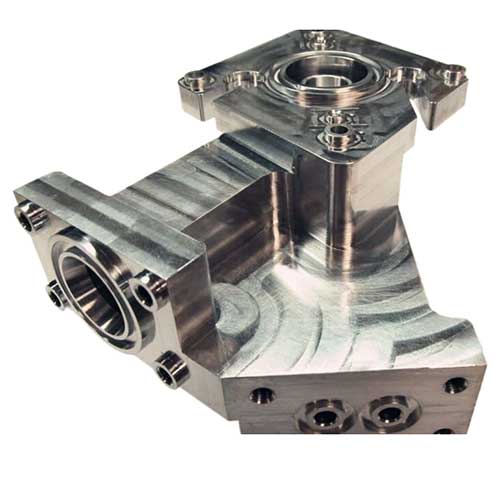
Computer Numerical Control (CNC) machining is a precise, subtractive manufacturing process. It uses pre-programmed computer software to dictate the movement of factory tools and machinery. This process can control a range of complex machinery, from 3-axis and 5-axis CNC mills to lathes and grinders, to cut, shape, and create parts from a solid block of material—known as the workpiece.
The key advantage is repeatable precision and automation. Once a design (from a CAD file) is converted into a CNC program (G-code), the machine can produce identical, complex parts with tolerances as tight as ±0.125 mm (±0.005″). This makes it ideal for creating the intricate, high-tolerance components often required for stainless steel applications in demanding fields.
Why Choose Stainless Steel for Your CNC Project?
Selecting the right material is the first critical step in any design. Stainless steel isn’t a single material but a family of iron-based alloys known for their exceptional corrosion resistance, primarily due to a minimum chromium content of 11-18%. This chromium forms a passive, protective oxide layer on the surface. Beyond corrosion resistance, its benefits are multifaceted:
- High Strength & Durability: Stainless steel offers high tensile strength and excellent wear resistance, ensuring parts can withstand significant stress, pressure, and physical wear over long periods.
- Hygienic & Sterilizable: Its non-porous, easy-to-clean surface makes it perfect for medical, food processing, and pharmaceutical applications where sterilization is mandatory.
- Temperature Resistance: It maintains its mechanical properties at both high and low temperatures, unlike many plastics or weaker metals.
- Aesthetic Versatility: It can be finished to a brilliant, polished mirror finish, a soft satin brush, or a dull matte bead blast, offering both functional and visual appeal.
- Sustainability: Stainless steel is 100% recyclable, with no degradation in performance, supporting sustainable manufacturing practices.
What Types of Stainless Steel Work Best for CNC Machining?
Not all stainless steels are created equal. Their machinability, strength, and corrosion resistance vary significantly based on their crystalline microstructure and alloying elements. Choosing the wrong grade can lead to production delays, tool wear, or part failure. Here’s a breakdown of the most commonly CNC machined stainless steel grades:
| Grade | Key Properties | Best For Applications | Machinability Rating |
|---|---|---|---|
| 304 / 304L | Excellent general-purpose corrosion resistance, good weldability. | Food processing equipment, chemical containers, architectural trim. | Good |
| 316 / 316L | Superior corrosion & chemical resistance (esp. vs. chlorides). | Marine hardware, medical implants, pharmaceutical devices. | Fair |
| 303 | Excellent machinability due to added sulfur. Lower corrosion resistance. | Shafts, fittings, fasteners, gears – high-volume machined parts. | Excellent |
| 17-4 PH | Precipitation hardening alloy; can be heat-treated to ~44 HRC. | Aerospace components, high-strength valves, turbine blades. | Good (annealed) |
| 416 | Magnetic with high machinability. Hardens by heat treatment. | Motor shafts, pump parts, firearm components. | Excellent |
| Duplex 2205 | Highest strength & hardness; excellent stress corrosion cracking resist. | Offshore oil & gas, chemical processing pressure vessels. | Difficult |
A Real-World Case: A client needed a custom housing for a sensor in a marine environment. While 304 was initially considered, our engineers recommended 316L for its superior pitting resistance against saltwater. This material expertise prevented a potential field failure, showcasing how deep material knowledge directly impacts product longevity.
Other notable grades include 420 (for hardened cutlery and molds), 440C (for high-wear bearings), and 15-5 PH (offering higher toughness than 17-4 PH for critical aerospace fittings).
How Does the CNC Machining Process for Stainless Steel Work?
Machining stainless steel requires expertise due to its work-hardening tendency and abrasive nature. A systematic approach ensures success.
- Design & DFM Analysis: The process begins with your 3D CAD model. Our engineers perform a Design for Manufacturability (DFM) review, focusing on stainless steel-specific factors like recommended minimum wall thickness (0.75mm), feature accessibility, and stress concentrations. We provide feedback to optimize the design for cost, speed, and performance.
- Programming & Setup: The approved design is translated into machine instructions (G-code). For complex parts, 5-axis CNC machining is often employed to allow for intricate geometries and undercuts in a single setup, improving accuracy and surface finish.
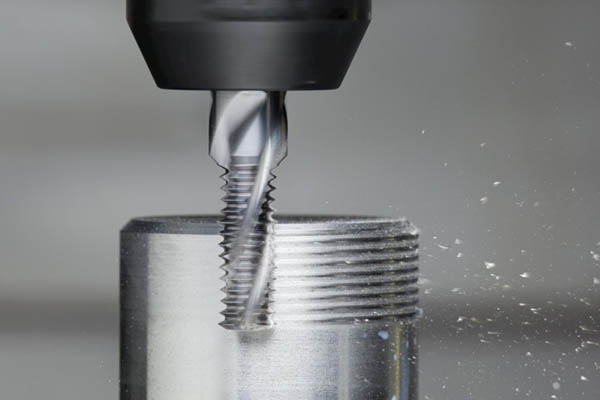
- Machining & Tooling: Using the right tools is critical. We employ sharp, premium-grade carbide tools with specialized coatings and optimized coolant strategies to manage heat, prevent work-hardening, and achieve the desired surface finish and dimensional accuracy.
- Post-Processing: Once machined, parts undergo deburring and finishing. Stainless steel offers a wide range of aesthetic and functional post-processing options:
- Bead Blasting: A uniform matte, non-reflective finish.
- Passivation: A chemical process that enhances the natural chromium oxide layer for maximum corrosion resistance.
- Electropolishing: Removes a microscopic layer, smoothing the surface to a bright, clean, and hygienic finish ideal for medical parts.
- Other options include brushing, powder coating, and electroless nickel plating.
What Are the Common Applications of CNC Machined Stainless Steel?
The properties of stainless steel make it indispensable across advanced industries:
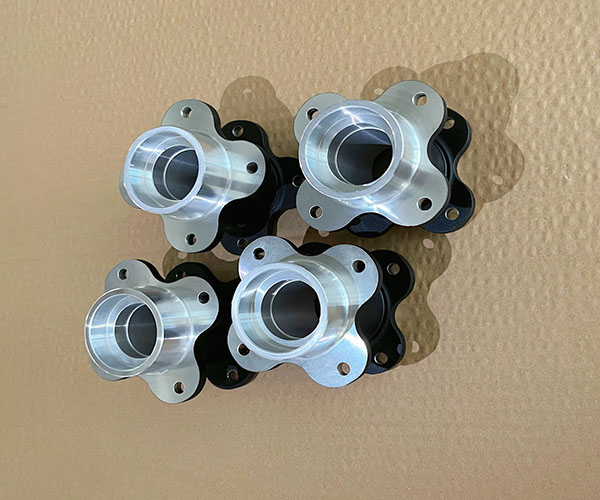
- Medical Technology: Surgical instruments, implantable device housings, diagnostic equipment components. Sterilization compatibility and biocompatibility (e.g., 316L) are paramount.
- Energy & Industrial Automation: Valve bodies, pump components, sensor housings, and robotic end-effectors that demand long-term reliability in harsh environments.
- Aerospace & Defense: High-strength structural brackets, landing gear components, and fasteners where the strength-to-weight ratio and fatigue resistance of grades like 17-4 PH are critical.
- Food & Beverage: Processing machinery, mixers, and fittings that require easy cleaning, corrosion resistance, and compliance with health standards.
How to Ensure Quality in CNC Machined Stainless Parts?
Quality is engineered into every step. Beyond selecting the correct stainless steel grade, we implement rigorous controls:
- In-Process Inspection: Operators use calibrated instruments like micrometers and CMMs (Coordinate Measuring Machines) to verify critical dimensions against the ±0.125 mm tolerance standard during production.
- Material Certification: We provide Mill Test Reports (MTRs) upon request, certifying the chemical composition and mechanical properties of the raw material used for your parts.
- Final QC & Testing: Every batch undergoes a final quality check. Additional services like salt spray testing for corrosion resistance or hardness testing can be performed to validate performance for your specific application.
What Does CNC Machining Stainless Steel Cost?
Cost is driven by three primary factors: part complexity, size, and the specific stainless steel grade. A simple 303 bracket will cost significantly less than a complex, tight-tolerance 316L medical component due to material cost and machining difficulty.
To provide immediate transparency, we use machine learning algorithms. By analyzing your uploaded CAD file, our system calculates material volume, machining time, and setup requirements to generate an instant, accurate quote. This allows for rapid iteration and budgeting.
For standard complexity parts, our extensive network of over 240 vetted stainless steel machine shops ensures competitive pricing and lead times as short as <10 days, with local sourcing options potentially reducing this to 5 days for urgent prototypes.
Conclusion
CNC machining transforms the inherent strength and corrosion resistance of stainless steel alloys into precision-engineered solutions that drive innovation. Success hinges on a deep understanding of material properties, from the general-purpose utility of 304 to the marine-grade superiority of 316L and the exceptional strength of 17-4 PH. By partnering with experts who master both the alloy characteristics and the CNC machining capabilities, you can navigate design choices, ensure quality, and optimize costs effectively. Let’s build something durable, precise, and exceptional.
FAQ: CNC Stainless Steel Machining
- What is the most easily machined stainless steel grade?
Grade 303 is specifically formulated for superior machinability. The addition of sulfur improves chip breaking and reduces tool wear, making it the top choice for high-volume production of screws, gears, and other complex parts where ultimate corrosion resistance is not the primary concern. - Can stainless steel parts be made as strong as steel?
Yes, certain precipitation-hardening stainless steels like 17-4 PH can be heat-treated to achieve a hardness over 40 HRC, rivaling or exceeding the strength of many traditional alloy steels, while retaining their essential corrosion resistance. - How do I prevent corrosion on my CNC machined stainless part?
Proper post-processing is key. Passivation is a standard, cost-effective chemical treatment that removes free iron from the surface and fortifies the natural chromium oxide layer. For parts in extreme environments, electropolishing provides a smoother, more resistant surface. - Is 304 or 316 stainless steel better for machining?
Grade 304 generally has better machinability than 316. However, selection should be based on the application’s needs. If the part will face exposure to chlorides (e.g., saltwater, chemicals), the superior corrosion resistance of 316/316L is necessary despite its slightly more challenging machining characteristics. - What is the standard tolerance for CNC machined stainless parts?
Our standard machining tolerance is a reliable ±0.125 mm (±0.005″). Tighter tolerances, down to ±0.025 mm (±0.001″), are absolutely achievable for critical features but should be specified only where truly needed, as they impact process time and cost.
Get projects quote with Moshijia Technology.
Ready to transform your design into a precision CNC machined stainless steel component? Our expertise in material science and advanced manufacturing ensures your project benefits from the optimal grade selection, efficient machining strategy, and rigorous quality control.
Simply upload your CAD file to our platform. Our quoting engine, backed by deep engineering experience, will provide you with an instant, detailed quote, DFM feedback, and lead time. For complex assemblies or custom material requirements, our engineering team is on standby for a personalized consultation.
Partner with Moshijia Technology – where the durability of stainless steel meets the precision of expert machining.