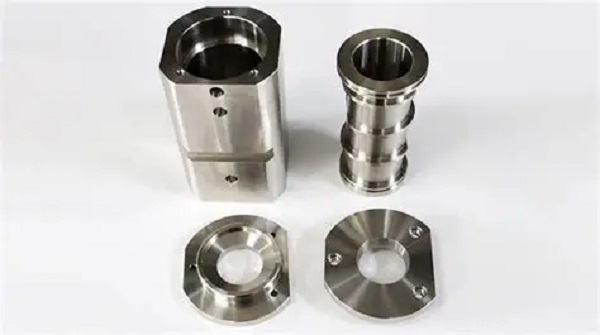
This guide demystifies the world of CNC turned stainless steel parts, explaining why this combination is a powerhouse for demanding applications. You’ll learn how to select the optimal stainless steel grade, understand the precision capabilities of modern turning, and discover the innovative hybrid techniques that are redefining manufacturing across aerospace, medical, and robotics industries. We cut through the complexity to provide actionable insights for your next project.
What Is CNC Turning and Why It’s Ideal for Stainless Steel
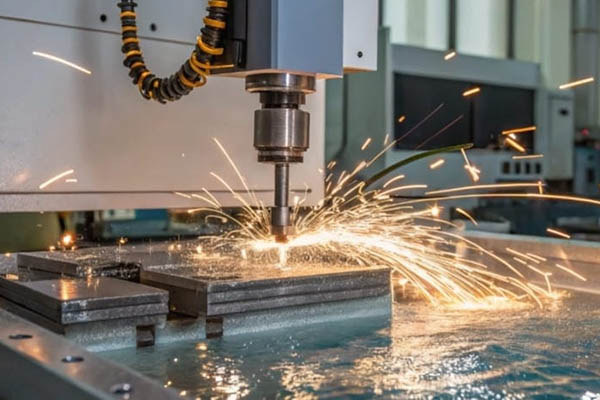
CNC turning is a precision manufacturing process where a cylindrical workpiece, typically a bar of material, rotates at high speed while a stationary cutting tool removes material to create the desired shape. This method is exceptionally well-suited for stainless steel, as it allows for the consistent and repeatable production of parts with excellent dimensional accuracy.
The synergy lies in the controllability of the CNC process. Modern turning centers, equipped with features like automatic tool correction and adaptive feed control, can expertly manage the unique challenges of cutting stainless steel, such as its toughness and tendency to work-harden. This results in components with guaranteed dimensional accuracy and perfect surfaces, ideal for everything from simple fasteners to complex valve components.
Why Stainless Steel is the Material of Choice for Critical Parts
Stainless steel isn’t chosen by accident; its inherent properties solve critical engineering challenges. Its most celebrated attribute is its exceptional corrosion resistance, granted by a minimum of 10.5% chromium, which forms a protective oxide layer. This makes parts last longer in harsh environments, from chemical processing to marine applications, reducing long-term replacement costs.
Beyond corrosion resistance, it offers a formidable strength-to-weight ratio and excellent durability, maintaining integrity under high stress and temperature. Furthermore, its hygienic surface and ease of sterilization make it indispensable in medical and food processing industries. While its initial cost may be higher than some alternatives, its longevity and performance often deliver a superior total cost of ownership.
Selecting the Right Stainless Steel Grade for Your Application
Not all stainless steel is created equal. Choosing the correct grade is paramount to balancing performance, machinability, and cost. The most common families are Austenitic (like 304 and 316), Martensitic (like 410 and 416), and Precipitation-Hardening (like 17-4PH), each with distinct properties.
The table below compares key CNC machining grades to guide your selection:
| Grade / Type | Key Characteristics & Alloy Notes | Best For Applications Requiring… |
|---|---|---|
| 303 (Austenitic) | Excellent machinability due to added sulfur. Good corrosion resistance. | High-volume production of screws, fittings, and gears where ease of machining is critical. |
| 304/304L (Austenitic) | All-purpose grade with excellent corrosion resistance and good formability. | Chemical equipment, architectural parts, and food processing where general corrosion resistance is needed. |
| 316/316L (Austenitic) | Superior corrosion resistance, especially to chlorides, due to added molybdenum. | Marine environments, medical implants, chemical processing, and pharmaceutical equipment. |
| 17-4PH (Precipitation-Hardening) | Very high strength and hardness achievable through heat treatment. Good corrosion resistance. | Aerospace components, high-stress turbine blades, and nuclear reactor parts where strength is paramount. |
| 416 (Martensitic) | Good machinability and hardenability; can be heat-treated for increased strength. | Pump shafts, connecting rods, and other high-strength, wear-resistant components. |
The CNC Turning Process for Stainless Steel: From Bar to Part
The journey from a stainless steel bar to a finished precision part is a meticulously controlled sequence. It begins with CAD/CAM-supported programming, where digital designs are translated into machine instructions. The chosen stainless steel bar is then loaded, often via an automated bar feeder, into the CNC turning center.
During machining, critical factors are managed to ensure quality:
- Tooling & Cutting Parameters: Carbide tools are often preferred for their hardness. Cutting speed, feed rate, and depth of cut are optimized to manage heat and prevent work hardening.
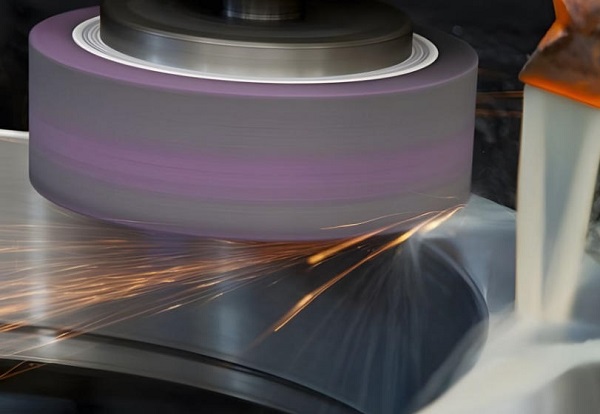
- Cooling & Chip Control: High-pressure coolant is essential to dissipate heat, lubricate the cut, and break up the long, stringy chips stainless steel tends to produce.
- In-Process Quality Assurance: Advanced machines feature sensor-based process monitoring and automatic dimensional correction, checking workpieces in real-time to guarantee consistency.
Achieving Precision: Tolerances and Surface Finishes
Modern CNC turning can achieve remarkable precision in stainless steel. Standard dimensional tolerances can reach ±0.01 mm, with some high-performance systems capable of ±0.005 mm for critical features.
Beyond simple dimensions, geometric tolerancing—controlling the form, orientation, and location of features—is crucial for parts that must mate perfectly in assembly. Available controls include:
- Flatness & Straightness: For ensuring surfaces are level or axes are true.
- Circularity & Cylindricity: For controlling the roundness of turned diameters.
- Concentricity & Runout: For ensuring different cylindrical features rotate around the same exact axis.
Surface finish, measured in micrometers (µm) as Roughness Average (Ra), is equally vital. A standard turned finish might be Ra 1.6 – 3.2 µm, but this can be refined through:
- Fine Machining: Achieving finishes as smooth as Ra 0.4 µm or better with optimized tools and parameters.
- Post-Processing: Mechanical polishing, electropolishing, or passivation can enhance aesthetics, improve corrosion resistance, and meet hygienic requirements.
The Cutting Edge: Hybrid CNC and 3D Printing Manufacturing
For the most complex, lightweight, or integrated components, a revolutionary hybrid approach is gaining traction. It combines metal 3D printing (SLM/DMLS) for “near-net-shape” fabrication with CNC turning/milling for precision finishing.
Process & Advantages:
- 3D Printing Stage: Creates the part’s complex internal geometry (like conformal cooling channels or lattice structures) from stainless steel powder, using material with up to 95% efficiency.
- CNC Finishing Stage: The printed “blank” is then precision-turned and milled on 5-axis machines to achieve critical tolerances (±0.01mm) and surface finishes (Ra 0.4 µm).
This synergy unlocks unique benefits:
- Design Freedom: Enables integrated, lightweight structures impossible to make subtractively.
- Performance Enhancement: CNC machining relieves residual stresses from printing, potentially increasing tensile strength by 15%.
- Cost & Speed for Complexity: For parts with complexity >60%, this can be more economical than pure CNC and allows for agile small-batch production.
FAQ: CNC Turned Stainless Steel Parts
- What are the main challenges when machining stainless steel on a CNC lathe? The primary challenges are rapid tool wear due to the material’s toughness, heat generation from its low thermal conductivity, and the tendency for long, stringy chip formation. Managing these requires robust tooling, effective coolant, and optimized cutting parameters.
- How do I choose between grades 304 and 316 stainless steel? Choose 304 for general-purpose use where excellent corrosion resistance is needed. Opt for 316 (which contains molybdenum) when superior resistance to chlorides and acids is required, such as in marine, chemical, or medical implant applications.
- What level of surface finish can I expect from CNC turning? Standard turning can achieve a good machine finish. For smoother finishes down to Ra 0.4 µm or better, specify fine machining with specialized tooling and parameters. For mirror-like or hygienic surfaces, mechanical or electropolishing post-processing is recommended.
- Is “hybrid manufacturing” with 3D printing cost-effective for my project? Hybrid manufacturing becomes cost-effective when your part has high complexity (e.g., internal channels, lattices), requires lightweighting, or is needed in low to medium volumes. It consolidates assemblies and reduces material waste, offering value beyond simple per-part cost.
- What certifications should I look for in a CNC turning supplier? For critical industries, prioritize suppliers with ISO 9001 for quality management and IATF 16949 for automotive standards. For aerospace or medical, AS9100 or ISO 13485 are essential indicators of a controlled, high-reliability manufacturing process.
Get a Quote for Your CNC Turned Stainless Steel Project
Navigating the specifics of material grade, geometric tolerance, and surface finish for your stainless steel components requires expert consultation. The choice between traditional precision turning and innovative hybrid manufacturing can fundamentally impact the performance, cost, and timeline of your project.
At Moshijia Technology, we provide more than just machining. We offer engineering insights to help you value-engineer your designs—like the case where converting a part from a casting to a machined bar stock more than doubled yield and reduced costs. Our expertise in material science and advanced processes, including hybrid manufacturing, ensures your parts are not only made to print but optimized for their real-world function.
Ready to see how precision CNC turning can advance your design? Submit your drawings and specifications for a detailed quote and a consultation on the most effective manufacturing strategy for your stainless steel parts.