Introduction
You have a critical component to manufacture. The tolerances are tight, the material is challenging, and the deadline is fixed. The problem? Precision machining isn’t a single process you can simply order from a catalog. It’s a family of distinct technologies, each with unique physical principles, capability boundaries, and economic logic. Picking the wrong one means failed inspections, scrapped parts, and delayed projects. This guide clarifies the landscape. We will break down eight core precision machining processes, providing you with a clear, technical understanding of how each one works, its true accuracy potential, the materials it handles best, and where it fits into real-world production. This isn’t just theory; it’s a practical map for making confident engineering decisions.
CNC Turning
The Principle of Rotation
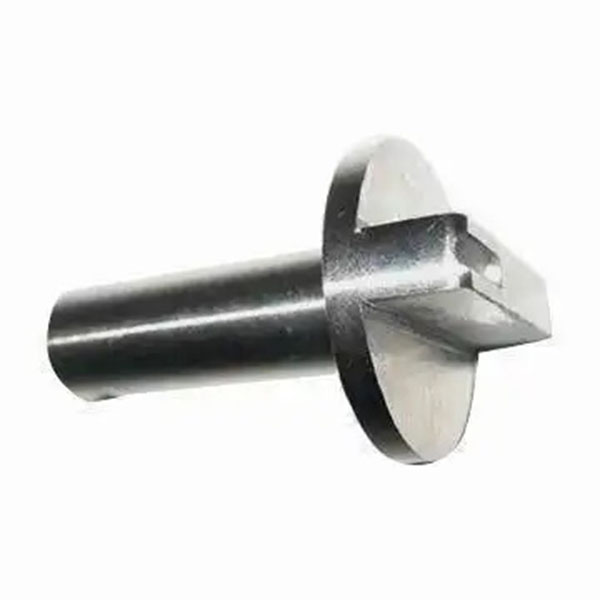
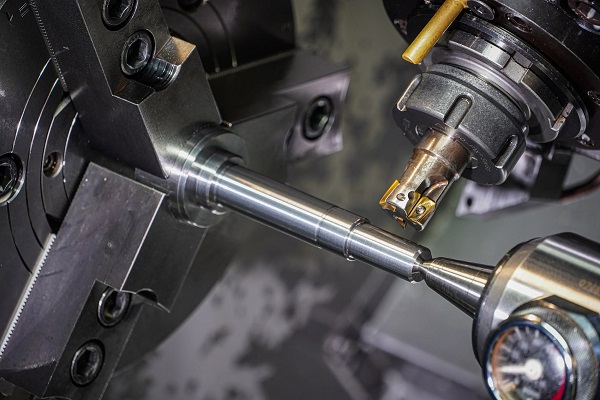
The foundational dynamic of turning is reversed: the workpiece rotates at high speed against a stationary cutting tool. The lathe’s spindle grips the raw material, be it a metal bar or a plastic disc, spinning it with immense rigidity. A single-point insert then traverses along the part’s profile, peeling away a continuous chip to define the diameter, face, grooves, and threads.
Accuracy and Key Parameters
Modern CNC lathes consistently hold a dimensional tolerance of ±0.005 mm on diameter. This is not an aspirational figure; it’s a daily production standard with a properly maintained machine and thermal compensation. Surface finish on a fine pass can easily reach Ra 0.4 µm, often eliminating a separate grinding operation. For context, we recently ran a batch of 316L stainless steel hydraulic piston rods. The critical seal diameter had a tolerance band of just 18 microns. We achieved a process capability index (Cpk) above 1.67 by controlling roughing depth to 1.5 mm and finishing depth to 0.15 mm, paired with a chip breaker optimized for the gummy material.
Ideal Applications and Materials
This process is the undisputed champion for any rotational part. Think shafts, pins, bushings, and connectors. It excels with the full spectrum of metals, from free-machining brass and aluminum to tough superalloys like Inconel 718. Engineering plastics like PEEK and Acetal also machine beautifully with sharp, polished carbide inserts. If your design is cylindrical, turning is almost always the most efficient starting point.
CNC Milling
Multi-Axis Material Removal
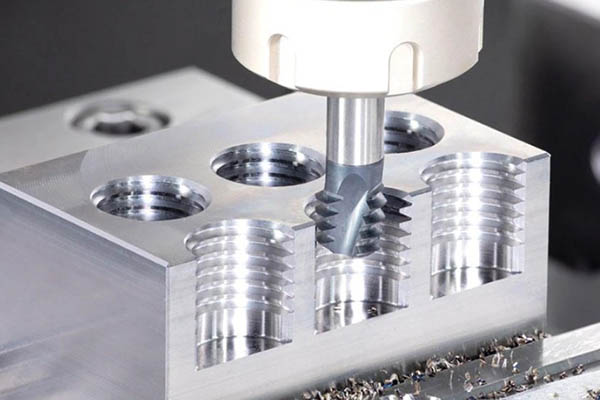
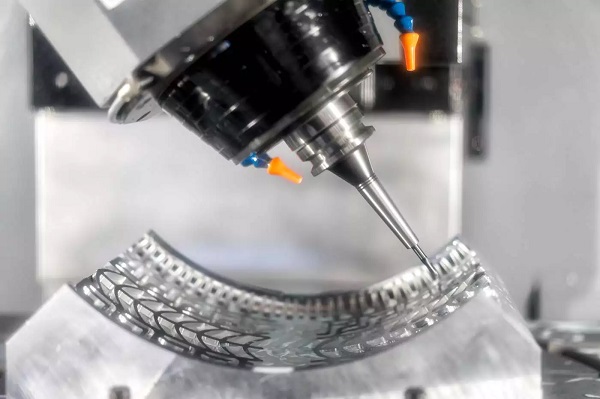
Milling has evolved from a simple 2.5D operation into a powerhouse of freedom. A rotating multi-fluted tool doesn’t just drill holes; it moves in a simultaneous, choreographed dance across 3, 4, or 5 axes. This allows you to create complex, contoured surfaces like turbine blades, injection mold cavities, and structural brackets with intricate pockets from a solid block.
Capability and Real-World Limits
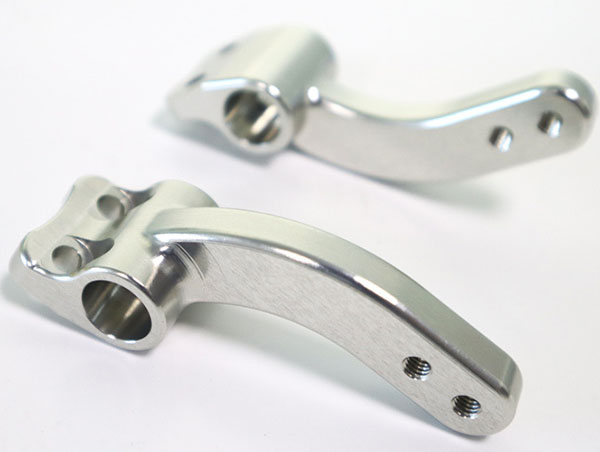
A high-end 5-axis mill can achieve a positioning accuracy of ±3 µm, but the practical feature accuracy depends on tool deflection and heat. For a typical pocket in 7075 aluminum, maintaining a true position tolerance of ±0.01 mm is reliable. Milling shines on prismatic parts made from virtually any machinable material. We often use it for rapid aluminum prototyping but also for production runs of titanium medical implants. A key design insight: always specify an internal corner radius equal to a standard end mill radius. A sharp 90-degree corner is technically impossible without a very costly and slow EDM process, a lesson many new engineers learn the hard way.
Electrical Discharge Machining (EDM)
Controlled Lightning Erosion
EDM completely sidesteps mechanical force. It uses a precisely controlled series of electrical sparks between an electrode (the tool) and the workpiece, both submerged in a dielectric fluid. Each spark vaporizes a microscopic particle of material, eroding the workpiece into the inverse shape of the electrode. There are two main types: Sinker EDM for complex 3D cavities and Wire EDM for through-form profiles.
The Power Over Hardness
The defining advantage is its independence from material hardness. It can shape carbide, hardened tool steel (60+ HRC), and titanium as easily as soft aluminum. Tolerances of ±0.0025 mm are achievable, making it the ultimate precision tool for sharp internal corners, deep ribs, and fragile features that would shatter under a cutter’s load. You can’t mill a perfectly sharp internal corner in a hardened mold insert, but you can burn it with EDM. The trade-off is speed; EDM is a thermally slow process, typically measuring material removal in cubic millimeters per hour.
Surface Grinding
The Art of the Micron Finish
This is not rough stock removal. Precision surface grinding is an abrasive machining process for achieving ultimate flatness, parallelism, and surface finish. A spinning grinding wheel with thousands of microscopic abrasive grains takes cuts so shallow they are measured in microns, generating a surface that often looks like a mirror.
Achieving Sub-Micron Geometry
On a quality reciprocating surface grinder, you can reliably achieve a flatness of less than 0.001 mm and a surface finish from Ra 0.1 µm down to 0.025 µm. The process generates significant heat, so a copious flow of coolant is not optional; it is axiomatic. It’s essential for the bearing raceways, seal faces, and mating surfaces of machine tool ways themselves. A classic gauge block, accurate to millionths of a meter, is born from meticulous grinding and lapping. You can’t mill a perfect seal face; you must grind it.
Cylindrical Grinding
Perfecting Outer and Inner Diameters
When a CNC-turned shaft isn’t round or smooth enough, it goes to the cylindrical grinder. This process refines the external and internal diameters of rotationally symmetric parts between centers or in a chuck. It corrects the lobing, taper, and surface imperfections left by turning to create a geometrically perfect cylinder.
Precision Class Bearings
This technology is the foundation of a rotating world. It delivers roundness within 0.5 µm and diametrical tolerances of ±0.002 mm. This is the domain of electric motor shafts, spindle noses, and injection mold cores. High-precision roller bearings, for instance, have their inner and outer raceways finished with this process to achieve the acoustic quietness and low runout required for a 30,000 RPM spindle. The process directly dictates the ABEC rating of a bearing.
Laser Cutting
Focused Light as a Blade
Laser cutting swaps a physical tool for a high-density beam of light, focused through a lens and often assisted by a jet of gas. The beam instantly heats, melts, and vaporizes the material along a programmed path. It’s a non-contact, high-speed process dictated by power density and wavelength.
Speed Versus Precision
For thin-gauge materials up to 20 mm in structural steel, a modern fiber laser is revolutionarily fast. It cuts complex profiles directly from a flat DXF file in seconds. The positioning accuracy is good, around ±0.05 mm, but the cut edge quality defines its precision. A finely tuned laser leaves a clean, square edge with minimal dross. However, the process inherently creates a microscopic heat-affected zone (HAZ) and striations. For a non-critical enclosure bracket, this is a one-and-done process. For a precision dowel pin hole, you will still need a secondary reaming or boring operation.
Precision Boring
Correcting Hole Geometry
A drilled hole is never truly straight, round, or on-location. A boring head corrects all three errors. The single-point tool spins within the hole, adjusting its radial offset with micron-level precision to enlarge the internal diameter until it’s perfectly cylindrical and concentrically aligned with the spindle axis.
The Solution for Deep Bore Alignment
This is the definitive process for bearing housing bores and engine cylinder bores, where perfect alignment over a long distance is non-negotiable. A well-executed boring operation can achieve an IT6 tolerance on diameter and straightness within 0.01 mm over 200 mm. It’s a finishing step that follows drilling and precedes honing. If you try to mill a critical bearing seat with an interpolated circular path, you will see roundness errors from machine geometry. Boring removes this variable by making the hole coaxial with the machine’s own spindle.
Ultrasonic Machining
High-Frequency Vibration Cutting
This is a hybrid process that superimposes a high-frequency, low-amplitude vibration (typically ~20 kHz) onto a standard cutting tool. This ultrasonic vibration doesn’t cut the material itself but radically changes the physics of chip formation, creating a momentary separation between tool and workpiece thousands of times per second.
Solving the Brittle Material Problem
Ultrasonic machining is a strong solution for brittle, hard-to-cut materials. Think glass, technical ceramics (alumina, zirconia), silicon carbide, and composites. Without ultrasonics, these materials micro-fracture and cause rapid tool wear. With an ultrasonically vibrating diamond tool, we achieve continuous ductile-mode cutting, leaving a surface free of subsurface damage. You can machine a microfluidic channel directly into a glass wafer with walls that are optically clear, a feat impossible with conventional milling. The cutting forces are reduced by up to 50%, enabling extremely delicate features.
Conclusion
Navigating the world of precision machining means moving beyond generic specifications. Each of these eight processes represents a distinct solution to a specific set of physical manufacturing challenges. An engineer’s primary task is not just to design a part, but to design it for the right process. A perfectly designed ground shaft will perform flawlessly, while a laser-cut version of the same model will fail. Understanding the core logic of turning, the limitless geometry of 5-axis milling, the hardness-defying power of EDM, and the finishing art of grinding empowers you to make selections that ensure functional success and economic efficiency. Your final product’s integrity is written in your process choices long before any material is cut.
FAQ
What is the most cost-effective precision machining process for cylindrical parts?
For parts with 90% rotational symmetry, CNC turning is the most economical. The process removes material rapidly and achieves tight tolerances for diameters and faces in a single setup.
Can you machine a perfectly sharp 90-degree interior corner?
No, not with a standard rotating milling cutter. A physical tool radius will always exist. To achieve a truly sharp corner, you must specify a process like Sinker EDM that can erode the material without a rotating, radiused tool.
How do I choose between EDM and conventional milling for a hard mold?
For a mold cavity under 45 HRC, high-speed milling is preferable. For hardened steel above 60 HRC with deep, sharp corners, Sinker EDM is not just an option, but a necessity, as end mills will deflect or break.
What surface roughness can I realistically expect from precision grinding?
A routine precision surface grinding process will deliver an Ra 0.4 µm finish easily. A well-dressed wheel with fine grit and spark-out passes can achieve a near-mirror Ra 0.05 µm finish.
What is the main advantage of ultrasonic machining for hard materials?
The primary advantage is the elimination of subsurface damage in brittle materials like glass and ceramics. By inducing a high-frequency chip separation, it cuts these materials in a ductile mode, preventing cracks and achieving a clean, smooth edge.
Is 5-axis CNC milling always the best choice for complex metal parts?
Not always. While 5-axis milling offers superb flexibility, it comes at a higher machine-hour rate. For a complex cavity in a hard material, a Sinker EDM might achieve the final geometry more accurately and economically, despite being slower. The best choice depends on the specific trade-off between geometry, material, and cost.
Get projects quote with Moshijia Technology
Choosing the optimal precision machining process is where value is truly created or lost. Your decision cascade—from material selection to process definition—directly impacts performance and cost. Don’t navigate this critical path on guesswork and generic data sheets. At Moshijia Technology, our process engineers partner with your design team from the design for manufacturability (DFM) stage, optimizing your architecture for the ideal process, be it multi-axis milling, EDM, or advanced grinding. Share your project with us, and we’ll provide a targeted, data-validated quotation and a process plan we will stand behind. Let’s turn your rigorous specification into a repeatable, high-quality reality.