Discover how aerospace, medical, automotive, and electronics industries solve tight tolerance challenges with high-quality precision CNC machining services.
What is Precision CNC Machining?
Defining the Core Technology
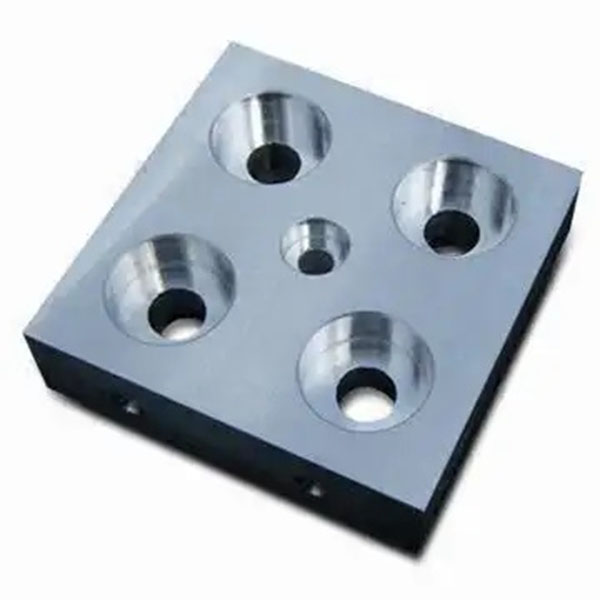
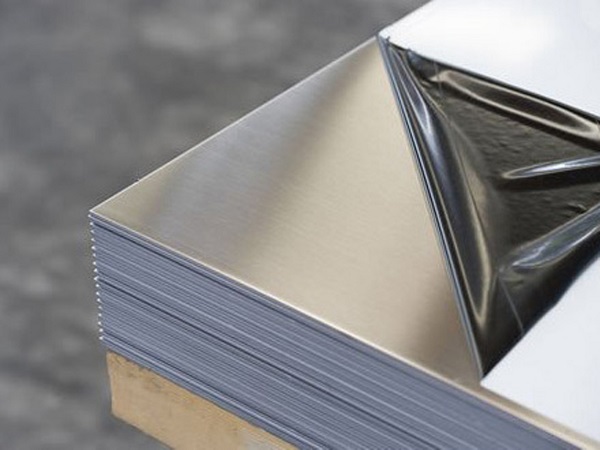
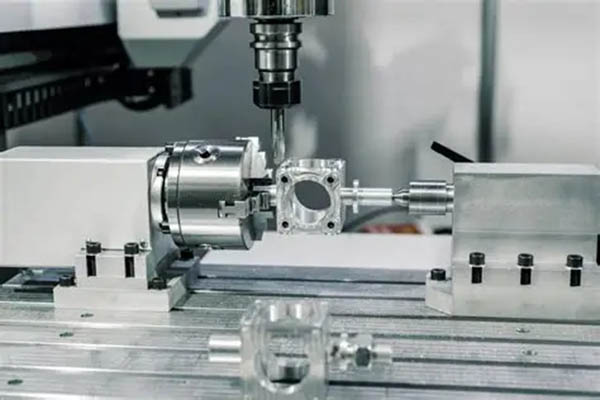
Precision CNC machining is a manufacturing process that uses programmed computer codes to control machine tools. These tools cut raw material into finished parts.
Unlike standard machining, precision CNC machining achieves incredibly tight tolerances. We often hold tolerances as close as $\pm0.005\text{ mm}$ ($\pm0.0002\text{ inches}$).
Modern production uses advanced multi-axis setups. These include 3-axis, 4-axis, and 5-axis CNC machines. Multi-axis machines rotate the cutting tool or the part along multiple axes simultaneously. This allows us to mill complex shapes without manual setups, reducing human error.
Why Tolerances and Materials Matter
For high-tech industries, a tiny error can cause total system failure. Tight tolerances ensure that mating parts fit perfectly every time.
Choosing the right material is also critical. CNC machines handle a wide range of materials:
- Metals: Aluminum (6061, 7075), Titanium (Grade 5), Stainless Steel (304, 316), and Inconel.
- Plastics: PEEK, POM (Delrin), PTFE (Teflon), and Polycarbonate.
Solving Key Manufacturing Pain Points
Traditional manufacturing methods often struggle with modern design demands. Here is how precision CNC machining solves major production challenges:
| Manufacturing Pain Point | Traditional Machining Impact | Precision CNC Machining Solution |
| Complex Geometries | High scrap rates, slow manual setups | 5-axis CNC paths cut complex shapes in one setup |
| Tight Tolerances | Inconsistent part dimensions | Computer-controlled accuracy down to $\pm0.005\text{ mm}$ |
| Material Hardness | Rapid tool wear, poor surface finish | Rigid machines and optimized tooling paths |
| Batch Consistency | Varied quality between production lots | Automated programs repeat the exact path every run |
Aerospace Industry
Strict Standards and Extreme Demands
The aerospace industry has zero tolerance for failure. Parts must withstand extreme temperatures, high pressure, and intense vibration. Every gram of weight matters.
Therefore, aerospace designs use lightweight but incredibly tough materials. Machining these materials requires maximum rigidity and tool path control.
Critical Aerospace Components
We machine critical flight components to the highest standards. Examples include:
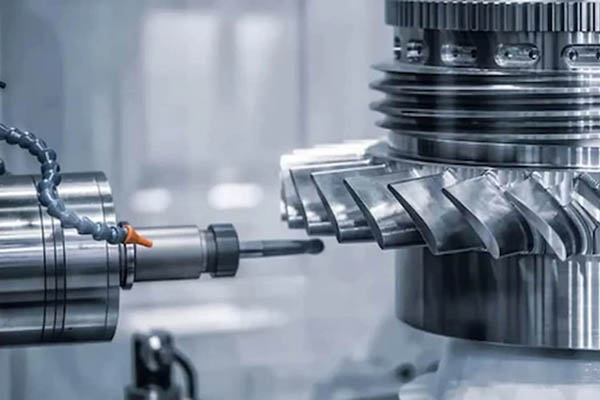
- Turbine Blades: Complex airfoil shapes requiring flawless surface finishes.
- Engine Manifolds: Intricate internal channels for fuel and air flow.
- Landing Gear Parts: Heavy-duty structural parts made from high-strength alloys.
- Satellites Brackets: Extremely lightweight structures with thin walls.
Advanced Materials and Tolerances
Aerospace manufacturing uses specialized materials:
- Titanium (Ti-6Al-4V): Excellent strength-to-weight ratio but hard to cut.
- Inconel (718/625): Superalloys that retain strength at high temperatures.
- Aircraft Aluminum (7075-T6): High strength and good fatigue resistance.
Typical tolerances for aerospace parts range from $\pm0.005\text{ mm}$ to $\pm0.012\text{ mm}$.
Medical and Healthcare Industry
Pure Precision for Patient Safety
Medical manufacturing requires extreme precision and absolute cleanliness. Implanted devices must fit the human body perfectly.
Surgical tools must be reliable and easy to sterilize. There is no room for burrs, sharp micro-edges, or surface contamination.
Common Medical CNC Applications
Precision CNC machining produces a wide variety of life-saving equipment:
- Orthopedic Implants: Bone screws, hip joints, and bone plates.
- Surgical Instruments: Scalpel handles, forceps, and endoscopic parts.
- Diagnostic Equipment: Complex housings for MRI machines and CT scanners.
- Dental Implants: Custom abutments and crowns matched to individual patients.
Materials and Surface Quality
Biocompatibility is the most important factor for medical parts. We machine these parts from specific medical-grade materials:
- Titanium (Grade 5 and Grade 23): Highly biocompatible and bone-friendly.
- PEEK (Polyetheretherketone): A strong plastic that resists sterilization cycles.
- Stainless Steel (316L): High corrosion resistance for surgical tools.
We often machine medical parts to tolerances of $\pm0.002\text{ mm}$. These parts require specialized post-processing, such as electropolishing, to eliminate microscopic surface defects.
Automotive Industry
Driving Performance and Innovation
The automotive industry is shifting rapidly toward electric vehicles (EVs) and autonomous driving. This shift requires lighter parts, higher efficiency, and flawless reliability.
High-performance racing and everyday passenger vehicles both rely on precision parts to optimize power output and safety.
High Precision Automotive Parts
CNC machining supports both prototype development and high-volume production:
- Engine Blocks and Cylinder Heads: Complex castings that require precise boring and facing.
- EV Battery Trays: Large, lightweight aluminum structures with tight sealing paths.
- Gearbox Components: Highly accurate gears and shafts for smooth power transfer.
- Suspension Knuckles: Strong, lightweight components that handle heavy road loads.
Materials and Production Volumes
Automotive components must balance strength, weight, and cost:
- Aluminum Alloys (6061-T6, 5083): Reduces overall vehicle weight for better mileage.
- Forged Steel: Used for high-wear components like crankshafts and camshafts.
- Brass and Bronze: Ideal for bushings and fluid connectors.
Tolerances for automotive engine and transmission parts are typically held at $\pm0.01\text{ mm}$.
Electronics and Semiconductor Industry
Shrinking Designs and Micro Tolerances
As consumer electronics get smaller and more powerful, their internal parts must shrink too.
The semiconductor industry requires microscopic features, ultra-flat surfaces, and absolute shielding against electromagnetic interference (EMI).
Key Electronic and Semi Components
We manufacture high-precision components for electronics and chip manufacturing:
- Semiconductor Chambers: Vacuum chambers where silicon wafers are processed.
- Heat Sinks: Complex fin structures machined from copper or aluminum to dissipate heat.
- EMI Shielding Enclosures: Custom aluminum boxes that prevent signal interference.
- Probe Cards and Sockets: Micro-drilled test fixtures for checking silicon chips.
Materials and Specialized Micro-Machining
Electronic parts require materials with specific thermal and electrical properties:
- Oxygen-Free Copper: Excellent electrical and thermal conductivity.
- Anodized Aluminum: High durability and insulation properties.
- Engineering Plastics (PTFE, Delrin): Used for insulating mounts and structural spacers.
Micro-machining electronic components requires tolerances down to $\pm0.002\text{ mm}$ and micro-drilling holes as small as $0.1\text{ mm}$ in diameter.
Robotics and Automation
Building the Future of Motion
Robots and automated assembly lines run continuously. They require parts that move smoothly, resist wear, and position themselves with extreme accuracy.
Any mechanical play or “backlash” in a joint can ruin the robot’s accuracy.
Essential Robotics CNC Components
- Robotic Joints and Articulations: Housing for motors and sensors.
- Precision Gears and Actuators: Custom gear profiles that eliminate play.
- End Effectors and Grippers: Custom fingers designed to handle specific products.
- Sensor Mounts: Rigid brackets that keep optical and laser sensors aligned.
Materials for Dynamic Applications
Robotic parts must be rigid yet lightweight to reduce motor strain:
- Aluminum 7075-T6: Provides steel-like strength at a fraction of the weight.
- Carbon Fiber Assemblies: Combined with CNC-machined metal inserts.
- Hardened Alloy Steel: Used for high-wear gear teeth and drive shafts.
Tolerances for robotic joint assemblies are typically held to $\pm0.008\text{ mm}$ to ensure zero play.
Oil & Gas and Energy Sector
Survival in Extreme Environments
The energy sector operates in the most punishing environments on Earth.
Parts are exposed to deep-sea saltwater, high corrosive gasses, extreme pressures, and abrasive sand. Failure can cause massive environmental damage and cost millions of dollars in downtime.
Heavy Duty Energy Parts
- Valves and Actuators: High-pressure flow control devices.
- Drill Bit Bodies: Large, complex geometries that must withstand intense torque.
- Mud Motor Sleeves: Wear-resistant tubes used in directional drilling.
- Wind Turbine Shafts: Massive, high-load rotators that require precise bearing fits.
Extreme Corrosion Resistant Materials
Energy parts use robust, expensive alloys that are difficult to machine using standard methods:
- Inconel and Monel: Nickel-based alloys that resist severe corrosion.
- Duplex Stainless Steel: High strength and excellent resistance to chloride stress cracking.
- Hastelloy: Superior resistance to highly aggressive chemical environments.
Due to the large scale of these parts, holding tolerances of $\pm0.02\text{ mm}$ over long distances requires rigid, heavy-duty CNC lathes and boring mills.
Defense and Military
Maximum Reliability and Security
The military requires equipment that operates flawlessly in any condition.
Parts must meet strict government regulations, international quality standards, and secure data handling requirements.
Standard Defense Components
- Firearm Components: Receiver chassis, bolt carriers, and custom scope mounts.
- Guidance System Parts: Internal housings for missile and drone navigation.
- Armor Vehicle Components: Heavy-duty hinges, hatches, and structural brackets.
- Communication Equipment: Ruggedized radio housings and antenna mounts.
Material Specifications and Tolerances
Defense manufacturing relies on heavy-duty, certified materials:
- Hardened Steel Alloys (4140, 4340): High tensile strength and impact resistance.
- Titanium Alloys: For critical aerospace defense structures.
- Marine-Grade Bronze: Resists corrosion in naval and submarine applications.
Tolerances for defense equipment must meet exact military standards, often requiring $\pm0.005\text{ mm}$ on critical mating surfaces.
Consumer Products and Other Industries
Esthetics Match High Functionality
While industrial parts focus on function, consumer goods require beautiful aesthetics alongside precise fitment.
From luxury goods to high-end sports gear, precision CNC machining creates the premium feel that consumers love.
Premium Consumer Goods Applications
- Smart Device Frames: Beautifully anodized aluminum smartphone and watch bodies.
- Luxury Watch Cases: Intricately carved metal watch housings.
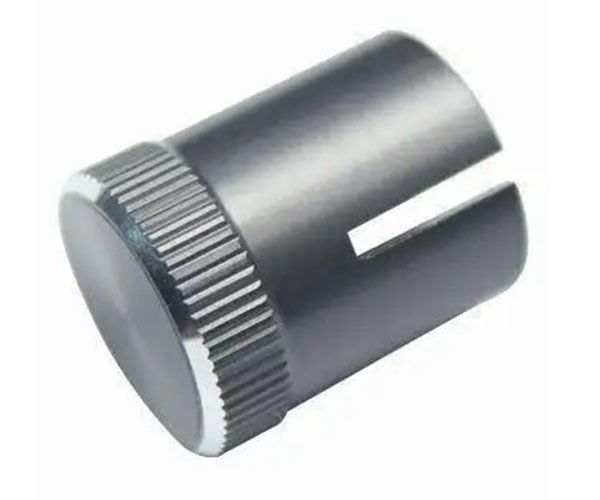
- High-End Audio Knobs: Solid metal dials with a heavy, smooth rotating feel.
- Bicycle Frame Links: Lightweight, strong links for mountain bike suspensions.
Materials and Visual Finishes
These parts use highly machinable materials that accept beautiful finishes:
- Brass and Copper: Creates a vintage, premium look over time.
- Aluminum (6000 series): Perfect for vibrant color anodizing and bead blasting.
- Stainless Steel (316): Provides a high-polish, mirror finish.
Tolerances are usually $\pm0.02\text{ mm}$, with a heavy emphasis on achieving perfect, scratch-free surface finishes.
Key Benefits Summary Across Industries
No matter your industry, precision CNC machining provides three main pillars of value:
1. Superior Repeatability
Once a CNC program is verified, the machine can run the part thousands of times. Every single part will be identical. This consistency eliminates part sorting and reduces assembly line downtime.
2. High Material Versatility
You are not limited to easy-to-cut metals. Precision CNC machining handles superalloys, hardened steels, and engineering plastics with equal accuracy.
3. Rapid Prototyping to Production
You can transition from a 3D CAD model to a physical prototype in days. Once you approve the prototype, the same CNC program can scale up to high-volume production immediately.
How to Choose the Right Precision CNC Partner
Assess Manufacturing Capabilities
Not all CNC shops are created equal. Look for a partner with modern equipment:
- Do they have 5-axis CNC machines for complex parts?
- Do they offer advanced turning, milling, and wire EDM?
- Can they handle both low-volume prototyping and high-volume runs?
Verify Quality Control and Equipment
A great CNC shop must have a clean, climate-controlled inspection room. Ask if they use:
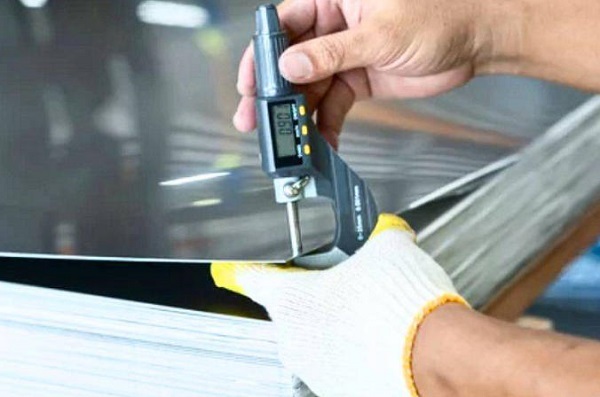
- Coordinate Measuring Machines (CMM): For automated, highly accurate 3D inspections.
- Optical Comparators: For checking complex profile shapes.
- Surface Roughness Testers: To guarantee the exact finish you specified.
Review Certifications and Standards
Your partner must hold certifications relevant to your industry. Look for ISO 9001 for general quality, or AS9100 for aerospace projects. Ensure they provide full material traceability reports and inspection certificates with every delivery.
Conclusion
Precision CNC machining is the backbone of modern manufacturing. From lifesaving medical implants to high-flying aerospace components, this process delivers the accuracy, speed, and consistency that high-tech industries require. Choosing a manufacturing partner with the right equipment and experience is the key to turning your complex designs into reality.
Frequently Asked Questions
What is the difference between CNC machining and precision CNC machining?
Standard CNC machining typically holds tolerances around $\pm0.1\text{ mm}$. Precision CNC machining uses advanced tooling, rigid setups, and climate-controlled environments to hold tolerances as tight as $\pm0.005\text{ mm}$ or better.
Which metals are the hardest to machine using CNC?
Superalloys like Inconel, Titanium, and hardened tool steels are the hardest to machine. They generate high heat, wear out cutting tools quickly, and require highly rigid CNC machines with specialized cooling systems.
How does 5-axis CNC machining benefit complex aerospace parts?
5-axis machining allows the cutting tool to reach five different sides of a part in a single setup. This eliminates the need to manually reposition the part, which reduces human setup errors and ensures perfect alignment of complex features.
Can precision CNC machines work with plastics?
Yes. Precision CNC machines easily cut high-performance plastics like PEEK, Delrin, Teflon, and Polycarbonate. This is common for lightweight medical, electronic, and aerospace components.
Get Projects Quote with Moshijia Technology
Need high-precision CNC machined parts for your project? At Moshijia Technology, our experienced product engineers deliver top-tier precision parts with certified quality and fast lead times. [Contact Moshijia Technology today to get an instant, competitive quote on your custom project!]