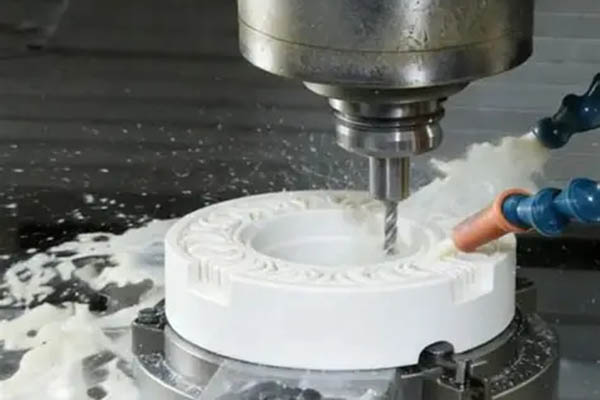
Master ceramic CNC machining with our engineering guide. Learn technical processes, advanced tools, and proven strategies to stop cracking and boost precision.
Advanced technical ceramics are the backbone of modern extreme-engineering industries. Aerospace firms use them for heat shields. Semiconductor fabs rely on them for wafer chucks. Medical companies need them for biocompatible implants. However, turning raw industrial ceramics into high-precision, complex shapes is a notorious manufacturing challenge.
Traditional machining methods often lead to high scrap rates. The extreme hardness of the material causes rapid tool wear, while its inherent brittleness makes edge chipping and micro-cracking common headaches.
As a product engineer at Moshijia Technology, I deal with these manufacturing bottlenecks daily. This comprehensive guide breaks down ceramic CNC machining, explains how the process works, and shares practical shop-floor strategies to overcome structural defects and control your production costs.
1. What is Ceramic CNC Machining?
Defining the Core Manufacturing Technology
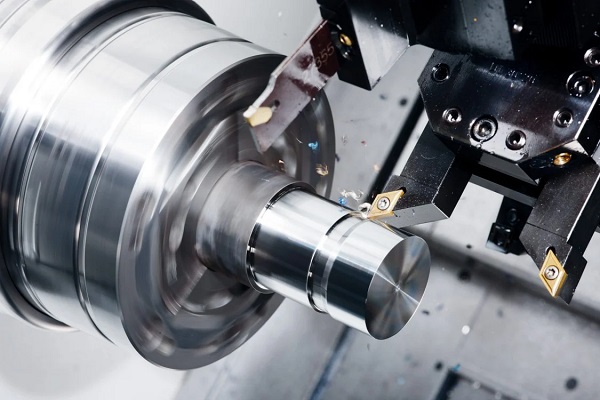
Ceramic CNC machining is a subtractive manufacturing process that uses computer-numerical-control (CNC) software to automate precision machine tools. The system removes material from a solid ceramic block, known as a blank or green body, to create custom geometric parts.
Unlike metal machining, which relies on shearing plastic deformation, ceramic machining relies on micro-fracturing and abrasive grinding. The automated system controls specialized cutting heads along multiple axes (typically 3-axis to 5-axis setups) to achieve tolerances as tight as $\pm 0.005 \text{ mm}$.
The Evolution of Hard Material Shaping
Historically, shaping technical ceramics required labor-intensive manual diamond grinding or expensive custom mold tooling. These methods limited design flexibility and prolonged prototyping timelines. Modern CNC ceramic milling and automated grinding centers changed the industry. By integrating advanced computer algorithms with ultra-rigid machine bases, CNC systems allow engineers to machine intricate internal channels, deep holes, and complex organic curves directly from technical data files.
2. Technical Ceramic Materials and Classes
Engineers must select the correct material state before starting production. The processing state radically changes the machining speed, tool wear, and final accuracy.
Green vs. Sintered Ceramics
Technical ceramics exist in three primary states during the manufacturing lifecycle. Choosing when to machine depends on your geometric complexity and tolerance requirements:
- Green State: The raw ceramic powder is mixed with an organic binder and pressed into a solid form. It feels similar to chalk. Green ceramic machining is fast and causes minimal tool wear, but the material shrinks by 15% to 25% during the final firing stage. This makes tight tolerances difficult to hit.
- Bisque (Biscuit) State: The material undergoes a low-temperature pre-firing process to burn off binders and lightly fuse the grains. It is more stable than green material but remains highly machinable.
- Sintered (Fully Fired) State: The ceramic is fired at extreme temperatures (often exceeding $1500^\circ\text{C}$). The material achieves its final density, extreme hardness, and full mechanical strength. Sintered ceramic machining requires specialized diamond tooling and rigid setups, but it delivers absolute dimensional stability with zero post-process shrinkage.
Common Engineering Ceramics
Different industrial ceramics present unique machining characteristics:
| Material Type | Primary Properties | Common Applications | Machining Behavior |
| Alumina ($Al_2O_3$) | High electrical insulation, excellent wear resistance, cost-effective. | Insulators, wear pads, laser tubes. | Standard abrasive nature; requires high-grade diamond tools when fully sintered. |
| Zirconia ($ZrO_2$) | Extreme fracture toughness, thermal expansion matching steel. | Structural valves, dental crowns, cutting blades. | High resistance to chipping; permits slightly higher feed rates than alumina. |
| Silicon Nitride ($Si_3N_4$) | Exceptional thermal shock resistance, high mechanical strength at high temperatures. | Turbocharger rotors, bearings, weld rolls. | Difficult to machine; demands highly rigid machine setups to prevent micro-cracks. |
| Silicon Carbide ($SiC$) | Extreme hardness, high thermal conductivity, corrosion proof. | Semiconductor components, mirrors, pump seals. | Highly abrasive; causes rapid tool degradation. Often requires ultrasonic assistance. |
| Macor | Machinable glass-ceramic; zero porosity, high dielectric strength. | Vacuum environments, aerospace sensors. | Can be machined using standard high-speed steel or carbide tools. Does not require sintering. |
3. Step-by-Step Ceramic CNC Machining Process
Transforming a raw block of technical ceramic into a finished, high-precision component requires a strict, methodical workflow.
[Material Preparation] ➔ [CAD/CAM Programming] ➔ [Machine Tool Setup]
                                                        │
[Surface Finishing] 🗜️ [Fine Precision Grinding] 🗜️ [Rough Grinding]
        │
[Quality Inspection] ➔ [Finished Component]
Step 1: Material Preparation
The process begins by selecting the material block based on the component’s final environment. If the design features loose tolerances but complex internal cavities, we use a green or bisque blank to reduce cycle time. For high-precision semiconductor or medical parts, we select a fully sintered, hot-isostatically-pressed (HIP) ceramic blank to ensure absolute dimensional stability.
Step 2: CAD and CAM Programming
Design engineers generate a 3D model using Computer-Aided Design (CAD) software. Next, Manufacturing Engineers import the geometry into Computer-Aided Manufacturing (CAM) software to generate the toolpaths.
Unlike metal toolpaths that utilize deep aggressive cuts, ceramic CAM programs utilize close-interval, low-depth-of-cut passes. The software programs specialized entry and exit tool moves to eliminate tensile stresses at the edges of the workpiece, where chipping occurs most frequently.
Step 3: Machine Tool Setup
Machinists secure the ceramic blank inside the CNC enclosure using custom fixtures. Because mechanical vises can exert uneven localized pressures that crack brittle ceramics, we frequently employ specialized vacuum chucks, custom resin potting, or dedicated potting fixtures. The machinist then mounts specialized diamond-coated tooling or resin-bonded diamond abrasive wheels into the spindle and calibrates the machine coordinates using automated touch probes.
Step 4: Rough Machining Stage
For sintered ceramics, roughing is performed via CNC diamond grinding rather than traditional milling. The tool removes bulk material by taking shallow cuts ($0.05 \text{ mm}$ to $0.10 \text{ mm}$ axial depth) at rapid feed rates. For green ceramics, standard carbide end mills can remove material quickly at this stage, leaving a $0.3 \text{ mm}$ envelope for post-sintering refinement.
Step 5: Fine Precision Grinding
The machine switches to micro-grain diamond tools to execute the finishing passes. The depth of cut drops to less than $0.005 \text{ mm}$ per pass, with slow, controlled feed rates. This step removes the subsurface damage layer introduced during the roughing stage and refines the part to its final blueprint dimensions.
Step 6: Post-Machining Surface Finishing
If the application requires an ultra-smooth finish—such as a medical joint implant or an optical component—the part undergoes secondary finishing. This involves chemical-mechanical polishing (CMP), diamond lapping, or tumble polishing. This phase eliminates micro-scratches and lowers the surface roughness to values below $Ra \, 0.1 \, \mu\text{m}$.
Step 7: Final Quality Inspection
Every component must pass strict quality checks. Technicians use Coordinate Measuring Machines (CMM) to verify physical dimensions. Because visual inspections cannot detect hidden interior damage, we utilize non-destructive testing (NDT) methods—such as dye penetrant testing or ultrasonic scanning—to check for internal micro-cracks.
4. Advanced Ceramic Machining Technologies
Engineers utilize several specialized CNC techniques depending on the part geometry and the specific ceramic material chosen.
CNC Ceramic Milling and Grinding
Traditional milling uses rotating multi-fluted cutters to shear away metal chips. For ceramics, this process converts into a grinding action. CNC grinding spindles rotate at high speeds (often between $20,000 \text{ RPM}$ and $40,000 \text{ RPM}$) using core drills or pins impregnated with diamond dust. This continuously abrades the ceramic surface, grinding it into a fine powder that is washed away by the coolant system.
Precision Ultrasonic Assisted Machining
Ultrasonic ceramic machining adds high-frequency micro-vibrations (typically $20 \text{ kHz}$ to $40 \text{ kHz}$) to the rotating diamond cutting tool. The tool rapidly taps the material thousands of times per second while spinning.
This vibrational motion cuts mechanical cutting forces by up to 40%. Lower cutting forces reduce sub-surface micro-cracking, decrease edge chipping, and extend diamond tool life by up to double compared to standard grinding.
High Power Laser Machining
Laser machining uses a highly focused, computer-controlled laser beam to melt or sublimate the ceramic material. This thermal process eliminates mechanical cutting forces completely, making it ideal for delicate, thin-walled profiles.
However, engineers must carefully manage the laser’s thermal output. Rapid heating and cooling cycles create high thermal stresses, which can introduce micro-fractures along the cut path.
5. Overcoming Ceramic Machining Technical Challenges
Machining ceramics requires a careful balance of speeds, feeds, and thermal control to avoid fracturing the workpiece.
Controlling Structural Brittle Fractures
Ceramics possess low fracture toughness, meaning they cannot deform plastically to relieve mechanical stress. To prevent edge blowout when a tool exits a cut, machinists use a technique called ductile-regime machining. By keeping the chip thickness below a critical threshold (typically less than $1 \, \mu\text{m}$), the material separates via plastic flow rather than brittle fracture, resulting in a clean, smooth cut.
Selection of Advanced Diamond Tooling
Standard tungsten carbide tools dull almost instantly against sintered technical ceramics. Machinists must utilize industrial diamond options:
- PCD (Polycrystalline Diamond): Offers exceptional wear resistance for flat, geometric grinding and high-speed finishing operations.
- CVD (Chemical Vapor Deposition) Diamond: A thin, uniform diamond coating deposited over carbide tools. Ideal for intricate 3D geometries and small-diameter end mills.
Thermal Management and Lubrication
Ceramics exhibit poor thermal conductivity. The friction generated at the grinding interface creates intense localized heat. If this heat builds up, the tool will degrade rapidly, and the ceramic will experience thermal shock and crack.
To prevent this, shops use high-pressure flood cooling systems with dedicated synthetic oil coolants or water-soluble oils. The coolant lines must target the exact point of tool-material contact to instantly sweep away heat and fine ceramic debris.
6. Industrial Advantages and Key Applications
While ceramic CNC machining carries higher upfront costs than metal processing, its exceptional performance characteristics make it irreplaceable in harsh operating environments.
Core Engineering Material Advantages
- Extreme Wear Resistance: Fired ceramics outlast hardened tool steels in high-friction environments by up to ten times.
- High Thermal Stability: Maintains structural integrity and mechanical strength at operating temperatures exceeding $1000^\circ\text{C}$.
- Chemical Inertness: Impervious to strong acids, caustic alkaline solutions, and atmospheric oxidation.
- Dielectric Strength: Functions as an exceptional electrical insulator in high-voltage electronics and plasma chambers.
High Tech Industry Applications
┌─────────────────────────────────────────────────────────────┐
│                 Ceramic CNC Components                      │
└──────┬───────────────┬───────────────┬───────────────┬──────┘
       │               │               │               │
┌──────▼──────┐ ┌──────▼──────┐ ┌──────▼──────┐ ┌──────▼──────┐
│ Aerospace   │ │Semiconductor│ │   Medical   │ │ Electronics │
│ Heat Shields│ │Wafer Rings  │ │Implant Joints│ │Substrates   │
└─────────────┘ └─────────────┘ └─────────────┘ └─────────────┘
- Aerospace: High-temperature turbine blades, rocket nose cones, and radar domes.
- Semiconductor: Plasma etch rings, gas distribution plates, and vacuum end-effectors.
- Medical Equipment: Biocompatible orthopedic joint replacements, high-speed dental drill bearings, and surgical instrumentation.
- Electronics: Custom high-power semiconductor substrates, industrial sensor housings, and laser cavities.
7. Critical Workshop Safety Protocols
Machining ceramics produces micro-fine ceramic dust that poses serious workplace health and safety risks if unmanaged.
- Respiratory Protection: Inhaling airborne crystalline silica or alumina dust causes silicosis and permanent lung damage. Shops must run wet filtration systems to capture dust at the source and equip workers with certified N95 or HEPA respirators.
- Machine Enclosures: Ceramic fragments can shatter under mechanical stress. CNC machines must operate with reinforced poly-carbonate safety windows and interlocking doors to contain flying debris.
- Coolant Filtration: Micro-fine ceramic dust acts as an abrasive slurry. The machine’s coolant system requires specialized multi-stage centrifugal filtration to remove suspended particles, preventing pump damage and workpiece scratching.
8. Summary and Material Selection Advice
Successfully implementing ceramic CNC machining requires aligning your budget, design tolerances, and operational environment. For rapid prototyping and complex designs with loose tolerances, green-state machining offers significant cost savings. However, when your design calls for absolute high precision and long-term wear resistance under extreme stress, machining fully sintered ceramics with advanced diamond tooling is the only viable path forward.
Ceramic Machining Frequently Asked Questions
Can you machine technical ceramics with standard metal-cutting CNC mills?
No. Standard metal-cutting mills lack the extreme structural rigidity, specialized high-speed spindles, and advanced multi-stage coolant filtration needed to handle the high cutting forces and abrasive dust of sintered ceramics. Standard carbide tools will dull within seconds.
What is the minimum wall thickness achievable in ceramic CNC machining?
For fully sintered zirconia or silicon nitride, the practical minimum wall thickness is typically $0.5 \text{ mm}$. Going thinner drastically increases the risk of structural failure and edge blowout during machining.
How does green ceramic machining compare to sintered ceramic machining in cost?
Green ceramic machining is significantly more cost-effective because the material cuts easily, lowering cycle times and reducing tool wear. However, you must account for a 15% to 25% material shrinkage rate during post-machining sintering, which makes holding tight tolerances difficult.
Why is silicon carbide so difficult to machine?
Silicon carbide exhibits extreme hardness (ranking near diamond on the Mohs scale) and high abrasive qualities. It requires highly rigid, ultrasonic-assisted CNC grinding setups and specialized diamond tools to prevent rapid tool failure.
Get Projects Quote with Moshijia Technology
Need high-precision, defect-free technical ceramic components for your next project? Moshijia Technology specializes in advanced ceramic CNC machining, grinding, and ultra-precise finishing services. Contact our engineering group today to review your CAD files and receive an optimized manufacturing quote.