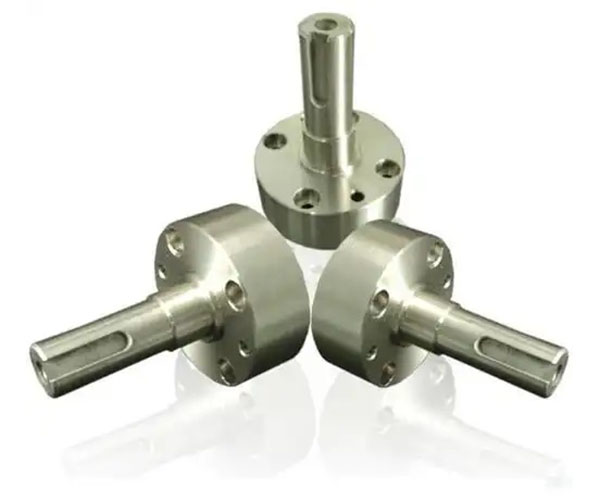
In today’s accelerated product iteration, enterprises are faced with the dual challenge of “quickly verifying designs and controlling costs”. Whether it’s the trial production of special components in the aerospace field or the customized production of medical devices, low-volume CNC machining has become the core link between prototype and mass production with its unique flexibility and precision. This article will comprehensively dismantle the core values and landing techniques of low-volume CNC machining from the essence of the process, industry applications, material selection, cost control to quality assurance, and help you truly make good use of this modern manufacturing “weapon”.
1. Process Essence and Value: What is the strength of low-volume CNC machining?
1. Understand First: The core definition of low-volume CNC machining
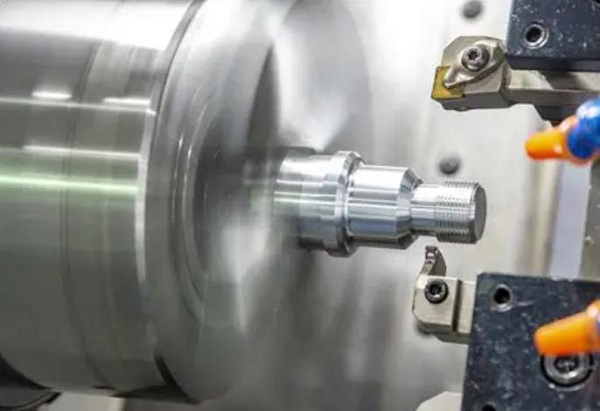
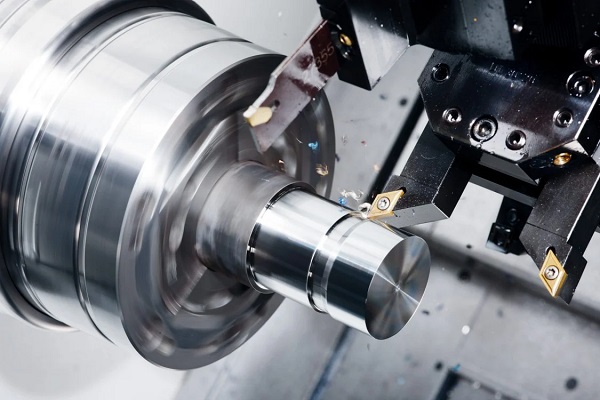
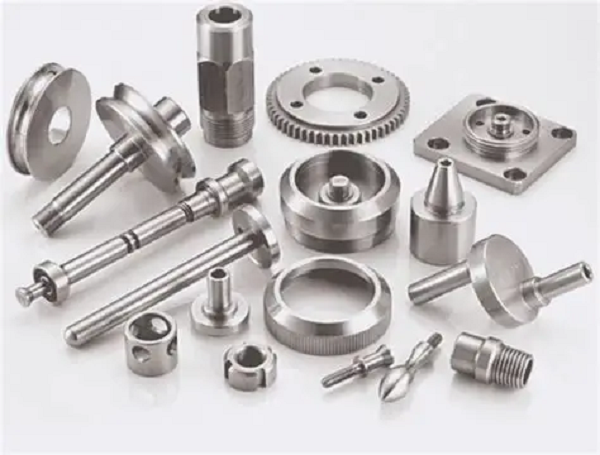
Low-volume CNC machining refers to the manufacturing method of cutting, milling, drilling, etc. of metals, plastics, and other materials through computer numerical control (CNC) machines, producing customized parts with batches between 1-1000 pieces. Unlike large-scale production mold processing, it does not require high mold opening costs; Compared with manual processing, it can ensure the stability of machining accuracy, especially suitable for the efficient production of complex structural parts.
2. Irreplaceable core advantages: full-link empowerment from R&D to mass production
- Quickly verify the design concept: When a new energy vehicle company developed a new motor shell, it made 10 samples through small-batch CNC machining, completed the assembly test in only 7 days, and found 3 structural interference problems, avoiding millions of losses after mold opening.
- Reduce mold opening costs: For products with short life cycles and low demand (such as military special components), mold opening costs may account for more than 50%, and small-batch processing directly eliminates this part of the investment, and although the cost of a single piece is higher than that of mass production, the total cost is reduced by 30%-70%.
- One-time forming of high-complexity parts: For parts with complex curved surfaces and multiple holes, such as UAV structural parts and robot joint shells, CNC machine tools can achieve one-time processing through multi-axis linkage to avoid the accumulation of errors in multiple clamping, and the hole position repeatability can reach ±0.01 mm.
- Flexible manufacturing core link: When customer needs change, only need to modify the CNC program to adjust the processing parameters, no need to redesign the mold, the response cycle is compressed by more than 50%, perfectly adapting to the modern production trend of “multi-variety, small batch”.
- Improved material utilization: By optimizing the cutting path through computer simulation, the material utilization rate is improved by 15%-25% compared to traditional machining, especially for high-value materials such as titanium alloys and PEEK, which can significantly reduce waste costs.
2. Applicable Industries and Typical Scenarios: These fields are inseparable from low-volume CNC machining
The flexible nature of low-volume CNC machining makes it a necessity in several high-end manufacturing sectors, and here are typical application scenarios:
| Industry Sectors | Core application scenarios | Processing requirements |
| Aerospace | Small-batch trial production of aerospace parts (such as satellite brackets, engine blade blanks) | High-temperature resistant material (titanium alloy TC4) with an accuracy of ±0.02 mm |
| Medical devices | Customized surgical instruments, stainless steel 316L medical grade parts | Biocompatibility, surface roughness below Ra0.8 |
| Automotive research and development | Automotive R&D prototypes (e.g., new gearbox gears, sensor housings) | High-strength aluminum alloy 6061/7075, batch 10-50 pieces |
| Smart equipment | UAV structural parts proofing, robot joint shell | Lightweight, complex surface machining, fast delivery |
| High-end consumption | High-end bicycle parts (cranks, frame mounts) | Appearance accuracy (sandblasting + wire drawing), strength requirements |
| Scientific research and education | University scientific research experimental parts, laboratory customized equipment accessories | Multi-material compatibility, small batches (1-10 pieces), fast response |
| semiconductor | Semiconductor equipment accessories (wafer carrier table, positioning fixture) | High rigidity, low deformation, and high repeatability of positioning |
Case: A medical device company customized guide plates for orthopedic surgery, which needed to be personalized according to the patient’s CT data, with a monthly demand of about 300 pieces, and achieved “same-day design, 3-day delivery” through small-batch CNC machining to meet clinical emergency needs and pass ISO13485 medical quality certification.
3. Material and surface process: select the right material + process, and the performance of the part will be doubled
1. Mainstream processing materials: characteristics and applicable scenarios
Small batch CNC machining is compatible with a variety of materials, and the processing difficulty and cost of different materials vary greatly, the core selection reference:
- Aluminum alloy 6061/7075: the most cost-effective common material, 6061 is suitable for structural parts (such as optical instrument housings), 7075 has higher strength, used in drones, auto parts, small batch cutting efficiency is high, the unit price is about 20-50 yuan/kg.
- Titanium alloy TC4: the preferred material for aerospace and medical treatment, high temperature resistance, corrosion resistance, but difficult to process, through titanium alloy TC4 low-cost processing process (such as low-temperature cutting), the processing cost can be reduced by 20%, the unit price is about 300-500 yuan/kg.
- Stainless steel 316L: Essential for medical-grade and food-grade scenarios, it is necessary to ensure that the medical-grade surface is free of burrs and impurities, and is suitable for making surgical instruments and testing equipment accessories.
- Engineering plastics (PEEK/PEI): High temperature resistance, good insulation, used in semiconductor equipment accessories, high-end electronic parts, CNC machining needs to control the cutting speed to avoid material melting.
- Copper electrode: electrode parts in mold processing, small batches of rapid production demand is strong, and the processing accuracy directly affects the quality of the mold cavity.
2. Key surface processes: Balance performance and appearance
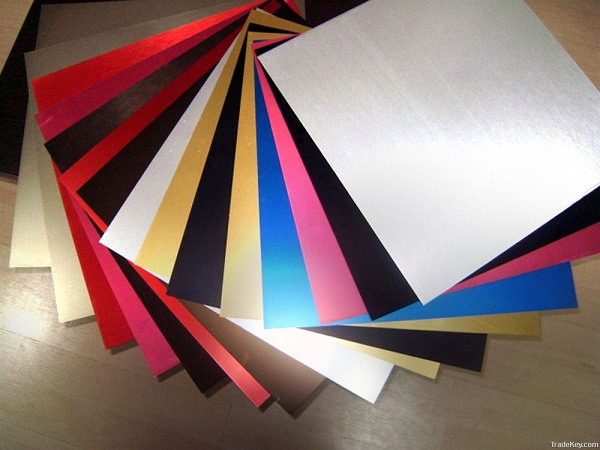
- Anodizing: Aluminum alloy parts are preferred, divided into ordinary oxidation and hard oxidation wear layer, the former improves the appearance (can be dyed), the latter has a hardness of HV500 or above, suitable for sports equipment and mechanical parts.
- Sandblasting + brushing: standard appearance of high-end products (such as high-end bicycle parts, instrument housings), which can mask processing traces and improve texture.
- Vacuum coating: Achieve a high-gloss and wear-resistant surface, often used in optical instruments and electronic equipment shells, can replace the electroplating process, and is more environmentally friendly.
- Magnesium alloy anti-corrosion solution: magnesium alloy is lightweight but easy to corrode, through micro-arc oxidation + closure treatment, salt spray test can reach more than 500 hours, suitable for drones, automobile lightweight parts.

4. Cost and delivery control: How to achieve “low cost and fast delivery”?
The core pain points of low-volume CNC machining are cost and lead time, and mastering the following methods can achieve efficient control:
1. Cost control: find the optimal cost-effective solution
- Understanding the Low-Volume CNC Cost Model: Cost = Material Cost + Machining Time Cost + Fixture Cost + Tool Loss + Management Cost, where machining time and fixture cost are at the core of optimization.
- Quantity critical point calculation: When the batch size exceeds 300-500 pieces, the cost per piece of mold processing may be lower than that of CNC machining, and the critical point needs to be accounted for in advance (e.g., 50,000 yuan for aluminum alloy parts, 100 yuan for CNC single machining, 20 yuan for 20 yuan for each mold, critical point = 50,000 / (100-20) = 625 pieces).
- Fixture sharing cost reduction: design universal fixtures, adapt to similar parts (such as cylindrical parts of different specifications), reduce the design and production cost of special fixtures, and reduce fixture costs by 30%-50%.
- Online tool life management: Real-time monitoring of tool wear through the machine tool system to avoid excessive consumption or sudden failures, reducing tool loss costs by 15% after application in a processing plant.
- Reduce secondary clamping: Optimize the structural design of parts to complete all machining in one clamping, which not only improves accuracy, but also reduces machining time by 20%-30%.
2. Delivery Compression: A practical strategy to speed up by 50%
- Unattended shift at night: Equipped with automatic loading and unloading device and online detection system, it realizes continuous processing at night and increases the daily production capacity by 40%.
- Parallel Multi-Spindle Machines: Multi-spindle CNC machines are used to process multiple parts or different processes of the same part simultaneously, doubling the machining efficiency.
- Logistics synchronous scheduling: prepare materials and tools in advance, and directly connect with the subsequent surface treatment after the processing is completed to avoid waiting and shorten the overall cycle.
- DFM Manufacturability Review: Inviting processing plants to participate in the review during the design stage to optimize part structures (such as simplifying complex surfaces and unifying hole specifications) can reduce machining difficulty and time, reducing delivery time by 10%-20%.
Case: A robot company needs 100 pieces of joint housings, the original delivery time is 15 days, through DFM optimization (elimination of 3 unnecessary complex surfaces), using parallel multi-spindle machine processing, and the final delivery is 7 days, reducing the cost by 18%.
5. Quality and Testing: How to ensure “zero defects” in low-volume production?
Although small-batch processing is flexible, quality control cannot be relaxed, and the following are key safeguards:
1. Whole process quality control system
- Full inspection of the first piece of coordinates: Before each batch of production, use a coordinate measuring instrument to conduct 100% dimensional inspection of the first part, and then mass produce after confirming that it meets the requirements of the drawings to avoid batch scrapping.
- Batch process sampling plan: Adopt the sampling mode of “first article + inspection + last part”, the sampling inspection ratio is ≥ 30% when the batch ≤ 50 pieces, and the sampling inspection ratio is ≥ 15% when the batch > 50 pieces, focusing on the detection of key dimensions and surface quality.
- Online laser probe compensation: Install a laser probe on the machine tool to detect the machining size in real time, automatically compensate for tool wear errors, and ensure the consistency of batch machining accuracy.
- Automatic Correction of Tool Length Wear: The CNC system monitors tool length changes in real-time, automatically adjusting parameters when wear exceeds the threshold to avoid dimensional deviations caused by tool wear.
2. Core quality standards and certifications
- Accuracy requirements: Surface roughness Ra0.8 guaranteed, hole position ±0.01 mm repeatability to meet the vast majority of high-end manufacturing needs.
- Material traceability: Each batch of parts comes with a material batch number, which can trace the source of raw materials and test reports, especially suitable for medical and military fields.
- Internal defect detection: For key load-bearing parts (such as space brackets), CT scanning is used to detect internal porosity, cracks, and other defects to ensure safe use.
- Quality Certification: The medical industry needs to pass ISO13485 medical quality certification, and the automotive industry needs PPAP small batch package to ensure compliance with industry standards.
6. Moshijia Technology’s point of view
The value of low-volume CNC machining has been upgraded from a “R&D auxiliary tool” to a “core link of modern manufacturing”, and its value lies not only in reducing costs and shortening cycles, but also in empowering enterprises to quickly respond to market changes and achieve personalized innovation. In the future, with the deep integration of 5G, AI technology and CNC machining, unmanned production and intelligent quality prediction will become new trends. Moshijia Technology recommends that when choosing low-volume CNC machining services, enterprises should give priority to “process expertise, quality control system, and DFM collaboration capabilities” rather than simply pursuing low prices.
7. FAQ FAQ
- What is the minimum batch size for low-volume CNC machining?
The minimum batch size can be as low as 1 piece, suitable for prototype verification, single-piece customization and other scenarios, the larger the batch, the lower the cost per piece.
- What materials are not suitable for low-volume CNC machining?
Extremely hard materials (such as tungsten steel, ceramics) and easily deformed soft materials (such as pure aluminum and soft plastics) are difficult to process and costly, so they need to be carefully selected.
- What is the typical lead time for low-volume CNC machining?
3-7 days for regular parts (non-complex structure) and 7-15 days for complex parts (multi-surface, high-precision), and urgent orders can be compressed to 2-3 days with expedited service.
- How can you tell if you need to choose low-volume CNC machining?
When the product is in the research and development stage, the demand ≤ 1000 pieces, the structure is complex and needs to be customized, or the mold opening cost is too high, small-batch CNC machining is the best choice; if the demand ≥ 500-1000 pieces, the cost-effectiveness of mold processing can be calculated.
- How Accurate Can Small Batch CNC Machining Be Achieved?
Conventional accuracy ± 0.01-0.05 mm, and high-precision machining can reach ±0.005 mm, depending on the machine accuracy, material properties, and part structure.