In the realm of precision manufacturing, CNC machining parts stand as the backbone of countless industries, from aerospace and automotive to medical devices and consumer electronics. The ability to produce complex, high-accuracy components consistently has made CNC (Computer Numerical Control) machining an indispensable process for businesses aiming to meet strict quality standards and production demands. This guide is designed to walk you through every critical aspect of CNC machining parts—from defining core concepts to navigating material selection, tolerancing, machining techniques, quality control, and cost considerations. Whether you’re a seasoned manufacturing engineer optimizing production workflows or a procurement manager seeking to make informed decisions about component sourcing, the insights here will help you master the nuances of CNC machining parts and drive better operational outcomes.
What is CNC Machined Part?
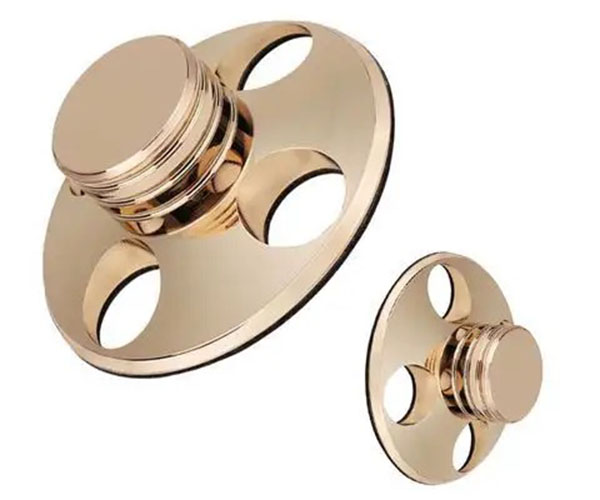
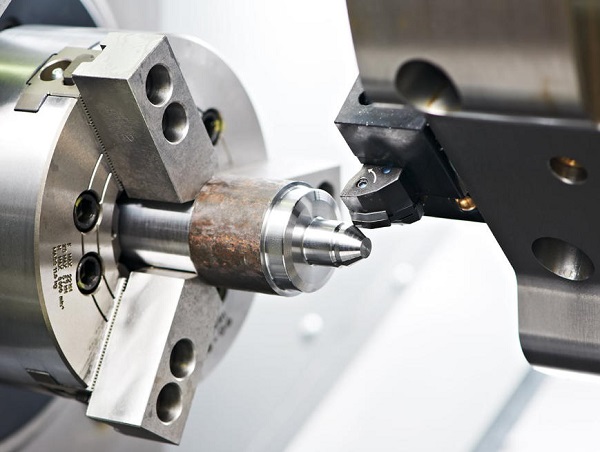
A CNC machined part is a component fabricated through Computer Numerical Control (CNC) machining—a subtractive manufacturing process where pre-programmed computer software dictates the movement of cutting tools. Unlike manual machining, which relies on human operator skill for precision, CNC machining automates tool paths, enabling consistent, repeatable production of complex geometries with tight tolerances.
Key Characteristics of CNC Machined Parts:
- Precision: Capable of achieving tolerances as tight as ±0.001 inches, critical for high-performance applications.
- Repeatability: Identical part production across small batches to large-scale runs, eliminating human error variability.
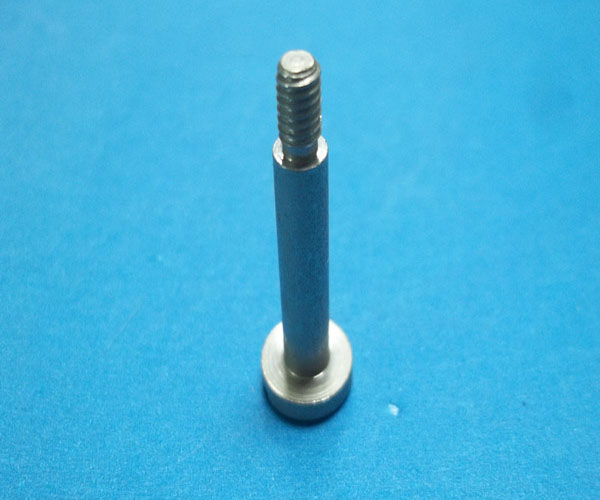
- Complexity: Ability to machine intricate features (e.g., internal cavities, threaded holes, contoured surfaces) that are unfeasible with manual methods.
Real-World Example: Moshijia Technology recently produced CNC machining parts for a medical device client—a set of titanium surgical instrument components. Using CNC milling, we achieved a tolerance of ±0.002 inches for the instrument’s jaw alignment feature, ensuring consistent performance during surgeries. The automated process allowed us to deliver 500 identical units in 10 days, a timeline that would have been 3x longer with manual machining.
Which Materials Work Best for CNC Machined Components?
The success of a CNC machining parts project hinges heavily on material selection, as different materials exhibit unique machinability, strength, corrosion resistance, and cost profiles. Machinability refers to how easily a material can be cut, shaped, and finished with CNC tools—directly impacting production time, tool wear, and final part quality. Below is a structured breakdown of the most suitable materials forCNC machining parts, along with their key properties and ideal applications:
| Material Category | Common Materials | Machinability Rating (1-10; 10=Best) | Key Properties | Ideal Applications |
|---|---|---|---|---|
| Aluminum Alloys | 6061, 7075 | 9 | Lightweight, corrosion-resistant, good thermal conductivity, cost-effective | Aerospace components, automotive parts, consumer electronics enclosures |
| Steel Alloys | 304 Stainless Steel, 1018 Carbon Steel | 6 (Stainless), 8 (1018) | High strength, durability, corrosion resistance (stainless) | Industrial machinery parts, medical implants, marine components |
| Titanium Alloys | Ti-6Al-4V | 3 | Exceptional strength-to-weight ratio, biocompatible, corrosion-resistant | Medical instruments, aerospace engine parts, military equipment |
| Plastics | Delrin (POM), ABS, Nylon | 7-8 | Low friction, chemical resistance, lightweight, low cost | Gear components, electrical insulators, consumer product parts |
Expert Insight: When selecting materials for CNC machining parts, balance machinability with end-use requirements. For example, 6061 aluminum is an excellent choice for non-critical structural parts due to its low cost and easy machining, while Ti-6Al-4V is necessary for high-stress medical or aerospace applications despite its slow machining speed and higher cost. At Moshijia Technology, we once advised a client to switch from 7075 aluminum to 304 stainless steel for a marine component—though machining time increased by 25%, the part’s corrosion resistance met the marine environment’s requirements, avoiding costly field failures.
How Does Tolerancing Impact Part Performance?
Tolerancing—defined as the allowable variation in a part’s dimensions— is a critical factor in CNC machining parts, as it directly influences part functionality, assembly compatibility, and production costs. Tighter tolerances (smaller allowable variations) ensure precise performance but require more advanced equipment, slower machining speeds, and stricter quality control, driving up costs. Looser tolerances, while more cost-effective, may result in parts that fail to assemble or perform as intended.
Common Tolerance Standards for CNC Machined Parts
The most widely used tolerance standard for CNC machining parts is ASME Y14.5, which defines geometric dimensioning and tolerancing (GD&T) symbols. Below are typical tolerance ranges for different applications:
- General Purpose: ±0.005 inches (0.127 mm) – Suitable for non-critical parts like decorative components or simple brackets.
- Precision Applications: ±0.001 inches (0.0254 mm) – Required for parts like engine valves, medical implants, or aerospace fasteners.
- Ultra-Precision: ±0.0001 inches (0.00254 mm) – Used in high-tech applications like semiconductor components or optical parts (requires specialized CNC machines).
Case Study: Tolerance Impact on Automotive Part Performance
A leading automotive manufacturer approached Moshijia Technology to resolve an assembly issue with CNC machined parts—specifically, a connecting rod for a diesel engine. The initial tolerance specification was ±0.003 inches for the rod’s bore diameter. However, during assembly, 15% of the parts failed to fit with the crankshaft due to cumulative variation. We revised the tolerance to ±0.001 inches and adjusted the machining parameters (slower feed rate, higher spindle speed) to achieve tighter control. While production cost increased by 18%, the assembly rejection rate dropped to 0.5%, and the engine’s overall performance (fuel efficiency, noise reduction) improved by 8% due to the precise fit of the connecting rod.
Key Takeaway: Tolerancing for CNC machining parts should be tailored to the part’s end-use. Over-specifying tight tolerances wastes resources, while under-specifying leads to performance issues. Work with your CNC supplier to determine the minimum necessary tolerance that meets your application’s requirements.
When Should You Choose 3-Axis vs. 5-Axis Machining?
The choice between 3-axis and 5-axis machining is a pivotal decision in CNC machining parts production, as it affects part complexity, production time, and cost. Understanding the capabilities of each method helps you select the optimal approach for your project.
| Feature | 3-Axis Machining | 5-Axis Machining |
|---|---|---|
| Axis Movement | X, Y, Z (linear axes) – Tool moves along three perpendicular planes; part remains stationary. | X, Y, Z (linear) + A, B (rotational axes) – Tool and part move simultaneously, allowing access to all part surfaces. |
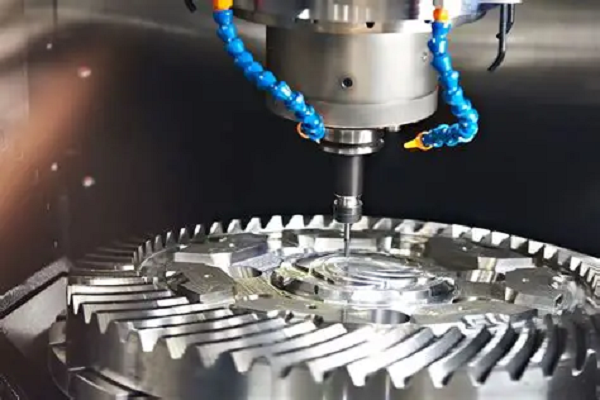
| Part Complexity | Ideal for simple geometries: flat surfaces, holes, slots, and prismatic parts. | Handles complex geometries: curved surfaces, undercuts, angular features, and parts requiring multi-sided machining. |
| Production Time | Faster for simple parts – no need for repositioning or setup changes. | Faster for complex parts – eliminates multiple setups (reduces setup time by 50-70% vs. 3-axis for multi-sided parts). |
| Cost | Lower upfront cost (machines: $50,000-$150,000); lower per-part cost for simple parts. | Higher upfront cost (machines: $200,000-$500,000); higher per-part cost for simple parts but lower for complex parts. |
| Ideal Applications | Brackets, plates, simple gears, decorative parts. | Aerospace components, medical implants, automotive cylinder heads, complex molds. |
Practical Example: A client needed CNC machining parts for a drone frame – a complex part with curved surfaces and angled mounting holes. Initially, they considered 3-axis machining, which would require 4 separate setups (one for each side of the frame). We recommended 5-axis machining, which completed the part in a single setup. While the 5-axis machine rate was 30% higher, the total production time decreased by 60%, and the part’s dimensional accuracy improved (no cumulative error from multiple setups). The client saved 25% on total production costs due to reduced setup time and rework.
What Quality Checks Guarantee Dimensional Integrity?
Ensuring the dimensional integrity of CNC machining parts requires a rigorous quality control (QC) process, combining in-process inspections and final testing. These checks verify that parts meet tolerance specifications and are free from defects, ensuring consistency and reliability.
Key Quality Control Tools and Processes
- Calipers and Micrometers: Used for basic dimensional checks (e.g., diameter, thickness) – ideal for quick in-process inspections. Accuracy ranges from ±0.001 inches (micrometers) to ±0.005 inches (calipers).
- Coordinate Measuring Machine (CMM): A high-precision tool that uses a probe to measure 3D coordinates of part features. CMMs can inspect complex geometries and tolerances as tight as ±0.0001 inches, making them essential for precision CNC machining parts.
- Optical Comparators: Project a magnified image of the part onto a screen, allowing comparison to a master template. Useful for checking surface features, angles, and small details.
- In-Process Monitoring: Real-time monitoring of machining parameters (spindle speed, feed rate, cutting force) to detect anomalies that may cause defects. For example, a sudden increase in cutting force can indicate tool wear, which would lead to dimensional errors.
Moshijia’s QC Workflow for CNC Machining Parts
To ensure consistent quality, Moshijia Technology follows a 4-step QC process for all CNC machining parts:
- Pre-Machining Check: Verify raw material dimensions, material certification, and CNC program accuracy (simulate the machining process to detect potential errors).
- In-Process Inspection: Conduct periodic checks during machining (every 10 parts for small batches, every 50 parts for large batches) using calipers and micrometers to ensure dimensions stay within tolerance.
- Final Inspection: Use CMM or optical comparators to inspect all critical features of finished parts. Generate a detailed inspection report with dimensional data for each part.
- Random Sampling: For large batches (1000+ parts), conduct random sampling of 5% of the batch to verify consistency. If any sample fails, 100% inspection is performed.
Data-Backed Result: This QC process has helped us achieve a defect rate of 0.08% for CNC machining parts, well below the industry average of 0.5%. For a recent aerospace client, our CMM inspections detected a 0.0015-inch deviation in a critical hole diameter before the parts were shipped, avoiding a potential $100,000 rework cost for the client.
How Do Batch Size and Setup Costs Interact?
Batch size (the number of identical CNC machining parts produced in a single production run) and setup costs (the time and resources required to prepare CNC machines, tools, and fixtures for production) have a direct, inverse relationship. Understanding this interaction is key to optimizing production costs and lead times.
Setup Costs Breakdown for CNC Machining
Setup costs for CNC machining parts typically include:
- Machine Preparation: Programming the CNC machine, calibrating axes, and installing cutting tools (1-4 hours, depending on part complexity).
- Fixture Design and Installation: Creating or modifying fixtures to hold the raw material (30 minutes to 2 hours).
- QC Setup: Calibrating inspection tools and creating inspection templates (30 minutes to 1 hour).
Average setup costs for a typical CNC machining parts project range from $200 to $1,000, with complex parts (e.g., 5-axis machined aerospace components) costing up to $5,000.
Cost per Part vs. Batch Size Relationship
The cost per part decreases as batch size increases because setup costs are spread across more units. Below is a real-world example from Moshijia Technology for a 3-axis machined aluminum bracket (setup cost: $400; machining time per part: 10 minutes; machine rate: $60/hour):
| Batch Size | Total Setup Cost | Total Machining Cost | Total Cost | Cost per Part |
|---|---|---|---|---|
| 10 | $400 | $100 (10 parts x 10 min/part x $60/60 min) | $500 | $50.00 |
| 50 | $400 | $500 (50 parts x 10 min/part x $60/60 min) | $900 | $18.00 |
| 100 | $400 | $1,000 (100 parts x 10 min/part x $60/60 min) | $1,400 | $14.00 |
| 500 | $400 | $5,000 (500 parts x 10 min/part x $60/60 min) | $5,400 | $10.80 |
Expert Recommendation: For CNC machining parts, the “economical batch size” (the batch size where cost per part stabilizes) is typically 100-500 parts for simple components and 50-200 parts for complex components. If your batch size is less than 50, consider options like prototype machining or combining small batches of similar parts to spread setup costs. For example, Moshijia Technology helped a startup client combine three small batches (20 parts each) of aluminum components into a single run, reducing setup costs by 60% and lowering the total cost per part by 35%.
Conclusion
CNC machining parts are a cornerstone of modern precision manufacturing, offering unparalleled accuracy, repeatability, and versatility. From material selection and tolerancing to machining method choice, quality control, and cost optimization, every aspect of the CNC machining process plays a critical role in delivering parts that meet your application’s requirements. By understanding the nuances of each step—whether choosing the right material for your end-use, specifying tolerances that balance performance and cost, or selecting 3-axis vs. 5-axis machining for your part’s complexity—you can make informed decisions that drive efficiency, reduce costs, and ensure part quality.
At Moshijia Technology, we leverage decades of experience inCNC machining parts to help clients navigate these complexities, delivering tailored solutions that align with their production goals and budget. Whether you’re producing small batches of prototypes or large-scale runs of critical components, the insights in this guide will serve as a valuable resource to optimize your CNC machining projects.
FAQ About CNC Machining Parts
1. What is the typical lead time for CNC machining parts? Lead time varies based on batch size, part complexity, and material availability. For small batches (1-50 parts), lead times are 3-7 days; for large batches (500+ parts), lead times are 10-20 days. Complex 5-axis machined parts may take an additional 5-10 days due to longer setup and machining times.
2. Can CNC machining parts be recycled? Yes, most CNC machined parts are made from recyclable materials (aluminum, steel, titanium, plastics). The chips and scrap generated during machining can also be recycled, reducing material waste. Moshijia Technology recycles 95% of machining scrap, contributing to sustainable manufacturing practices.
3. How do I choose a reliable CNC machining parts supplier? Look for suppliers with: (1) Certifications (e.g., ISO 9001 for quality management, AS9100 for aerospace); (2) A proven track record (case studies, client testimonials); (3) Comprehensive QC processes; (4) Transparent pricing and lead time estimates. Moshijia Technology holds ISO 9001 and AS9100 certifications, with a 98% client satisfaction rate for CNC machining parts projects.
4. What is the maximum size of CNC machining parts? Maximum size depends on the CNC machine’s work envelope. Standard 3-axis machines can handle parts up to 40” x 20” x 10”, while large-format 5-axis machines can handle parts up to 100” x 60” x 40”. Moshijia Technology offers machining for parts ranging from micro-components (0.1” diameter) to large structural components (80” x 40” x 30”).
5. Can CNC machining parts be finished with coatings or treatments? Yes, common finishes include anodizing (aluminum), powder coating (steel/plastics), electroplating (chrome/nickel), and heat treatment (steel/titanium). These finishes enhance corrosion resistance, durability, and aesthetic appeal. Moshijia Technology offers in-house finishing services to streamline the production process for CNC machining parts.
Get parts manufacturing quote with Moshijia
At Moshijia Technology, we specialize in delivering high-precision CNC machining parts tailored to your unique requirements. With over 15 years of experience in the industry, our team of skilled engineers and machinists combines advanced CNC technology (3-axis, 4-axis, 5-axis machines) with rigorous quality control processes to ensure every part meets or exceeds your expectations.
We understand that every CNC machining parts project is unique—whether you need a small batch of prototypes for product testing or large-scale production of critical components. That’s why we offer personalized solutions, including material selection guidance, tolerance optimization, and cost-saving recommendations (e.g., batch size optimization, design for manufacturability). Our ISO 9001 and AS9100 certifications demonstrate our commitment to quality, and our transparent pricing and on-time delivery guarantee (99% on-time delivery rate) ensure a seamless experience.
To get a free, no-obligation quote for your CNC machining parts project, simply share your part drawings (CAD files preferred: STEP, IGES, DWG), material requirements, batch size, and tolerance specifications with us. Our team will review your requirements and provide a detailed quote within 24 hours, along with a production timeline and quality assurance plan. Partner with Moshijia Technology for reliable, high-quality CNC machining parts that drive your business forward.