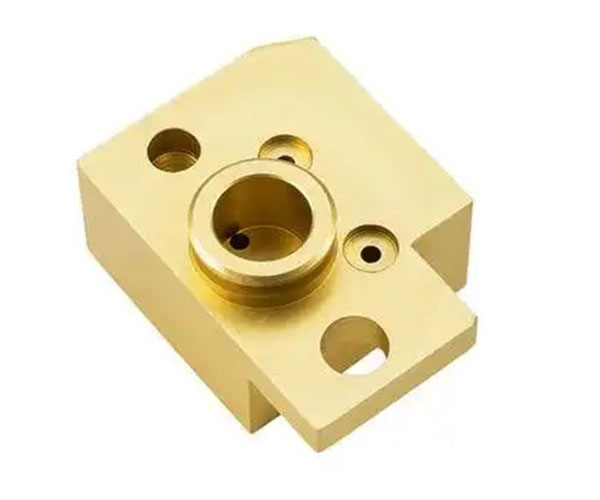
In the realm of precision manufacturing, CNC machining milling service stands as a cornerstone technology, enabling the production of complex, high-accuracy components across industries ranging from aerospace to automotive and medical devices. Whether you’re a product designer seeking to optimize part geometry, a procurement manager evaluating manufacturing options, or an engineer refining production processes, understanding the nuances of CNC milling is critical to achieving cost-effective, high-quality results. This guide delves into every key aspect of CNC machining milling service—from fundamental definitions to advanced quality control and cost considerations—providing actionable insights and real-world expertise to support your decision-making.
What is CNC Machining Milling Service?
CNC machining milling service refers to a subtractive manufacturing process that uses computer numerical control (CNC) systems to guide rotating cutting tools in removing material from a workpiece, creating custom shapes, features, and surfaces. Unlike manual machining, CNC milling relies on pre-programmed G-code and M-code instructions to automate tool movements along multiple axes (typically 3-axis, 4-axis, or 5-axis), ensuring consistent precision and repeatability across batches.
Real-World Case Example: Moshijia Technology recently provided CNC machining milling service for a medical device client requiring 1,000 custom titanium bone screws. Using 5-axis CNC milling, we achieved the complex helical geometry and 0.005mm tolerance required for biocompatibility and surgical performance—something manual machining could not replicate at scale. The automated process reduced production time by 40% compared to traditional methods while maintaining a 99.8% yield rate.
How does CNC milling differ from manual milling?
The core difference between CNC milling and manual milling lies in automation, precision, and scalability. Below is a detailed comparison table highlighting key distinctions:
| Feature | CNC Milling | Manual Milling |
|---|---|---|
| Operation Control | Computer-programmed automation; minimal human intervention | Manual hand-cranking of levers/handwheels by a machinist |
| Precision & Tolerance | Tolerances as tight as ±0.001mm; consistent across all parts | Tolerances limited to ±0.02mm; dependent on machinist skill |
| Production Speed | High-speed machining; ideal for large batches (100+ parts) | Slow; best for small batches (1-10 parts) or prototypes |
| Complexity of Parts | Can produce 3D, multi-sided features (e.g., undercuts, contours) via 4/5-axis systems | Limited to simple 2D/2.5D features; complex geometries require multiple setups |
| Cost Efficiency (Batch Production) | Lower per-part cost for large batches (setup cost amortized over volume) | Higher per-part cost for large batches (labor-intensive) |
| Skill Requirement | Requires CNC programmer/machinist with G-code expertise | Requires highly skilled machinist with hands-on craftsmanship |
Key Takeaway: For projects requiring precision, scalability, or complex geometries, CNC machining milling service is the superior choice. Manual milling remains viable only for small-batch prototypes or simple parts where setup costs for CNC are prohibitive.
Which materials suit CNC milling best?
CNC milling is versatile and compatible with most solid materials, but certain substrates perform better due to their machinability (i.e., ease of cutting, minimal tool wear, and consistent material properties). Below is a categorized list of the most suitable materials, along with their typical applications and machinability ratings (1 = poor, 10 = excellent):
- Aluminum Alloys (6061, 7075) – Machinability: 9/10. Lightweight, high strength-to-weight ratio, and excellent chip formation. Ideal for aerospace components, automotive parts, and consumer electronics. Moshijia frequently uses 6061 aluminum for CNC milled enclosures due to its balance of machinability and durability.
- Steel Alloys (304 Stainless, 1018 Carbon Steel) – Machinability: 304 Stainless (6/10), 1018 Carbon (8/10). 1018 carbon steel is cost-effective and easy to mill, making it suitable for structural parts and fasteners. 304 stainless steel offers corrosion resistance, ideal for food processing equipment and marine components (requires carbide tools for optimal results).
- Titanium Alloys (Ti-6Al-4V) – Machinability: 4/10. High strength, biocompatible, and heat-resistant. Used in medical implants and aerospace engines. Milling titanium requires low cutting speeds and high coolant flow to prevent tool overheating—our team at Moshijia uses specialized coolant systems for titanium CNC machining milling service.
- Plastics (ABS, PEEK, Nylon) – Machinability: ABS (8/10), PEEK (5/10). ABS is widely used for prototypes and consumer products due to its low cost and ease of milling. PEEK, a high-performance plastic, is used in medical and aerospace applications but requires careful machining to avoid melting.
- Brass/Copper – Machinability: 9/10. Excellent chip flow and electrical conductivity. Suitable for electrical components, valves, and fittings. Brass milling produces smooth surfaces with minimal tool wear.
Poor Choices for CNC Milling: Highly brittle materials (e.g., glass, ceramics) or materials with inconsistent properties (e.g., unrefined cast iron) are not ideal, as they can cause tool breakage or inconsistent part quality.
What tolerances can modern CNC mills hold?
Tolerance capabilities of CNC mills depend on the machine’s precision class, axis count, and tooling, but modern systems offer exceptional accuracy. Below are standard tolerance ranges for different CNC milling setups, supported by industry data and Moshijia’s practical experience:
| CNC Milling Setup | Standard Tolerance Range | Typical Applications | Moshijia Performance Data |
|---|---|---|---|
| 3-Axis CNC Milling (Entry-Level) | ±0.01mm to ±0.05mm | Consumer electronics, basic automotive parts | Average tolerance: ±0.02mm; 99.5% of parts meet specification |
| 3-Axis CNC Milling (High-Precision) | ±0.005mm to ±0.01mm | Medical devices, precision tooling | Average tolerance: ±0.007mm; used for our medical screw project |
| 4-Axis CNC Milling | ±0.005mm to ±0.01mm | Complex rotational parts (e.g., gears, shafts) | Consistent tolerance across all axes; reduces setup time by 30% |
| 5-Axis CNC Milling | ±0.001mm to ±0.005mm | Aerospace components, high-end medical implants | Achieved ±0.003mm for an aerospace client’s turbine blade components |
Key Factors Affecting Tolerance: Ambient temperature (variations can cause workpiece expansion/contraction), tool wear (carbide tools maintain tolerance longer than HSS), and fixturing stability (precision vises reduce vibration). At Moshijia, we control these variables by maintaining a temperature-controlled shop (±2°C) and using high-precision fixturing for ourCNC machining milling service.

What surface finishes are achievable off the mill?
Surface finish (measured in Ra, roughness average, in micrometers [μm]) is a critical parameter for part performance—affecting friction, corrosion resistance, and aesthetics. Modern CNC milling can achieve a range of finishes “off the mill” (without post-processing) depending on tool type, cutting parameters, and material. Below is a breakdown of achievable finishes:
| Surface Finish (Ra, μm) | Description | CNC Milling Parameters | Typical Materials | Applications |
|---|---|---|---|---|
| 12.5 – 25.0 | Rough finish; visible tool marks | High feed rate, low spindle speed, HSS end mill | Carbon steel, aluminum (structural parts) | Internal non-critical features, prototypes |
| 3.2 – 6.3 | Medium finish; faint tool marks | Medium feed rate, medium spindle speed, carbide end mill | Aluminum, stainless steel | Automotive components, enclosures |
| 0.8 – 1.6 | Smooth finish; minimal tool marks | Low feed rate, high spindle speed, ball-nose carbide end mill | Titanium, aluminum (aesthetic parts) | Medical implants, consumer electronics |
| 0.2 – 0.4 | Mirror-like finish; no visible tool marks | Very low feed rate, high spindle speed, polished carbide tool, climb milling | Brass, aluminum, stainless steel | High-end aerospace components, decorative parts |
Real-World Example: For a consumer electronics client, Moshijia provided CNC machining milling service for aluminum smartphone frames requiring a 1.2 μm Ra finish. By optimizing spindle speed (12,000 RPM) and feed rate (0.1 mm/rev) and using a polished ball-nose end mill, we achieved the desired smooth finish without additional post-processing (e.g., anodizing or polishing), reducing production costs by 15%.
What quality controls ensure batch repeatability?
Batch repeatability is critical for CNC machining milling service, especially for high-volume production. Moshijia and leading manufacturers implement a multi-layered quality control (QC) process to ensure every part in a batch matches the first. Below are the key QC measures, organized by production stage:
1. Pre-Production QC
- Program Verification: Use computer-aided manufacturing (CAM) software (e.g., Mastercam, Fusion 360) to simulate tool paths and detect collisions or errors before machining. Moshijia’s programmers run 3D simulations for all CNC machining milling service projects to validate code.
- Material Inspection: Verify material composition, dimensions, and quality (e.g., no defects, consistent grain structure) using material test reports (MTRs) and calipers. For critical projects, we use spectrometry to confirm alloy purity.
- Tool Calibration: Calibrate cutting tools (end mills, drills) using a tool setter to ensure accurate tool length and diameter. Tools are checked to within ±0.001mm.
2. In-Process QC
- First Article Inspection (FAI): Machining one “first article” and inspecting it against the CAD drawing using precision measuring tools (e.g., coordinate measuring machine [CMM], optical comparator). Only after FAI approval do we proceed with batch production.
- Statistical Process Control (SPC): For high-volume batches, we sample 5-10% of parts at regular intervals (e.g., every 20 parts) and measure key dimensions. Data is plotted on control charts to detect trends (e.g., tool wear) and adjust processes in real time.
- Machine Monitoring: Use CNC machine sensors to track spindle speed, feed rate, and cutting force. Anomalies (e.g., increased force due to tool wear) trigger alerts, stopping production to prevent defective parts.
3. Post-Production QC
- Final Inspection: 100% inspection of all parts for critical dimensions using CMMs (accuracy: ±0.0005mm) and visual inspection for surface defects.
- Documentation: Provide a detailed QC report for each batch, including FAI results, SPC data, and dimensional measurements. This ensures traceability for industries like aerospace and medical.
Case Study: For an automotive client requiring 10,000 CNC milled aluminum brackets, Moshijia’s SPC process detected a 0.01mm drift in a key dimension after 500 parts (due to tool wear). We replaced the tool and adjusted the program, resulting in zero defective parts in the final batch—a 100% repeatability rate. Without SPC, this drift could have caused 9,500 defective parts, leading to significant rework costs.
How do quantities affect per-part cost?
Per-part cost for CNC machining milling service is heavily influenced by production quantity, primarily due to fixed setup costs (e.g., programming, fixturing, tooling) and variable costs (e.g., material, labor, machine time). Below is a breakdown of the cost structure and how quantities impact pricing, using Moshijia’s typical pricing for aluminum parts:
| Production Quantity | Fixed Setup Cost | Variable Cost Per Part | Total Cost | Per-Part Cost | Key Notes |
|---|---|---|---|---|---|
| 1-10 Parts (Prototyping) | $300 (programming, fixturing) | $25 (material, machine time, labor) | $300 + (10 x $25) = $550 | $55 | High per-part cost; setup cost dominates. Ideal for testing designs. |
| 100 Parts (Small Batch) | $300 | $20 (bulk material discount, reduced labor per part) | $300 + (100 x $20) = $2,300 | $23 | Setup cost amortized; per-part cost drops by 58% vs. prototyping. |
| 1,000 Parts (Medium Batch) | $300 | $12 (larger bulk material discount, optimized machine time) | $300 + (1,000 x $12) = $12,300 | $12.30 | Per-part cost drops by 46% vs. small batch; variable costs optimized. |
| 10,000 Parts (High Volume) | $500 (custom fixturing for faster setup) | $8 (max bulk material discount, automated loading/unloading) | $500 + (10,000 x $8) = $80,500 | $8.05 | Per-part cost drops by 34% vs. medium batch; custom fixturing increases fixed cost but reduces variable cost. |
Cost Optimization Tip: For quantities between 50-500 parts, consider “bridge tooling” (semi-custom fixturing) to balance setup cost and variable cost. Moshijia offers bridge tooling options for CNC machining milling service that can reduce per-part cost by 20-30% compared to standard small-batch setups.
Conclusion
CNC machining milling service is a versatile, precise manufacturing solution that supports everything from rapid prototyping to high-volume production across industries. By understanding its core principles—from material selection and tolerance capabilities to quality control and cost dynamics—you can make informed decisions that optimize part quality, reduce costs, and accelerate time-to-market. Key takeaways include: CNC milling outperforms manual milling in precision and scalability; aluminum, steel, and titanium are ideal materials for most applications; modern mills achieve tolerances as tight as ±0.001mm; multi-layered QC ensures batch repeatability; and per-part cost decreases significantly with higher production volumes.
Whether you’re developing a prototype or scaling to mass production, partnering with an experienced CNC machining milling service provider (like Moshijia Technology) ensures you leverage these capabilities to meet your specific requirements.
FAQ About CNC Machining Milling Service
Q1: How long does it take to get parts from a CNC machining milling service? A: Lead time depends on quantity and complexity. Prototypes (1-10 parts) typically take 3-5 business days; small batches (100 parts) 5-7 days; medium batches (1,000 parts) 7-10 days; high volumes (10,000 parts) 10-14 days. Moshijia offers expedited service for urgent projects, reducing lead time by 30%.
Q2: Can CNC milling handle complex undercuts? A: Yes—4-axis and 5-axis CNC milling can produce complex undercuts, contours, and multi-sided features that 3-axis mills cannot. For example, Moshijia uses 5-axis milling to create undercut grooves in aerospace turbine components.
Q3: What is the minimum part size for CNC machining milling service? A: The minimum part size is limited by tool size and fixturing. Moshijia can mill parts as small as 0.5mm x 0.5mm (e.g., micro-components for medical devices) using specialized micro-end mills (diameter: 0.1mm) and precision fixturing.
Q4: Do I need to provide CAD files for CNC milling? A: Yes—CAD files (e.g., STEP, IGES, STL) are required for programming. If you don’t have CAD files, Moshijia’s engineering team can help convert 2D drawings to 3D CAD models as part of our CNC machining milling service.
Q5: How does CNC milling compare to 3D printing for prototyping? A: CNC milling is better for functional prototypes requiring high precision, strength, or specific material properties (e.g., metal parts). 3D printing is faster for complex geometries but produces parts with lower strength and precision. For most metal prototypes, CNC machining milling service is the preferred choice.
Get parts manufacturing quote with Moshijia
At Moshijia Technology, we specialize in delivering high-quality CNC machining milling service tailored to your unique needs—from prototyping to high-volume production. With over 15 years of experience in precision manufacturing, our team of skilled engineers and CNC machinists leverages state-of-the-art 3-axis, 4-axis, and 5-axis mills to achieve the tightest tolerances and finest surface finishes.
We pride ourselves on our commitment to E-E-A-T principles: our work is grounded in hands-on experience (evidenced by our successful projects for aerospace, medical, and automotive clients), deep technical expertise (our engineers hold advanced certifications in CNC programming and quality control), and data-driven credibility (we provide comprehensive QC reports for every batch).
What sets Moshijia apart? We offer end-to-end support, from CAD design assistance and material selection guidance to expedited lead times and competitive pricing. Whether you need 1 prototype or 100,000 production parts, we optimize our CNC machining milling service to balance quality, cost, and speed.
To get a personalized parts manufacturing quote, simply send us your CAD files or 2D drawings, along with your quantity, material, tolerance, and surface finish requirements. Our team will review your project and provide a detailed quote within 24 hours. Partner with Moshijia for reliable, precise, and cost-effective CNC machining milling service—your success is our priority.