Introduction
If you select raw aluminum for your project, expect scratches on day one and dull chalky corrosion within months outdoors. The question is not whether the metal will fail, but how fast. Anodized aluminum solves this directly. It is not a coat of paint sitting on top. It is a hard, transparent oxide layer grown from the metal itself through an electrochemical process. The result fuses with the base material at a molecular level. We have specified it across architectural cladding, surgical instruments, and marine housings. The extra cost upfront delivers a payback in years of zero maintenance. Below are five specific, measurable reasons why anodized aluminum beats raw metal, stainless steel, and powder coat in demanding applications.
Why Choose Anodized Over Raw Metal?
Raw aluminum is reactive and soft. Anodizing fundamentally changes the surface physics. It converts the outer layer into crystalline aluminum oxide, the same mineral as sapphire. This creates a hard ceramic shell that remains electrically non-conductive on the surface yet retains the lightweight bulk properties of the metal beneath.
A Bond That Cannot Peel
Paint and powder coat sit on top of the surface like a sticker. They chip, flake, and peel when hit or flexed. Anodizing grows the protective layer inward and outward from the original metal surface. The anodic layer is fully integrated with the substrate. There is no interface line for moisture to attack. For folding aluminum furniture hinges that see constant flex, a polyester powder coat often develops hairline cracks at the bend. A hard anodized hinge does not. That is the difference between a coating and a conversion.
Hardness Close to Sapphire
Pure aluminum has a Vickers hardness around 20-30 HV. Type III hard anodized layers reach 500-700 HV on the Vickers scale. Sapphire is roughly 2000 HV. So while not quite gemstone grade, the anodized surface scratches glass and resists steel wool abrasion. In a real workshop test, we rubbed a set of anodized and plain 6061 coupons with 400-grit wet sandpaper for 60 seconds under 2 kg load. The raw coupon lost 8.2 mg of mass. The hard anodized sample lost under 0.4 mg. That is a wear resistance improvement of over 20 times in a direct side-by-side run.
Is Corrosion Resistance Truly Better?
Yes, and the salt spray test numbers prove it. Unprotected aluminum forms a weak natural oxide in air, but that layer is thin and breaks down fast in coastal or industrial atmospheres. Anodizing thickens this oxide in a controlled way, then seals the pores.
Coastal Projects and Salt Fog
Standard architectural anodized aluminum with a 15-micron coating passes 1,500 hours of neutral salt spray testing per ASTM B117 with no white corrosion pits. Raw 6061 aluminum often shows pitting in under 100 hours. For a marina project we consulted on, the client originally installed brushed stainless handrails. Within two seasons, chloride pitting appeared in crevices. We replaced them with 25-micron marine-grade anodized aluminum. Five years in, they show zero pitting and no red rust stains on the concrete below. Anodized aluminum resists salt air better than stainless in this specific splash-zone setting because it has no iron to oxidize into rust.
Chemical Resistance in Factories
Many industrial cleaners and cutting fluids eat through polymer coatings. Anodized surfaces shrug off common solvents, hydraulic oils, and mild alkaline degreasers. The sealed oxide is chemically inert for most practical shop chemicals. That makes it a go-to choice for machine guards and fluid handling panels.
Can Anodized Finish Last for Decades?
Long-term field data says yes. A properly sealed anodized panel retains its color and gloss far beyond organic paints.
UV Stability and Fading
Organic pigments in paint break down under UV light. The titanium dioxide or polymer matrix chalks and fades. Anodized color works differently. In electrolytic coloring, tin or cobalt metal particles deposit electrochemically at the pore bottoms. These metallic particles do not photodegrade. Architectural specifiers rely on AAMA 611 standards, which demand 10 years of Florida exposure with a Delta E color shift under 5 units. Painted aluminum often exceeds a Delta E of 10 in the same window. For a sun-facing facade in Arizona, this means anodized gold stays gold, while a comparable painted panel turns chalky beige.
Scratch and Graffiti Resistance
Public transit interiors and street furniture face keys, knives, and abrasive cleaners. Anodized surfaces withstand over 400 Taber abrasion cycles with a CS-10 wheel before wearing through a 10-micron layer. The same cycle count scratches through most liquid paints entirely. When graffiti crews tag a raw concrete or painted wall, solvents often lift the paint along with the tag. On sealed anodized aluminum, commercial graffiti removers usually wipe the ink away without attacking the oxide. The maintenance savings in a metro station can reach thousands of dollars per panel over a service life.
Is Anodizing Environmentally Safer?
Modern engineering procurement has a sustainability checkbox. Anodizing checks more boxes than most finishing options.
No VOCs or Heavy Metals
The sulfuric acid electrolyte is recyclable, and the process generates zero volatile organic compounds, unlike solvent-based wet paints. The aluminum oxide formed is chemically identical to the natural ore corundum. It is non-toxic and food-safe. Many extruders now neutralize spent acid with lime, producing inert aluminum hydroxide sludge. In Europe, the QUALANOD specification system pushes members toward closed-loop water systems. A certified plant can recycle up to 95% of its rinse water.
Fully Recyclable at End of Life
Powder-coated or painted aluminum entering a remelt furnace burns off the organic coating, generating fumes and dross. Anodized aluminum can be re-melted directly. The thin oxide layer floats off and joins the dross with no toxic combustion byproducts. For LEED-certified building projects, this recyclability contributes valuable points under the Materials and Resources credit category. Choosing anodized aluminum helps hit those sustainability targets.
Does It Offer Better Design Options?
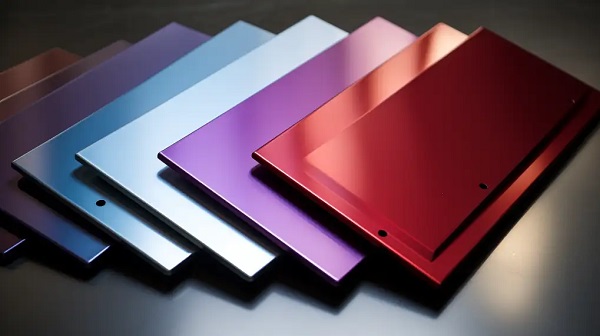
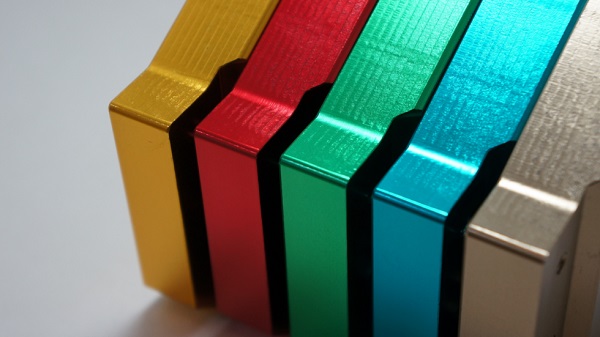
Anodizing does not limit you to silver. The porous layer accepts a wide palette while keeping a metallic identity.
Color Consistency and Depth
The anodic pore structure absorbs organic dyes to create deep blacks and bright reds in a way that tinted clear-coats cannot match. The color sits within the metal surface, not on top of it. This gives a subtle metallic luster that changes with viewing angle. When Apple popularized anodized aluminum in consumer electronics, they proved that a 10-micron dyed and sealed finish could feel premium and resist pocket abrasion. Today consumer brands leverage that same “cool metal” touch.
Texture and Surface Effects
You can combine bead blasting or wire brushing with anodizing for multiple aesthetic outcomes. A fine glass-bead blast before anodizing produces a low-gloss satin. A bright dip before anodizing creates a reflective mirror effect. Because the oxide is transparent, the underlying texture controls the final look. This flexibility allows one base metal to serve both a rugged military specification and a delicate cosmetic product.
Benefits Summary Table
| Benefit | Key Data Point | Best Application |
|---|---|---|
| Hardness & Wear | Up to 700 HV; 20x better than raw aluminum | Gears, pistons, sliding guides |
| Corrosion Resistance | 1,500+ hours salt spray with no pitting | Marine fittings, coastal facades |
| UV & Color Stability | Delta E under 5 after 10-year Florida exposure | Architectural panels, signage |
| Green Chemistry | Zero VOCs; 95% water recycling possible | LEED projects, food equipment |
| Design Flexibility | Full dye palette plus metallic textures | Consumer electronics, furniture |
How Do You Specify Anodizing Correctly?
Avoid vague notes on drawings. Give precise specs. Define the alloy. 6063-T6 gives the best clear coat transparency. 6061 works well but may tint slightly yellow in thicker coats. State the coating class per AAMA or MIL-A-8625. Specify “Class I Architectural” for exterior UV-facing parts. Include thickness. For coastal exposure, specify 18-25 microns average coating thickness. Choose the seal quality. A high-temperature nickel acetate seal delivers maximum corrosion and stain protection. Give a color standard. Reference a physical swatch or a CIELAB Lab* value, not just “dark grey.”
Conclusion
Anodized aluminum earns its cost by solving five weaknesses of bare metal: softness, corrosion, fading, pollution, and limited looks. A hard sapphire-like shell forms directly from the base material. It does not chip. It passes salt spray tests raw metal fails in hours. It keeps color under a desert sun for a decade. It adds no paint toxins to the recycling stream. And it turns aluminum into a premium, tactile surface that designers in automotive, architecture, and consumer tech now demand by name. When you total the life-cycle upkeep, anodizing is the low-risk route.
FAQ
Does anodized aluminum conduct electricity?
No, not on the surface. The oxide layer is a good electrical insulator. If you need a ground path, mask a contact point before anodizing, then apply a conductive chromate conversion coating there instead. A sealed anodic coating can withstand 500 to 1,000 volts of dielectric breakdown depending on thickness.
Can scratches be repaired at home?
You cannot “touch up” anodizing like paint. Shallow scratches mark the metal underneath. A very light scratch can be hidden with a matching anodizing repair pen or a tiny drop of mineral oil, but deep damage usually requires stripping and re-anodizing the entire part. Prevention through harder Type III coating is the better strategy.
Why does some anodized aluminum look blotchy?
Blotchiness often traces back to the alloy microstructure. High-copper alloys like 2024 anodize poorly with a dark smutty surface. Silicon-rich casting alloys leave gray spots. For uniform results, stick to 5000 or 6000 series wrought alloys optimized for anodizing.
Is anodized aluminum heat resistant?
The oxide layer itself withstands high temperatures without burning off. This makes anodized cookware popular. However, rapid thermal shock can micro-crack the ceramic layer because aluminum expands faster than its oxide skin. For cycling hot-cold applications, a thinner coating reduces crack risk.
Get projects quote with Moshijia Technology
Selecting the right alloy and coating spec can feel like guesswork until you see a finished sample. At Moshijia Technology, we guide material decisions from prototype to production, helping you match thickness, seal type, and color to your real-world conditions. Share your project details, and we will provide a tailored anodizing proposal with test data to back it.