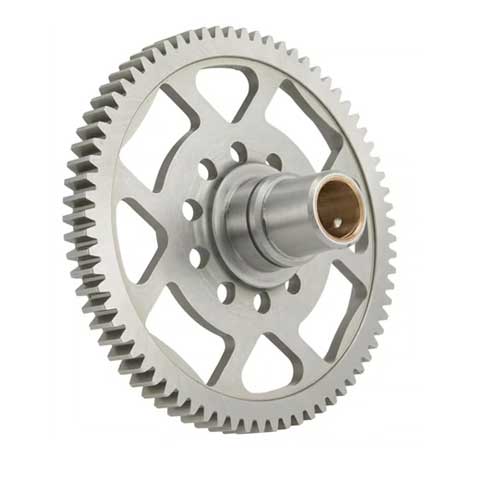
Manufacturers today face increasing pressure to produce complex components with tighter tolerances, shorter lead times, and lower costs. Traditional machining methods often struggle to balance these demands, leading to production bottlenecks, quality inconsistencies, and missed deadlines. Many companies find themselves limited by equipment capabilities or struggling with inefficient processes that waste time and materials. This guide explores how center CNC machining addresses these challenges, delivering the precision, efficiency, and versatility needed for modern manufacturing success.
Understanding CNC Machining Centers: The Heart of Precision Production
CNC machining centers represent the backbone of modern manufacturing facilities, integrating advanced technology with robust construction to deliver consistent, high-quality results. These sophisticated machines combine computer control with multi-functional capabilities, enabling complex part production in fewer operations than traditional equipment.
Key Components of Modern Machining Centers
Today’s machining centers incorporate several critical elements that enhance performance and versatility:
- CNC machining center controls: Advanced software that manages all machine functions with precise programming.
- Vertical machining centers (VMC) and horizontal machining centers (HMC): The two primary configurations optimized for different part geometries.
- Multi-axis machining centers: Machines with 4, 5, or more axes for complex contouring and undercutting.
- 3-axis machining centers: Workhorses for simpler parts requiring X, Y, and Z axis movement.
- 5-axis machining centers: High-performance systems that add rotational axes for complex geometries.
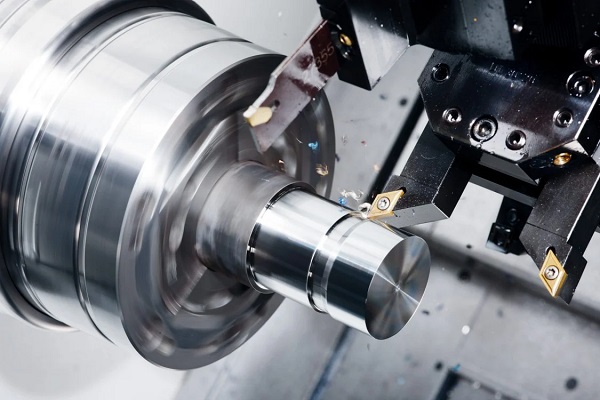
- CNC milling centers and CNC turning centers: Specialized configurations for specific machining tasks.
Modern machining center technology has evolved significantly, with today’s machines offering positioning accuracy within ±0.0001 inches and repeatability better than ±0.00005 inches. According to industry research, facilities utilizing advanced machining centers achieve up to 40% higher productivity than those using older equipment.
Machining Center Operations: Mastering Precision Processes
The versatility of machining center operations allows manufacturers to produce complex parts in a single setup, reducing handling time and improving accuracy. These operations leverage the multi-functional capabilities of machining centers to perform multiple processes on a single machine.
Essential Machining Center Operations
| Operation | Description | Typical Applications | Accuracy Level |
| Milling operations | Removing material with rotating cutters to create shapes and features | Flat surfaces, slots, pockets, contours | ±0.0005 inches |
| Drilling operations | Creating holes with precise diameters and depths | Fastener holes, through holes, blind holes | ±0.0005 inches |
| Boring operations | Enlarging existing holes to precise diameters with tight tolerances | Bearing bores, precision fits | ±0.0001 inches |
| Tapping operations | Creating internal threads with precise pitch and depth | Fastening points, threaded holes | ±0.001 inches |
| Reaming operations | Finishing existing holes to improve surface finish and dimensional accuracy | Precision fits, bearing surfaces | ±0.0002 inches |
Successful machining center operation depends on several supporting processes, including efficient tool changing (with automatic tool changers handling 20–100+ tools), proper fixture setup, secure workholding, and optimized CNC programming for machining centers. These elements work together to minimize setup time and maximize cutting time, with modern machines achieving up to 90% spindle utilization on optimized production runs.
Types of Machining Centers: Choosing the Right Configuration
Selecting the appropriate types of machining centers depends on part geometry, material, production volume, and accuracy requirements. Each configuration offers unique advantages for specific applications.
Comparing Common Machining Center Types
| Type | Configuration | Key Advantage | Best For |
| Vertical machining centers | Spindle oriented vertically, workpiece on stationary table | Better access, simpler setup, lower cost | Flat parts, dies, molds, smaller components |
| Horizontal machining centers | Spindle oriented horizontally, table often rotates | Better chip evacuation, multiple faces in one setup | Complex prismatic parts, high-volume production |
| Universal machining centers | Convertible between vertical and horizontal orientations | Flexibility for varied production needs | Job shops, varied part mix |
| Gantry machining centers | Bridge-style structure with moving gantry | Large workpieces, heavy materials | Aerospace components, large molds |
| Swiss-type machining centers | Sliding headstock design with guide bushings | Small, complex parts with tight tolerances | Medical components, precision small parts |
| Hybrid machining centers | Combine additive and subtractive capabilities | Complex parts with both features | Prototypes, repair work, complex geometries |
The right machining center type reduces production steps, improves accuracy, and increases throughput. For example, horizontal machining centers typically reduce setup time by 30–50% compared to vertical machines for complex parts requiring multiple faces to be machined.
Applications of Machining Centers: Transforming Industries Through Precision
The applications of machining centers span virtually every manufacturing sector, with each industry leveraging these versatile machines to produce critical components with enhanced quality and efficiency.
Key Industries Utilizing Machining Centers
- Automotive parts manufacturing: Producing engine components, transmission parts, and suspension components with consistent quality.
- Aerospace components production: Creating lightweight, high-strength parts with complex geometries and tight tolerances.
- Medical devices manufacturing: Machining precision surgical instruments, implant components, and diagnostic equipment.
- Industrial machinery production: Fabricating gears, shafts, and structural components for heavy equipment.
- Consumer electronics manufacturing: Producing precision housings, connectors, and internal components.
- Mold and die making: Creating complex tooling with superior surface finishes for injection molding and casting.
- Prototyping: Quickly producing functional prototypes for design validation and testing.
In the aerospace industry, machining centers have enabled the production of complex components that reduce aircraft weight by up to 20% while maintaining strength requirements. Similarly, medical device manufacturers utilize machining centers to produce components with tolerances as tight as ±0.0001 inches, ensuring proper function in critical applications.
Advantages of Machining Centers: Why They Outperform Traditional Methods
The transition to modern machining centers delivers numerous advantages of machining centers that directly address the key challenges of traditional manufacturing processes.
Key Benefits of Modern Machining Centers
- High precision: Consistently achieving tight tolerances that manual or older machines can’t match.
- Increased productivity: Completing more operations in less time with fewer setups.
- Enhanced part quality: Reducing variability between parts and improving surface finishes.
- Reduced setup time: Performing multiple operations in a single setup saves significant preparation time.
- Improved efficiency: Higher spindle utilization and reduced handling time lower production costs.
- Versatility in machining: Handling diverse materials and part geometries with minimal reconfiguration.
- Reduced human error: Automated processes minimize operator intervention and mistakes.
- Enhanced surface finish: Advanced cutting strategies produce superior surface quality requiring less post-processing.
- Cost-effective production: Lower per-part costs through improved efficiency and reduced scrap.
- Advanced automation capabilities: Integrating with robots, pallet changers, and other systems for lights-out production.
Studies show that manufacturers implementing modern machining centers reduce scrap rates by an average of 35% and decrease production time by 40% compared to traditional methods. These improvements translate directly to lower costs and faster time-to-market for new products.
Moshijia Technology’s Perspective
At Moshijia Technology, we leverage advanced CNC machining centers to deliver precision components across industries. Our diverse fleet includes vertical, horizontal, and 5-axis machining centers, enabling us to handle any complexity. With expert programming and strict quality control, we maximize machining center capabilities to provide accurate, cost-effective solutions for your most challenging manufacturing needs.
Frequently Asked Questions (FAQ)
- What’s the difference between vertical and horizontal machining centers?
Vertical machining centers have vertically oriented spindles ideal for flat parts and simpler geometries, offering better accessibility and lower cost. Horizontal machining centers feature horizontal spindles with rotating tables, excelling at complex parts requiring multiple faces machined in one setup.
- How accurate are modern CNC machining centers?
Modern machining centers typically achieve positioning accuracy of ±0.0001–±0.0002 inches and repeatability of ±0.00005–±0.0001 inches. 5-axis machines often maintain similar accuracy across all axes, enabling complex parts with consistent precision.
- What factors determine the right machining center for a project?
Key factors include part size and geometry, material type, required tolerances, production volume, and budget. Complex, multi-sided parts often benefit from horizontal or 5-axis machines, while simpler parts may be more economical on 3-axis vertical machines.