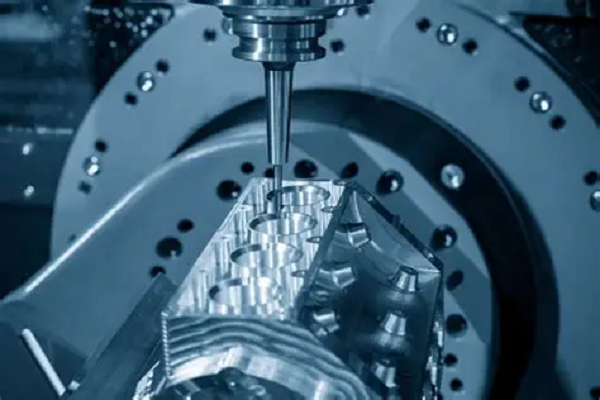
Need 5-axis CNC machining for complex geometries and tight tolerances? We explain how it works, when to choose it, machine configurations, and which industries rely on this technology.
Introduction
You have a part that defies simple machining. Features on every face. Compound angles. Deep cavities with tight corners. Or maybe it is a single component that currently requires five different setups on a 3-axis mill.
That is when you need 5-axis CNC machining.
Five-axis technology changes what is possible. It tilts and rotates the tool or the part. It reaches undercuts that 3-axis cannot touch. It machines complex shapes in a single setup. It delivers surface finishes that would take hours of hand work.
But here is the catch—5-axis is not always the answer. It costs more per hour than 3-axis. Programming is more complex. Not every part benefits from the extra axes.
This guide covers everything you need to know. We explain how 5-axis differs from 3-axis, which parts need it, the common machine configurations, and when simultaneous milling beats 3+2 positioning.
What Is 5-Axis CNC Machining?
Let us start with a clear definition. 5-axis CNC machining uses machine tools that can move a cutting tool or workpiece across five different axes simultaneously. This allows the tool to approach the material from any direction.
Standard 3-axis machines move in X, Y, and Z. Think left-right, front-back, up-down. The tool always points straight down.
Five-axis adds two rotational axes. These rotate around X, Y, or Z. Common names are A (rotate around X), B (rotate around Y), and C (rotate around Z).
With five axes, the tool can tilt. It can reach into deep cavities. It can cut complex curves. It can machine multiple faces without re-clamping the part.
A medical implant manufacturer learned the value of 5-axis. They made titanium spinal cages with complex lattice structures. On a 3-axis mill, each part required five setups and took 8 hours. On a 5-axis machine, one setup and 2.5 hours. Tolerances improved. Scrap dropped. They bought three more machines.
How Does It Differ from 3-Axis?
Understanding the difference helps you choose the right process.
Setup Reduction
3-axis machining often requires multiple setups. Machine one face, re-clamp, machine the next. Each setup introduces error. The part moves relative to the machine. Features may not align perfectly.
5-axis machining machines multiple faces in one setup. The part stays clamped once. All features reference the same coordinate system. Alignment is perfect.
Tool Access
3-axis tools point straight down. They cannot reach undercuts. They cannot machine angled features without special fixtures or angled tools.
5-axis tools tilt. They reach undercuts. They machine angled surfaces directly. They get into deep cavities with shorter, more rigid tools.
Surface Finish
3-axis machining of curved surfaces leaves stepped tool marks. Each pass is a straight line. The stair-step effect requires polishing.
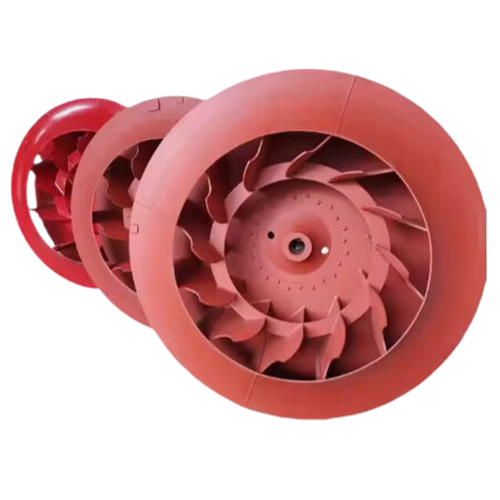
5-axis keeps the tool perpendicular to the surface. This produces smooth finishes with minimal hand work. Impellers, turbine blades, and molds benefit tremendously.
Tool Life
3-axis uses long tools to reach deep features. Long tools deflect. Deflection causes chatter and poor finish. Tools wear faster.
5-axis tilts the tool or part. Shorter tools reach deep features. Shorter tools are rigid. Rigid tools last longer and cut better.
Cycle Time
3-axis multiplies setup time. Each re-clamp takes time. Each setup requires re-establishing coordinates.
5-axis runs continuously. One program, one setup, one finished part.
Comparison Table
| Factor | 3-Axis | 5-Axis |
|---|---|---|
| Setups | Multiple | Usually one |
| Tool access | Limited | Full |
| Surface finish | Stepped | Smooth |
| Tool length | Long | Short |
| Cycle time | Longer | Shorter |
| Programming | Simple | Complex |
| Machine cost | Lower | Higher |
Which Parts Need 5-Axis Capability?
Not every part needs 5-axis. Here is when it becomes essential.
Complex Organic Shapes
Turbine blades, impellers, and medical implants have curved surfaces. The tool must stay perpendicular to the surface to cut smoothly. 3-axis leaves steps. 5-axis leaves smooth surfaces.
An aerospace supplier machines Inconel turbine disks. Each disk has dozens of airfoil-shaped blades. 5-axis machining creates the complex twist in one setup. Inspection shows surface finish within 16 Ra. No hand polishing needed.
Parts with Undercuts
Any feature that angles inward needs tool tilt. 5-axis reaches undercuts that 3-axis cannot touch without custom angled tools.
Deep Cavities
Deep pockets need long tools on 3-axis. Long tools deflect. 5-axis tilts to use shorter, more rigid tools. Cavities come out straight and smooth.
Multiple Faces
Parts with features on five or six sides benefit. One setup on 5-axis replaces multiple setups on 3-axis. Time saves. Accuracy improves.
Angled Holes and Surfaces
Holes at compound angles are easy on 5-axis. Program the angle, drill. On 3-axis, you need angled fixtures or sine plates.
Thin Walls
Thin-walled parts vibrate during cutting. 5-axis uses shorter tools with less overhang. Less overhang means less vibration. Walls come out straighter.
When 3-Axis Is Enough
Simple prismatic parts with features on one face do not need 5-axis. Brackets, covers, and simple housings machine fine on 3-axis. The extra cost of 5-axis would be wasted.
What Are the Key Machine Configurations?
5-axis CNC machining comes in several physical configurations. Each has strengths.
Trunnion Table
The table tilts and rotates. The part moves. The spindle stays vertical. This is the most common configuration for smaller parts.
Pros: Rigid, good for heavy parts, familiar programming
Cons: Table size limits part envelope, moving mass limits speed
Swivel Head
The head tilts. The table stays horizontal. Common on larger machines where moving the part is impractical.
Pros: Handles heavy parts, large work envelope
Cons: Head weight limits speed, less rigid than trunnion
Hybrid
Both head and table move. Maximum flexibility. Common on high-end machines.
Pros: Unlimited flexibility, optimal tool orientation
Cons: Complex, expensive, challenging programming
Horizontal with Rotary
Horizontal spindle machines with rotary tables. Common in high-production environments.
Pros: Excellent chip evacuation, good for cube parts
Cons: Limited access to part top, complex setup
Configuration Comparison
| Type | Part Size | Rigidity | Speed | Cost | Best For |
|---|---|---|---|---|---|
| Trunnion | Small-Medium | High | Medium | Medium | General purpose |
| Swivel head | Large | Medium | Slow | High | Heavy parts |
| Hybrid | Medium-Large | Medium | Fast | Very High | Complex aerospace |
| Horizontal | Medium-Large | High | Fast | High | Production volumes |
A job shop chose trunnion machines for their first 5-axis investment. Parts were mostly aerospace brackets under 12 inches. The trunnion design offered rigidity and reasonable cost. Five years later, they added a swivel-head machine for large wing components.
How Does Simultaneous vs. 3+2 Milling Compare?
Two different ways to use 5-axis capability exist. Understanding the difference matters.
3+2 Milling (Positional 5-Axis)
The machine moves to an angled position. It locks the rotary axes. Then it mills with three axes in that orientation. Think of it as indexing to an angle, then cutting normally.
Advantages:
- Simpler programming
- Shorter cycle times for some parts
- More rigid (axes locked)
- Uses standard 3-axis toolpaths
Limitations:
- Cannot cut complex curved surfaces in one pass
- May need multiple orientations
Simultaneous 5-Axis Milling
All five axes move continuously during cutting. The tool maintains optimal orientation as it follows the surface.
Advantages:
- Best surface finish on complex curves
- Shorter tools reach deep features
- One continuous cut replaces multiple operations
Limitations:
- Complex CAM programming
- Requires post-processor expertise
- Machine dynamics matter more
- Verification essential to avoid collisions
When to Use Each
Use 3+2 for:
- Parts with angled faces but flat surfaces
- Drilling holes at compound angles
- Multiple setups in one clamping
- Deep cavities where short tools help
Use simultaneous for:
- Turbine blades and impellers
- Complex mold cavities
- Organic medical implants
- Any surface where tool must stay perpendicular
Real-World Example
An aerospace shop machines titanium brackets. Most features are flat faces at various angles. They use 3+2 exclusively. Program the angle, face the surface, rotate, face the next. Cycle time dropped 40% compared to multiple setups.
The same shop machines impellers. These require simultaneous 5-axis. The blades twist continuously. Only simultaneous cutting produces the required surface finish.
What Industries Benefit Most?
5-axis CNC machining serves industries where complexity and precision matter.
Aerospace
Aircraft components are complex. Titanium and Inconel are tough. Tolerances are tight. 5-axis is standard.
- Turbine disks: Hundreds of blade attachments, each at precise angles
- Structural brackets: Complex shapes that save weight
- Landing gear components: Large parts with critical features
A Pratt & Whitney supplier machines turbine disks on 5-axis horizontal machines. Each disk takes 12 hours. One setup replaces five. Tolerance on blade attachment slots is ±0.0005 inches.
Medical
Implants match human anatomy. No two are identical. 5-axis machines custom parts efficiently.
- Hip stems: Compound curves, tapered shapes
- Spinal cages: Lattice structures, angled screw holes
- Surgical instruments: Ergonomic handles, complex tips
Automotive
Racing and high-performance parts benefit from 5-axis.
- Intake manifolds: Complex internal passages
- Cylinder heads: Angled valve guides, combustion chambers
- Prototype components: One-off designs for testing
Mold and Die
Mold makers were early adopters. Complex cavities need 5-axis.
- Injection molds: Complex part shapes, cooling channels
- Die casting dies: Angled cores, complex shutoffs
- Blow molds: Compound curves, parting lines
Energy
Oil and gas, power generation, and renewable energy use 5-axis.
- Turbine blades: Steam and gas turbines
- Valve bodies: Complex flow paths
- Drill components: Threads, seals, wear surfaces
Industry Adoption Table
| Industry | Common Parts | Why 5-Axis? |
|---|---|---|
| Aerospace | Turbine disks, structural brackets | Complex shapes, tough materials |
| Medical | Implants, surgical tools | Organic shapes, custom parts |
| Automotive | Prototypes, racing parts | Complex geometry, speed |
| Mold & Die | Injection molds, dies | Cavity complexity, finish |
| Energy | Turbines, valves | Precision, material removal |
Conclusion
5-axis CNC machining transforms what is possible in precision manufacturing. It machines complex shapes that 3-axis cannot touch. It reduces setups from five to one. It improves surface finish and extends tool life.
The choice between 3+2 and simultaneous milling depends on the part. Positional 5-axis handles angled faces and deep cavities. Simultaneous 5-axis creates smooth curved surfaces that need no hand finishing.
Machine configurations vary. Trunnion tables suit general work. Swivel heads handle large parts. Hybrid machines offer maximum flexibility.
Industries from aerospace to medical rely on 5-axis for critical components. The technology delivers precision that manual methods cannot match and speed that 3-axis cannot achieve.
Not every part needs 5-axis. Simple components with features on one face machine fine on 3-axis. But when complexity demands it, 5-axis delivers.
Frequently Asked Questions
What is the difference between 3+2 and simultaneous 5-axis machining?
3+2 (positional) indexes the rotary axes to an angle, then cuts with three axes. Simultaneous moves all five axes continuously during cutting. 3+2 is simpler and more rigid. Simultaneous produces better surfaces on complex curves.
How much does 5-axis machining cost?
Machine rates typically run $100 to $250 per hour depending on equipment size and capability. This is higher than 3-axis rates, but reduced setups and faster cycles often lower total part cost.
What parts need 5-axis machining?
Parts with complex curves (turbine blades, implants), features on multiple faces, deep cavities, angled holes, or thin walls benefit from 5-axis. Simple prismatic parts do not need it.
Can 5-axis machines do 3-axis work?
Yes. 5-axis machines can run 3-axis programs. The extra axes simply remain stationary. Many shops use 5-axis machines for all work, leveraging the rigidity and automation.
What software is needed for 5-axis programming?
CAM software with 5-axis capability is essential. Mastercam, PowerMill, NX CAM, and Fusion 360 all offer 5-axis modules. Post-processors specific to your machine are critical.
How do you avoid collisions in 5-axis?
Simulation software is essential. Run the program virtually before cutting metal. Check for tool-holder collisions with the part and fixture. Modern CAM includes collision detection.
Is 5-axis programming difficult?
It requires training and practice. Understanding tool orientation, machine kinematics, and collision avoidance adds complexity. Experienced 5-axis programmers are in high demand.
Get projects quote with Moshijia Technology.
Ready to machine complex parts in fewer setups? At Moshijia Technology, we specialize in 5-axis CNC machining for aerospace, medical, and industrial applications. Our trunnion and swivel-head machines handle parts up to complex multi-face components.
We program both 3+2 and simultaneous toolpaths. We optimize for shortest cycle times and best surface finish. We inspect every critical feature. We deliver parts that meet your specifications.
Upload your CAD file today. Get a quote within 24 hours. Let’s make your next project a success.